Christmas is one of the most widely celebrated holidays in the world, but the way people enjoy this special season varies considerably from country to country. Although exchanging gifts, decorating homes, singing carols, and gathering with family are common customs, many cultures have developed their own distinctive traditions, festive characters, seasonal foods, and celebrations. These customs reflect centuries of history, religious beliefs, folklore, and local cultural heritage.
In Italy, children look forward to the arrival of Befana, a friendly old woman who delivers gifts and sweets on the eve of Epiphany. In Sweden, families enjoy the Julbord, a traditional Christmas buffet featuring a wide variety of festive dishes. Meanwhile, Norway preserves the tradition of Julebukk, in which people dress up in costumes and visit homes, often singing Christmas songs.
In Austria and other parts of Central Europe, Krampus, a legendary horned creature, accompanies Saint Nicholas and represents a darker side of Christmas folklore. In several Slavic cultures, Kolyada refers to traditional winter festivities involving songs, house visits, and seasonal celebrations. In Catalonia, the Pessebre, a traditional nativity scene depicting the birth of Jesus Christ, is an important part of Christmas decorations.
Food also plays an essential role in Christmas celebrations around the world. In the United Kingdom, Christmas Pudding is a traditional dessert made with dried fruits and spices, while Italians enjoy Panettone, a sweet, festive bread. In Germany, Stollen, a fruit-filled bread dusted with powdered sugar, has been associated with Christmas for centuries.
These fascinating traditions demonstrate how the same holiday can be celebrated in remarkably different ways. Many customs have been passed down through generations, preserving unique stories, expressions, and cultural identities. Learning their original names also provides an opportunity to discover new vocabulary from different languages and understand the meaning behind each celebration.
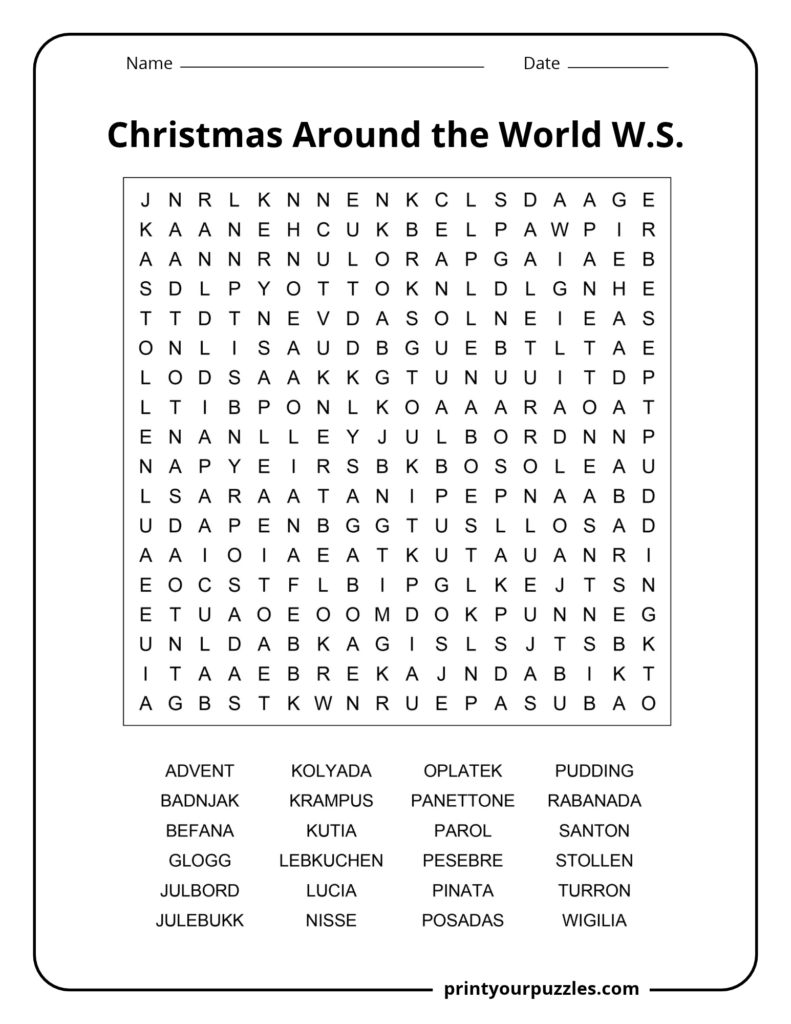
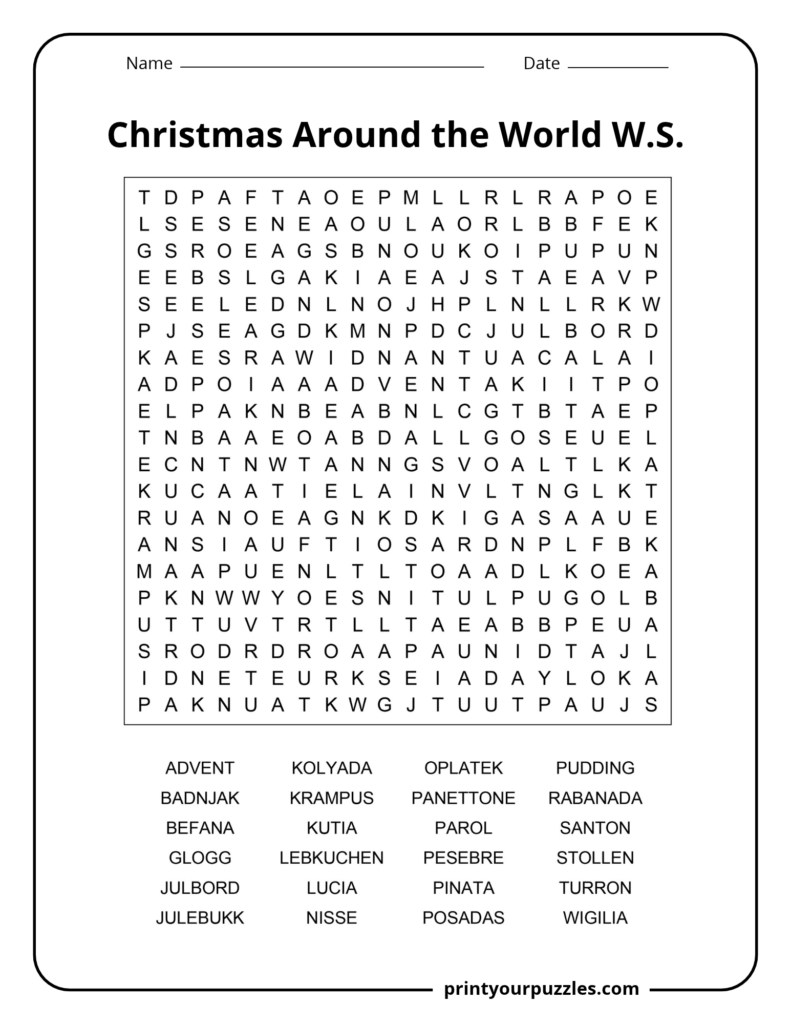
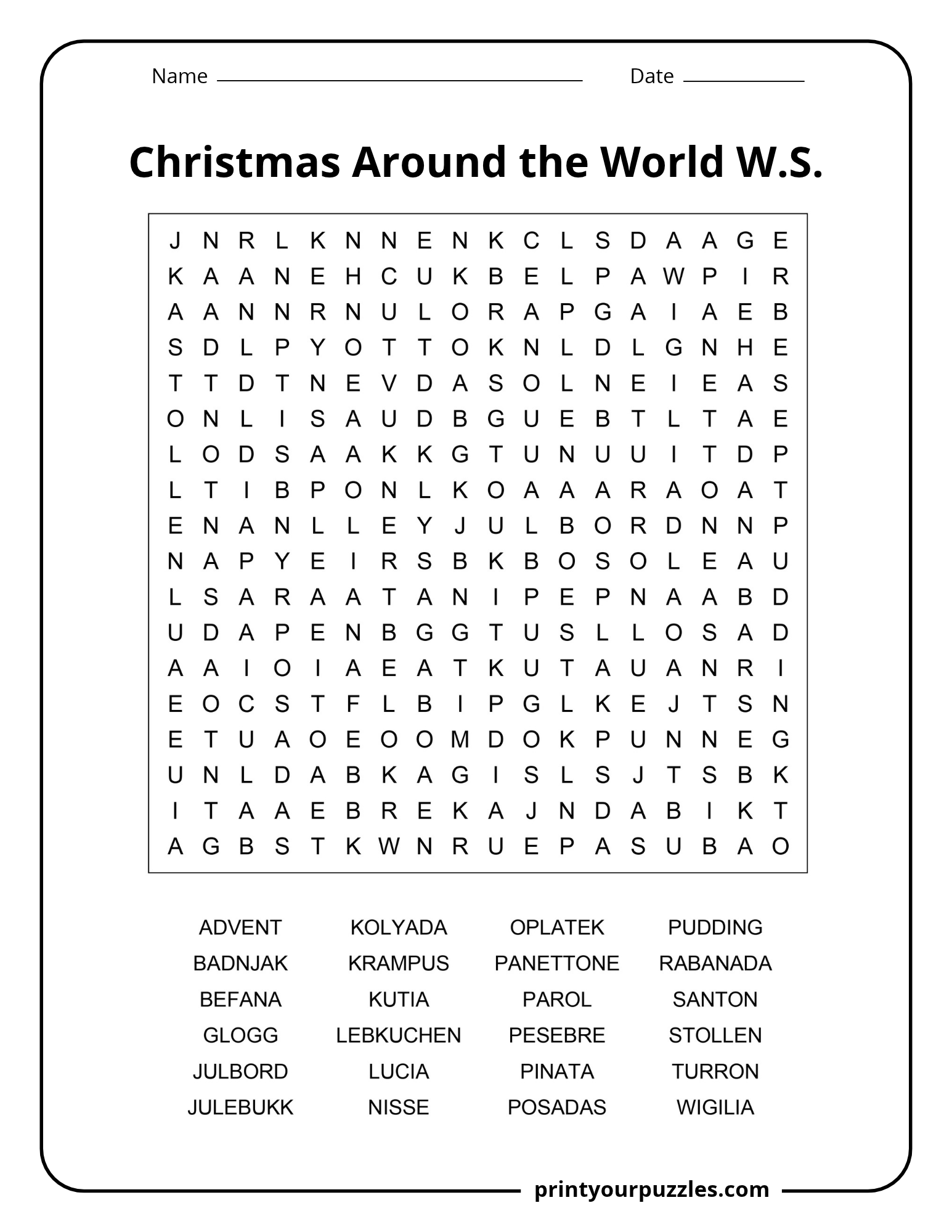
Our Christmas Around the World word search invites you to explore these remarkable traditions through a selection of words associated with festive customs, traditional foods, legendary characters, and cultural celebrations from different countries. As you search for the hidden words, you will discover how communities around the globe express the joy and spirit of Christmas in their own special ways.
Whether you are a student, a teacher, a puzzle enthusiast, or simply curious about other cultures, this educational activity offers an entertaining way to expand your vocabulary, discover international Christmas traditions, and appreciate the rich cultural diversity behind this beloved holiday.
Ho, ho, ho! The holiday fun doesn’t stop here! Explore our Christmas Word Searches collection, featuring 20 festive puzzles filled with Christmas magic, traditions, and cheer!
Related Word Searches:
Christmas Traditions | Christmas Foods | 12 Days of Christmas | Christmas Nativity | Christmas Decorations | Christmas Tree
ADVENT – The period of preparation leading up to Christmas, observed in many Christian countries through special calendars, candle lighting, religious services, and traditions that celebrate the approaching holiday.
BADNJAK – A traditional oak branch or log used in Serbian Orthodox Christmas celebrations, often ceremonially burned on Christmas Eve to symbolize warmth, prosperity, and the birth of Christ.
BEFANA – A legendary Italian woman who travels on a broomstick and delivers sweets, gifts, or symbolic coal to children on the night before Epiphany, celebrated on January 6.
GLOGG – A traditional Scandinavian warm beverage made with wine or juice, aromatic spices, raisins, and almonds, commonly enjoyed during Christmas gatherings, winter festivals, and other seasonal celebrations.
JULBORD – A traditional Swedish Christmas buffet featuring dishes such as pickled herring, meatballs, Christmas ham, potatoes, and festive desserts, usually shared with family, friends, or colleagues.
JULEBUKK – A Norwegian Christmas tradition in which children or adults dress in costumes, visit neighboring homes, sing festive songs, and sometimes receive sweets or other seasonal treats.
KOLYADA – A traditional Slavic winter celebration associated with Christmas, featuring groups of people visiting homes, singing seasonal songs, offering good wishes, and sometimes receiving food or gifts.
KRAMPUS – A horned creature from Alpine folklore, particularly associated with Austria, who accompanies Saint Nicholas and traditionally frightens misbehaving children during celebrations in the early days of December.
KUTIA – A traditional sweet ceremonial dish made with wheat berries, poppy seeds, honey, and sometimes nuts, served during Christmas Eve celebrations in Ukraine and other Eastern European countries.
LEBKUCHEN – A traditional German Christmas baked treat made with honey, nuts, and aromatic spices, similar to gingerbread and commonly sold at festive markets throughout the holiday season.
LUCIA – A Scandinavian celebration held on December 13 honoring Saint Lucia, featuring candlelit processions, white clothing, traditional songs, and saffron buns that symbolize light during the winter darkness.
NISSE – A small mythical figure from Scandinavian folklore believed to protect farms and households, traditionally associated with Christmas celebrations and often depicted wearing a distinctive red pointed hat.
OPLATEK – A thin, unleavened Christmas wafer traditionally shared among Polish families before their Christmas Eve dinner, symbolizing forgiveness, reconciliation, love, unity, and good wishes for the coming year.
PANETTONE – A traditional Italian sweet bread originating in Milan, typically containing raisins and candied citrus peel, enjoyed during Christmas and New Year celebrations in many countries worldwide.
PAROL – A traditional Filipino Christmas lantern, usually shaped like a star, representing the Star of Bethlehem and symbolizing hope, faith, and the festive spirit throughout the holiday season.
PESEBRE – A traditional Spanish nativity scene depicting the birth of Jesus Christ, often featuring figurines of Mary, Joseph, shepherds, animals, and the Three Wise Men in miniature settings.
PINATA – A decorated container filled with sweets and treats, traditionally broken during Mexican Christmas celebrations, particularly Las Posadas, bringing children and families together for a joyful festive activity.
POSADAS – Traditional Mexican Christmas celebrations held from December 16 through December 24, reenacting Mary and Joseph’s search for shelter through processions, songs, prayers, food, and community gatherings.
PUDDING – A traditional British Christmas dessert prepared with dried fruits, spices, and other rich ingredients, often steamed for several hours and served with cream, custard, or brandy sauce.
RABANADA – A traditional Christmas dessert popular in Portugal and Brazil, made by soaking bread in milk and eggs, frying it, and coating it with sugar and cinnamon.
SANTON – A small traditional handcrafted figurine from Provence, France, used in Christmas nativity scenes to represent biblical characters, local villagers, artisans, and people performing everyday activities and occupations.
STOLLEN – A traditional German Christmas bread containing dried fruits, nuts, and aromatic spices, often covered with powdered sugar and sometimes filled with marzipan for an extra sweet flavor.
TURRON – A traditional Spanish Christmas confection typically made with almonds, honey, sugar, and egg whites, available in hard or soft varieties and enjoyed during family gatherings throughout December.
WIGILIA – The traditional Polish Christmas Eve celebration, featuring a festive meatless dinner, the sharing of Christmas wafers, family gatherings, and customs associated with hospitality, faith, and cultural heritage.