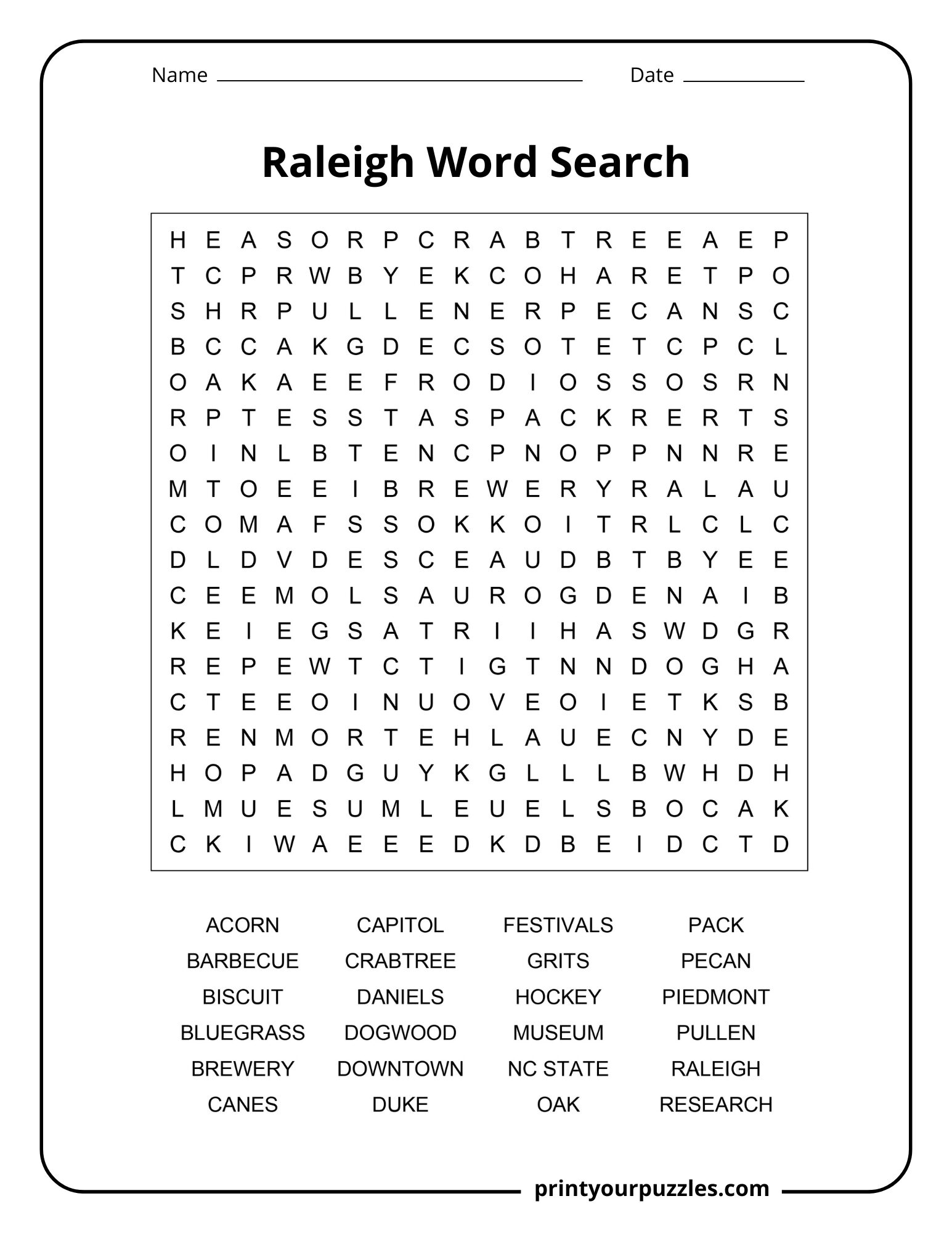

This Annapolis word search puzzle invites you to explore Maryland’s historic capital through an engaging and educational activity. Known as “America’s Sailing Capital” and home to the United States Naval Academy, Annapolis blends rich colonial history with vibrant maritime culture along the scenic Chesapeake Bay.
The puzzle features 24 carefully selected words that capture the essence of Annapolis—from maritime traditions like Sailboats and Skip Jack to culinary delights such as Crab Cake and Oysters, plus historic landmarks including the Capitol and Colonial architecture. Each term represents an important aspect of what makes this waterfront city unique.
What makes this Annapolis word search printable especially valuable is that every word included in the puzzle comes with a detailed 20-30 word definition. This educational approach transforms a simple puzzle into a learning experience, helping solvers understand the significance of each term they find.
Whether you’re a student studying Maryland history, a visitor planning a trip, or a puzzle enthusiast, this word search printable offers both entertainment and knowledge. Challenge yourself to locate all 24 words while discovering fascinating facts about Annapolis’s maritime heritage, cultural traditions, and historical importance.
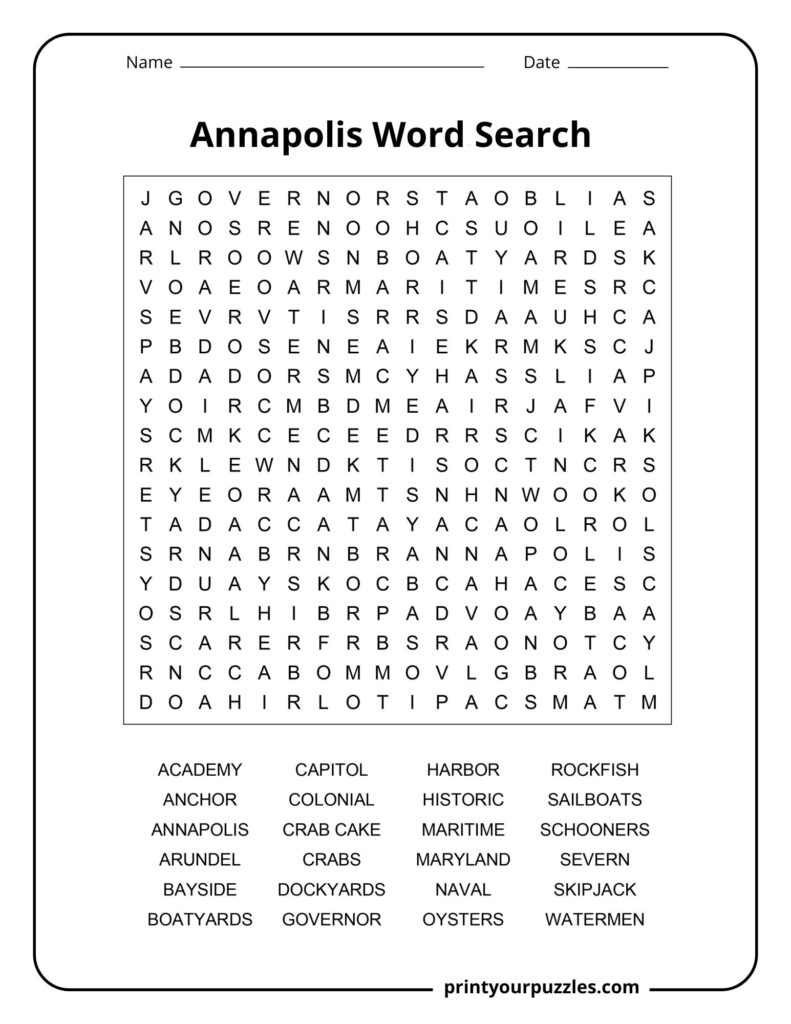
ACADEMY, ANCHOR, ANNAPOLIS, ARUNDEL, BAYSIDE, BOATYARDS, CAPITOL, COLONIAL, CRAB CAKE, CRABS, DOCKYARDS, GOVERNOR, HARBOR, HISTORIC, MARITIME, MARYLAND, NAVAL, OYSTERS, ROCKFISH, SAILBOATS, SCHOONERS, SEVERN, SKIPJACK, WATERMEN
ACADEMY – The United States Naval Academy, founded in 1845, is a prestigious military service academy that trains future Navy and Marine Corps officers on its Annapolis waterfront campus.
ANCHOR – A fundamental maritime symbol representing Annapolis’s deep connection to naval heritage, sailing tradition, and the Chesapeake Bay’s enduring influence on the city’s identity and economy.
ANNAPOLIS – Maryland’s capital city since 1694, known as “America’s Sailing Capital,” featuring colonial architecture, the U.S. Naval Academy, and serving as a major Chesapeake Bay maritime center.
ARUNDEL – Anne Arundel County surrounds Annapolis, named after Lady Anne Arundell, wife of Maryland’s first proprietor. The county was established in 1650 and encompasses the capital city.
BAYSIDE – Describes Annapolis’s prime location on the Chesapeake Bay, offering stunning waterfront views, maritime activities, and a lifestyle centered around the water and coastal living.
BOATYARDS – Shipbuilding and boat repair facilities that have operated in Annapolis for centuries, supporting the city’s maritime economy through construction, maintenance, and restoration of various watercraft.
CAPITOL – The Maryland State House, built in 1772, is the oldest state capitol in continuous legislative use and briefly served as the United States Capitol in 1783-1784.
COLONIAL – Refers to Annapolis’s remarkably preserved
eighteenth-century architecture and history, including colonial-era brick buildings, streets, and important Revolutionary War sites that attract visitors worldwide.
CRAB CAKE – Maryland’s signature dish featuring lump crabmeat with minimal filler, seasoned with Old Bay. Annapolis restaurants serve this iconic Chesapeake Bay delicacy as a regional culinary specialty.
CRABS – Blue crabs are central to Annapolis culture and cuisine. Steamed with Old Bay seasoning, these Chesapeake Bay crustaceans represent the region’s seafood heritage and watermen traditions.
DOCKYARDS – Naval and commercial docking facilities along Annapolis’s waterfront where ships are built, repaired, and maintained, supporting both military operations and the local maritime industry throughout history.
GOVERNOR – Maryland’s chief executive resides and works in Annapolis, the state capital. The Governor’s Mansion, built in 1868, stands as one of the nation’s oldest continuously occupied executive residences.
HARBOR – Annapolis Harbor is a protected deep-water port on the Severn River that accommodates countless sailboats, yachts, and vessels, making it a world-renowned sailing destination and maritime hub.
HISTORIC – Annapolis preserves more eighteenth-century buildings than any other American city. Its historic district features colonial architecture, cobblestone streets, and sites significant to Revolutionary and early American history.
MARITIME – Annapolis’s identity centers on maritime culture, including sailing, boating, naval traditions, shipbuilding, and Chesapeake Bay watermen. The city hosts major sailing events and regattas annually.
MARYLAND – Annapolis has served as Maryland’s state capital since 1694, housing state government operations, the legislature, and governor’s office in this historic Chesapeake Bay waterfront city.
NAVAL – The U.S. Naval Academy’s presence defines Annapolis. Midshipmen training, Navy football games, and military ceremonies create a distinctive atmosphere in this military-connected community of tradition.
OYSTERS – Chesapeake Bay oysters are harvested and served throughout Annapolis. These mollusks, eaten raw or cooked, represent the region’s aquaculture heritage and remain a beloved local delicacy.
ROCKFISH – Maryland’s state fish, also called striped bass, is a prized Chesapeake Bay species. Annapolis restaurants feature this local catch, grilled, broiled, or blackened in traditional preparations.
SAILBOATS – Hundreds of sailboats fill Annapolis Harbor year-round. The city hosts the United States Sailboat Show annually, cementing its reputation as “America’s Sailing Capital” and sailing enthusiast destination.
SCHOONERS – Historic multi-masted sailing vessels once common in Chesapeake Bay commerce. Several restored schooners operate from Annapolis today, offering tours and connecting visitors to maritime heritage.
SEVERN – The Severn River flows into Annapolis Harbor and the Chesapeake Bay. This tidal estuary borders the Naval Academy grounds and provides protected waters for sailing and recreation.
SKIP JACK – Traditional Chesapeake Bay sailing workboat with distinctive raked masts, used historically for oyster dredging. These wooden vessels represent Maryland’s watermen heritage and maritime craftsmanship traditions.
WATERMEN – Traditional Chesapeake Bay workers who harvest crabs, oysters, and fish for their livelihood. These independent watermen maintain centuries-old traditions using skills passed through generations.
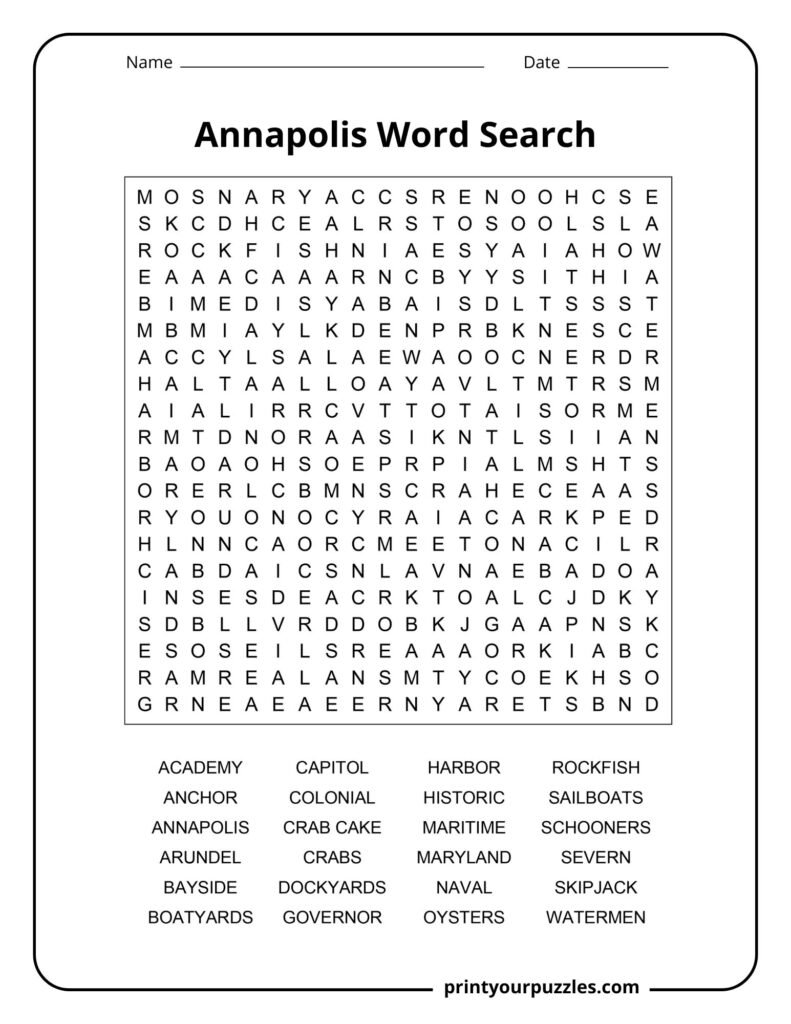
ACADEMY, ANCHOR, ANNAPOLIS, ARUNDEL, BAYSIDE, BOATYARDS, CAPITOL, COLONIAL, CRAB CAKE, CRABS, DOCKYARDS, GOVERNOR, HARBOR, HISTORIC, MARITIME, MARYLAND, NAVAL, OYSTERS, ROCKFISH, SAILBOATS, SCHOONERS, SEVERN, SKIPJACK, WATERMEN
Annapolis earned this title due to its exceptional harbor, numerous sailing events, yacht clubs, and maritime culture. The city hosts major boat shows and attracts sailors worldwide year-round.
Founded in 1845, the U.S. Naval Academy is a prestigious military service academy located in Annapolis that trains midshipmen to become officers in the Navy and Marine Corps.
Annapolis is renowned for Chesapeake Bay blue crabs, Maryland crab cakes, oysters, and rockfish (striped bass). Old Bay seasoning features prominently in traditional seafood preparations throughout the region.
Founded in 1649, Annapolis became Maryland’s capital in 1694. Visitors can explore the 1772 State House, colonial-era buildings, historic district, Naval Academy grounds, and Revolutionary War sites.
A skipjack is a traditional wooden sailing workboat with raked masts, used for oyster dredging on the Chesapeake Bay. These vessels represent Maryland’s watermen heritage and maritime craftsmanship.
For official city information, government updates, and public services, visit the City of Annapolis website. If you are planning a trip, check out the official tourism portal, Visit Annapolis.
In 1783-1784, the Continental Congress met in Annapolis’s State House, where George Washington resigned his military commission and the Treaty of Paris was ratified, officially ending the Revolutionary War.
The historic district preserves remarkable colonial architecture, including brick homes, churches, and public buildings from the 1700s. Many structures remain privately owned and continuously occupied since construction.
William Paca, Samuel Chase, Charles Carroll, and Thomas Stone all had connections to Annapolis. Their historic homes, particularly the William Paca House and Garden, remain popular attractions today.
The enslaved African, made famous by Alex Haley’s “Roots,” arrived at Annapolis harbor. A memorial and plaque commemorate his arrival and honor African Americans’ contributions to Maryland history.
The 1788 wooden dome was constructed entirely with wooden pegs. It’s the largest wooden dome built without nails in the United States and remains an architectural marvel today.
Purus ut praesent facilisi dictumst sollicitudin cubilia ridiculus.