Introduction to the Florida Word Search
Florida feels different from almost every other state the moment you look at a map. Stretching like a peninsula between the Atlantic Ocean and the Gulf of Mexico, it is surrounded by water on three sides and filled with beaches, islands, wetlands, lakes, and tropical scenery. Located in the Southeast, Florida has Tallahassee as its capital and Jacksonville as its largest city. Its famous nickname, The Sunshine State, reflects both its warm climate and its bright, vacation-like image.
Water shapes nearly every part of Florida’s identity. The state is known for sandy beaches, coral reefs, mangrove forests, springs, rivers, and the vast Everglades, one of the most unusual ecosystems in North America. Alligators, manatees, dolphins, sea turtles, panthers, flamingos, and countless birds help make Florida one of the best states for learning about wildlife and habitats. A Florida word search can introduce students and puzzle lovers to many of these animals, places, and natural features in a fun and memorable way.
Florida’s history is just as rich as its landscapes. Indigenous peoples lived in the region for thousands of years before Spanish explorers arrived in the 1500s. St. Augustine, founded in 1565, is often described as the oldest continuously inhabited European-established city in the United States. Over time, Florida was shaped by Spanish, British, Caribbean, Latin American, and Southern influences, giving the state a culture that feels especially diverse. That cultural mix also appears in Florida’s food, from Cuban sandwiches and key lime pie to fresh seafood, stone crab, citrus fruits, and conch fritters in the Keys.
Today, Florida has one of the largest economies in the country. Tourism is a major part of daily life, with visitors coming for beaches, theme parks, cruises, national parks, and warm winter weather. Agriculture is also important, especially oranges, sugarcane, tomatoes, and nursery plants. Along the Space Coast, Kennedy Space Center connects Florida to NASA, rockets, astronauts, and space exploration.
Florida is a state of movement: waves along the shore, rockets rising into the sky, birds crossing wetlands, and people arriving from around the world. From Miami’s culture to the Keys, from Orlando’s attractions to the Everglades, it offers endless opportunities to explore. As you complete this free printable Florida word search, look for words that capture the sunshine, wildlife, history, food, and energy of one of America’s most recognizable states.
Take your Southeast States learning further with our Georgia word search, Alabama word search, South Carolina word search, and the full US States Word Searches collection.
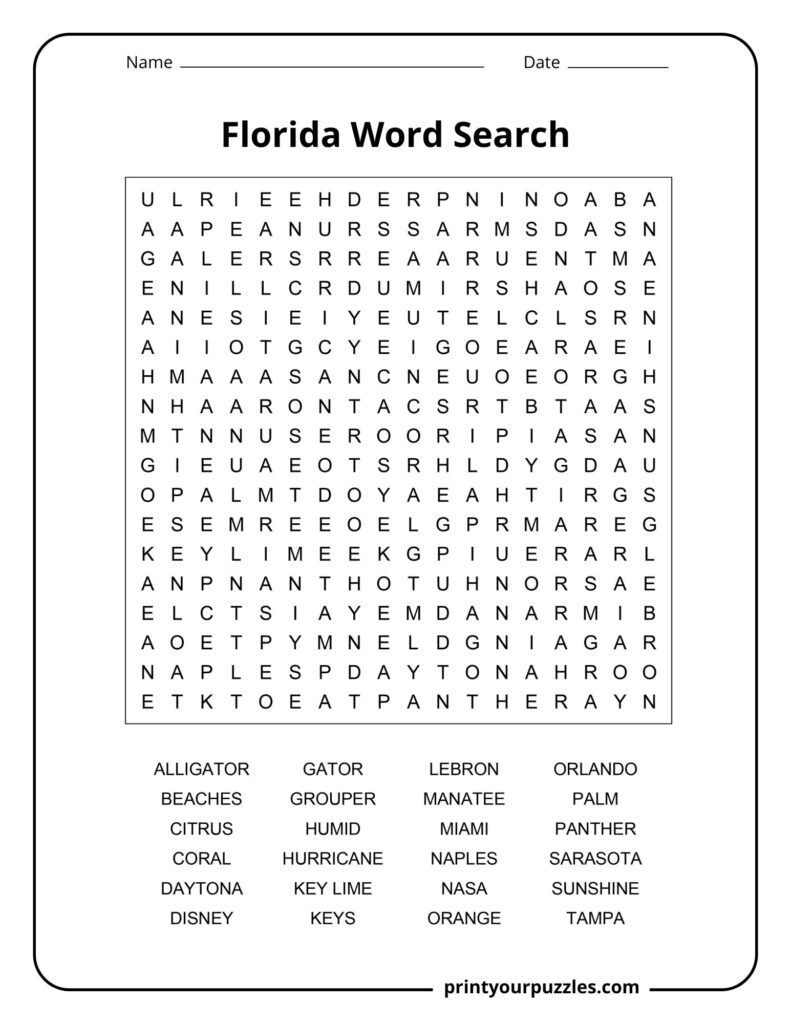
Medium Difficulty Word Search
Words to Find
ALLIGATOR, BEACHES, CITRUS, CORAL, DAYTONA, DISNEY, GATOR, GROUPER, HUMID, HURRICANE, KEY LIME, KEYS, LEBRON, MANATEE, MIAMI, NAPLES, NASA, ORANGE, ORLANDO, PALM, PANTHER, SARASOTA, SUNSHINE, TAMPA
All Words Defined
ALLIGATOR – Large reptile native to Florida’s wetlands and swamps, distinguished from crocodiles by their broader snouts. American alligators thrive throughout the state’s freshwater habitats.
BEACHES – Florida boasts over 1,300 miles of stunning coastline with white sandy beaches, attracting millions of tourists annually for swimming, sunbathing, and water sports along both coasts.
CITRUS – Florida’s signature agricultural industry, producing oranges, grapefruits, and other citrus fruits. The state leads U.S. citrus production, contributing significantly to its economy and identity.
CORAL – Florida’s extensive coral reef systems, including the only living barrier reef in North America, support diverse marine ecosystems and attract divers from worldwide to explore underwater wonders.
DAYTONA – Famous coastal city home to Daytona International Speedway, hosting NASCAR races. Known for its hard-packed beach where cars can drive and spring break celebrations attract students.
DISNEY – Walt Disney World Resort in Orlando is the world’s most visited vacation destination, featuring four theme parks, water parks, and resorts that transformed Florida’s tourism industry.
GATOR – Shortened term for alligator, also the mascot of the University of Florida. Represents the state’s wildlife and fierce athletic spirit in collegiate sports competitions nationwide.
GROUPER – Popular Florida fish served in restaurants statewide, typically blackened, fried, or grilled. A staple of Florida cuisine, caught in Gulf and Atlantic waters surrounding the peninsula.
HUMID – Florida’s tropical and subtropical climate creates high humidity levels year-round, especially during summer months. This moisture-laden air characterizes the state’s distinctive weather patterns and environment.
HURRICANE – Powerful tropical storms that frequently threaten Florida during hurricane season from June through November, requiring extensive preparation and influencing architecture, insurance, and emergency management systems.
KEY LIME – Small, tart citrus fruit that grows in the Florida Keys, famous for Key lime pie, the state’s official dessert with its distinctive tangy flavor.
KEYS – Chain of tropical islands stretching southwest from mainland Florida, connected by the Overseas Highway. Known for fishing, diving, and relaxed island lifestyle in this unique archipelago.
LEBRON – LeBron James brought two NBA championships to Miami Heat during his tenure, cementing his legacy in Florida basketball history and thrilling fans statewide.
MANATEE – Gentle, endangered marine mammals inhabiting Florida’s coastal waters and rivers. These slow-moving “sea cows” are protected species and beloved symbols of Florida’s conservation efforts.
MIAMI – Vibrant, multicultural city in South Florida known for Art Deco architecture, Cuban culture, international trade, beautiful beaches, nightlife, and serving as gateway to Latin America.
NAPLES – Affluent Gulf Coast city renowned for pristine beaches, luxury shopping, golf courses, and high quality of life. A premier retirement destination with sophisticated cultural amenities.
NASA – The Kennedy Space Center on Florida’s Space Coast launches rockets and spacecraft, establishing Florida as America’s gateway to space exploration and attracting tourists to witness historic launches.
ORANGE – Florida’s iconic fruit and former economic backbone. The state produces most U.S. orange juice, with orange blossoms serving as the official state flower symbolizing the industry.
ORLANDO – Central Florida city famous as the theme park capital of the world, hosting Disney World, Universal Studios, and SeaWorld. A major tourist destination and convention hub.
PALM – Tropical trees ubiquitous throughout Florida, symbolizing the state’s warm climate. Various palm species line streets, beaches, and landscapes, defining Florida’s distinctive subtropical aesthetic and scenery.
PANTHER – The endangered Florida panther is the state animal, a subspecies of cougar inhabiting southwestern Florida’s forests and swamps. Conservation efforts aim to protect this iconic predator.
SARASOTA – Cultural Gulf Coast city renowned for beautiful beaches, arts scene, Ringling Museum, and affluent communities. Known for excellent quality of life and year-round outdoor activities appeal.
SUNSHINE – Florida’s nickname “The Sunshine State” reflects abundant sunny weather year-round, averaging over 230 sunny days annually. This climate attracts tourists, retirees, and outdoor recreation enthusiasts.
TAMPA – Major Gulf Coast city and economic hub featuring a historic port, vibrant downtown, professional sports teams, and the famous Ybor City neighborhood with rich Cuban heritage.
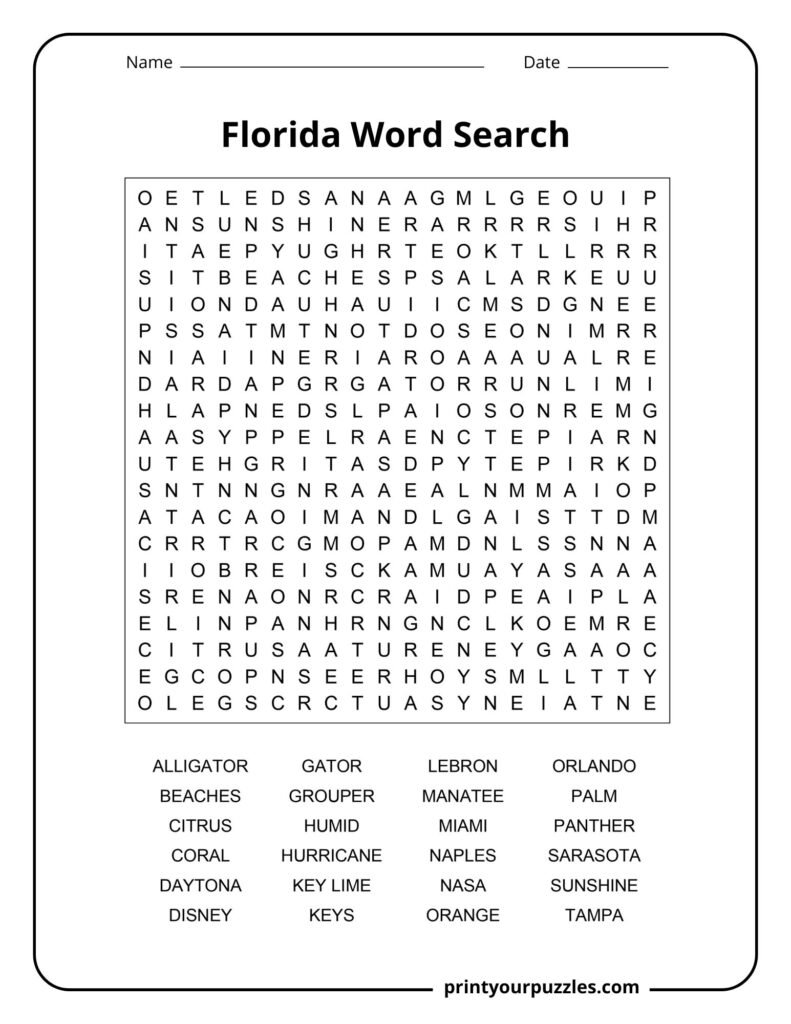
Hard Difficulty Word Search
Words to Find
ALLIGATOR, BEACHES, CITRUS, CORAL, DAYTONA, DISNEY, GATOR, GROUPER, HUMID, HURRICANE, KEY LIME, KEYS, LEBRON, MANATEE, MIAMI, NAPLES, NASA, ORANGE, ORLANDO, PALM, PANTHER, SARASOTA, SUNSHINE, TAMPA
6 Key FAQs About Florida
5 Curious "Did You Know?" Facts About Florida