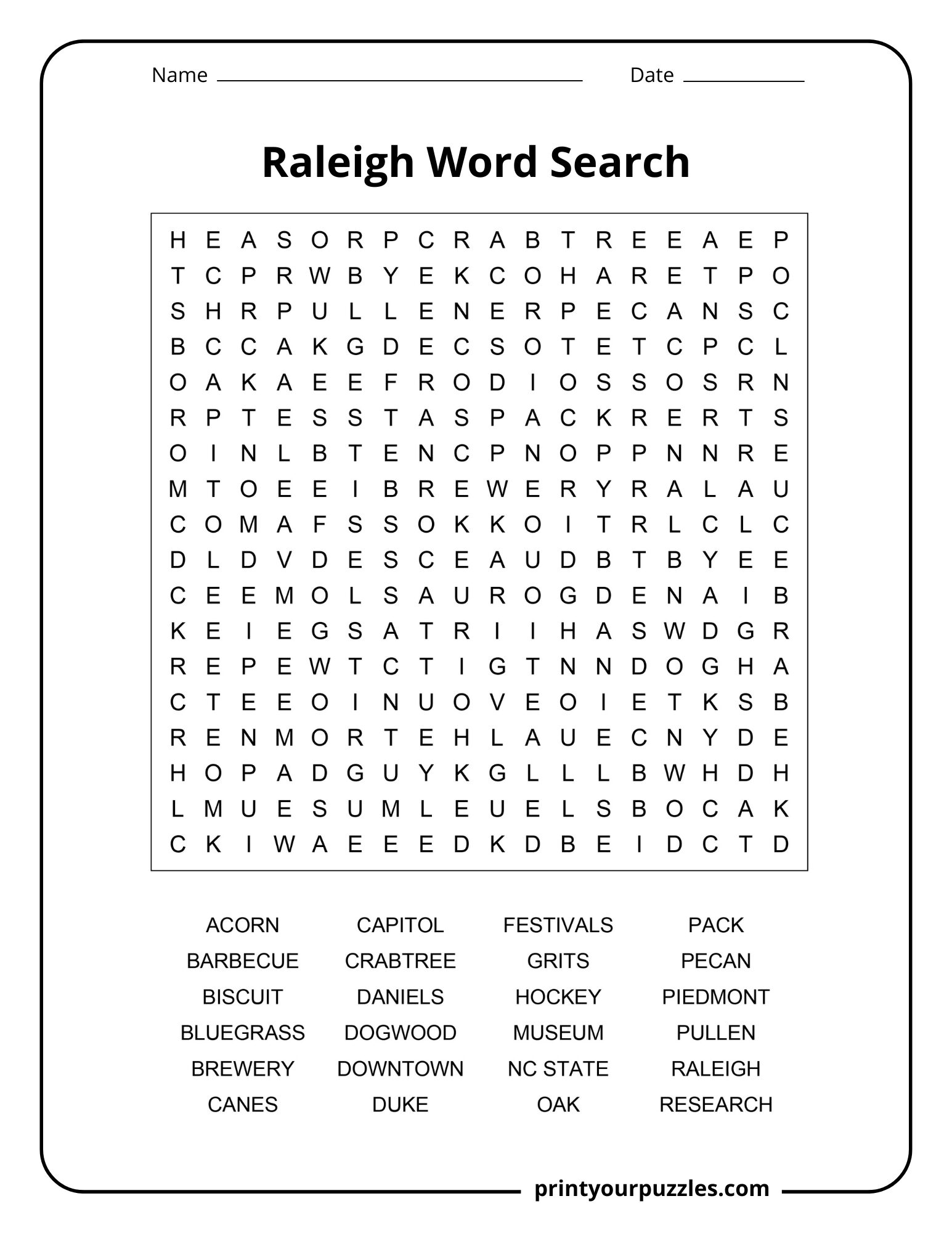

This engaging Lincoln word search celebrates everything that makes Nebraska’s capital city unique and memorable. Featuring 24 carefully selected words, this puzzle captures Lincoln’s rich history, vibrant culture, iconic landmarks, and beloved traditions that define the heart of the Great Plains.
From the thunderous cheers at Memorial Stadium to the golden dome of the State Capitol, from prairie landscapes to the historic Haymarket District, each word represents an essential piece of Lincoln’s identity. Whether you’re a devoted Huskers fan, a history enthusiast, or simply love challenging puzzles, this word search printable offers entertainment for all ages and skill levels.
What makes this puzzle special is that every single word is thoroughly defined with detailed 20-30 word explanations, helping solvers learn fascinating facts about Lincoln while they search. Teachers, students, families, and visitors will appreciate these educational descriptions that bring context and meaning to each term.
The Lincoln word search printable format makes sharing easy—perfect for classrooms, community events, road trips, or quiet afternoons. Download, print, and start discovering the words that tell Lincoln’s story. Happy searching, and go Big Red!
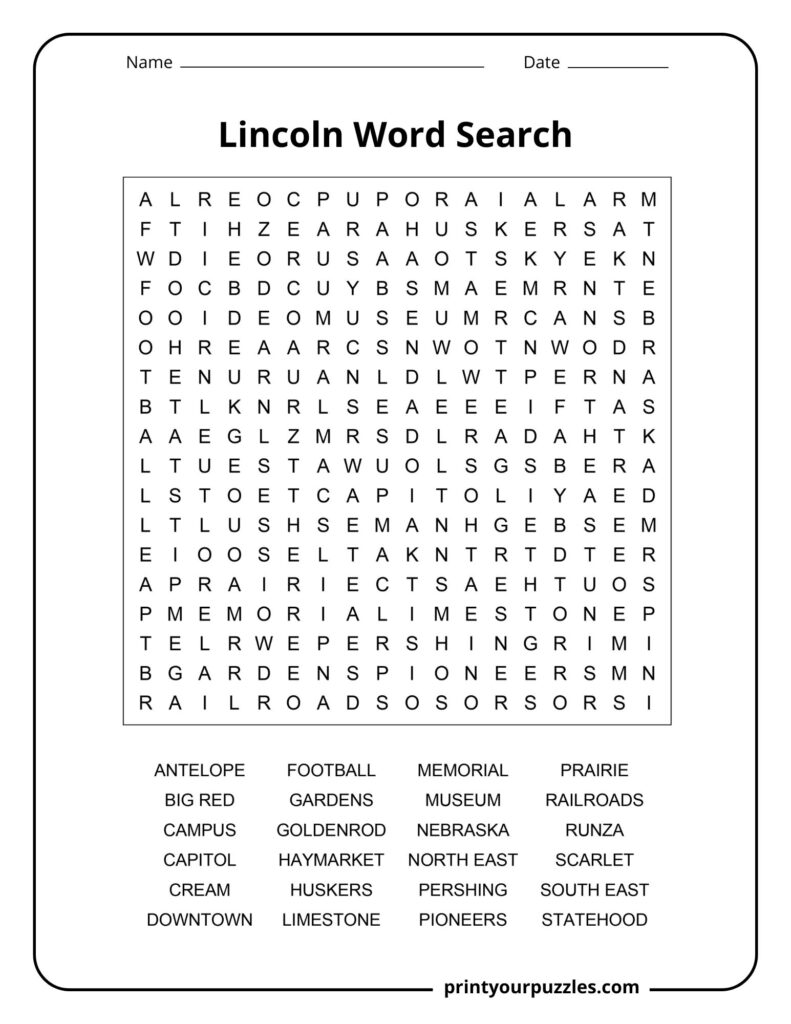
ANTELOPE, BIG RED, CAMPUS, CAPITOL, CREAM, DOWNTOWN, FOOTBALL, GARDENS, GOLDENROD, HAYMARKET, HUSKERS, LIMESTONE, MEMORIAL, MUSEUM, NEBRASKA, NORTH EAST, PERSHING, PIONEERS, PRAIRIE, RAILROADS, RUNZA, SCARLET, SOUTH EAST, STATEHOOD
ANTELOPE – Historic valley and creek running through Lincoln, giving its name to Antelope Park and the surrounding neighborhoods that define the city’s natural geography and recreational spaces.
BIG RED – Nickname for Nebraska’s passionate football fan base and mascot, representing the state’s unified support for Husker athletics and the sea of red at games.
CAMPUS – University of Nebraska-Lincoln’s expansive grounds featuring historic buildings, modern facilities, and green spaces where over 25,000 students pursue higher education in Nebraska’s capital city.
CAPITOL – Nebraska’s distinctive State Capitol building, completed in 1932, featuring a unique tower design by architect Bertram Goodhue and “The Sower” statue atop its golden dome.
CREAM – Refers to the University of Nebraska’s alternate cream-colored football uniforms, symbolizing heritage and tradition while complementing the iconic scarlet and serving as nostalgic colors.
DOWNTOWN – Lincoln’s central business district featuring government buildings, entertainment venues, restaurants, and cultural attractions that serve as the city’s historic and economic heart for residents and visitors.
FOOTBALL – Dominant cultural force in Lincoln centered on Nebraska Huskers, creating game-day traditions that transform the city into the state’s third-largest population when Memorial Stadium fills.
GARDENS – Refers to Sunken Gardens, Lincoln’s beloved botanical attraction featuring colorful floral displays, waterfalls, and landscaped paths in a former quarry site, offering tranquil beauty year-round.
GOLDENROD – Nebraska’s official state flower since 1895, this bright yellow wildflower blooms across prairies surrounding Lincoln, symbolizing the state’s natural beauty and agricultural heritage throughout.
HAYMARKET – Historic warehouse district transformed into Lincoln’s vibrant entertainment area, featuring brick streets, farmers market, restaurants, shops, and nightlife in beautifully restored nineteenth-century buildings preserving character.
HUSKERS – University of Nebraska athletic teams’ nickname derived from corn husking, representing state pride, powerful football tradition, and passionate fan culture that unites Lincoln and Nebraska.
LIMESTONE – Primary building material used throughout Lincoln’s State Capitol, quarried from Indiana, giving the building its distinctive buff color and durability while creating architectural magnificence.
MEMORIAL – Memorial Stadium, home of Nebraska Huskers football since 1923, honoring Nebraskans who served in wars while hosting legendary games and maintaining sellout streak traditions exceeding decades.
MUSEUM – Lincoln features several museums including University of Nebraska State Museum with natural history exhibits, Elephant Hall fossils, and planetarium, enriching educational and cultural experiences for visitors.
NEBRASKA – The state where Lincoln serves as capital city, representing Great Plains heritage, agricultural strength, pioneering spirit, and Midwestern values throughout its history since 1867 statehood.
NORTH EAST – Quadrant of Lincoln featuring diverse neighborhoods, commercial areas, parks, and residential communities representing the city’s geographic organization and development patterns across various decades of growth.
PERSHING – General John J. Pershing, World War I commander who grew up in Lincoln, attended University of Nebraska, and became one of America’s most decorated military leaders.
PIONEERS – Early settlers who established Lincoln in 1867 when it became Nebraska’s capital, facing harsh prairie conditions while building communities and establishing foundations for growth.
PRAIRIE – Vast grassland ecosystem surrounding Lincoln, defining Nebraska’s landscape with native grasses, wildflowers, and wildlife that shaped the region’s agricultural development and natural character throughout history.
RAILROADS – Crucial to Lincoln’s founding and growth, connecting the capital to national markets, transporting goods and people, and driving economic development throughout the late nineteenth century.
RUNZA – Nebraska’s beloved regional food specialty featuring ground beef, cabbage, and onions baked in bread pocket, originating from German-Russian immigrants and headquartered
in Lincoln since founding.
SCARLET – University of Nebraska’s primary color alongside cream, creating the iconic “Big Red” identity worn by athletes, students, and fans throughout Lincoln on game days.
SOUTH EAST – Lincoln quadrant containing historic neighborhoods, the state penitentiary, parks, and diverse communities representing different eras of the city’s expansion and demographic development over generations.
STATEHOOD – Nebraska achieved statehood March 1, 1867, with Lincoln designated as capital that same year, marking the beginning of the city’s role as government center.
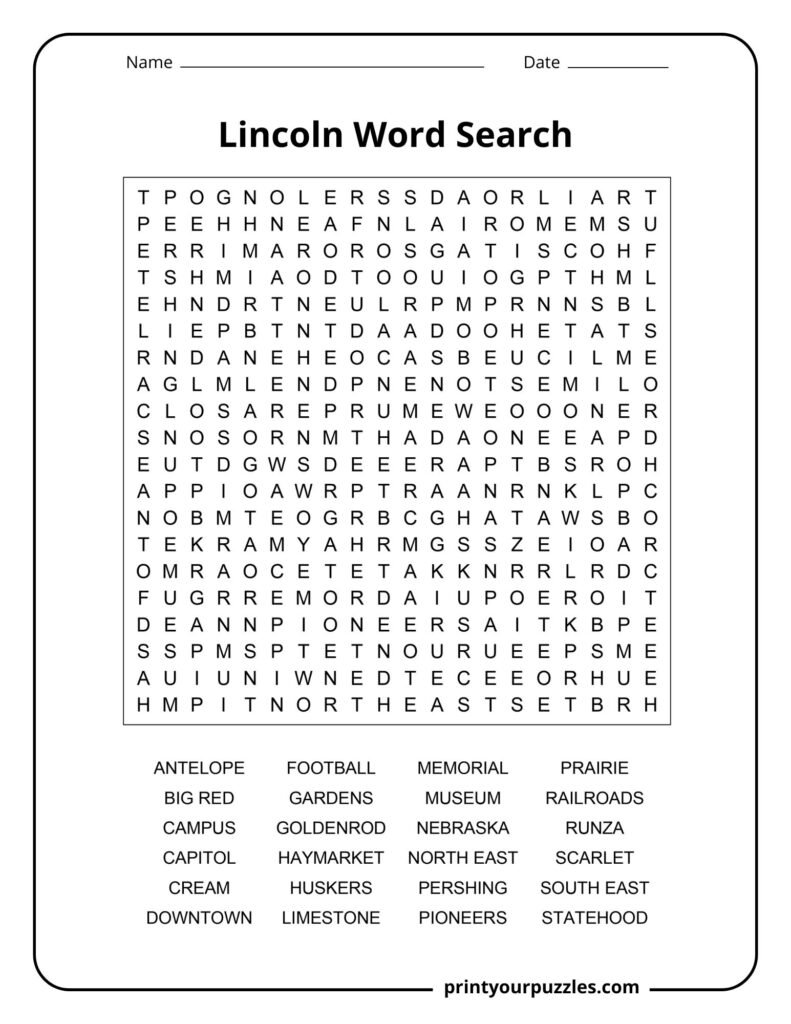
ANTELOPE, BIG RED, CAMPUS, CAPITOL, CREAM, DOWNTOWN, FOOTBALL, GARDENS, GOLDENROD, HAYMARKET, HUSKERS, LIMESTONE, MEMORIAL, MUSEUM, NEBRASKA, NORTH EAST, PERSHING, PIONEERS, PRAIRIE, RAILROADS, RUNZA, SCARLET, SOUTH EAST, STATEHOOD
Lincoln is best known as Nebraska’s capital city, home to the University of Nebraska Huskers football program, the distinctive State Capitol building, and its passionate Big Red fan culture.
Lincoln was founded in 1867 specifically to serve as Nebraska’s capital after statehood, strategically located in the center of the state to replace the original capital, Omaha.
Lincoln’s population exceeds 290,000 residents, making it Nebraska’s second-largest city after Omaha, with steady growth driven by the university, government employment, and expanding business sectors.
Top attractions include Memorial Stadium on game days, the State Capitol tower, Sunken Gardens, Haymarket District, University of Nebraska State Museum, and historic downtown featuring restaurants and entertainment.
Lincoln experiences four distinct seasons with hot, humid summers averaging 87°F, cold winters with snow, and beautiful spring and fall transitions typical of Great Plains continental climate patterns.
For official city information, government updates, and public services, visit the City of Lincoln website. If you are planning a trip, check out the official tourism portal, Visit Lincoln.
With seating capacity exceeding 85,000 fans, Memorial Stadium’s population on game days surpasses all Nebraska cities except Omaha and Lincoln itself, creating an electrifying sea of red.
The city’s name was changed to Lincoln to honor President Abraham Lincoln and help secure Nebraska’s capital status, despite Lincoln being a Republican in Democratic-leaning Lancaster County.
Completed in 1932 during the Great Depression, the Capitol was built in four phases between 1922-1932, with each phase funded before construction began, avoiding debt entirely.
Nebraska’s Memorial Stadium sellout streak began in 1962 and continued for decades, reaching over 350 consecutive games, demonstrating the unwavering loyalty of Husker fans statewide.
Standing 400 feet high, this 19-foot bronze figure scattering seeds represents Nebraska’s farming tradition and looks over the prairie, becoming Lincoln’s most recognizable landmark and symbol.
Purus ut praesent facilisi dictumst sollicitudin cubilia ridiculus.