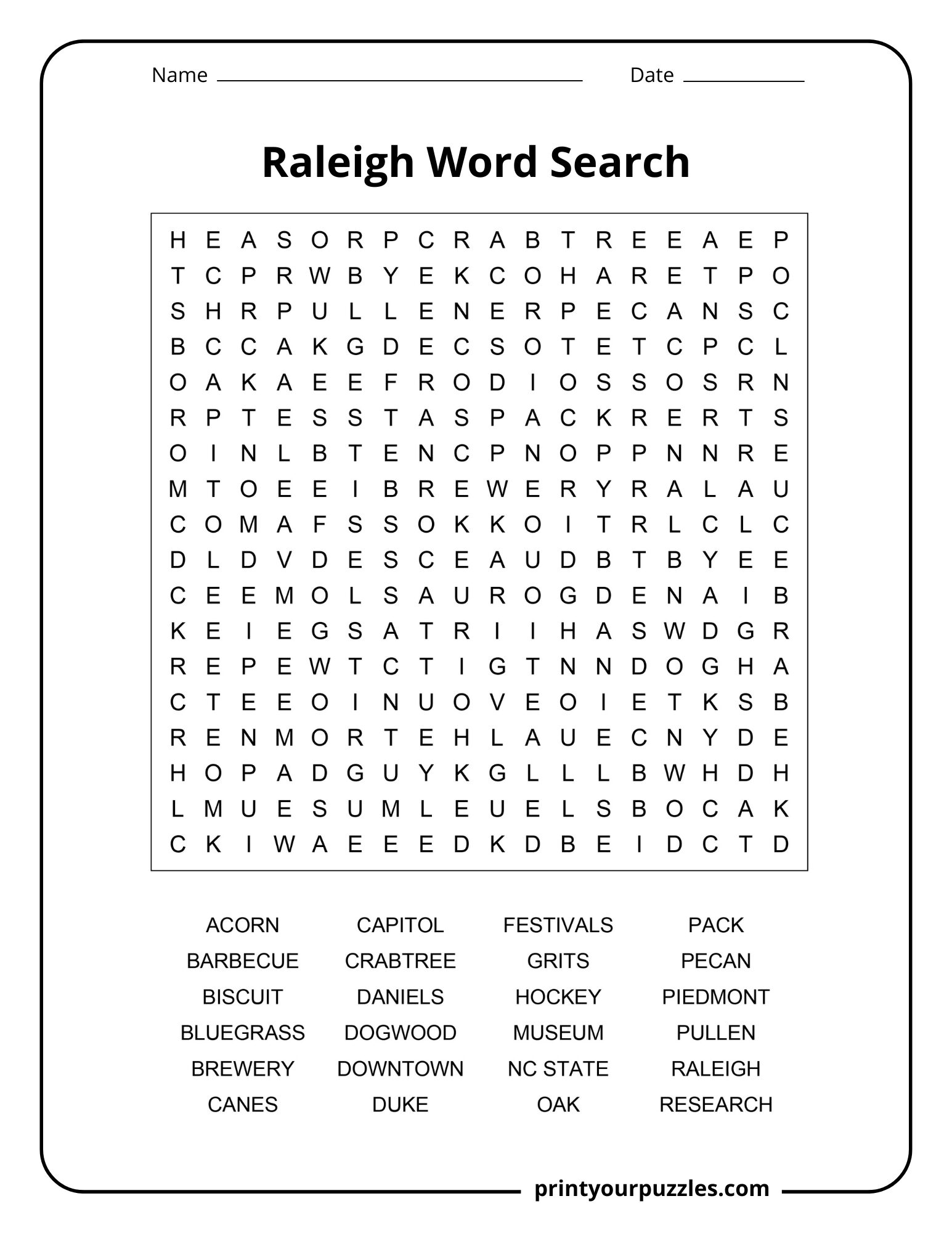

This Trenton word search offers an engaging way to explore New Jersey’s capital city through an educational puzzle experience. Trenton stands as a cornerstone of American history, where George Washington’s famous 1776 victory during the Revolutionary War turned the tide of independence. The city later became an industrial giant, proudly declaring “Trenton Makes, The World Takes” as pottery, wire rope, and manufacturing excellence put it on the map.
Our Trenton word search printable features twenty-four carefully selected words representing the city’s rich heritage—from the Assunpink Creek and Old Barracks Museum to John Roebling’s engineering innovations and the beloved pork roll. Each term captures an essential element of Trenton’s identity, including historical battles, colonial architecture, indigenous Lenape people, and the Delaware River.
What makes this word search printable special is that every word comes with a detailed 20-30 word definition, helping solvers understand the significance behind each term they find. Whether you’re an educator, history enthusiast, or puzzle lover, this activity combines entertainment with learning, making it perfect for classrooms, family activities, or personal enrichment while discovering what makes Trenton truly remarkable.
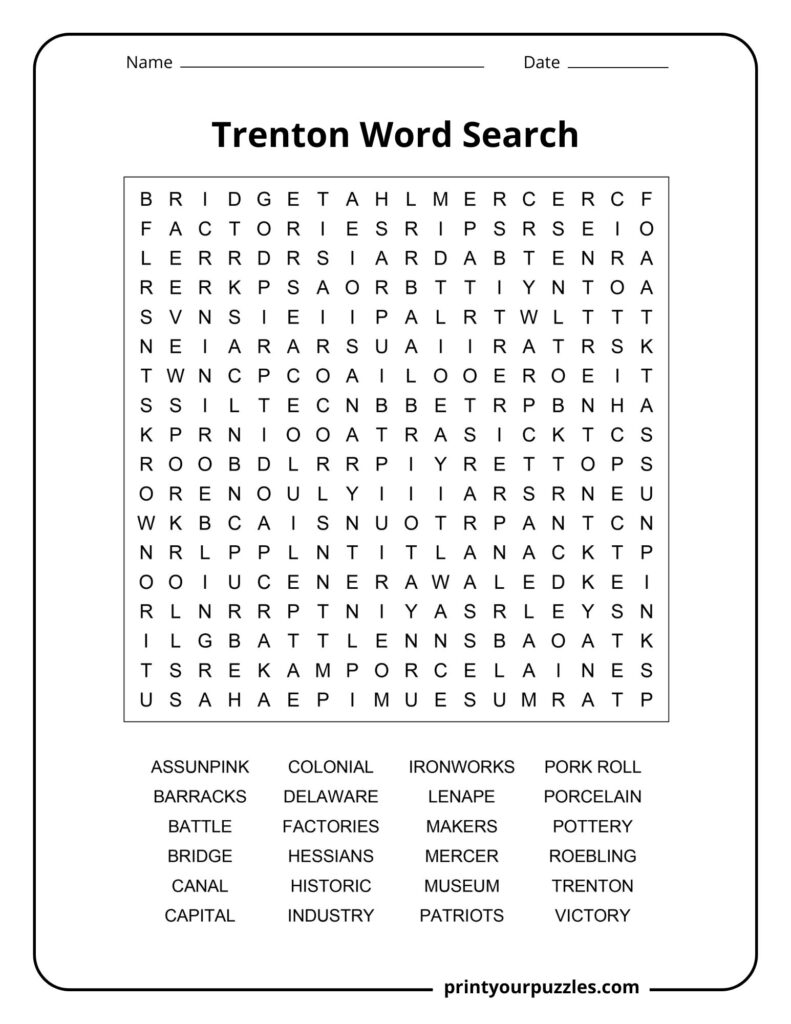
ASSUNPINK, BARRACKS, BATTLE, BRIDGE, CANAL, CAPITAL, COLONIAL, DELAWARE, FACTORIES, HESSIANS, HISTORIC, INDUSTRY, IRONWORKS, LENAPE, MAKERS, MERCER, MUSEUM, PATRIOTS, PORK ROLL, PORCELAIN, POTTERY, ROEBLING, TRENTON, VICTORY
ASSUNPINK – Historic creek flowing through Trenton where the Second Battle of Trenton occurred in 1777, helping secure Washington’s strategic victory during the Revolutionary War campaign.
BARRACKS – The Old Barracks Museum, built in 1758, is the only remaining colonial barracks in New Jersey, housing British and Hessian troops during the Revolutionary War.
BATTLE – The Battle of Trenton on December 26, 1776, was Washington’s surprise attack on Hessian forces, revitalizing the American Revolution after devastating losses and retreats.
BRIDGE – The Lower Trenton Bridge spans the Delaware River, featuring the famous illuminated sign “Trenton Makes, The World Takes,” celebrating the city’s industrial manufacturing heritage.
CANAL – The Delaware and Raritan Canal, completed in 1834, was a vital shipping route connecting Philadelphia and New York, spurring Trenton’s industrial and economic growth.
CAPITAL – Trenton became New Jersey’s state capital in 1790, serving as the seat of government, housing the State House, and hosting legislative and executive operations.
COLONIAL – Trenton’s colonial period shaped its identity, featuring eighteenth-century architecture, Revolutionary War significance, and its role as a strategic crossroads between
Philadelphia and New York.
DELAWARE – The Delaware River borders Trenton’s western edge, providing strategic military advantage during the Revolution, transportation routes, and defining the Pennsylvania-New Jersey boundary.
FACTORIES – Trenton’s factories produced ceramics, rubber goods, wire rope, steel, and textiles, earning recognition as a major manufacturing center during America’s industrial boom era.
HESSIANS – German mercenary soldiers hired by Britain to fight American colonists, famously surprised and defeated by Washington’s troops during the Christmas 1776 Trenton attack.
HISTORIC – Trenton’s historic significance includes Revolutionary War battles, colonial architecture, industrial innovation, and serving as New Jersey’s capital for over two centuries of American history.
INDUSTRY – Manufacturing industries including pottery, rubber, steel, wire rope, and textiles made Trenton an economic powerhouse, proudly declaring “Trenton Makes, The World Takes” throughout history.
IRONWORKS – Trenton’s iron industry produced crucial materials for bridges, railroads, and construction, contributing significantly to America’s nineteenth-century industrial expansion and infrastructure development.
LENAPE – Indigenous Lenape people originally inhabited the Trenton area along the Delaware River valley before European colonization, establishing settlements and trading routes throughout the region.
MAKERS – “Trenton Makes, The World Takes” became the city’s proud slogan, celebrating its role as a manufacturing powerhouse producing goods distributed globally during industrial prosperity.
MERCER – Mercer County, established in 1838 and named for Revolutionary War General Hugh Mercer, encompasses Trenton as its county seat, including surrounding municipalities and communities.
MUSEUM – Trenton features several museums including the Old Barracks Museum, New Jersey State Museum, and Trenton City Museum, preserving Revolutionary War and industrial history.
PATRIOTS – American Revolutionary patriots, led by George Washington, crossed the Delaware River and defeated enemy forces at Trenton, reviving hope for independence and military success.
PORK ROLL – Pork roll, also called Taylor Ham, is a processed meat product invented in Trenton by John Taylor in 1856, becoming New Jersey’s beloved breakfast staple.
PORCELAIN – Trenton’s porcelain industry thrived from the 1850s through 1900s, with numerous companies producing fine china, sanitary ware, and decorative ceramics for national and international markets.
POTTERY – The pottery industry flourished in Trenton, earning it the nickname “Staffordshire of America,” with dozens of companies manufacturing ceramics, dinnerware, and sanitary products nationwide.
ROEBLING – John A. Roebling established his wire rope factory in Trenton, producing cables for iconic suspension bridges including the Brooklyn Bridge, revolutionizing engineering and construction.
TRENTON – New Jersey’s capital city since 1790, strategically located on the Delaware River between Philadelphia and New York, rich in Revolutionary War history and industrial heritage.
VICTORY – Washington’s victory at Trenton on December 26, 1776, marked a crucial turning point, boosting American morale and proving colonial forces could defeat professional European armies.
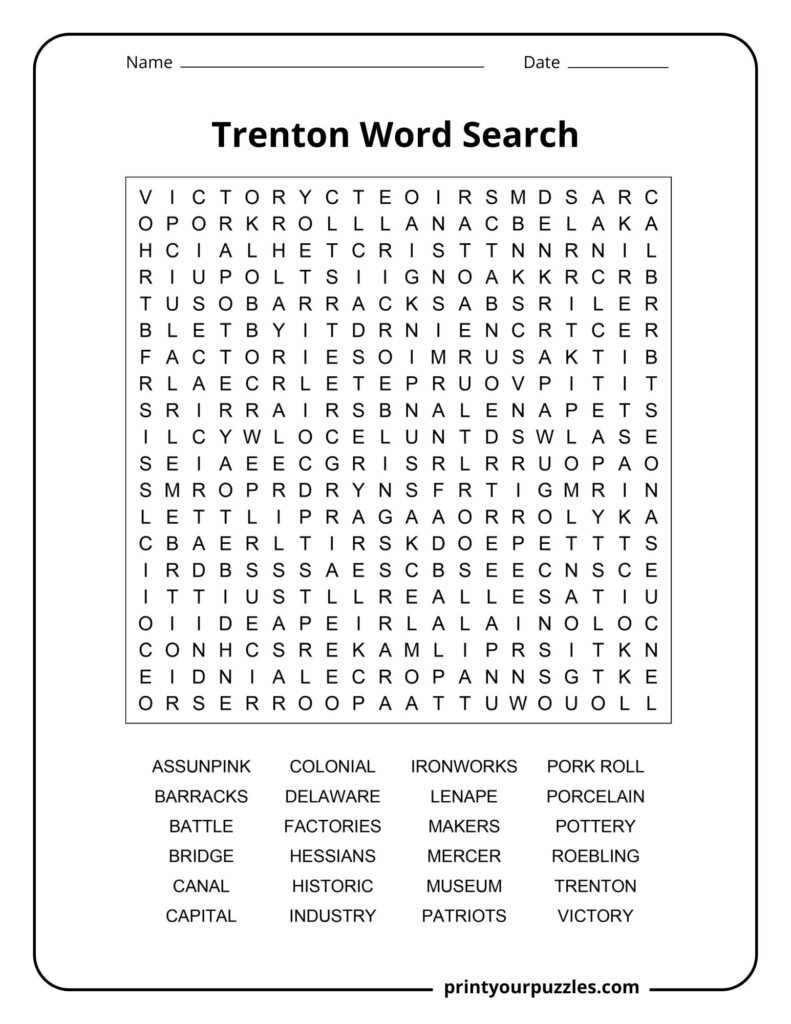
ASSUNPINK, BARRACKS, BATTLE, BRIDGE, CANAL, CAPITAL, COLONIAL, DELAWARE, FACTORIES, HESSIANS, HISTORIC, INDUSTRY, IRONWORKS, LENAPE, MAKERS, MERCER, MUSEUM, PATRIOTS, PORK ROLL, PORCELAIN, POTTERY, ROEBLING, TRENTON, VICTORY
Trenton is famous for George Washington’s pivotal Revolutionary War victory in 1776, serving as New Jersey’s capital since 1790, and its industrial heritage as a manufacturing powerhouse.
Trenton became New Jersey’s permanent state capital in 1790, chosen for its central location between New York and Philadelphia, and its strategic position along the Delaware River.
Trenton is located in central New Jersey along the Delaware River, approximately thirty miles northeast of Philadelphia and sixty miles southwest of New York City, bordering Pennsylvania.
This slogan celebrates Trenton’s industrial legacy as a major manufacturing center producing pottery, wire rope, rubber goods, and steel products distributed globally during America’s industrial boom.
On December 26, 1776, George Washington crossed the Delaware River and launched a surprise attack on Hessian forces, achieving a crucial victory that revitalized the Revolutionary cause.
For official city information, government updates, and public services, visit the City of Trenton website. If you are planning a trip, check out the official tourism portal, Visit Trenton.
In November and December 1784, Trenton served as the temporary capital of the United States while Congress met in the city, making it one of nine capitals.
John Taylor created pork roll in Trenton in 1856, originally calling it “Taylor’s Prepared Ham.” This processed meat product became New Jersey’s iconic breakfast staple, sparking the “pork roll vs. Taylor Ham” debate.
The “Trenton Makes, The World Takes” sign on the Lower Trenton Bridge features 1,200 light bulbs and has welcomed travelers crossing the Delaware River for nearly ninety years.
John A. Roebling’s Trenton factory manufactured the revolutionary wire rope cables used in the Brooklyn Bridge and many other iconic suspension bridges worldwide, transforming modern engineering.
Trenton earned this nickname because it housed over thirty pottery and porcelain companies, rivaling England’s famous Staffordshire region in ceramic production quality and quantity during its industrial peak.
Purus ut praesent facilisi dictumst sollicitudin cubilia ridiculus.