Louisiana does not sound, taste, or feel quite like any other state. Music drifts through city streets, the smell of gumbo and beignets fills neighborhood restaurants, cypress trees rise from quiet bayous, and the Mississippi River carries centuries of history toward the Gulf of Mexico. Located in the Southeast, Louisiana has Baton Rouge as its capital and New Orleans as its largest city. Known as The Pelican State, it is a place where geography, culture, and tradition come together in unforgettable ways.
Water has shaped Louisiana from the beginning. The Mississippi River, one of the most important rivers in North America, flows through the state before reaching the Gulf. Wetlands, marshes, bayous, lakes, and coastal areas create habitats for alligators, herons, pelicans, fish, turtles, and many other animals. These landscapes are beautiful, but they are also fragile, making Louisiana an important place for learning about coastal ecosystems, hurricanes, and environmental change.
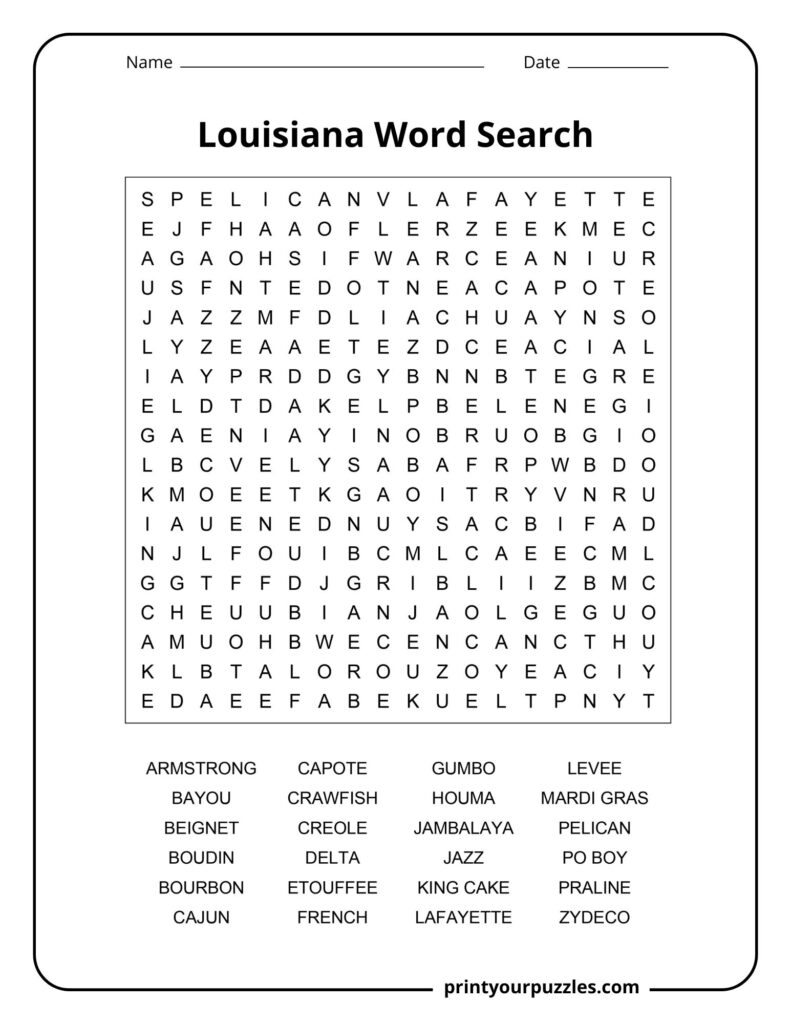
A Louisiana word search can introduce students and puzzle lovers to a state with one of the richest cultural identities in America. Indigenous peoples lived in the region long before European arrival. Later, French, Spanish, African, Caribbean, and American influences shaped Louisiana’s language, architecture, food, music, religion, and daily life. Dishes such as jambalaya, crawfish étouffée, red beans and rice, po’boys, boudin, king cake, and pralines reflect this blend of cultures just as clearly as the state’s songs and festivals.
Few states are more closely connected to music and celebration. New Orleans is known as the birthplace of jazz, while brass bands, blues, zydeco, and Cajun music all help define the state’s sound. Mardi Gras, with its parades, costumes, music, and traditions, is one of the most famous festivals in the country. Louisiana’s economy includes energy, shipping, fishing, agriculture, petrochemicals, tourism, and port activity along the Mississippi River.
Louisiana is a state of layers: river history, coastal wildlife, French Quarter balconies, lively parades, swamp landscapes, and communities that keep old traditions alive. As you complete this free printable Louisiana word search, look for words connected to its rivers, music, foods, festivals, wildlife, and history. Each hidden word reveals another layer of one of America’s most vibrant states.
Explore more Southeast States along the Gulf and lower South with our Mississippi word search, Texas word search, Arkansas word search, and the full US States Word Searches collection.
ARMSTRONG – Louis Armstrong, nicknamed “Satchmo,” was a groundbreaking New Orleans jazz trumpeter and singer. His innovative improvisations, gravelly voice, and charismatic performances revolutionized jazz and influenced music worldwide.
BAYOU – A slow-moving, marshy waterway common in Louisiana’s lowlands. These shallow streams connect swamps, lakes, and rivers, creating unique ecosystems essential to the state’s geography and culture.
BEIGNET – A square-shaped French pastry covered in powdered sugar, deep-fried until golden and puffy. Café Du Monde in New Orleans made these delicious treats famous, serving them with chicory coffee.
BOUDIN – A spicy Cajun pork sausage mixed with rice, vegetables, and seasonings. This traditional Louisiana delicacy reflects the state’s French and Acadian culinary heritage, often enjoyed at local meat markets.
BOURBON – Famous street in New Orleans’ French Quarter known for lively nightlife, jazz clubs, bars, and restaurants. Bourbon Street epitomizes the city’s vibrant entertainment culture and historic charm.
CAJUN – Descendants of French-speaking Acadian exiles from Canada who settled in Louisiana. Cajun culture encompasses distinctive music, spicy cuisine, and French dialect influencing the state’s identity significantly.
CAPOTE – Truman Capote, born in New Orleans, was an acclaimed American author known for “Breakfast at Tiffany’s” and “In Cold Blood.” His literary style blended Southern Gothic with journalistic precision.
CRAWFISH – Freshwater crustaceans resembling small lobsters, essential to Louisiana cuisine and culture. Also called crayfish or mudbugs, they’re featured in boils, étouffée, and other traditional dishes.
CREOLE – People of mixed French, Spanish, African, and Native American heritage in Louisiana. Creole culture represents a unique blend of languages, cuisine, music, and traditions distinct from Cajun.
DELTA – The Mississippi River Delta region where the river meets the Gulf of Mexico. This fertile wetland area is crucial for Louisiana’s ecosystem, economy, and wildlife habitat.
ETOUFFEE – A rich Cajun dish featuring shellfish smothered in a thick, flavorful sauce made with roux, vegetables, and spices. Typically served over rice, crawfish étouffée is particularly popular.
FRENCH – Louisiana’s colonial heritage stems from French rule before becoming American territory. French language, architecture, legal traditions, and culture profoundly shaped the state’s unique character and cuisine.
GUMBO – A thick, hearty stew combining African, French, and Native American influences. Made with roux, okra or filé, seafood or meat, and served over rice, it’s Louisiana’s signature dish.
HOUMA – A city in southeast Louisiana, serving as Terrebonne Parish’s seat. Named after the Native American Houma tribe, it’s a hub for Cajun culture and offshore oil industry.
JAMBALAYA – A one-pot rice dish combining Spanish, French, and West African cooking traditions. Filled with meat, seafood, vegetables, and Creole spices, it’s a beloved Louisiana comfort food.
JAZZ – Revolutionary American music genre born in New Orleans around 1900. Blending African rhythms, blues, ragtime, and European harmonies, jazz profoundly influenced global music culture and heritage.
KING CAKE – A colorful oval pastry eaten during Mardi Gras season from Epiphany through Fat Tuesday. Decorated with purple, green, and gold icing, it contains a hidden baby figurine.
LAFAYETTE – Louisiana’s fourth-largest city, considered the heart of Cajun Country. Known for authentic Cajun and Creole culture, music festivals, and cuisine, Lafayette celebrates Louisiana’s French heritage.
LEVEE – Earthen embankments built along rivers and coastlines to prevent flooding. Louisiana’s extensive levee system protects communities from Mississippi River floods and hurricane storm surges throughout the state.
MARDI GRAS – French for “Fat Tuesday,” this famous carnival celebration occurs before Lenten fasting begins. New Orleans hosts elaborate parades, colorful costumes, masks, and bead-throwing festivities attracting millions.
PELICAN – Louisiana’s official state bird, the brown pelican appears on the state flag and seal. These large waterbirds inhabit coastal areas, diving for fish in Louisiana’s abundant waterways.
PO BOY – A traditional Louisiana submarine sandwich served on French bread. Filled with fried seafood, roast beef, or other ingredients, dressed with lettuce, tomatoes, pickles, and mayonnaise.
PRALINE – A sweet candy made from sugar, cream, butter, and pecans. These creamy confections reflect Louisiana’s French heritage and abundant pecan harvests, sold throughout New Orleans and beyond.
ZYDECO – Energetic music genre originating from Louisiana’s Creole communities, blending blues, rhythm and blues, and Cajun influences. Characterized by accordion, washboard, and fast-paced rhythms for dancing.