Introduction to the Advent Calendar Word Search
An Advent calendar is a beloved Christmas tradition that helps children and adults count down the days until Christmas Day. Combining excitement, anticipation, and festive surprises, Advent calendars have become a familiar part of holiday celebrations in many countries around the world.
The tradition originated in Germany during the 19th century, when Christian families developed creative ways to mark the days leading up to Christmas. Some families drew chalk marks on doors, while others lit candles or displayed religious pictures. Printed Advent calendars appeared in the early 20th century and gradually became popular throughout Europe and beyond.
Although the Christian season of Advent begins on the fourth Sunday before Christmas, most traditional Advent calendars start on December 1 and feature 24 numbered doors or compartments. Each day, a new door is opened, revealing a small surprise until Christmas Eve arrives on December 24.
Early Advent calendars typically contained religious illustrations, Bible verses, or festive scenes. Over time, they evolved to include chocolates, candies, miniature toys, and other small gifts. Today, Advent calendars come in countless designs, ranging from traditional paper calendars and reusable wooden houses to fabric pockets and digital versions.
Many families also create personalized Advent calendars filled with meaningful activities rather than material gifts. These might include baking Christmas cookies, decorating the Christmas tree, watching holiday movies, writing Christmas cards, or performing acts of kindness. Such activities encourage families to spend quality time together while celebrating the festive season.
Advent calendars are enjoyed by people of all ages. While children often look forward to discovering daily treats, adults can enjoy calendars featuring tea, puzzles, books, craft supplies, and other themed surprises.
Beyond their entertainment value, Advent calendars encourage patience, generosity, and appreciation for everyday moments. They transform the weeks before Christmas into a memorable journey filled with small celebrations and cherished traditions.
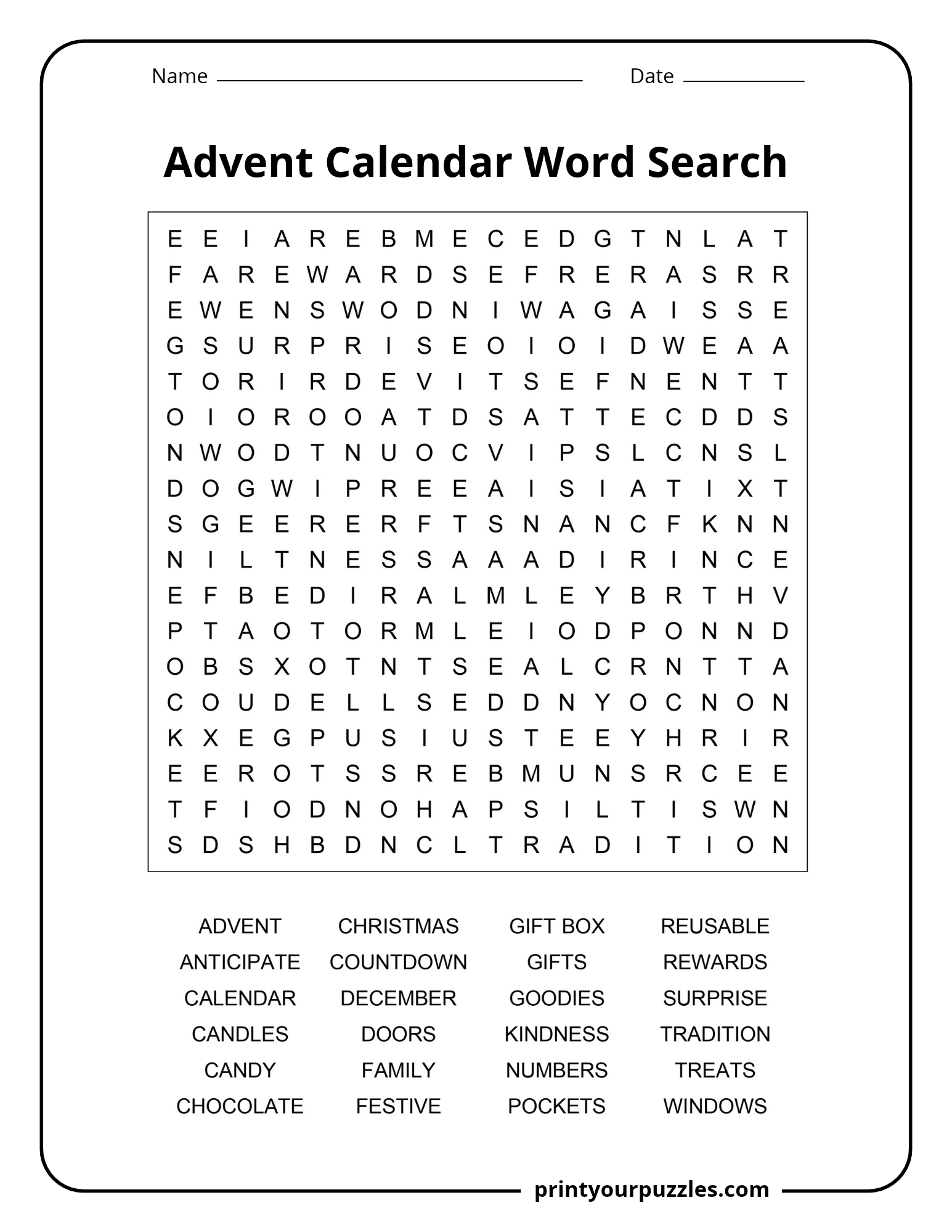
Our printable Advent calendar word search offers a fun and educational way to explore this popular Christmas tradition. As you search for hidden words, you will discover vocabulary associated with Advent calendars, holiday countdowns, festive decorations, daily surprises, and Christmas celebrations.
Whether used at home, in the classroom, or during a holiday gathering, this activity provides an enjoyable opportunity to expand your vocabulary, improve concentration, and embrace the excitement of the Christmas season.
Ho, ho, ho! The holiday fun doesn’t stop here! Explore our Christmas Word Searches collection, featuring 18 festive puzzles filled with Christmas magic, traditions, and cheer!
Related Word Searches:
12 Days of Christmas | Advent | Christmas Eve | Christmas Day | Christmas Nativity | Christmas Decorations
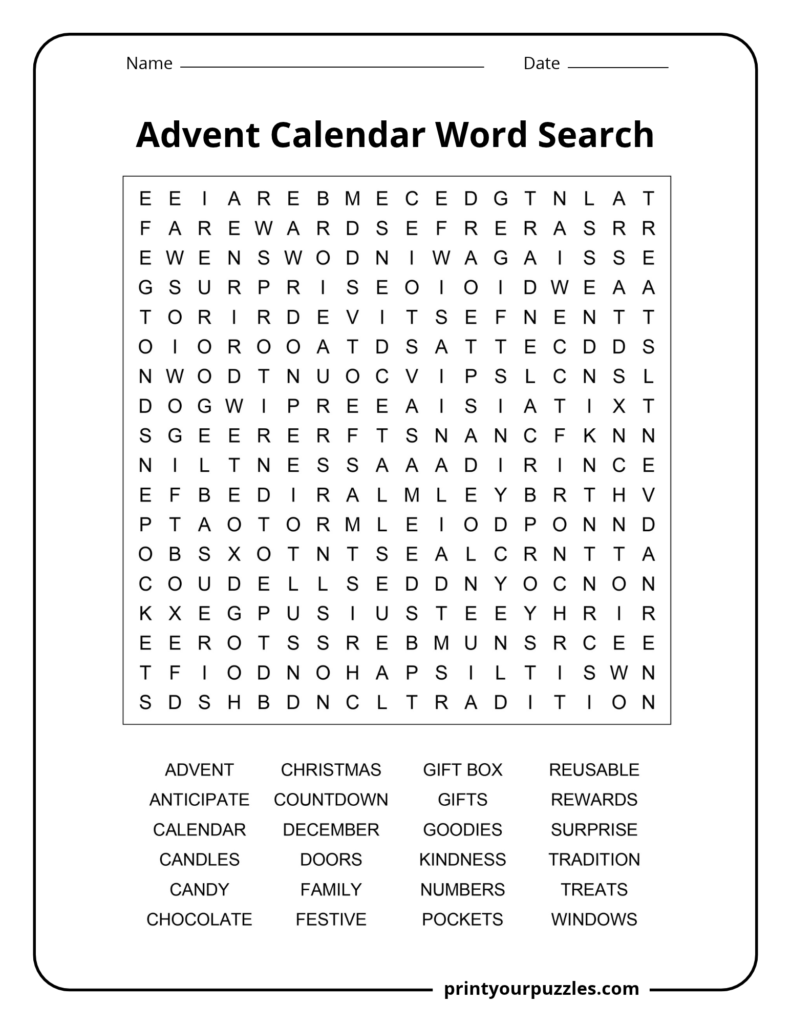
Medium Difficulty Word Search
Words to Find:
ADVENT, ANTICIPATE, CALENDAR, CANDLES, CANDY, CHOCOLATE, CHRISTMAS, COUNTDOWN, DECEMBER, DOORS, FAMILY, FESTIVE, GIFT BOX, GIFTS, GOODIES, KINDNESS, NUMBERS, POCKETS, REUSABLE, REWARDS, SURPRISE, TRADITION, TREATS, WINDOWS
All Words Defined
ADVENT – The Christian season of preparation before Christmas, traditionally observed through prayer, reflection, and special customs that celebrate anticipation and the approaching birth of Jesus Christ.
ANTICIPATE – To eagerly look forward to a future event, such as opening another Advent calendar window or celebrating Christmas Day with family, friends, and loved ones.
CALENDAR – A system for organizing days, weeks, and months, adapted during Advent to create an exciting daily countdown leading up to the celebration of Christmas Day.
CANDLES – Decorative sources of light traditionally used during Advent to symbolize hope, peace, joy, and love while marking the weeks leading up to the celebration of Christmas.
CANDY – A sweet confection frequently included in Advent calendars, providing children and adults with a delicious daily surprise throughout the festive countdown to Christmas Day.
CHOCOLATE – A popular sweet treat found behind the numbered doors of many Advent calendars, often shaped into festive figures representing Christmas trees, stars, bells, or snowmen.
CHRISTMAS – An annual celebration observed on December 25 that commemorates the birth of Jesus Christ and incorporates numerous cultural traditions involving generosity, family gatherings, and festive decorations.
COUNTDOWN – The process of counting the remaining days before a special event, forming the central purpose of Advent calendars during the weeks leading up to Christmas.
DECEMBER – The twelfth and final month of the year, during which most Advent calendars are opened daily from December 1 through December 24, immediately before Christmas Day.
DOORS – Small numbered openings on traditional Advent calendars that conceal pictures, chocolates, miniature gifts, or other surprises waiting to be discovered each day before Christmas arrives.
FAMILY – A group of loved ones who often share the Advent calendar tradition, creating memorable experiences through daily surprises, festive activities, and meaningful moments spent together.
FESTIVE – Describing something cheerful, colorful, or associated with celebrations, particularly the decorations, activities, and joyful atmosphere surrounding Advent calendars and the Christmas season in many homes.
GIFT BOX – A small container used in certain Advent calendar designs to hold individual presents, sweets, or surprises that are opened on specific days throughout the December countdown.
GIFTS – Items given to others as expressions of affection, appreciation, or generosity, often included in Advent calendars to create enjoyable daily surprises leading up to Christmas.
GOODIES – Small enjoyable treats, gifts, or special surprises commonly hidden inside Advent calendars, including chocolates, candies, miniature toys, decorative items, and other festive delights for all ages.
KINDNESS – The quality of being considerate, helpful, and generous toward others, sometimes encouraged through Advent calendars featuring daily charitable activities, thoughtful gestures, and acts of compassion.
NUMBERS – Mathematical symbols used to identify individual compartments on Advent calendars, typically arranged from one to twenty-four to guide the daily countdown toward Christmas Eve.
POCKETS – Small fabric compartments featured in some reusable Advent calendars, designed to hold daily notes, candies, miniature presents, or festive activities throughout the weeks before Christmas.
REUSABLE – Describing Advent calendars made from durable materials such as wood or fabric that can be refilled and enjoyed during the Christmas season year after year.
REWARDS – Small prizes or enjoyable experiences received after opening Advent calendar compartments, helping build excitement and providing something special to look forward to each December day.
SURPRISE – An unexpected treat, message, picture, or gift hidden inside an Advent calendar compartment, creating a moment of excitement and discovery during the countdown to Christmas.
TRADITION – A custom or practice passed down through generations, such as opening Advent calendars each December to celebrate the anticipation and joyful arrival of Christmas Day.
TREATS – Small portions of delicious food or other enjoyable items frequently placed inside Advent calendars to make the daily Christmas countdown more entertaining, rewarding, and memorable.
WINDOWS – Small numbered flaps found on traditional cardboard Advent calendars that open to reveal hidden illustrations, religious messages, chocolates, or other festive surprises during the Christmas countdown.
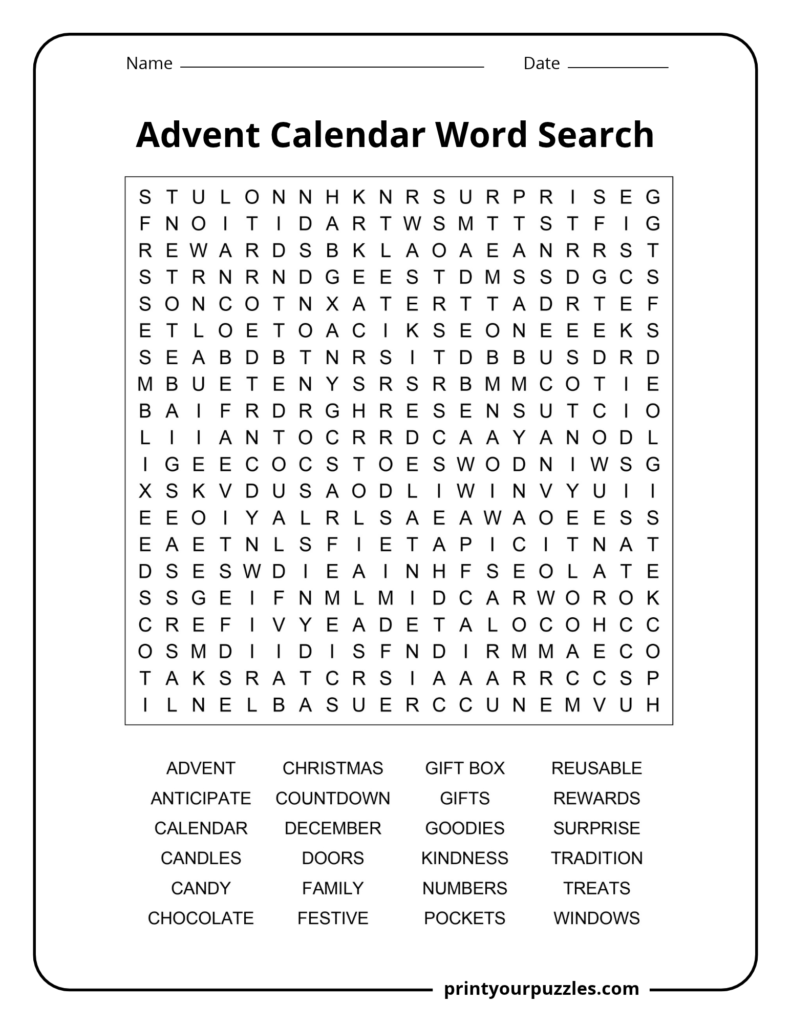
Hard Difficulty Word Search
Words to Find:
ADVENT, ANTICIPATE, CALENDAR, CANDLES, CANDY, CHOCOLATE, CHRISTMAS, COUNTDOWN, DECEMBER, DOORS, FAMILY, FESTIVE, GIFT BOX, GIFTS, GOODIES, KINDNESS, NUMBERS, POCKETS, REUSABLE, REWARDS, SURPRISE, TRADITION, TREATS, WINDOWS
5 Key FAQs About the Advent Calendar
5 Curious "Did You Know?" Facts About the Advent Calendar