Introduction to the Independence Day Word Search
Independence Day is the national celebration of the United States, observed every year on July 4. It commemorates the adoption of the Declaration of Independence in 1776, when the thirteen American colonies announced that they were no longer under British rule. The holiday is commonly called the Fourth of July and combines history, patriotism, community events, summer activities, and family traditions.
The Declaration of Independence was approved by the Continental Congress in Philadelphia. Primarily drafted by Thomas Jefferson, the document explained why the colonies believed they had the right to form a separate nation. It expressed influential ideas about equality, liberty, government, and individual rights. Although the struggle for independence continued during the American Revolutionary War, July 4 became the symbolic birthday of the United States.
Early celebrations included public readings of the Declaration, ringing bells, military ceremonies, bonfires, speeches, and community meals. Over time, fireworks became one of the holiday’s most recognizable traditions. Today, large displays illuminate the night sky in cities and towns across the country, often accompanied by patriotic music and public gatherings.
Parades are also common, featuring marching bands, veterans, local organizations, decorated vehicles, and people carrying American flags. Many families spend the day outdoors at picnics, beaches, parks, or neighborhood parties. Barbecues often include hamburgers, hot dogs, corn, watermelon, salads, and colorful desserts decorated in red, white, and blue.
The American flag, the bald eagle, stars, stripes, and the Liberty Bell are familiar symbols of the occasion. Homes, streets, and public buildings may be decorated with banners and flags, while people often wear clothing in the national colors. Baseball games, concerts, historical reenactments, and visits to museums or important landmarks provide other ways to enjoy the holiday.
Independence Day is both festive and reflective. While it celebrates the creation of the nation, it also invites people to consider how the principles expressed in 1776 have developed over time and how Americans continue working toward liberty and equality.
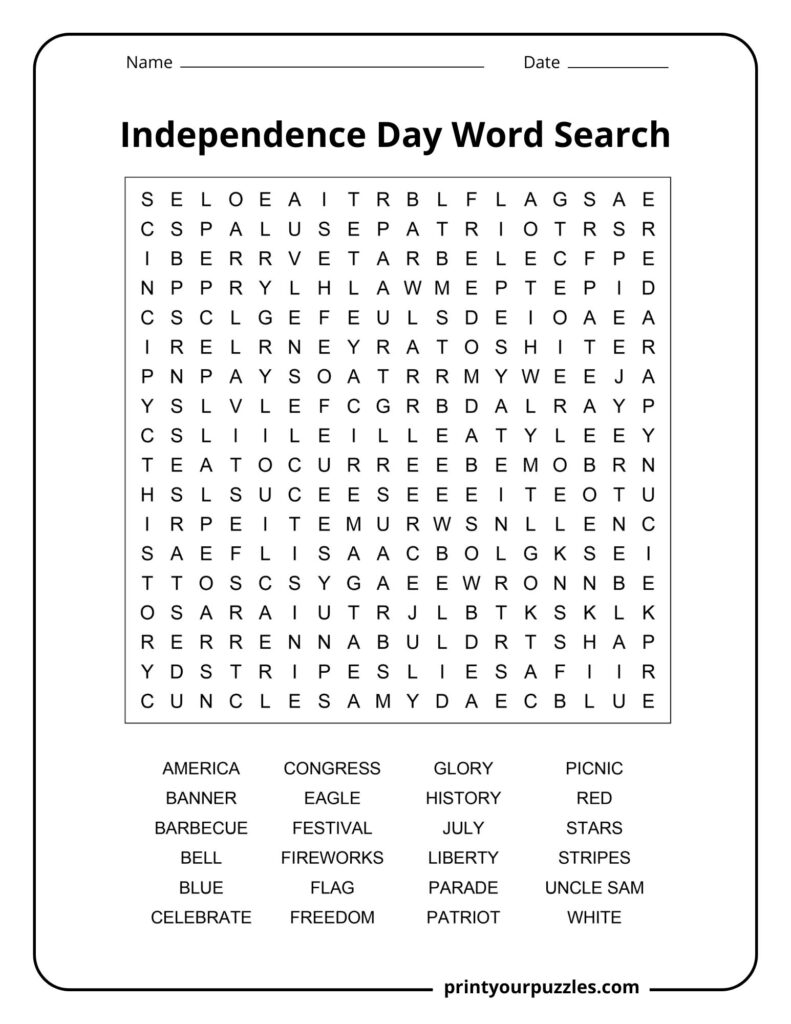
Celebrate the history, symbols, foods, and patriotic traditions of July 4 with this Independence Day word search puzzle, featuring 24 carefully selected words inspired by freedom, fireworks, flags, parades, summer gatherings, and the birth of the United States.
Related Word Searches:
4th of July | Constitution Day | Memorial Day | Veterans Day | Presidents’ Day
Medium Difficulty Word Search
Words to Find:
AMERICA, BANNER, BARBECUE, BELL, BLUE, CELEBRATE, CONGRESS, EAGLE, FESTIVAL, FIREWORKS, FLAG, FREEDOM, GLORY, HISTORY, JULY, LIBERTY, PARADE, PATRIOT, PICNIC, RED, STARS, STRIPES, UNCLE SAM, WHITE
All Words Defined
AMERICA – The United States of America, a nation founded on principles of liberty and democracy, celebrating its independence from British rule on July Fourth each year.
BANNER – A flag or cloth bearing symbols or words, notably referenced in the national anthem “The Star-Spangled Banner,” representing American patriotism and national identity during celebrations.
BARBECUE – A popular outdoor cooking method and social gathering tradition during Independence Day, where families and friends grill meat and vegetables while celebrating America’s birthday together.
BELL – The Liberty Bell in Philadelphia, an iconic symbol of American independence and freedom, famously rung to mark the first public reading of the Declaration of Independence.
BLUE – One of three colors on the American flag, representing vigilance, perseverance, and justice. It forms the canton background where fifty white stars represent the states.
CELEBRATE – To honor and observe Independence Day with joy through festivities, fireworks, parades, and gatherings, commemorating America’s freedom and the signing of the Declaration of Independence.
CONGRESS – The legislative body of the United States government that voted for independence from Britain on July 2, 1776, and adopted the Declaration of Independence two days later.
EAGLE – The bald eagle, America’s national bird and symbol, representing strength, freedom, and courage. It appears on the Great Seal and various patriotic emblems throughout the nation.
FESTIVAL – A celebratory event or series of activities held during Independence Day, featuring entertainment, food, music, and community gatherings to honor American freedom and national pride.
FIREWORKS – Explosive pyrotechnic displays that light up the sky on Independence Day, symbolizing the rockets and bombs from the Revolutionary War and America’s triumphant spirit.
FLAG – The Stars and Stripes, America’s national banner featuring thirteen stripes and fifty stars, representing the original colonies and current states, displayed proudly on Independence Day.
FREEDOM – The fundamental right of independence and liberty that Americans celebrate on July Fourth, commemorating the nation’s break from British rule and establishment of self-governance.
GLORY – Honor, pride, and magnificence associated with America’s independence and achievements, often referenced in patriotic songs and speeches celebrating the nation’s heritage and values.
HISTORY – The record of America’s past, including the Revolutionary War, the Declaration of Independence, and events that shaped the nation celebrated each Independence Day.
JULY – The seventh month of the year, specifically July Fourth, when Americans celebrate Independence Day, marking the adoption of the Declaration of Independence in seventeen seventy-six.
LIBERTY – Personal and political freedom, a core American value symbolized by the Liberty Bell and Statue of Liberty, celebrated as the foundation of independence and democracy.
PARADE – A festive procession featuring marching bands, floats, veterans, and community groups traveling through streets to celebrate Independence Day with patriotic displays and community spirit.
PATRIOT – A person who loves and supports their country, particularly those who fought for American independence or citizens who demonstrate devotion to national values and freedom.
PICNIC – An outdoor meal enjoyed during Independence Day celebrations, where families gather in parks or backyards to eat, relax, and enjoy summer weather while commemorating America’s birthday.
RED – One of the three colors on the American flag, symbolizing hardiness and valor. Red stripes alternate with white on the flag, representing courage and sacrifice.
STARS – The fifty white stars on the blue canton of the American flag, each representing one state in the union, symbolizing unity and the nation’s growth.
STRIPES – The thirteen alternating red and white horizontal bands on the American flag, representing the original thirteen colonies that declared independence from British rule in seventeen seventy-six.
UNCLE SAM – A personification of the United States government and American spirit, typically depicted as an older man with white hair, a top hat, and patriotic clothing.
WHITE – One of three colors on the American flag, representing purity and innocence. White stripes alternate with red, and white stars appear on the blue canton.
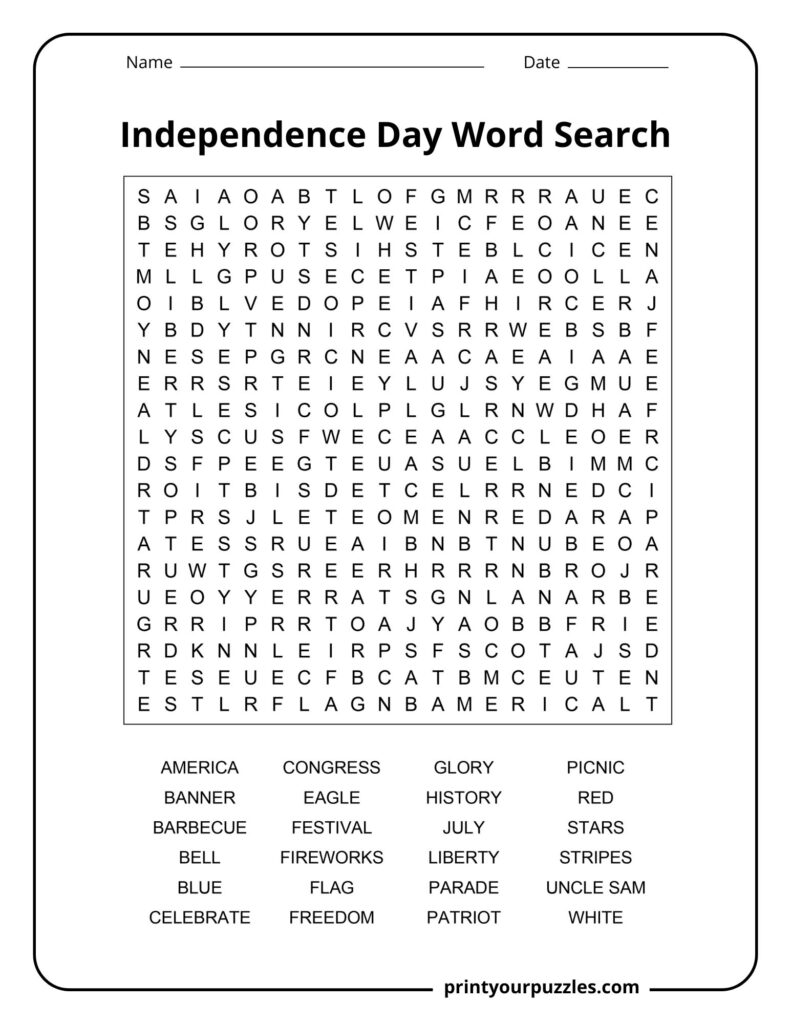
Hard Difficulty Word Search
Words to Find:
AMERICA, BANNER, BARBECUE, BELL, BLUE, CELEBRATE, CONGRESS, EAGLE, FESTIVAL, FIREWORKS, FLAG, FREEDOM, GLORY, HISTORY, JULY, LIBERTY, PARADE, PATRIOT, PICNIC, RED, STARS, STRIPES, UNCLE SAM, WHITE
5 Key FAQs About Independence Day
5 Curious "Did You Know?" Facts About Independence Day