Introduction to the Juneteenth Word Search
Juneteenth is a United States holiday that commemorates the end of slavery and celebrates freedom, African American history, cultural achievement, and community strength. It is observed every year on June 19 and became a federal holiday in 2021. The date is especially connected with events in Texas, but its meaning now reaches communities across the country.
The holiday remembers June 19, 1865, when Union General Gordon Granger arrived in Galveston, Texas, and announced that enslaved people were free. This occurred more than two years after President Abraham Lincoln issued the Emancipation Proclamation on January 1, 1863. The proclamation had declared freedom for enslaved people in states rebelling against the Union, but the Civil War and limited enforcement meant that freedom did not reach every community immediately.
Juneteenth combines the words “June” and “nineteenth.” Early celebrations began in Texas in 1866 and often included church gatherings, speeches, music, food, games, and family reunions. Over time, the tradition spread as African American families moved to other parts of the United States and carried the celebration with them.
Red is an important color in many Juneteenth traditions. Red foods and drinks, such as strawberry soda, watermelon, red velvet cake, and barbecue sauces, may appear at gatherings. The color can represent resilience, sacrifice, and connections with African cultural traditions. Barbecues, picnics, parades, festivals, historical programs, and musical performances are also common.
Juneteenth is both joyful and reflective. It honors the progress made since slavery while recognizing that freedom and equality were not achieved all at once. Schools, museums, libraries, and community organizations may hold discussions, exhibitions, readings, and educational events about emancipation, Reconstruction, civil rights, and African American contributions to the nation.
Families celebrate in different ways. Some attend public festivals, support Black-owned businesses, visit historical sites, or share stories with younger generations. Others focus on rest, worship, learning, or spending time together.
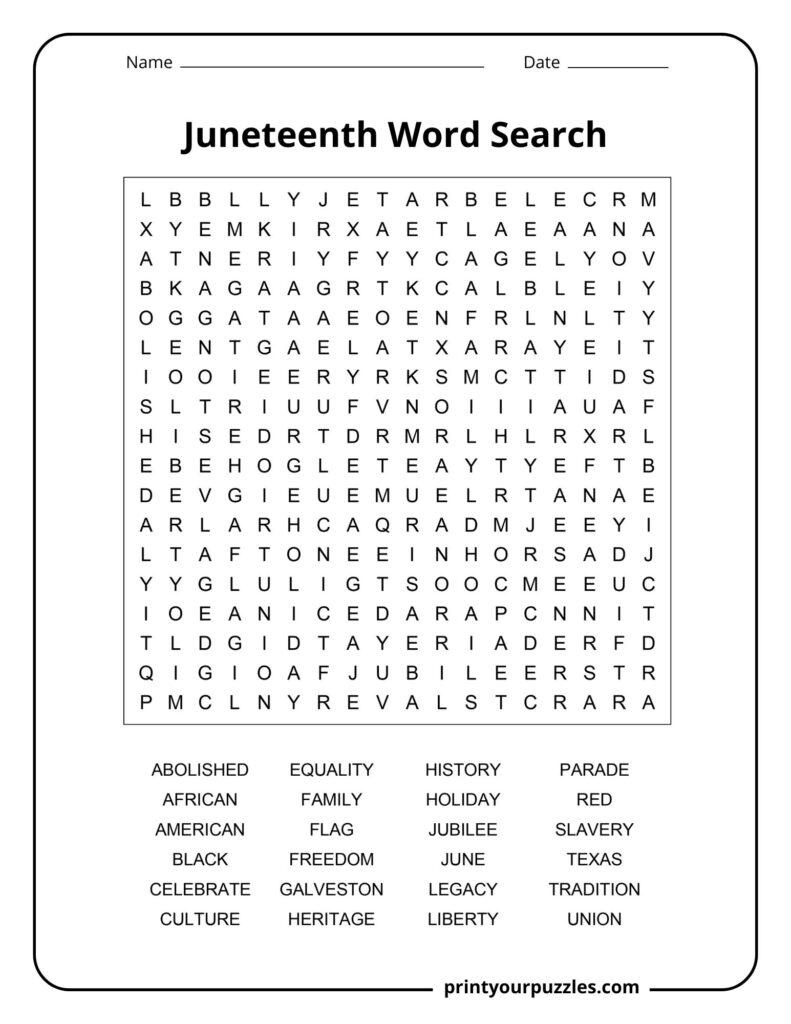
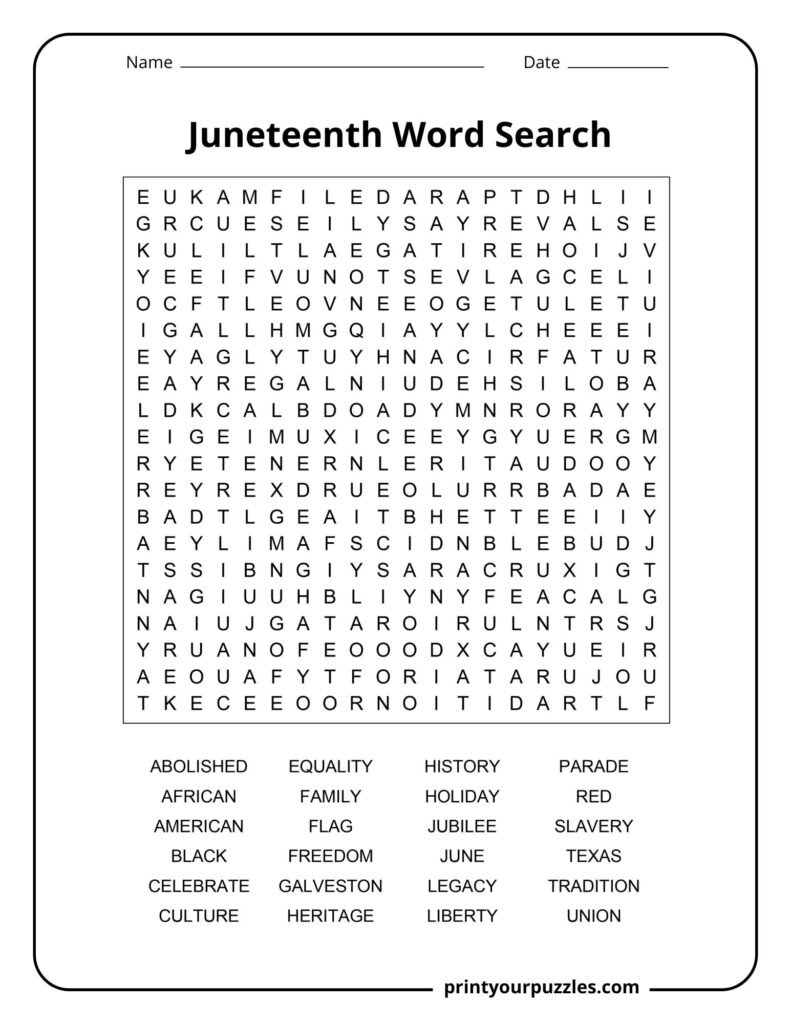
Explore the history, people, symbols, traditions, and enduring meaning of freedom with this Juneteenth word search, featuring 24 carefully selected words inspired by emancipation, Galveston, community gatherings, African American heritage, remembrance, progress, and celebration.
Related Word Searches:
June | 4th of July | Independence Day | Martin Luther King Jr. Day | Constitution Day
Medium Difficulty Word Search
Words to Find:
ABOLISHED, AFRICAN, AMERICAN, BLACK, CELEBRATE, CULTURE, EQUALITY, FAMILY, FLAG, FREEDOM, GALVESTON, HERITAGE, HISTORY, HOLIDAY, JUBILEE, JUNE, LEGACY, LIBERTY, PARADE, RED, SLAVERY, TEXAS, TRADITION, UNION
All Words Defined
ABOLISHED – To formally end or eliminate a practice, law, or institution. In Juneteenth context, it refers to ending slavery through the Thirteenth Amendment and emancipation proclamations.
AFRICAN – Relating to Africa, its people, cultures, or descendants. Celebrates the ancestral heritage and cultural roots of African Americans whose freedom Juneteenth commemorates and honors.
AMERICAN – Pertaining to the United States or its citizens. Juneteenth represents an important chapter in American history, marking when all Americans finally gained freedom from enslavement.
BLACK – Relating to people of African descent. Juneteenth specifically celebrates Black American freedom, culture, resilience, and the ongoing journey toward equality and justice in America.
CELEBRATE – To honor or commemorate a special occasion with festivities and joy. Juneteenth is celebrated with parades, festivals, food, music, and gatherings that honor emancipation.
CULTURE – The customs, traditions, arts, and social behaviors of a particular group. Juneteenth celebrations showcase African American culture through music, food, storytelling, and community gathering.
EQUALITY – The state of being equal in rights, status, and opportunities. Juneteenth commemorates a crucial step toward racial equality, though the struggle for true equality continues.
FAMILY – A group of related individuals or close community. Juneteenth brings families and communities together to celebrate shared heritage, history, and the bonds slavery couldn’t break.
FLAG – The Juneteenth flag features red, white, and blue with a star burst, symbolizing freedom, new beginnings, and the nova of Texas where emancipation news arrived.
FREEDOM – The state of being free from oppression, captivity, or slavery. Juneteenth celebrates the day enslaved people in Texas finally learned of their freedom and liberation.
GALVESTON – A Texas city where General Gordon Granger arrived to announce emancipation. Galveston represents the final frontier where slavery’s end was officially proclaimed in Confederate territory.
HERITAGE – Traditions, culture, and history passed from previous generations. Juneteenth honors African American heritage, preserving the memory of ancestors who endured and overcame slavery’s horrors.
HISTORY – Past events and their study. Juneteenth is a significant historical milestone marking the effective end of slavery and beginning of African American freedom in America.
HOLIDAY – A day of celebration or commemoration recognized officially. Juneteenth became a federal holiday in 2021, recognizing its importance in American history and culture.
JUBILEE – A special anniversary celebration or time of rejoicing. Juneteenth is often called “Jubilee Day,” expressing the joy and relief of emancipation from slavery’s bonds.
JUNE – The sixth month of the year. June nineteenth (Juneteenth) marks when Union General Granger announced emancipation in Texas, completing slavery’s end throughout America.
LEGACY – Something handed down from the past; an enduring impact. Juneteenth’s legacy includes resilience, perseverance, and the ongoing fight for civil rights and racial justice.
LIBERTY – Freedom from oppressive restrictions or control. Juneteenth celebrates liberty finally extended to all Americans, though enslaved people had already freed themselves through resistance.
PARADE – A public procession celebrating a special event. Juneteenth parades feature music, dancing, floats, and community participation, showcasing pride and celebrating freedom’s arrival.
RED – A color on the Juneteenth flag representing resilience and the blood shed by enslaved ancestors. Red also appears in traditional Juneteenth foods like strawberry soda.
SLAVERY – The brutal system where people were held as property, forced to work without freedom or compensation. Juneteenth marks slavery’s official end in America’s last holdout.
TEXAS – The last Confederate state where slavery continued after the Civil War ended. Texas is where General Granger’s announcement made emancipation real for remaining enslaved people.
TRADITION – Customs passed through generations. Juneteenth traditions include family gatherings, barbecues, red foods and drinks, storytelling, and celebrating African American culture and freedom’s meaning.
UNION – The United States federal government and northern states during the Civil War. Union forces brought news of emancipation to Texas, finally ending slavery nationwide.
Hard Difficulty Word Search
Words to Find:
ABOLISHED, AFRICAN, AMERICAN, BLACK, CELEBRATE, CULTURE, EQUALITY, FAMILY, FLAG, FREEDOM, GALVESTON, HERITAGE, HISTORY, HOLIDAY, JUBILEE, JUNE, LEGACY, LIBERTY, PARADE, RED, SLAVERY, TEXAS, TRADITION, UNION
5 Key FAQs About Juneteenth
5 Curious "Did You Know?" Facts About Juneteenth