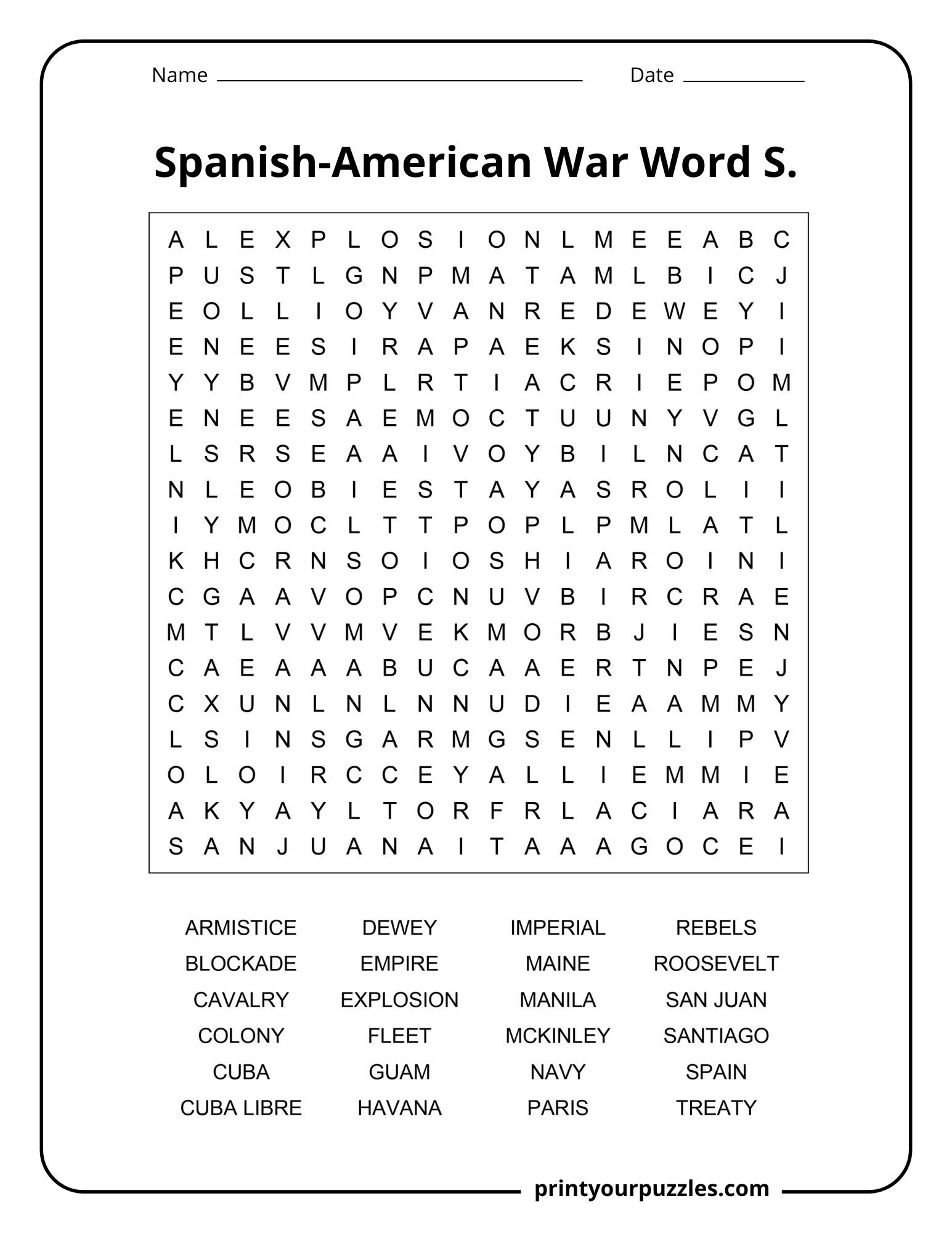

This David Hockney word search celebrates one of the most influential and beloved artists of the twentieth and twenty-first centuries. Born on 9 July 1937 in Bradford, Yorkshire, England, David Hockney transformed modern art through his vibrant paintings, innovative printmaking, theatrical set designs, and fearless embrace of new technologies. His work spans decades and continents, from the industrial streets of northern England to the sun-drenched swimming pools of Los Angeles.
Hockney rose to international fame during the 1960s with his iconic California pool paintings, most notably A Bigger Splash, works that captured leisure, light, and desire with extraordinary technical brilliance. Throughout his long career he explored portraiture, landscape, photography, opera design, fax art, and digital drawing, constantly reinventing himself while maintaining a joyful, humanist vision that resonated with audiences worldwide. Sadly, David Hockney passed away on 11 June 2026, aged 88, leaving behind an astonishing legacy that continues to inspire artists and art lovers everywhere.
This David Hockney word search printable is designed to be both entertaining and genuinely educational. Every one of the 24 hidden words comes with its own definition, helping solvers understand exactly why each term connects to Hockney’s remarkable life and work. Did you know, for instance, that Hockney painted his beloved dachshunds Stanley and Boodgie hundreds of times, even dedicating an entire book to them?
Beyond the puzzle itself, this word search printable includes a carefully written FAQ section answering the most common questions about Hockney, alongside a fascinating Did You Know? section packed with surprising facts that even dedicated admirers may not know.
Whether you are an art enthusiast, a student, or simply a curious mind, this engaging resource offers a wonderful gateway into the world of a true creative giant.
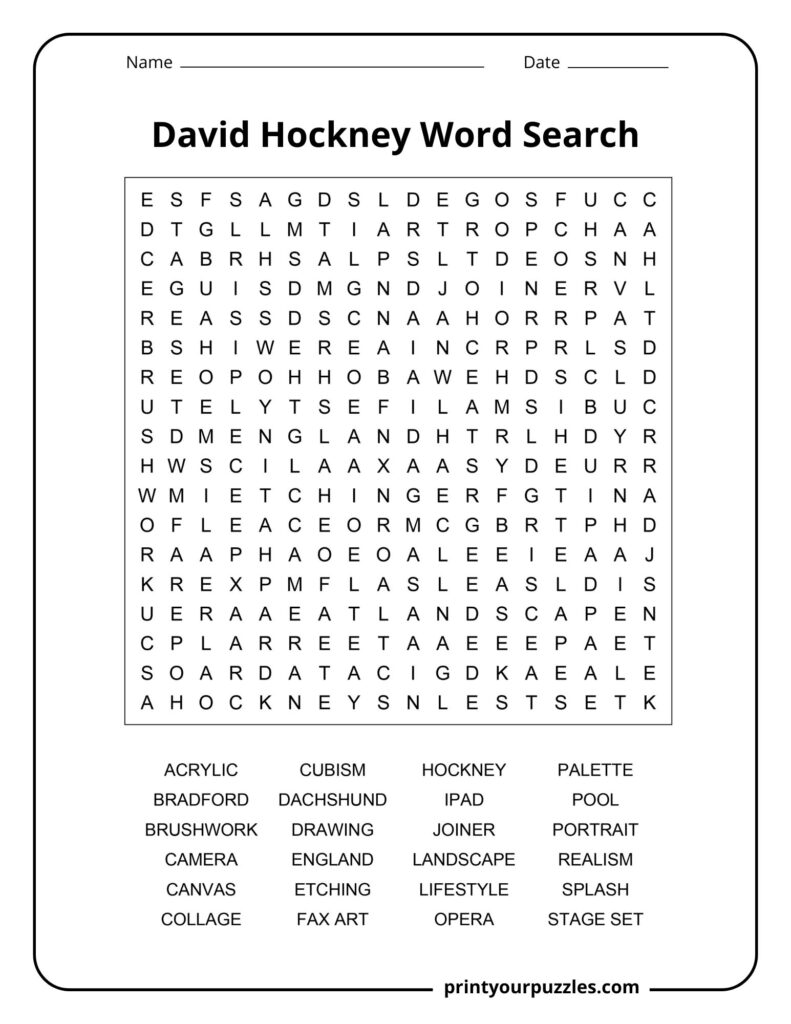
ACRYLIC, BRADFORD, BRUSHWORK, CAMERA, CANVAS, COLLAGE, CUBISM, DACHSHUND, DRAWING, ENGLAND, ETCHING, FAX ART, HOCKNEY, IPAD, JOINER, LANDSCAPE, LIFESTYLE, OPERA, PALETTE, POOL, PORTRAIT, REALISM, SPLASH, STAGE SET
ACRYLIC – Fast-drying paint made with pigments suspended in acrylic polymer emulsion, favoured by Hockney for its vivid colours and versatility, especially in his iconic California swimming pool paintings.
BRADFORD – Industrial city in Yorkshire, England, where David Hockney was born in 1937, and which deeply influenced his working-class roots, northern sensibility, and lifelong connection to the British landscape.
BRUSHWORK – The distinctive way an artist applies paint to a surface; Hockney’s brushwork evolved from loose expressive strokes to bold, confident marks that convey movement, light, and emotional depth.
CAMERA – Optical device central to Hockney’s artistic investigations; he explored how cameras distort perception and famously argued that Old Masters secretly used optical devices to achieve photographic-like precision in their paintings.
CANVAS – The primary surface on which Hockney paints, often in very large formats; his monumental canvases, sometimes joined together, allow him to represent space and time in unconventional, immersive ways.
COLLAGE – An artistic technique assembling different materials onto a surface; Hockney employed collage principles in his photographic joiners, combining multiple images to construct a fragmented yet unified representation of reality.
CUBISM – Revolutionary early twentieth-century art movement pioneered by Picasso and Braque; Hockney was profoundly influenced by Cubism’s multiple viewpoints, which inspired his joiners and his exploration of depicting time within images.
DACHSHUND – Small long-bodied dog breed; Hockney owned beloved dachshunds named Stanley and Boodgie, who became frequent subjects of tender, affectionate paintings and drawings celebrating his deep emotional bond with animals.
DRAWING – Fundamental artistic practice that Hockney has championed throughout his career; he considers drawing the foundation of all visual art and has produced thousands of works in pencil, ink, crayon, and digitally.
ENGLAND – Hockney’s homeland, whose landscapes, light, and culture shaped his artistic identity; despite long periods in California, he returned repeatedly to England, producing celebrated series depicting Yorkshire countryside across changing seasons.
ETCHING – Printmaking technique using acid to cut designs into metal plates; Hockney became a master printmaker early in his career, producing celebrated etching series including illustrations for Grimm’s fairy tales and Cavafy’s poetry.
FAX ART – Innovative artistic practice Hockney pioneered in the 1980s and 1990s, transmitting colourful composite images via fax machines to friends and galleries, embracing new technology as a legitimate creative medium.
HOCKNEY – David Hockney, born in Bradford, Yorkshire in 1937, became one of the most influential British artists of the twentieth century, celebrated for his joyful, innovative, and technically brilliant contributions to painting, printmaking, and drawing.
IPAD – Hockney embraced the iPad as a serious artistic tool in his final years, producing thousands of vibrant digital drawings and landscapes, proving that a touchscreen device could deliver genuine expressive freedom and painterly spontaneity.
JOINER – Hockney’s term for his photographic collages assembling many separate photographs into one composite image; joiners deliberately show multiple viewpoints and moments in time, challenging photography’s claim to represent a single truth.
LANDSCAPE – Genre depicting natural scenery that became central to Hockney’s later career; his Yorkshire landscapes, painted across seasons, celebrate the English countryside with vibrant colour and deep personal emotional attachment.
LIFESTYLE – Hockney’s life in Los Angeles during the 1960s and 1970s profoundly shaped his art; the sunshine, swimming pools, relaxed attitudes, and gay social scene all fed directly into his most celebrated imagery.
OPERA – Hockney designed sets and costumes for major opera productions worldwide, including works by Mozart, Stravinsky, and Wagner, bringing his bold graphic sensibility and love of colour to theatrical performance spaces.
PALETTE – The range of colours an artist characteristically uses; Hockney’s palette is famously vivid and joyful, dominated by brilliant blues, greens, and yellows that evoke California sunshine, Yorkshire nature, and personal optimism.
POOL – Swimming pools became Hockney’s most iconic subject during his California years; their shimmering blue water, rippling light patterns, and associations with leisure and desire produced some of twentieth-century art’s most recognizable images.
PORTRAIT – Hockney is considered one of the greatest portrait painters of his era, capturing friends, family, and fellow artists with psychological insight, compositional inventiveness, and a warm humanity that transcends mere physical likeness.
REALISM – Artistic approach representing subjects faithfully as they appear; Hockney engaged with and questioned realism throughout his career, arguing that all depiction involves interpretation and that photographic realism is itself a constructed convention.
SPLASH – Reference to his 1966 painting depicting a frozen moment of water erupting from a swimming pool; this work became one of Hockney’s most celebrated images, masterfully capturing movement within a completely still medium.
STAGE SET – Hockney designed spectacular theatrical stage sets for opera and ballet productions, most famously for Glyndebourne and the Metropolitan Opera, creating visually arresting environments that transformed audiences’ experience of live performance.
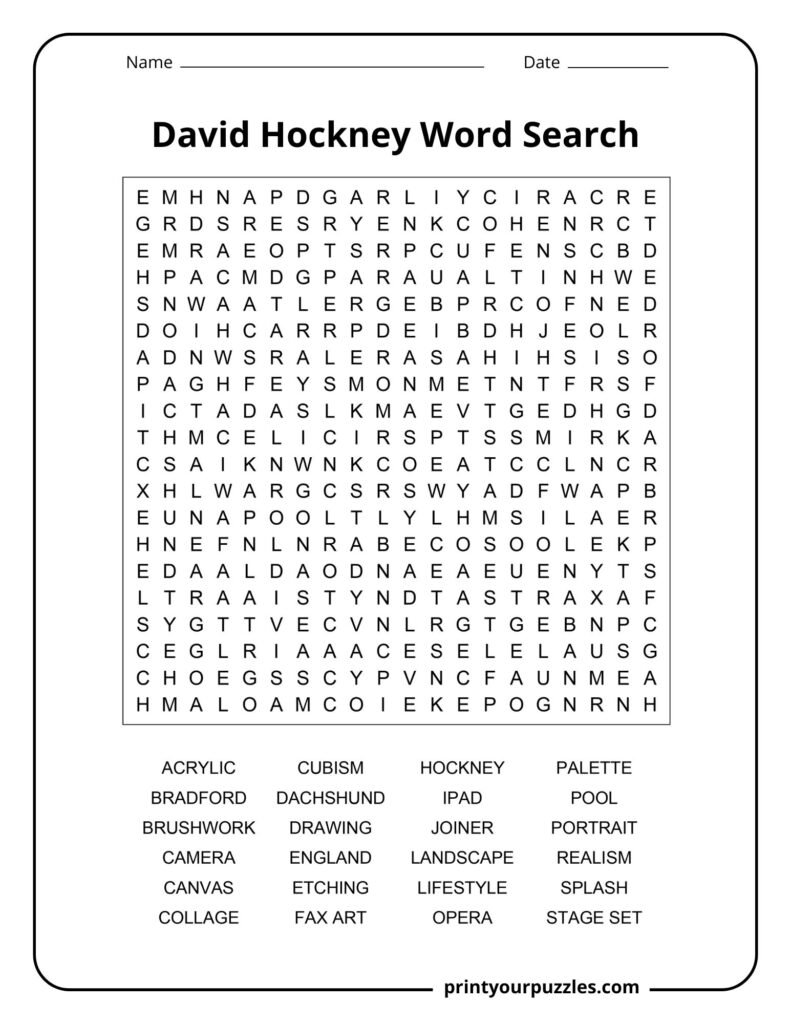
ACRYLIC, BRADFORD, BRUSHWORK, CAMERA, CANVAS, COLLAGE, CUBISM, DACHSHUND, DRAWING, ENGLAND, ETCHING, FAX ART, HOCKNEY, IPAD, JOINER, LANDSCAPE, LIFESTYLE, OPERA, PALETTE, POOL, PORTRAIT, REALISM, SPLASH, STAGE SET
David Hockney was born on 9 July 1937 in Bradford, Yorkshire, England, the fourth of five children in a working-class family with strong creative and intellectual values.
Hockney is best known for his vibrant California swimming pool paintings from the 1960s and 1970s, particularly A Bigger Splash, which became icons of twentieth-century modern art.
Hockney challenged photography’s single viewpoint by creating “joiners,” composite collages assembling dozens of photographs to represent multiple perspectives and moments in time simultaneously, reflecting how humans truly see.
Always curious about new tools, Hockney enthusiastically adopted fax machines in the 1980s and later iPads and iPhones, producing thousands of vibrant digital drawings sent directly to friends worldwide.
Hockney has received numerous prestigious honors, including the Order of Merit in 2012, and is widely regarded as the greatest living British artist, with record-breaking auction prices confirming his enduring status.
Hockney used acrylic paint’s quick-drying properties to build layered textures, combining flat decorative surfaces with carefully observed ripple patterns, creating a convincing illusion of shimmering, light-filled moving water.
Beginning with muted, restrained tones in early London works, Hockney’s palette transformed dramatically upon arriving in California, embracing brilliant blues, sharp whites, and saturated yellows that defined his most celebrated and recognizable paintings.
His Official website: hockney.com
His Foundation: thedavidhockneyfoundation.org
And want to recommend one book: Secret Knowledge: Rediscovering the Lost Techniques of the Old Masters by David Hockney. It pairs meticulous historical investigation — drawing on documents, correspondence with experts, and hundreds of reproduced masterworks — with Hockney’s own direct, accessible voice as he builds his case about optics and lenses. The research is rigorous, yet the book reads as a personal detective story, making it uniquely engaging.
Despite significant hearing loss, Hockney wore hearing aids and remained deeply engaged with music, opera, and conversation, proving that sensory limitation never diminished his extraordinary creative energy and social vitality.
Apple secretly gave Hockney an early iPad, and he immediately began drawing on it daily, sending fresh digital flower and landscape images to friends each morning as personal artistic greetings.
His controversial “Secret Knowledge” theory, developed with physicist Charles Falco, suggested Renaissance and Baroque masters used lenses and mirrors to achieve their astonishing photographic-like precision, sparking fierce debate in art history.
Hockney painted his two dachshunds hundreds of times and published Dog Days in 1998, a devoted collection capturing their sleeping, eating, and playing with genuine tenderness and artistic sophistication.
Back in his homeland, Hockney painted Bigger Trees Near Warter, a monumental work comprising fifty individual canvases joined together, celebrating the English countryside on an breathtakingly ambitious and joyful scale.