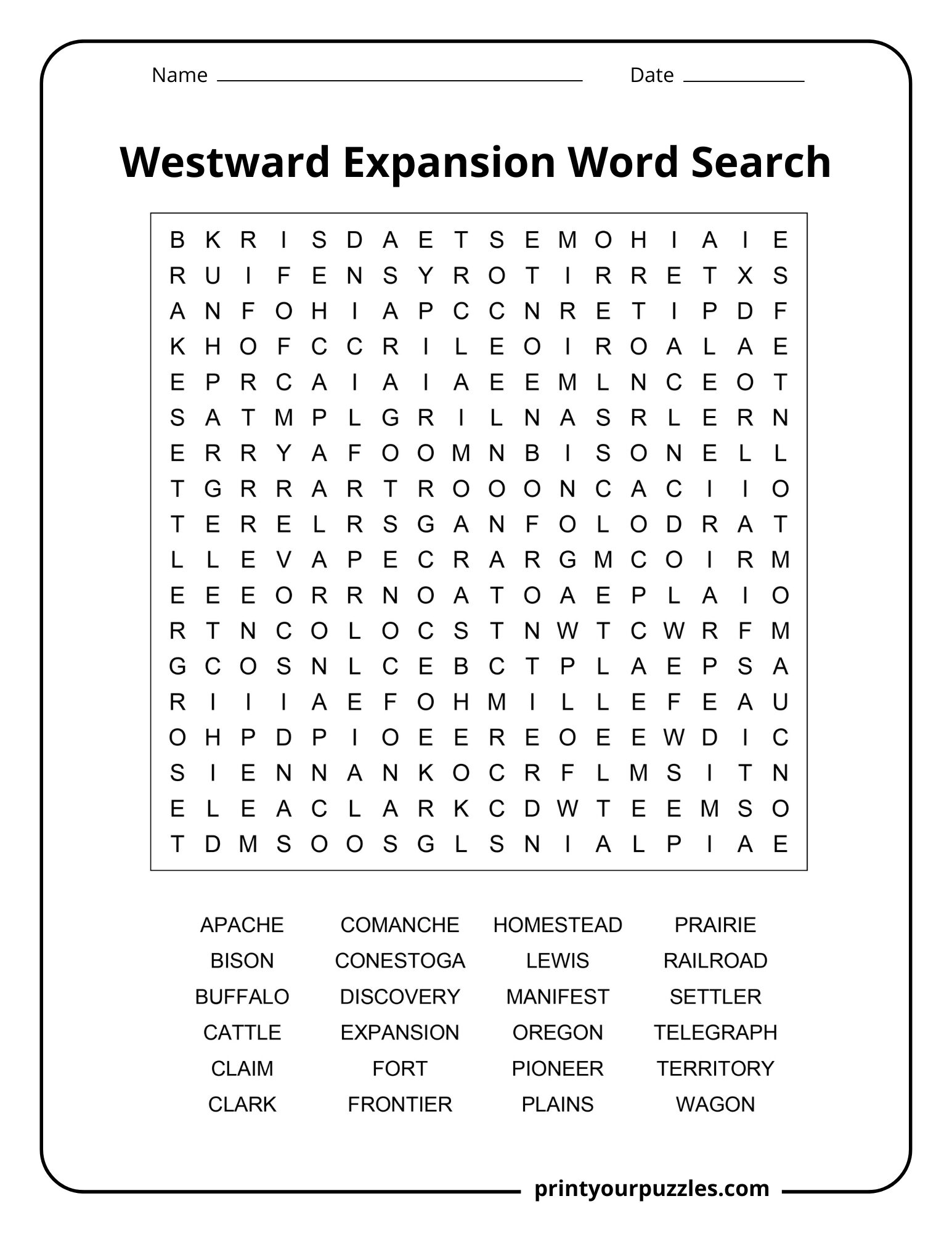

This engaging Montana word search puzzle offers an exciting journey through Big Sky Country’s most iconic features, from its majestic mountains and diverse wildlife to its rich mining heritage and legendary figures. Perfect for students, families, or anyone fascinated by the American West, this educational activity brings Montana’s essence to life through 24 carefully selected words.
The puzzle includes Montana’s major cities like Billings and Bozeman, natural wonders such as Glacier National Park and Flathead Lake, iconic wildlife including grizzly bears and bison, and important historical figures like Jeannette Rankin. You’ll also discover words representing the state’s ranching culture, mining industry, and stunning Rocky Mountain landscapes.
What makes this Montana word search printable truly special is that every single word is fully defined with detailed 20-30 word explanations, helping you understand the significance of each term. This word search printable serves as both entertainment and an educational resource, perfect for classrooms, homeschooling, or anyone wanting to deepen their knowledge of Montana’s geography, history, and culture. Challenge yourself to find all 24 words while learning what makes the Treasure State truly remarkable!
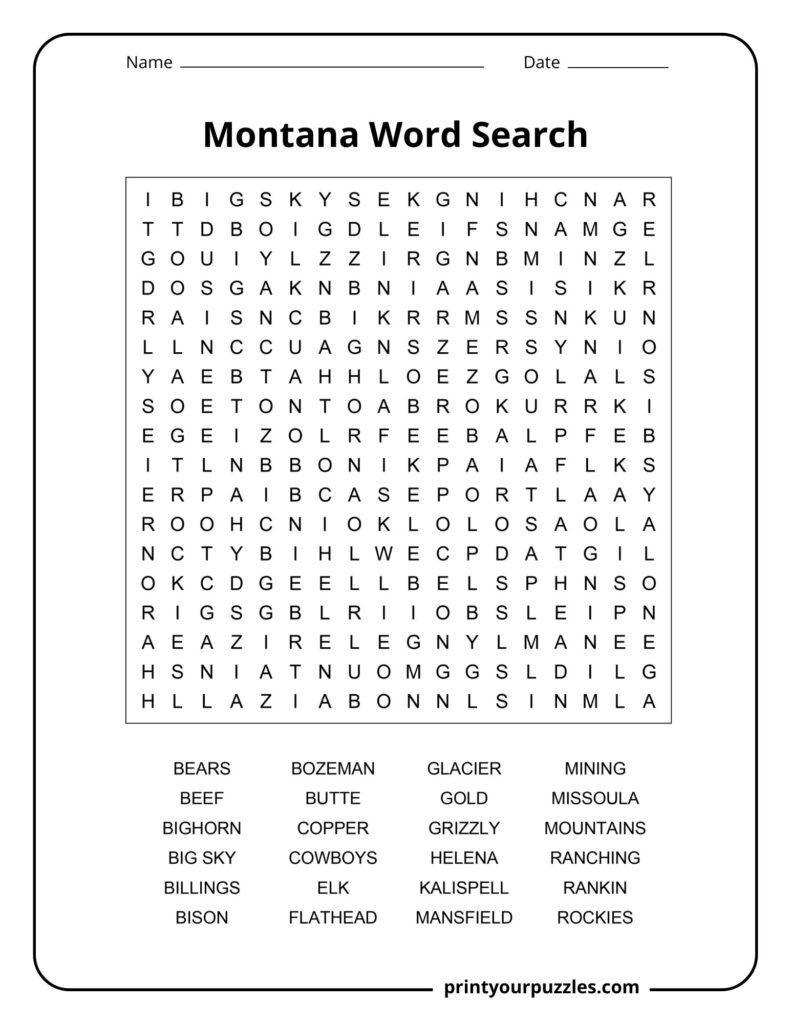
BEARS, BEEF, BIGHORN, BIG SKY, BILLINGS, BISON, BOZEMAN, BUTTE, COPPER, COWBOYS, ELK, FLATHEAD, GLACIER, GOLD, GRIZZLY, HELENA, KALISPELL, MANSFIELD, MINING, MISSOULA, MOUNTAINS, RANCHING, RANKIN, ROCKIES
BEARS – Large carnivorous mammals abundant throughout Montana’s wilderness areas, including black bears commonly seen in forests and mountainous regions across the state.
BEEF – Montana’s premier agricultural product, raised on vast ranches across the state. The cattle industry remains a cornerstone of Montana’s economy and cultural identity.
BIGHORN – Bighorn sheep are iconic Montana wildlife with distinctive curved horns, inhabiting rocky mountain terrain. The Bighorn River is also a renowned fly-fishing destination.
BIG SKY – Montana’s official nickname, “Big Sky Country,” refers to the state’s vast, unobstructed horizons and expansive landscapes where endless skies dominate the dramatic scenery.
BILLINGS – Montana’s largest city and economic hub, located along the Yellowstone River. Known as the “Magic City,” it serves as a commercial center for eastern Montana.
BISON – Massive wild buffalo that once roamed Montana’s plains in millions. Today, protected herds live in Yellowstone and other preserves, symbolizing Western heritage.
BOZEMAN – Thriving city home to Montana State University, gateway to Yellowstone National Park. Known for outdoor recreation, growing tech industry, and vibrant cultural scene.
BUTTE – Historic copper mining city nicknamed “The Richest Hill on Earth.” Its mining heritage shaped Montana’s development and attracted diverse immigrant communities during boom years.
COPPER – The metal that built Butte and drove Montana’s economy for decades. Massive copper mining operations created wealth, jobs, and environmental challenges still visible today.
COWBOYS – Iconic figures representing Montana’s ranching culture and Western heritage. Working cowboys still manage cattle on vast ranches, embodying the state’s frontier spirit and traditions.
ELK – Large deer species thriving in Montana’s forests and mountains. Highly prized by hunters, elk populations remain strong, contributing to wildlife tourism and conservation efforts.
FLATHEAD – Refers to Flathead Lake, Montana’s largest natural freshwater lake, and the surrounding valley. A popular recreation area with stunning mountain views and cherry orchards.
GLACIER – Glacier National Park, Montana’s crown jewel, features pristine wilderness, dramatic peaks, alpine lakes, and diverse wildlife. Over a million visitors explore annually its breathtaking beauty.
GOLD – Precious metal discovered in Montana in 1860s, sparking gold rushes that established many towns. Gold mining helped develop Montana Territory into statehood in 1889.
GRIZZLY – Powerful brown bear species native to Montana’s wilderness. Grizzlies symbolize wild Montana, though their populations require careful management and conservation in remaining habitat areas.
HELENA – Montana’s capital city since 1875, founded during the gold rush era. Historic downtown features Victorian architecture and the impressive copper-domed State Capitol building.
KALISPELL – Northwestern Montana city near Glacier National Park and Flathead Lake. Serves as commercial hub for the region’s tourism, timber, and outdoor recreation industries.
MANSFIELD – Mike Mansfield served as U.S. Senator from Montana for 24 years, becoming Senate Majority Leader. Later distinguished ambassador to Japan, representing American diplomacy.
MINING – Industry that shaped Montana’s history and economy through copper, gold, silver, and coal extraction. Mining heritage remains evident in Butte, Virginia City, and other communities.
MISSOULA – Montana’s second-largest city, home to University of Montana. Cultural center known for arts, outdoor recreation, and scenic location in five converging mountain valleys.
MOUNTAINS – Defining Montana’s landscape, the Rocky Mountains dominate western regions with towering peaks, alpine wilderness, and world-class skiing, hiking, and climbing opportunities throughout the state.
RANCHING – Fundamental Montana industry and lifestyle, with cattle and sheep ranches covering millions of acres. Ranching traditions deeply influence state culture, politics, and rural economy.
RANKIN – Jeannette Rankin, Montana native who became America’s first woman elected to Congress in 1916. Pacifist who voted against both World Wars, pioneering women’s political participation.
ROCKIES – The Rocky Mountain range dominates western Montana’s geography, creating spectacular scenery, dividing watersheds, and providing habitat for wildlife and endless outdoor recreation opportunities statewide.
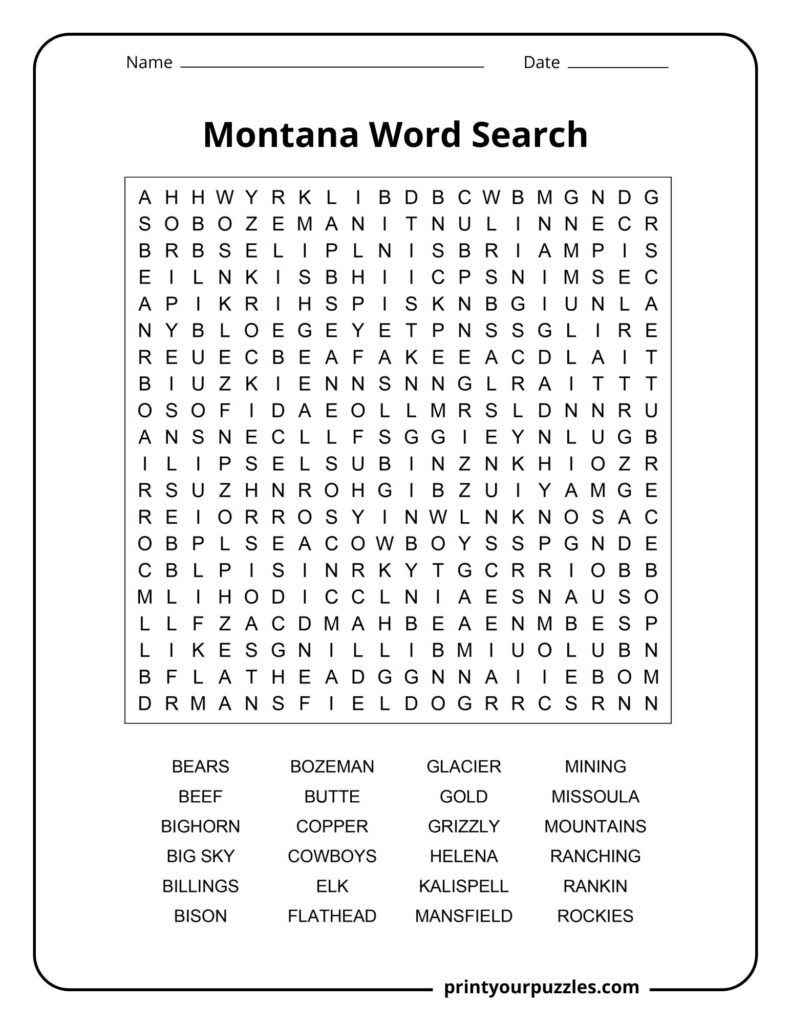
BEARS, BEEF, BIGHORN, BIG SKY, BILLINGS, BISON, BOZEMAN, BUTTE, COPPER, COWBOYS, ELK, FLATHEAD, GLACIER, GOLD, GRIZZLY, HELENA, KALISPELL, MANSFIELD, MINING, MISSOULA, MOUNTAINS, RANCHING, RANKIN, ROCKIES
Montana is famous for its stunning natural beauty, including Glacier National Park, vast wilderness areas, abundant wildlife like grizzly bears and bison, rich mining history, and cowboy ranching culture.
Helena is Montana’s capital city, established during the 1860s gold rush. The city features beautiful Victorian architecture and houses the distinctive copper-domed State Capitol building overlooking the valley.
Montana’s economy relies on agriculture, particularly cattle ranching and wheat farming, tourism centered on national parks, mining including coal and precious metals, timber, and growing technology sectors.
Montana hosts diverse wildlife including grizzly bears, black bears, elk, bison, bighorn sheep, mountain goats, wolves, moose, and over 400 bird species throughout its forests, mountains, and plains.
Montana became the 41st U.S. state on November 8, 1889. Its path to statehood was driven by population growth from gold and copper mining booms throughout the territory.
For official state records and government services, visit the Montana State Portal. If you are planning a trip, check out Visit Montana.
Jeannette Rankin from Montana became the first woman elected to U.S. Congress in 1916, four years before women nationally gained voting rights through the Nineteenth Amendment.
Montana has approximately three times more cattle than humans. With only about one million residents, Montana ranks as America’s third least-populated state despite its massive size.
Glacier National Park originally had approximately 150 glaciers in 1850. Today, fewer than 25 remain due to climate change, and scientists predict they may completely disappear by 2030.
Butte’s copper mines produced over 20 billion pounds of copper, earning the nickname “The Richest Hill on Earth.” The Berkeley Pit, a former mine, is now a toxic lake.
Montana is one of only five U.S. states with no sales tax, making shopping more affordable. The state relies primarily on income taxes, property taxes, and tourism revenue instead.
Purus ut praesent facilisi dictumst sollicitudin cubilia ridiculus.