

This Oregon Trail word search explores one of America’s most significant historical events—the mass westward migration that shaped the nation during the nineteenth century. Between 1840 and 1869, approximately 400,000 pioneers embarked on the treacherous 2,000-mile journey from Missouri to Oregon’s Willamette Valley, forever changing the American landscape and establishing settlements across the western frontier.
The pioneers who traveled the Oregon Trail were ordinary families seeking extraordinary opportunities. Drawn by promises of free fertile farmland through the Donation Land Act, these courageous settlers endured four to six months of unimaginable hardships including disease, dangerous river crossings, extreme weather, and rugged mountain terrain. They traveled in covered wagons pulled by oxen, crossing prairies, deserts, and mountain ranges in pursuit of better lives and economic prosperity in Oregon Territory.
This Oregon Trail word search printable goes beyond a simple puzzle by providing comprehensive educational resources. Each of the 24 keywords is accompanied by a detailed 20-30 word definition, helping learners understand the historical context and significance of terms like Conestoga, Cholera, Pioneer, and Dysentery. The activity also includes a helpful FAQ section answering common questions about the trail, plus a fascinating Did You Know? section revealing surprising facts.
Did you know that most pioneers actually walked the entire 2,000 miles rather than riding in their wagons? This word search printable combines entertainment with education, making it perfect for classrooms, homeschooling, or anyone interested in American history while enjoying an engaging puzzle challenge.
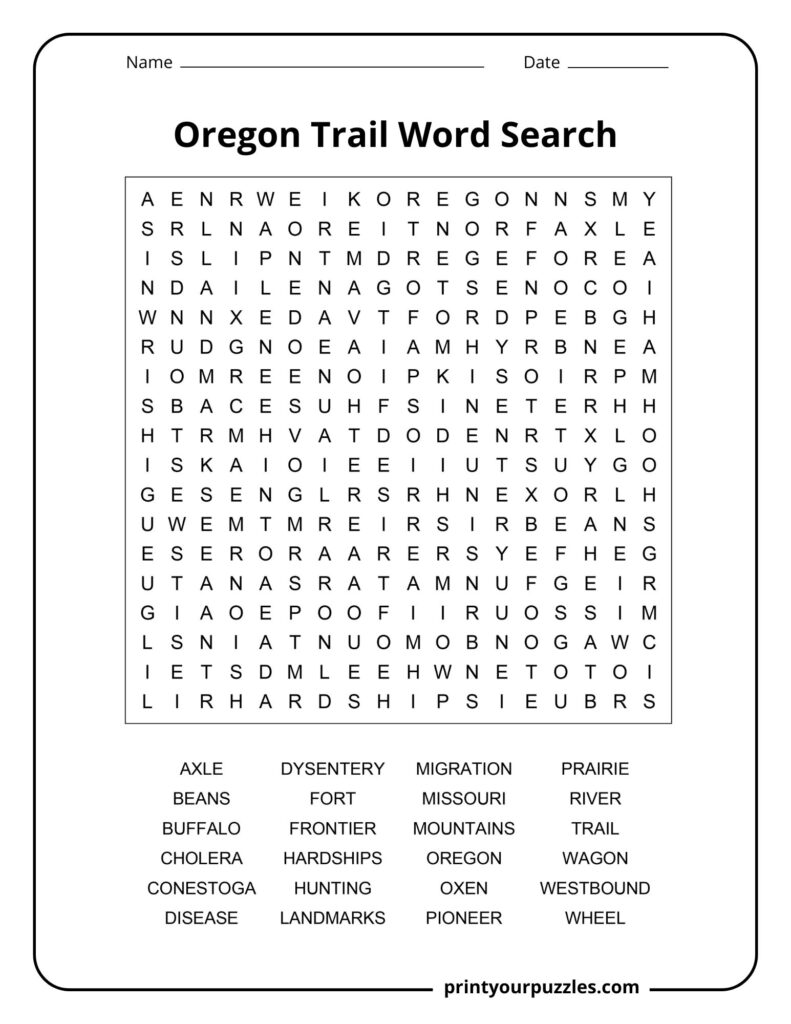
AXLE, BEANS, BUFFALO, CHOLERA, CONESTOGA, DISEASE, DYSENTERY, FORT, FRONTIER, HARDSHIPS, HUNTING, LANDMARKS, MIGRATION, MISSOURI, MOUNTAINS, OREGON, OXEN, PIONEER, PRAIRIE, RIVER, TRAIL, WAGON, WESTBOUND, WHEEL
AXLE – The rod or spindle passing through the center of a wagon wheel, connecting it to the wagon body and bearing the vehicle’s weight during travel.
BEANS – A staple food item carried by pioneers, providing essential protein and nutrition. They were inexpensive, portable, and could be stored for long periods without spoiling.
BUFFALO – Large, shaggy mammals roaming the Great Plains in massive herds. Pioneers hunted them for meat, hides, and other materials essential for survival along the trail.
CHOLERA – A deadly waterborne bacterial disease causing severe diarrhea and dehydration. It killed thousands of Oregon Trail travelers who drank contaminated water from rivers and streams.
CONESTOGA – A heavy, broad-wheeled covered wagon originally developed in Pennsylvania. These sturdy vehicles transported families and their possessions across thousands of miles of rugged wilderness terrain.
DISEASE – Various illnesses including cholera, dysentery, and typhoid that spread rapidly among trail travelers due to poor sanitation, contaminated water, and close living quarters in wagon trains.
DYSENTERY – An intestinal infection causing severe bloody diarrhea, cramping, and fever. Poor hygiene and contaminated food or water made this disease a leading cause of death on the trail.
FORT – Military outposts and trading posts along the trail where pioneers could rest, repair wagons, purchase supplies, trade goods, and gather information about conditions ahead on the journey.
FRONTIER – The edge of settled American territory, representing the boundary between civilization and wilderness. Oregon Trail pioneers pushed this boundary westward, seeking new opportunities and land.
HARDSHIPS – The numerous difficulties pioneers endured including extreme weather, disease, starvation, accidents, dangerous river crossings, attacks, broken equipment, and death of loved ones during the arduous journey.
HUNTING – The practice of tracking and killing wild game like buffalo, deer, and rabbits for food. Successful hunting supplemented trail provisions and provided fresh meat for families.
LANDMARKS – Notable natural formations like Chimney Rock, Independence Rock, and Scotts Bluff that served as recognizable guideposts, helping pioneers track their progress and navigate along the two-thousand-mile route.
MIGRATION – The mass movement of thousands of American families traveling westward seeking fertile farmland, economic opportunities, and new beginnings in Oregon Territory during the mid-nineteenth century westward expansion.
MISSOURI – The starting point state for most Oregon Trail journeys. Towns like Independence and St. Joseph served as “jumping-off” points where pioneers gathered supplies before beginning their westward trek.
MOUNTAINS – Formidable geographic obstacles including the Rocky Mountains and Sierra Nevada ranges. These steep, treacherous passes tested pioneers’ endurance and caused many wagons to break down or overturn.
OREGON – The destination territory in the Pacific Northwest offering fertile valleys, mild climate, and free land through the Donation Land Act. This promised land attracted thousands of pioneering families.
OXEN – Strong, patient draft animals preferred over horses for pulling heavy covered wagons. They were cheaper to maintain, more durable, and could survive on prairie grass available along trail.
PIONEER – A brave settler who traveled west to establish new homes and communities in unsettled territories. These hardy individuals endured tremendous hardships seeking better lives and opportunities.
PRAIRIE – Vast, flat grasslands stretching across the Great Plains. This seemingly endless, treeless landscape challenged pioneers with monotony, extreme weather, and lack of wood for fires.
RIVER – Major water crossings like the Platte, Snake, and Columbia Rivers that pioneers forded or ferried across. These dangerous obstacles caused drownings, lost supplies, and damaged wagons.
TRAIL – The two-thousand-mile overland route stretching from Missouri to Oregon’s Willamette Valley. This pathway, marked by wagon ruts, became the primary corridor for westward migration during the 1840s-1860s.
WAGON – The covered vehicle that carried families and their belongings westward. Typically pulled by oxen, these prairie schooners served as transportation, shelter, and storage throughout the grueling journey.
WESTBOUND – Traveling in a western direction toward the Pacific Ocean and Oregon Territory. This term describes the direction of pioneers’ journey as they pursued dreams of land and opportunity.
WHEEL – Circular wooden components essential to wagon mobility. Made from hardwood with iron rims, wheels frequently broke from rough terrain, requiring repairs that delayed travel and depleted precious time.
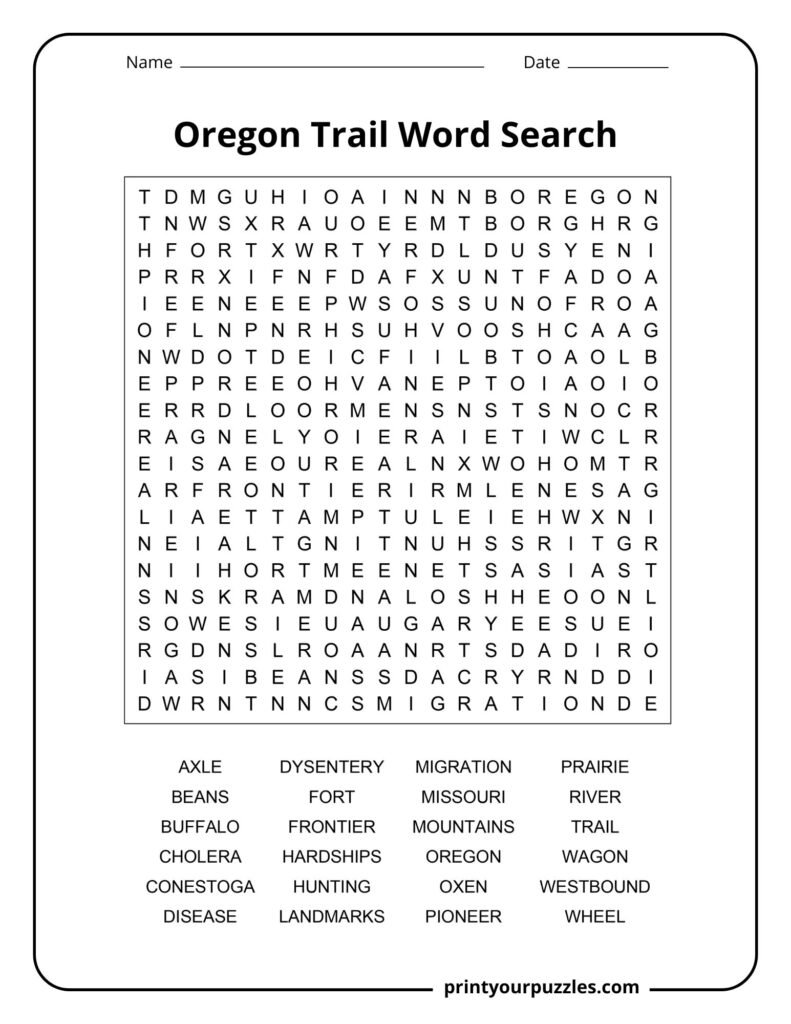
AXLE, BEANS, BUFFALO, CHOLERA, CONESTOGA, DISEASE, DYSENTERY, FORT, FRONTIER, HARDSHIPS, HUNTING, LANDMARKS, MIGRATION, MISSOURI, MOUNTAINS, OREGON, OXEN, PIONEER, PRAIRIE, RIVER, TRAIL, WAGON, WESTBOUND, WHEEL
The Oregon Trail stretched approximately 2,000 miles from Independence, Missouri, to Oregon’s Willamette Valley. The exact distance varied depending on specific routes, cutoffs, and alternate paths chosen by wagon trains.
The peak migration period occurred between 1840 and 1869. An estimated 400,000 settlers traveled westward during this era before the transcontinental railroad offered a faster, safer alternative transportation method.
Pioneers sought free fertile farmland, economic opportunities, and fresh starts. The Donation Land Act offered 640 acres to married couples, making Oregon Territory an irresistible destination for struggling families.
Disease, particularly cholera and dysentery, killed the most travelers. Other dangers included accidental gunshots, drowning during river crossings, wagon accidents, starvation, extreme weather, and occasionally conflicts with Native Americans.
The journey typically required four to six months, depending on weather conditions, starting dates, wagon train size, and unforeseen delays. Most travelers departed in spring to avoid winter snowstorms in mountain passes.
Wagons were packed tightly with supplies and possessions, leaving little room for passengers. Walking also reduced weight, preventing oxen exhaustion and wheel breakage on rough terrain.
The treeless prairies offered no firewood, forcing travelers to collect dried animal droppings. Children often competed to gather the most chips, which burned hot and relatively odorless when dry.
Approximately 20,000 people died during the migration, mostly from disease. Families carved names into wooden boards or piled rocks, creating somber reminders of the journey’s deadly toll throughout.
Pianos, furniture, stoves, and heavy trunks littered the route. Desperate families abandoned treasured heirlooms to save exhausted oxen and prevent wagon breakdowns on steep mountain passes.
Deep grooves carved by thousands of wooden wheels remain etched into rock and soil after 175 years. These preserved tracks offer tangible connections to pioneer journeys at sites throughout Wyoming, Nebraska, and Idaho.