Introduction to the Phoenix Word Search
Phoenix rises from the Sonoran Desert in a landscape of rugged mountains, giant saguaro cacti, and intense desert light. Arizona’s capital has grown into one of the largest cities in the American Southwest, yet its identity still reflects the environment around it through architecture, outdoor recreation, Native heritage, art, and food.
Long before the modern city existed, the Hohokam people built an extensive network of canals across the Salt River Valley, allowing agriculture to flourish in the desert. Centuries later, settlers reused parts of that irrigation system, helping Phoenix develop during the nineteenth century. The city became Arizona’s capital in 1889, before statehood arrived in 1912.
Outdoor experiences are one of Phoenix’s great strengths. Visitors can hike Camelback Mountain for sweeping views across the valley or explore trails in the surrounding desert parks. For a gentler introduction to the landscape, the Desert Botanical Garden displays thousands of desert plants and shows how surprisingly diverse the Sonoran ecosystem can be.
Culture is equally important. The Heard Museum is one of the city’s most significant institutions, with exhibitions focused on Native American art, history, and living cultures, especially those of the Southwest. The Phoenix Art Museum adds collections ranging from American and European works to fashion, photography, and contemporary art.
Architecture also tells part of the local story. Mid-century design, adobe-inspired forms, modern desert homes, and buildings influenced by Frank Lloyd Wright can all be found around the metropolitan area. Nearby Taliesin West, Wright’s former winter home and studio, offers another memorable excursion.
Phoenix food reflects Mexican, Native, Southwestern, and modern American influences. Tacos, enchiladas, tamales, Sonoran-style dishes, grilled meats, citrus, dates, and spicy salsas are common, while the city’s growing restaurant scene also includes cuisines from around the world.
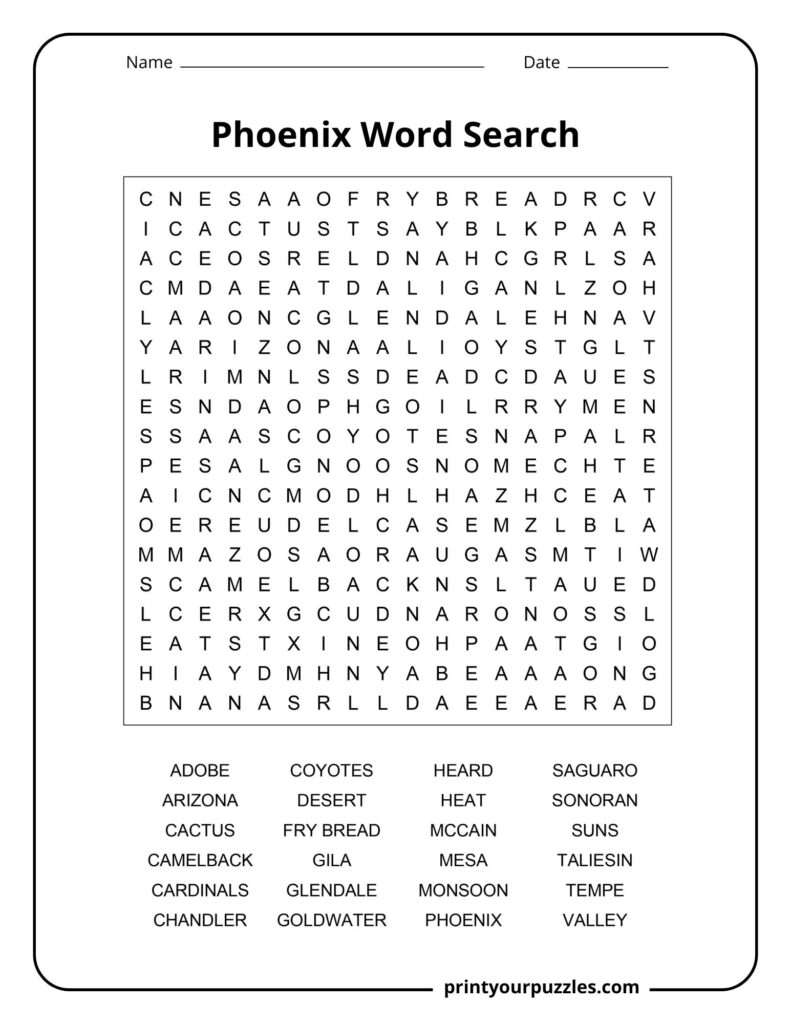
A printable Phoenix word search puzzle can introduce readers to vocabulary connected with the Sonoran Desert, Native cultures, art, architecture, food, and outdoor life. From cactus gardens and mountain trails to major museums and bold Southwestern flavors, Phoenix offers far more than sunshine and heat.
Related Word Searches:
Arizona | Carson City | Santa Fe | Salt Lake City | Sacramento
Medium Difficulty Word Search
Words to Find:
ADOBE, ARIZONA, CACTUS, CAMELBACK, CARDINALS, CHANDLER, COYOTES, DESERT, FRY BREAD, GILA, GLENDALE, GOLDWATER, HEARD, HEAT, MCCAIN, MESA, MONSOON, PHOENIX, SAGUARO, SONORAN, SUNS, TALIESIN, TEMPE, VALLEY
All Words Defined
ADOBE – Traditional Southwestern building material made from sun-dried clay bricks, creating thick walls that keep buildings cool. Defines Phoenix’s historic architectural style and desert heritage.
ARIZONA – The 48th U.S. state, admitted in 1912. Known for the Grand Canyon, desert landscapes, and Phoenix as its capital and largest city.
CACTUS – Succulent desert plants with spines that thrive in Phoenix’s arid climate. Iconic symbols of the Southwest, storing water to survive extreme heat and drought.
CAMELBACK – Distinctive mountain landmark in Phoenix shaped like a kneeling camel. Popular hiking destination offering panoramic city views from its 2,704-foot summit and challenging trails.
CARDINALS – Phoenix’s NFL football team, originally from Chicago. Play at State Farm Stadium in Glendale, representing Arizona in the National Football League since 1988.
CHANDLER – Fast-growing suburban city southeast of Phoenix. Known for technology companies, Intel’s major manufacturing presence, and transformation from agricultural community to tech hub.
COYOTES – Phoenix’s NHL hockey team, playing desert ice hockey. Based in the Valley since 1996, representing Arizona’s unexpected but passionate hockey culture in the desert.
DESERT – Phoenix sits in the Sonoran Desert, characterized by extreme heat, minimal rainfall, unique flora and fauna, and stunning landscapes defining the region’s ecosystem and lifestyle.
FRY BREAD – Native American flatbread, deep-fried and served sweet or savory. Important cultural food in Phoenix’s indigenous communities, often topped with beans, meat, or honey.
GILA – River flowing through Arizona and important Gila monster lizard native to region. Both represent Phoenix’s natural heritage and connection to desert wildlife and waterways.
GLENDALE – Northwest Valley city, home to State Farm Stadium and Desert Diamond Arena. Major sports and entertainment destination within the Greater Phoenix metropolitan area.
GOLDWATER – Barry Goldwater, influential Arizona senator and 1964 presidential candidate. Conservative icon who shaped Phoenix politics and represented Arizona for decades in
Washington.
HEARD – The Heard Museum in Phoenix, world-renowned institution dedicated to Native American art, culture, and history. Essential destination showcasing indigenous Southwest heritage and contemporary works.
HEAT – Phoenix’s defining characteristic with summer temperatures exceeding 110°F. Intense, dry heat shapes lifestyle, architecture, and culture, making Phoenix one of America’s hottest cities.
MCCAIN – John McCain, Arizona senator, war hero, and 2008 presidential candidate. Longtime Phoenix resident who represented Arizona in Congress and shaped American politics for decades.
MESA – Third-largest city in Arizona, east of Phoenix. Suburban community known for Mormon heritage, spring training baseball, and as a major residential and commercial center.
MONSOON – Summer weather pattern bringing dramatic thunderstorms, dust storms, and heavy rain to Phoenix. Occurs July through September, providing relief from intense heat and spectacular displays.
PHOENIX – Arizona’s capital and fifth-largest U.S. city. Named after the mythical bird symbolizing rebirth, reflecting the city rising from ancient Hohokam ruins in the Salt River Valley.
SAGUARO – Iconic giant cactus with upward arms, reaching 40 feet tall. Symbol of the Sonoran Desert and Arizona, these majestic plants live over 150 years throughout Phoenix.
SONORAN – The Sonoran Desert surrounding Phoenix, most biologically diverse desert in North America. Features unique plants like saguaros and extreme summer heat with mild, pleasant winters.
SUNS – Phoenix’s NBA basketball team since 1968. One of the city’s most beloved franchises, playing downtown at Footprint Center with passionate fanbase and championship aspirations.
TALIESIN – Frank Lloyd Wright’s winter home and architecture school in Scottsdale. Taliesin West showcases desert modernism and Wright’s innovative designs harmonizing with the dramatic Arizona landscape.
TEMPE – Central Valley city home to Arizona State University. Vibrant college town with Mill Avenue entertainment district, Town Lake, and thriving cultural scene between Phoenix and Mesa.
VALLEY – Common nickname for the Greater Phoenix metropolitan area. Encompasses Phoenix and surrounding cities in the Salt River Valley, home to over 4.8 million residents.
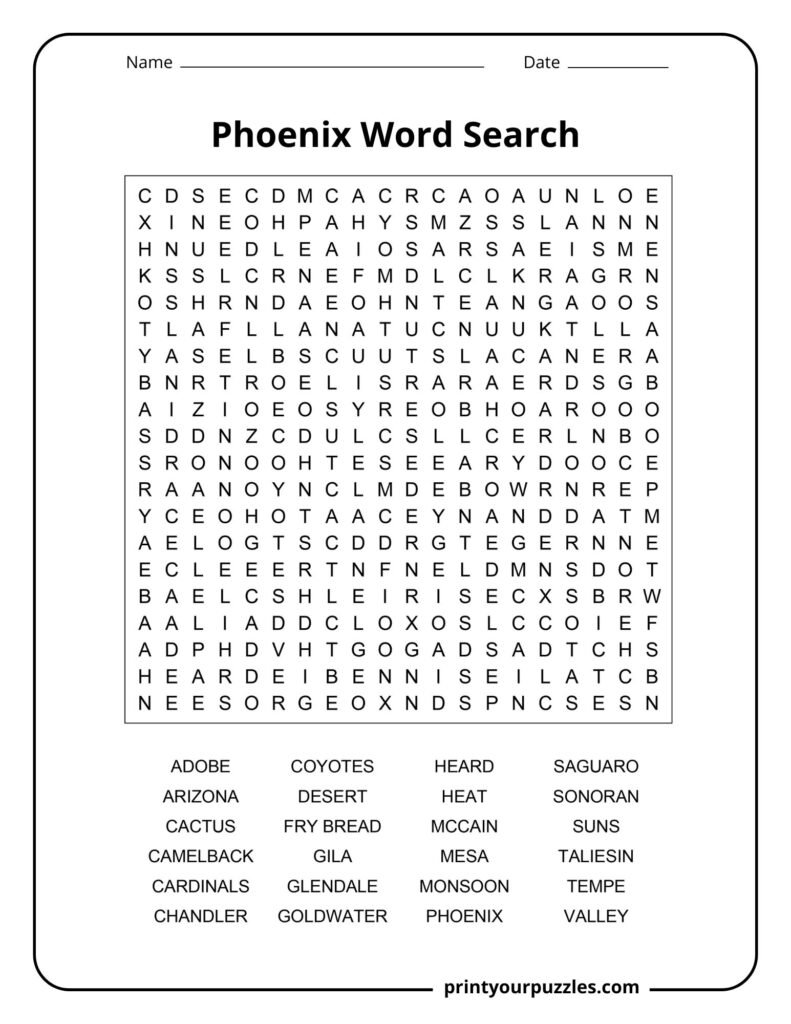
Hard Difficulty Word Search
Words to Find:
ADOBE, ARIZONA, CACTUS, CAMELBACK, CARDINALS, CHANDLER, COYOTES, DESERT, FRY BREAD, GILA, GLENDALE, GOLDWATER, HEARD, HEAT, MCCAIN, MESA, MONSOON, PHOENIX, SAGUARO, SONORAN, SUNS, TALIESIN, TEMPE, VALLEY
6 Key FAQs About Phoenix
5 Curious "Did You Know?" Facts About Phoenix