The Prodigal Son is one of the best-known parables told by Jesus. It appears in the Gospel of Luke and teaches important lessons about forgiveness, repentance, compassion, and the love of a parent. The story is sometimes called the Parable of the Lost Son, although it also gives significant attention to the reactions of the father and the older brother.
The parable begins with a younger son asking his father for his share of the family inheritance. This request was unusual and disrespectful because inheritances were normally received after a parent’s death. Even so, the father divided his property between his two sons, and the younger son soon left home for a distant country.
While living far away, the son wasted his wealth through careless and irresponsible choices. After he had spent everything, a severe famine affected the region, and he became desperately poor. He found work feeding pigs, an especially humiliating situation for a Jewish listener because pigs were considered unclean animals. He became so hungry that he wished he could eat the food given to them.
The young man eventually recognized his mistakes and decided to return home. He planned to confess that he had sinned against heaven and against his father. Believing that he no longer deserved to be called a son, he hoped his father might accept him as a hired servant.
However, while the son was still far away, his father saw him and ran to welcome him. Instead of rejecting or punishing him, the father embraced him and ordered servants to bring the finest robe, a ring, and sandals. He also arranged a celebration because the son who had been lost had returned.
The older brother became angry when he heard about the feast. He believed that his loyalty and hard work had not been rewarded fairly. The father reminded him that everything he owned was already available to him, but explained that celebrating was appropriate because his brother had returned safely.
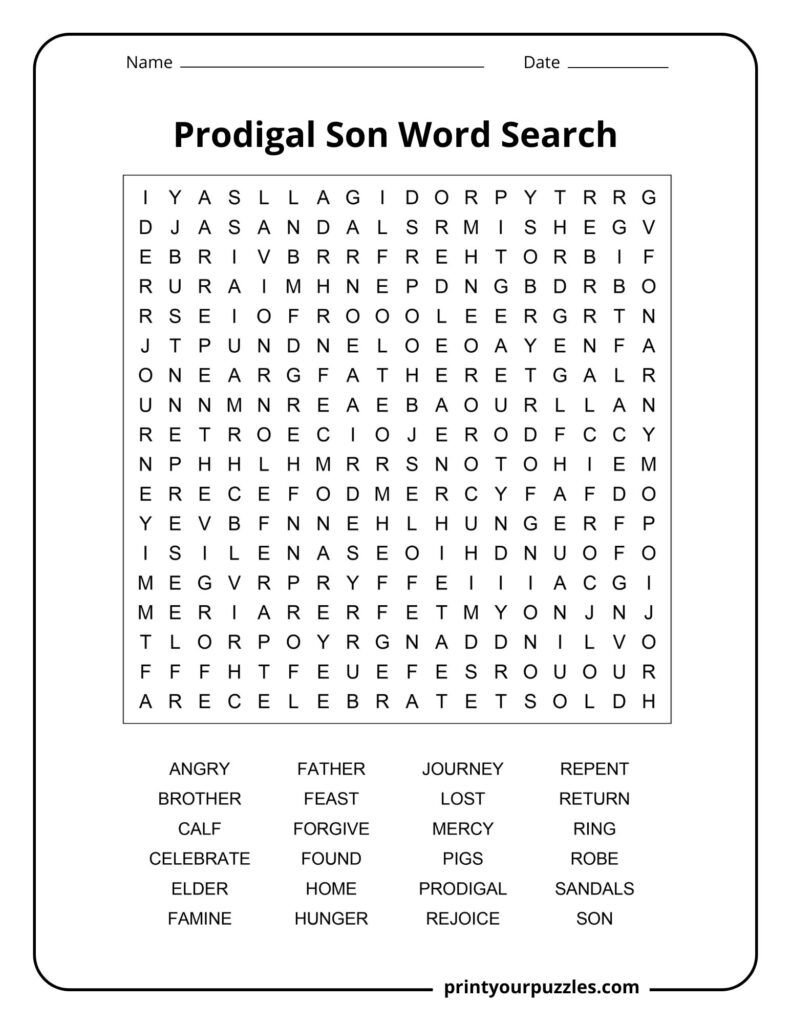
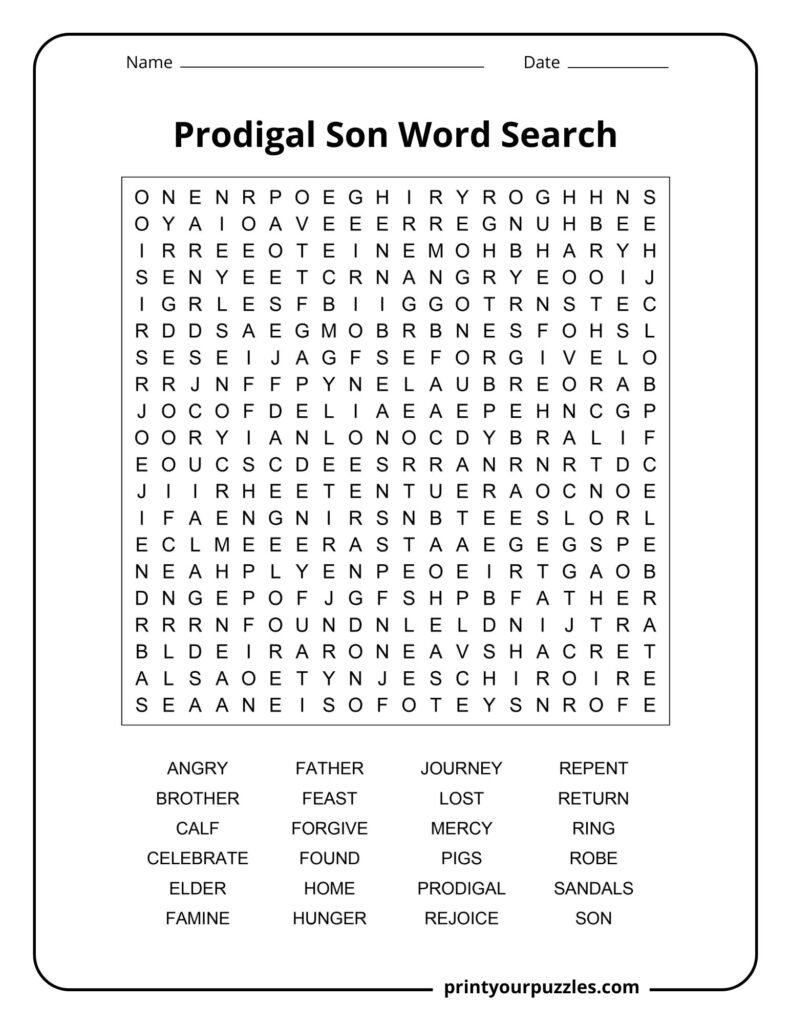
The parable shows that sincere repentance can lead to restoration and that forgiveness may be offered more generously than expected. A Prodigal Son word search offers a useful way to revisit the people, symbols, feelings, and turning points in this well-known parable. The puzzle highlights the inheritance, distant land, famine, pigs, robe, ring, celebration, repentance, jealousy, forgiveness, and the restoration of a broken relationship.
Related Word Searches:
Good Samaritan | Jesus Christ | Sermon on the Mount | New Testament
ANGRY, BROTHER, CALF, CELEBRATE, ELDER, FAMINE, FATHER, FEAST, FORGIVE, FOUND, HOME, HUNGER, JOURNEY, LOST, MERCY, PIGS, PRODIGAL, REJOICE, REPENT, RETURN, RING, ROBE, SANDALS, SON
ANGRY – The emotion felt by the elder brother when his father celebrated the younger son’s return, showing resentment at the father’s generous forgiveness and joyful reception.
BROTHER – The elder son who stayed home and worked faithfully, becoming bitter when his wayward sibling returned and received a lavish celebration despite squandering his inheritance recklessly.
CALF – The fatted young cow specially prepared and slaughtered for the celebration feast, symbolizing the father’s extravagant joy and complete forgiveness upon his lost son’s return home.
CELEBRATE – To honor and rejoice with feasting and music, as the father did when his lost son returned, demonstrating overwhelming happiness at being reunited with his repentant child.
ELDER – The responsible older brother who remained dutiful and obedient, yet struggled with jealousy and bitterness when his father showed such grace to his irresponsible younger sibling’s homecoming.
FAMINE – The severe shortage of food that struck the distant land, causing the prodigal son to experience desperate hunger and finally recognize his foolish choices and need to return.
FATHER – The compassionate parent who represents God’s unconditional love, watching for his son’s return, running to embrace him, and celebrating his homecoming with complete forgiveness and restored relationship.
FEAST – The abundant celebration meal prepared with the finest calf, symbolizing complete restoration, joy, and the father’s wholehearted welcome of his repentant son back into the family.
FORGIVE – To pardon completely without holding grudges, as the father immediately forgave his son’s rebellion and wastefulness, restoring him fully without requiring him to earn back acceptance.
FOUND – Discovered or recovered after being lost, describing the son’s return from spiritual and physical death to new life, bringing overwhelming joy to his waiting father’s heart.
HOME – The father’s house representing safety, love, and belonging, which the son left seeking independence but eventually returned to, finding acceptance, restoration, and his true identity there.
HUNGER – The physical starvation experienced by the prodigal son in the far country, which became the catalyst for his recognition of sin and decision to return humbly home.
JOURNEY – The physical and spiritual travels to a distant land where the son wasted his inheritance, and his eventual humbling return home, representing spiritual wandering and repentance.
LOST – The state of being separated, missing, or spiritually dead, describing the younger son’s condition while away, making his father’s joy at his return even more profound.
MERCY – The compassionate kindness shown by the father despite the son deserving punishment, freely offering grace, forgiveness, and full restoration instead of judgment for his rebellion.
PIGS – The unclean animals the Jewish son fed while hired as a servant, representing the degrading depths of his desperation and how far he’d fallen from his father’s house.
PRODIGAL – Wastefully extravagant or recklessly spending resources, describing the younger son who squandered his entire inheritance through foolish living before returning home in repentance and humility.
REJOICE – To feel or express great joy and celebration, as the father did with music and dancing when his dead son came alive and his lost son was found.
REPENT – To turn away from sin with genuine remorse and change direction, as the son did when he recognized his foolishness and decided to return home confessing wrongdoing.
RETURN – The son’s journey back to his father’s house, representing spiritual repentance and restoration, met with unexpected grace, celebration, and complete acceptance despite his past failures.
RING – The symbolic gift placed on the returning son’s finger, signifying authority, family identity, and complete restoration to his position as a beloved son in the household.
ROBE – The best garment given to the returning son, symbolizing honor, dignity, and complete restoration of his status, covering his shame and rags with the father’s finest clothing.
SANDALS – Footwear given to the returning son, signifying his restoration as a free family member rather than a barefoot servant, showing the father’s complete acceptance and love.
SON – The child who demanded his inheritance early, left home, wasted everything, but eventually returned repentant, receiving unconditional love, forgiveness, and restoration from his compassionate father.
ANGRY, BROTHER, CALF, CELEBRATE, ELDER, FAMINE, FATHER, FEAST, FORGIVE, FOUND, HOME, HUNGER, JOURNEY, LOST, MERCY, PIGS, PRODIGAL, REJOICE, REPENT, RETURN, RING, ROBE, SANDALS, SON