
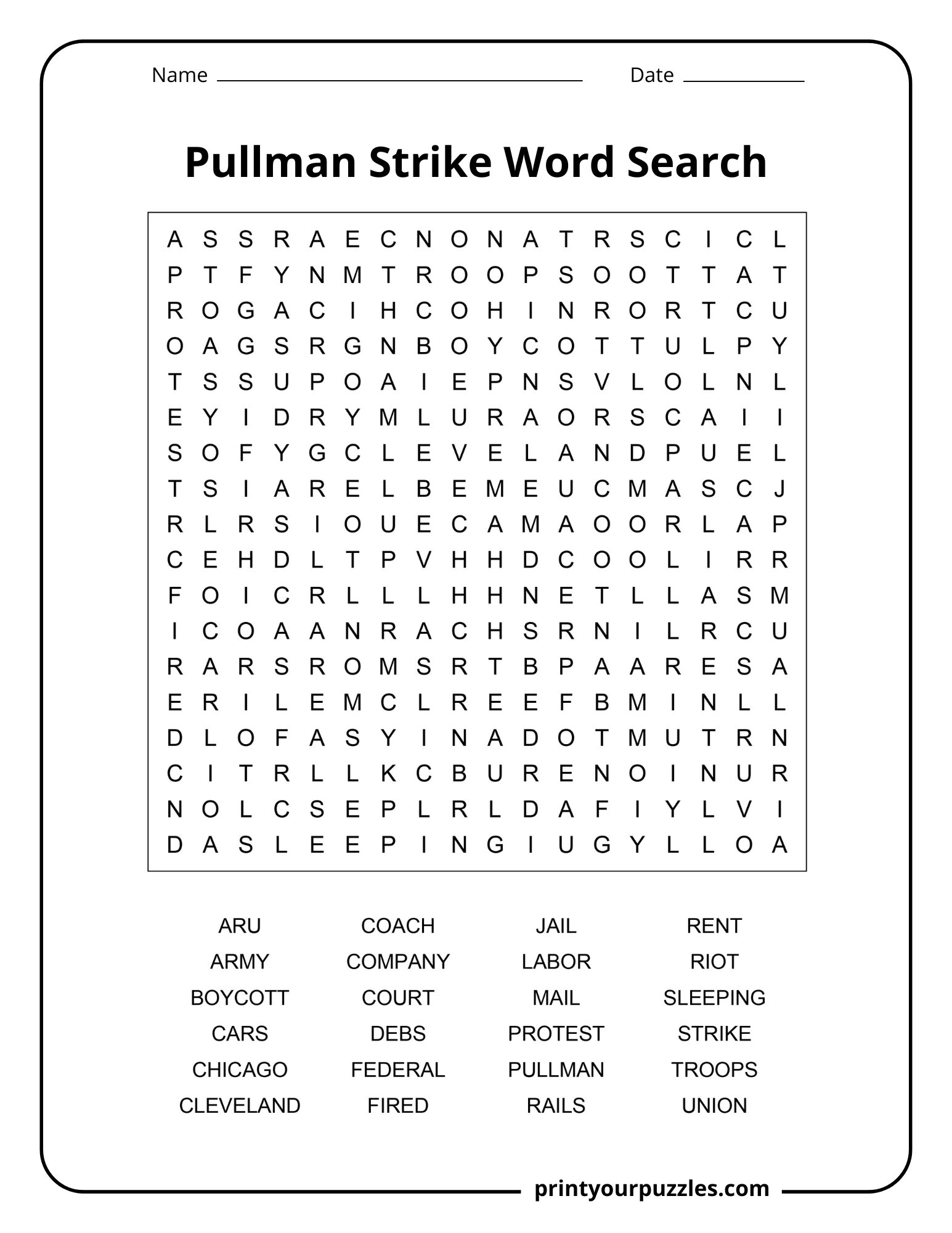
This Pullman Strike word search offers an engaging way to explore one of America’s most significant labor conflicts of the 19th century. The 1894 Pullman Strike marked a pivotal moment in labor history, when railway workers across the nation united to protest unfair wages and working conditions in George Pullman’s company town near Chicago.
This educational Pullman Strike word search printable features 24 carefully selected terms that capture the essential elements of this historic event. Each word—from key figures like Eugene Debs and President Cleveland to important concepts like boycott, union, and federal intervention—helps tell the story of this dramatic confrontation between labor and management.
What makes this word search printable particularly valuable for students and history enthusiasts is that every term is accompanied by a detailed 20-30 word definition. These explanations provide context and meaning, transforming a simple puzzle into a comprehensive learning tool. As you search for words like ARU, troops, strike, and injunction, you’ll gain deeper understanding of the events that shaped American labor relations and established precedents for government intervention in industrial disputes that continue influencing workers’ rights today.
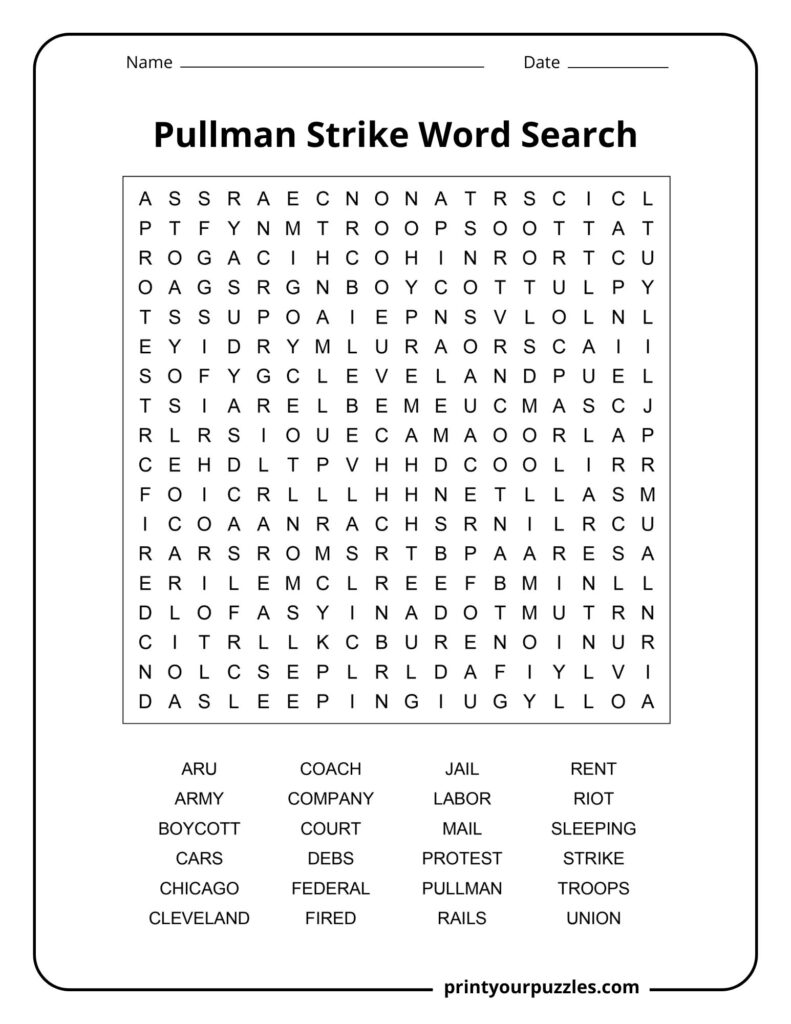
ARU, ARMY, BOYCOTT, CARS, CHICAGO, CLEVELAND, COACH, COMPANY, COURT, DEBS, FEDERAL, FIRED, JAIL, LABOR, MAIL, PROTEST, PULLMAN, RAILS, RENT, RIOT, SLEEPING, STRIKE, TROOPS, UNION
ARU – American Railway Union, founded by Eugene Debs in 1893, organized railway workers across different crafts and led the boycott supporting Pullman workers during the 1894 strike.
ARMY – Federal troops deployed by President Cleveland to break the Pullman Strike, enforcing court injunctions and protecting mail trains despite protests from Illinois Governor Altgeld against federal intervention.
BOYCOTT – ARU members refused to handle Pullman cars on any train, paralyzing rail traffic across twenty-seven states and creating a nationwide transportation crisis that threatened commerce and mail delivery.
CARS – Pullman Palace Car Company manufactured luxury sleeping and dining cars for railroads. Workers who built these cars lived in the company town and faced wage cuts.
CHICAGO – The strike’s epicenter, where Pullman’s factory and model town were located. Railway traffic through this major hub was severely disrupted, prompting federal intervention and violent confrontations.
CLEVELAND – President Grover Cleveland ordered federal troops to Chicago over Governor Altgeld’s objections, citing mail obstruction. His intervention broke the strike and established federal precedent in labor disputes.
COACH – Type of passenger railway car manufactured by Pullman workers. These vehicles, along with sleeping cars, were central to the company’s business and the boycott’s economic impact.
COMPANY – Pullman Palace Car Company, founded by George Pullman, controlled workers’ lives through its model town, cutting wages while maintaining high rents, sparking the 1894 strike.
COURT – Federal courts issued injunctions against the strike under the Sherman Antitrust Act, making the boycott illegal. Violating these orders led to Eugene Debs’s imprisonment for contempt.
DEBS – Eugene V. Debs led the American Railway Union during the strike. His imprisonment afterward transformed him into a socialist, running for president five times championing workers’ rights.
FEDERAL – The national government intervened forcefully,
sending troops and obtaining injunctions. This established federal authority to intervene in labor disputes affecting interstate commerce and mail delivery systems.
FIRED – Pullman Company dismissed workers who joined union committees to protest wage cuts, triggering the initial walkout that escalated into the massive nationwide railway boycott and strike.
JAIL – Eugene Debs was sentenced to six months imprisonment for contempt of court after violating federal injunctions. His incarceration became a rallying point for the labor movement nationwide.
LABOR – The strike represented organized workers’ struggle for fair wages and treatment. It highlighted conflicts between industrial capitalism and workers’ rights, influencing future American labor movements significantly.
MAIL – Disruption of U.S. mail delivery provided the legal justification for federal intervention. Railroad companies attached mail cars to Pullman cars, making the boycott seem like mail obstruction.
PROTEST – Workers demonstrated against wage cuts, high rents, and poor conditions in Pullman’s company town. Protests escalated into riots when federal troops arrived, resulting in deaths and injuries.
PULLMAN – George Pullman created a model company town near Chicago, controlling housing, stores, and services. His paternalistic approach and wage cuts without rent reductions sparked worker rebellion.
RAILS – Railroad tracks and the railway industry were paralyzed during the boycott. Twenty-seven states experienced disrupted service, affecting commerce, mail, and passenger travel across America’s transportation network.
RENT – Pullman charged workers high rents in his company town while cutting wages during economic depression. This exploitation without corresponding rent reduction triggered the walkout and strike.
RIOT – Violent clashes erupted when federal troops arrived in Chicago. Strikers and sympathizers fought soldiers, resulting in property damage, deaths, and injuries that intensified public attention nationwide.
SLEEPING – Pullman’s luxury sleeping cars were the company’s signature product. The boycott of these cars crippled long-distance rail travel and demonstrated organized labor’s potential economic power effectively.
STRIKE – Workers walked out in May 1894 after wage cuts and firings. The ARU boycott expanded it nationwide, becoming one of America’s most significant labor confrontations and tests.
TROOPS – Federal soldiers sent to Chicago broke the strike through force, protecting trains and suppressing protests. Their deployment set precedent for government intervention favoring business over labor rights.
UNION – The American Railway Union united railway workers across different jobs, demonstrating industrial unionism’s power. Though defeated, it influenced future labor organization strategies and solidarity movements throughout America.
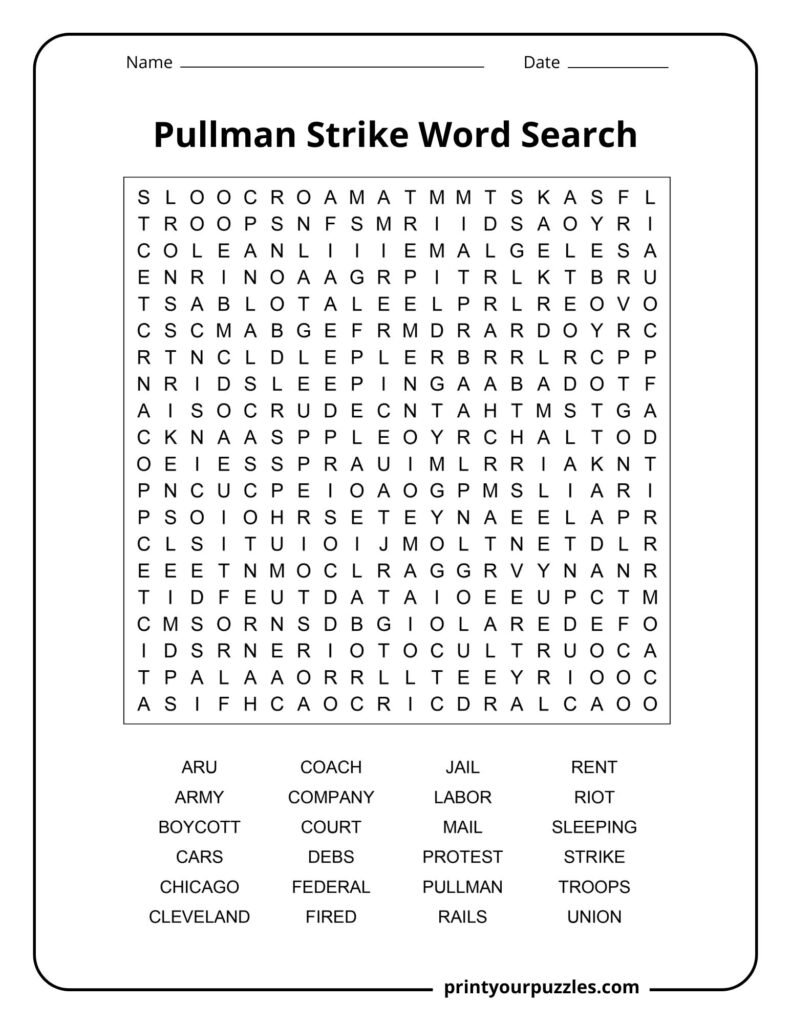
ARU, ARMY, BOYCOTT, CARS, CHICAGO, CLEVELAND, COACH, COMPANY, COURT, DEBS, FEDERAL, FIRED, JAIL, LABOR, MAIL, PROTEST, PULLMAN, RAILS, RENT, RIOT, SLEEPING, STRIKE, TROOPS, UNION
A nationwide railway boycott led by the American Railway Union supporting Pullman Palace Car Company workers who protested wage cuts and high rents in the company town near Chicago.
George Pullman cut workers’ wages by 25-30% during the 1893 economic depression but maintained high rents and prices in his company town, creating severe financial hardship for employees.
Cleveland claimed the strike obstructed U.S. mail delivery and interstate commerce. He sent federal troops to Chicago and obtained court injunctions, overriding Illinois Governor Altgeld’s opposition to intervention.
Debs was imprisoned for six months for contempt of court after violating federal injunctions. His jail experience transformed him into a socialist leader who ran for president five times.
The strike established federal government authority to intervene in labor disputes, weakened the ARU, but strengthened the labor movement by highlighting workers’ grievances and inspiring future organizing efforts.
President Cleveland signed legislation creating Labor Day just six days after the strike ended, attempting to reconcile with the labor movement and repair his damaged relationship with workers nationwide.
Pullman owned all housing, stores, churches, and even the library. Workers paid rent, bought goods at inflated prices, and faced eviction if fired, creating complete economic dependence. er undertaken.
Violent clashes between federal troops, strikers, and sympathizers destroyed railway cars and infrastructure across Chicago, making it one of America’s bloodiest labor confrontations in history.
During his six-month jail sentence, Debs studied socialist theory and received visits from socialist leaders. This transformed him from a union organizer into America’s most prominent socialist politician.
What began as 4,000 Pullman workers striking escalated into a massive nationwide movement, paralyzing rail traffic and demonstrating unprecedented solidarity among American railway workers across the country.
Purus ut praesent facilisi dictumst sollicitudin cubilia ridiculus.