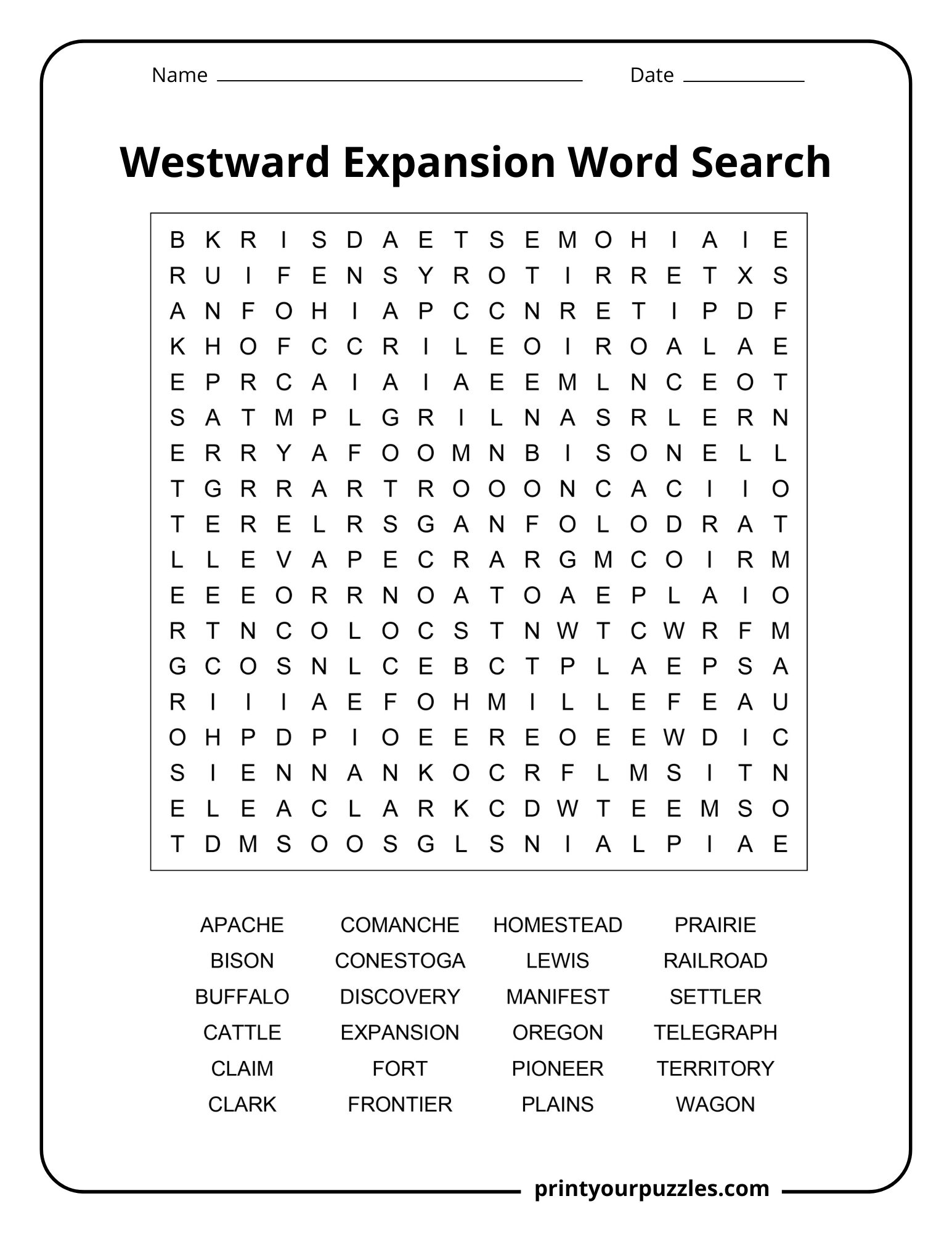

This San Francisco Earthquake word search offers an engaging and educational way to explore one of the most significant natural disasters in American history. The catastrophic earthquake that struck San Francisco on April 18, 1906, forever changed the city and influenced building codes, emergency response protocols, and urban planning nationwide.
This San Francisco Earthquake word search printable features 24 carefully selected words and phrases that capture the essential elements of this historic event. From the San Andreas Fault that caused the devastation to the refugee camps that sheltered displaced residents, each term represents an important aspect of the earthquake and its aftermath. Students and history enthusiasts will discover words related to the destruction, emergency response, key locations, and notable figures involved in the disaster.
What makes this word search printable particularly valuable is that all words to search are thoroughly defined with detailed explanations of 20-30 words each. These definitions provide historical context and educational value, transforming a simple puzzle into a comprehensive learning experience. Whether used in classrooms or for personal enrichment, this resource combines entertainment with education, making history memorable and accessible.
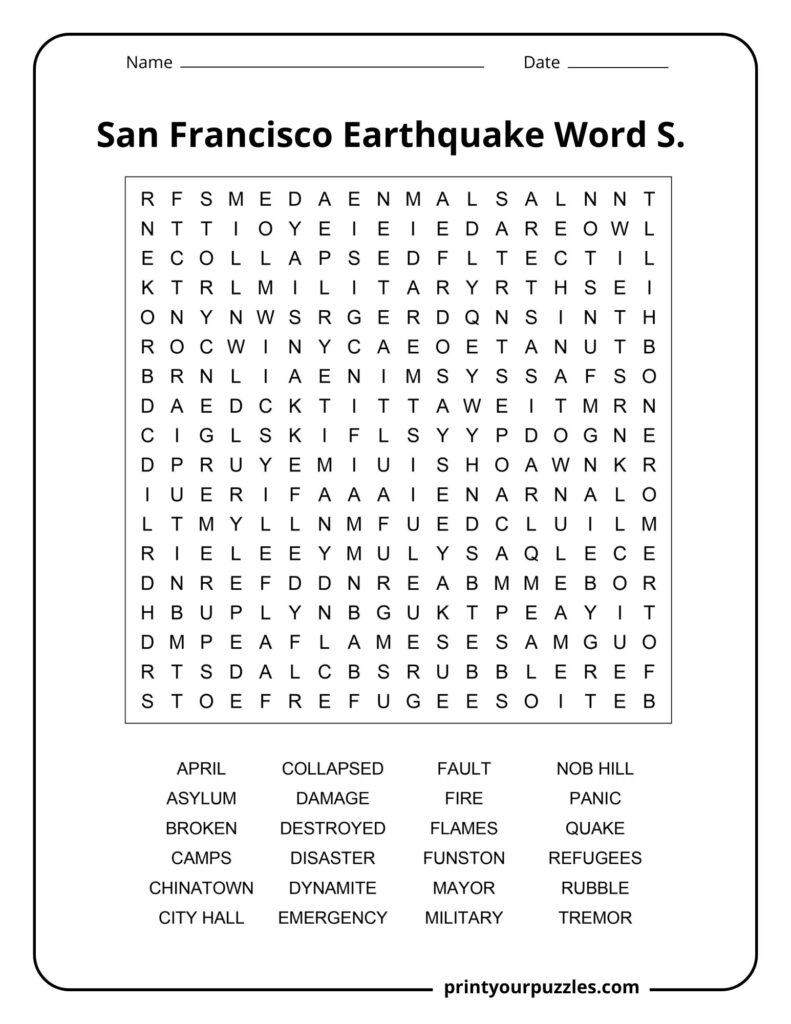
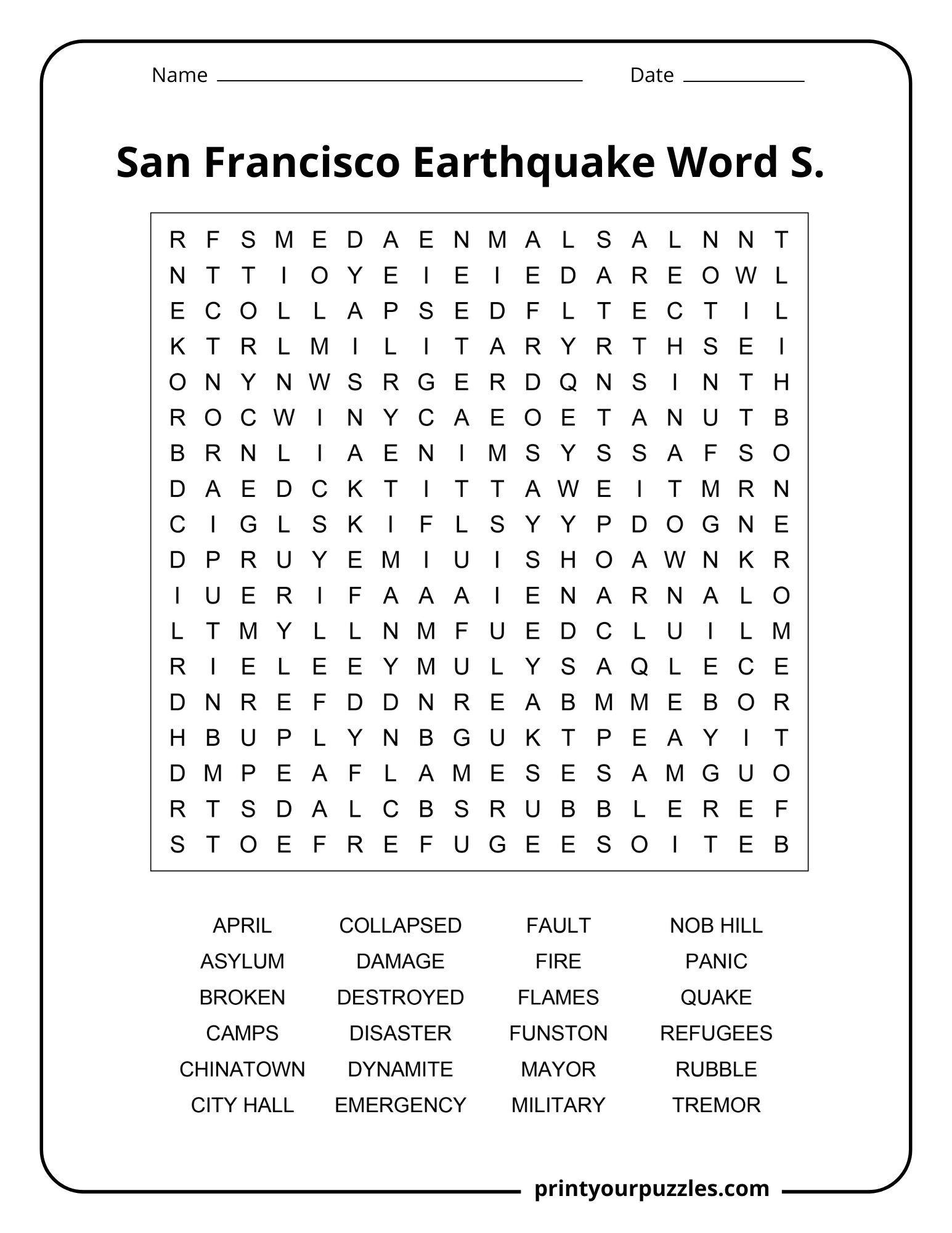
APRIL, ASYLUM, BROKEN, CAMPS, CHINATOWN, CITY HALL, COLLAPSED, DAMAGE, DESTROYED, DISASTER, DYNAMITE, EMERGENCY, FAULT, FIRE, FLAMES, FUNSTON, MAYOR, MILITARY, NOB HILL, PANIC, QUAKE, REFUGEES, RUBBLE, TREMOR
APRIL – The month when the devastating earthquake struck San Francisco on April 18, 1906, at 5:12 AM, changing the city’s history forever.
ASYLUM – Insane asylums and hospitals in San Francisco suffered severe damage during the earthquake, requiring evacuation of patients to temporary shelters and safer locations.
BROKEN – The earthquake broke gas lines, water mains, roads, and buildings throughout San Francisco, creating dangerous conditions and hampering firefighting and rescue efforts significantly.
CAMPS – Refugee camps were established in parks and open spaces throughout San Francisco to house over 200,000 displaced residents who lost their homes.
CHINATOWN – San Francisco’s Chinatown was completely destroyed by the earthquake and subsequent fires, displacing thousands of Chinese residents and destroying their community’s cultural center.
CITY HALL – San Francisco’s ornate City Hall, which cost millions to build, was completely destroyed, exposing corruption in its construction due to substandard materials used.
COLLAPSED – Thousands of buildings collapsed instantly when the earthquake struck, trapping victims in rubble and creating massive devastation across San Francisco’s urban landscape and neighborhoods.
DAMAGE – The earthquake and fires caused an estimated $400 million in damage, equivalent to billions today, making it one of America’s costliest natural disasters.
DESTROYED – Over 80 percent of San Francisco was destroyed by the earthquake and subsequent three-day fire, leaving the city in ruins and ashes.
DISASTER – The 1906 San Francisco earthquake remains one of the worst natural disasters in American history, killing thousands and displacing hundreds of thousands of residents.
DYNAMITE – Firefighters used dynamite to create firebreaks by demolishing buildings, attempting to stop the spreading flames, though this strategy had mixed results and success.
EMERGENCY – City officials declared a state of emergency, implementing martial law, establishing relief operations, and coordinating rescue efforts throughout the devastated San Francisco area.
FAULT – The San Andreas Fault ruptured along 296 miles, causing the massive earthquake that measured approximately 7.9 on the Richter scale, devastating the region.
FIRE – Fires burned for three days after the earthquake, destroying more property than the quake itself, fueled by broken gas lines and hampered efforts.
FLAMES – Uncontrollable flames swept through San Francisco’s wooden buildings, creating firestorms that consumed entire neighborhoods and could be seen from miles away at night.
FUNSTON – General Frederick Funston took command of military forces, ordering troops to maintain order, fight fires, and provide relief to San Francisco’s devastated population.
MAYOR – Mayor Eugene Schmitz, despite being under indictment for corruption, led emergency response efforts and issued shoot-to-kill orders to prevent looting during chaos.
MILITARY – Military troops patrolled streets, fought fires, dynamited buildings, distributed supplies, and maintained order under martial law throughout the disaster’s aftermath in San Francisco.
NOB HILL – Nob Hill, home to San Francisco’s wealthiest residents and grand mansions, was largely destroyed by fire, with only the Flood Mansion’s walls surviving.
PANIC – Initial panic gripped San Francisco residents as buildings collapsed, fires spread, and people fled into streets, desperately seeking safety and their loved ones.
QUAKE – The quake struck at 5:12 AM, lasting about one minute, with violent shaking that toppled buildings, ruptured infrastructure, and awakened terrified residents citywide.
REFUGEES – Over 200,000 refugees fled their destroyed homes, seeking shelter in parks, camps, and neighboring communities, relying on emergency relief for basic survival needs.
RUBBLE – Mountains of rubble filled San Francisco’s streets after the earthquake, consisting of collapsed buildings, broken infrastructure, and debris that hindered rescue and firefighting operations.
TREMOR – The initial tremor was followed by powerful aftershocks that continued for days, frightening survivors and causing additional damage to already weakened structures throughout the region.
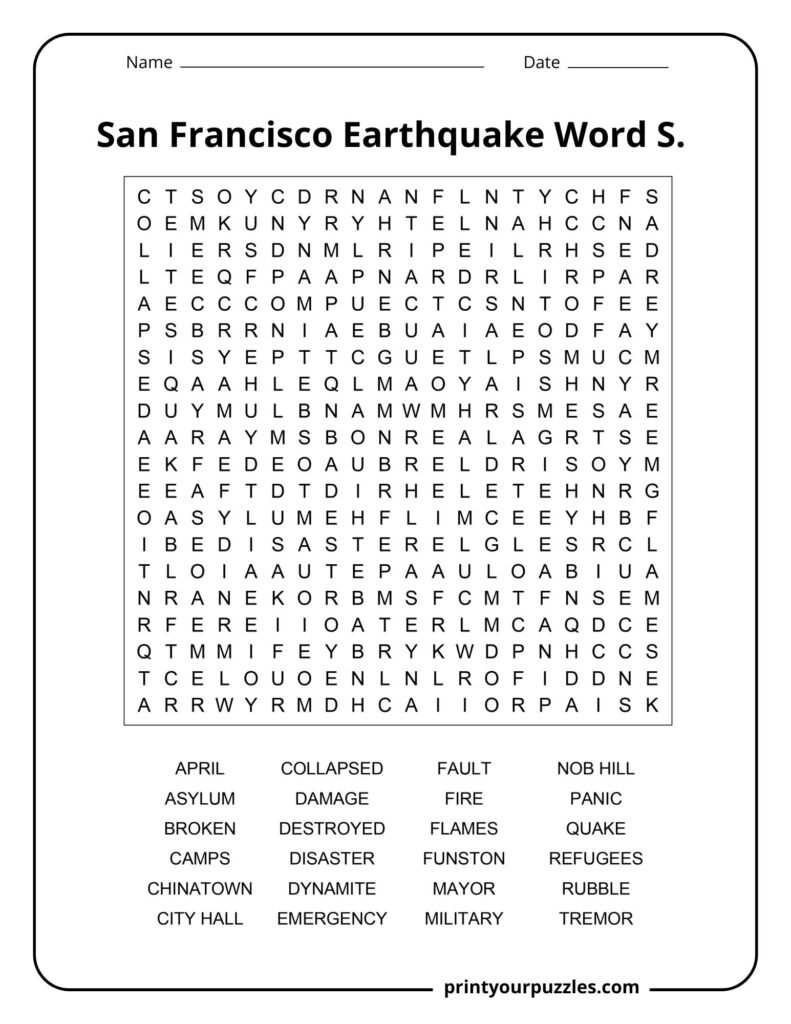
APRIL, ASYLUM, BROKEN, CAMPS, CHINATOWN, CITY HALL, COLLAPSED, DAMAGE, DESTROYED, DISASTER, DYNAMITE, EMERGENCY, FAULT, FIRE, FLAMES, FUNSTON, MAYOR, MILITARY, NOB HILL, PANIC, QUAKE, REFUGEES, RUBBLE, TREMOR
The San Francisco Earthquake struck on April 18, 1906, at 5:12 AM. The massive quake measured approximately 7.9 on the Richter scale and lasted about one minute.
Official death tolls initially reported 478 deaths, but modern estimates suggest over 3,000 people died. Many victims were never counted, particularly immigrants and Chinese residents in destroyed areas.
The fires caused significantly more damage than the earthquake itself. Flames burned uncontrolled for three days, destroying over 80 percent of San Francisco due to broken water mains.
San Francisco’s reconstruction took approximately three years for basic rebuilding. However, complete recovery and restoration of the city’s infrastructure and economy extended well into the 1910s.
The disaster caused an estimated $400 million in damage in 1906 dollars, equivalent to approximately $12 billion today, making it one of America’s costliest natural disasters ever.
Caruso was performing at the opera house the night before. Terrified by the disaster, he vowed never to return to San Francisco and kept that promise.
Sullivan fell through collapsing floors at his fire station during the initial quake. His death left the fire department leaderless during the city’s greatest crisis.
The San Andreas Fault rupture created visible cracks and displacement along 296 miles, with some areas showing up to 20 feet of horizontal movement
Mayor Schmitz issued shoot-to-kill orders to prevent looting. Several people were executed without trial, though exact numbers remain disputed and controversial among historians today.
Despite intense heat melting buildings around them, well-constructed bank vaults preserved crucial financial records and currency, helping businesses recover and rebuild San Francisco’s economy faster.
Purus ut praesent facilisi dictumst sollicitudin cubilia ridiculus.