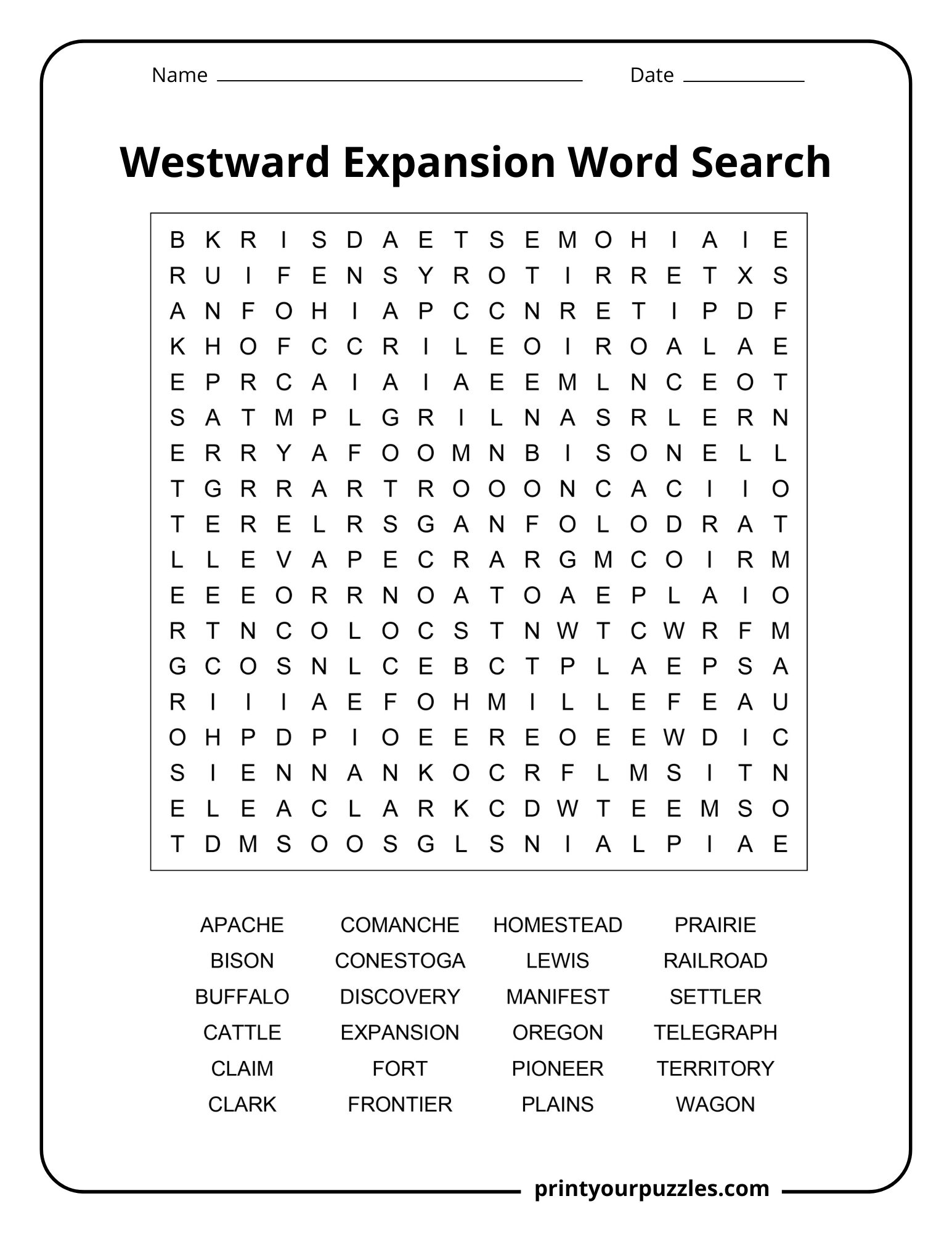

This Thanksgiving word search offers an engaging and educational activity perfect for celebrating America’s beloved holiday of gratitude and togetherness. Featuring 24 carefully selected words that capture the essence of Thanksgiving traditions, this puzzle provides entertainment for all ages while exploring the rich history and customs associated with this special day.
What makes this Thanksgiving word search printable unique is that every word included in the puzzle comes with a detailed definition of 20-30 words. This educational component transforms a simple puzzle into a comprehensive learning experience, helping participants understand the significance of terms like Pilgrim, Harvest, and Cranberry. Whether you’re a teacher seeking classroom resources, a parent looking for holiday activities, or simply someone who enjoys word puzzles, this word search printable delivers both fun and knowledge.
The words are hidden horizontally, vertically, and diagonally within the grid, offering varying difficulty levels to challenge puzzlers of all abilities. As you search for each term, you’ll deepen your appreciation for Thanksgiving’s traditions, from the festive parade and football games to the abundant feast that brings families together. This puzzle celebrates not just wordplay, but the spirit of thankfulness itself.
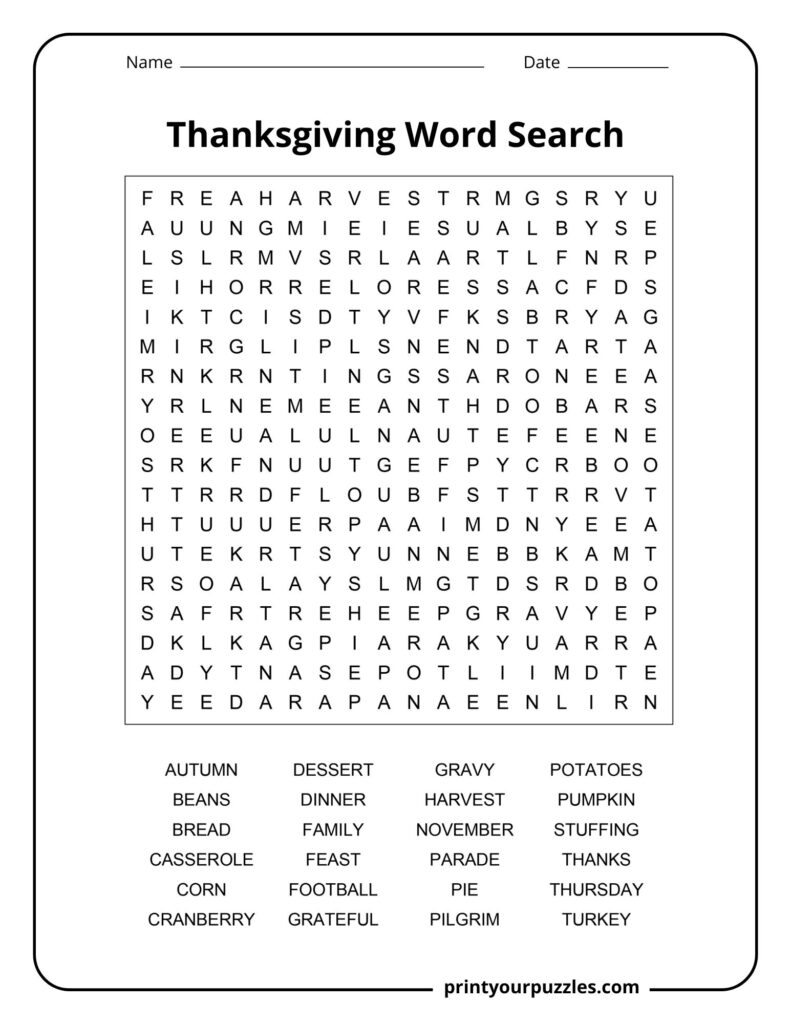
AUTUMN, BEANS, BREAD, CASSEROLE, CORN, CRANBERRY, DESSERT, DINNER, FAMILY, FEAST, FOOTBALL, GRATEFUL, GRAVY, HARVEST, NOVEMBER, PARADE, PIE, PILGRIM, POTATOES, PUMPKIN, STUFFING, THANKS, THURSDAY, TURKEY
AUTUMN – The season between summer and winter, characterized by cooler temperatures and falling leaves, when Thanksgiving is celebrated in North America during late November.
BEANS – Nutritious legumes often served as a traditional side dish at Thanksgiving dinner, commonly prepared as green beans, string beans, or baked beans with various seasonings.
BREAD – A staple food made from flour and water, served at Thanksgiving as dinner rolls, cornbread, or used as a key ingredient in stuffing and dressing.
CASSEROLE – A baked dish combining multiple ingredients in one pan, popular at Thanksgiving including green bean casserole, sweet potato casserole, and other creamy, comforting preparations topped with crunchy toppings.
CORN – A golden grain native to the Americas, symbolizing the harvest and frequently served at Thanksgiving as cornbread, corn on the cob, or creamed corn dishes.
CRANBERRY – A tart red berry traditionally served as sauce or relish at Thanksgiving dinner, providing a sweet and tangy complement to turkey and other savory dishes on the table.
DESSERT – The sweet course served after the main Thanksgiving meal, typically featuring pies like pumpkin, pecan, or apple, along with other treats like cakes and cookies.
DINNER – The main Thanksgiving meal traditionally eaten in the afternoon or evening, bringing family and friends together to share turkey, side dishes, and express gratitude for blessings.
FAMILY – Relatives who gather together on Thanksgiving to share a meal, create memories, and celebrate their relationships while expressing thanks for one another’s love and support.
FEAST – An abundant and elaborate meal with multiple courses and dishes, characterizing the Thanksgiving dinner tradition of preparing and sharing more food than everyday meals.
FOOTBALL – A popular American sport traditionally watched on Thanksgiving Day, with professional and college games broadcast while families gather, creating a beloved holiday tradition for many.
GRATEFUL – Feeling or showing appreciation and thankfulness for blessings, kindness, and positive aspects of life, which is the central emotional theme and spirit of the Thanksgiving holiday.
GRAVY – A savory sauce made from turkey drippings, flour, and broth, poured over turkey, mashed potatoes, and stuffing to add moisture and rich flavor to Thanksgiving dishes.
HARVEST – The gathering of ripened crops in autumn, historically celebrated by Pilgrims and Native Americans, forming the agricultural foundation and original purpose of the Thanksgiving holiday tradition.
NOVEMBER – The eleventh month of the year when Americans celebrate Thanksgiving on the fourth Thursday, marking the beginning of the holiday season with gratitude and feasting.
PARADE – A festive procession featuring floats, balloons, and performers, most famously the Macy’s Thanksgiving Day Parade in New York City, watched by millions on television annually.
PIE – A baked dessert with filling in a pastry crust, traditionally served at Thanksgiving in flavors like pumpkin, pecan, apple, or sweet potato, often homemade recipes.
PILGRIM – Early English settlers who arrived in Plymouth, Massachusetts in sixteen twenty, celebrating the first Thanksgiving feast with Native Americans after their first successful harvest in America.
POTATOES – Starchy root vegetables commonly prepared as creamy mashed potatoes or sweet potato casserole, serving as essential comfort food side dishes at nearly every Thanksgiving dinner table.
PUMPKIN – A large orange squash used to make traditional Thanksgiving pumpkin pie, symbolizing autumn harvest and featured in various seasonal dishes, decorations, and flavors throughout November.
STUFFING – A savory mixture of bread cubes, herbs, vegetables, and broth, cooked inside the turkey or separately as dressing, providing a beloved and essential Thanksgiving side dish.
THANKS – Expressions of gratitude and appreciation shared during Thanksgiving, often voiced before the meal when family members take turns stating what they’re thankful for this year.
THURSDAY – The day of the week when Thanksgiving is celebrated in the United States, specifically the fourth Thursday of November, designated as a national holiday for feasting.
TURKEY – A large domesticated bird traditionally roasted as the centerpiece of Thanksgiving dinner, often weighing ten to twenty pounds and served with various sides, stuffing, and gravy.
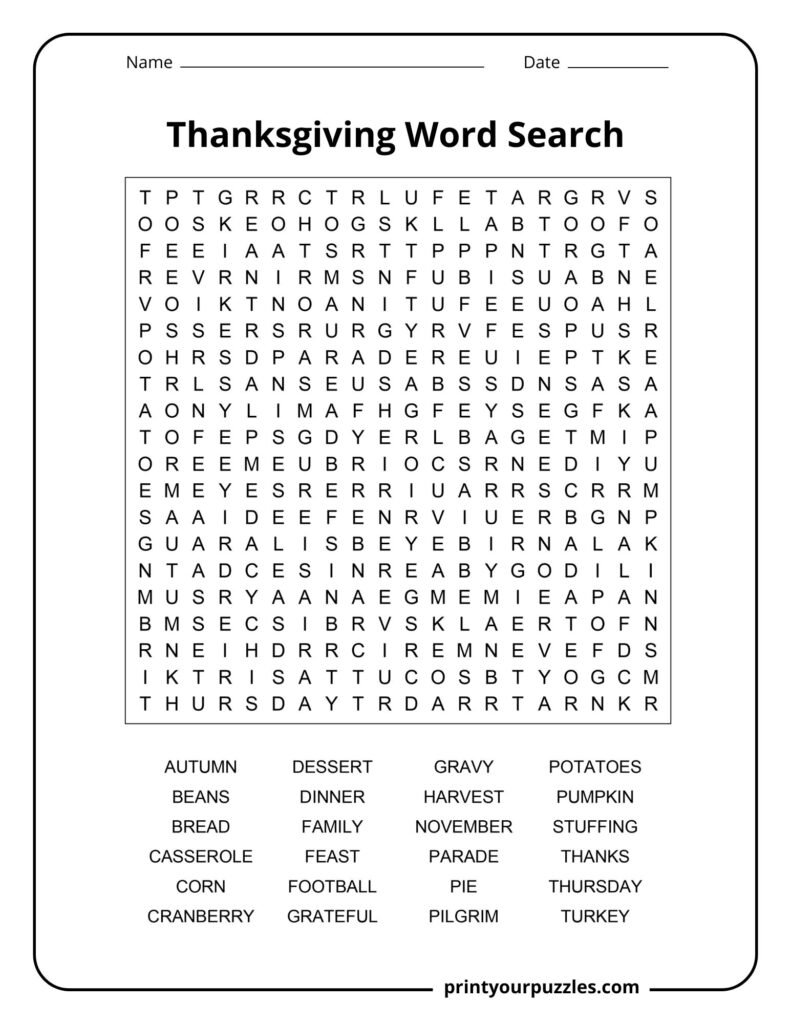
AUTUMN, BEANS, BREAD, CASSEROLE, CORN, CRANBERRY, DESSERT, DINNER, FAMILY, FEAST, FOOTBALL, GRATEFUL, GRAVY, HARVEST, NOVEMBER, PARADE, PIE, PILGRIM, POTATOES, PUMPKIN, STUFFING, THANKS, THURSDAY, TURKEY
Thanksgiving is celebrated annually on the fourth Thursday of November in the United States. In Canada, it’s observed on the second Monday of October, reflecting different harvest seasons.
Thanksgiving commemorates the 1621 harvest feast shared by Pilgrims and Native Americans. Today, it’s a time to express gratitude, gather with loved ones, and reflect on life’s blessings.
Traditional Thanksgiving foods include roasted turkey, stuffing, mashed potatoes, gravy, cranberry sauce, green bean casserole, sweet potatoes, dinner rolls, and pies like pumpkin and pecan for dessert.
Pilgrims were English settlers who arrived in Plymouth, Massachusetts in 1620. They celebrated their first successful harvest with Native American allies, creating the historical foundation for Thanksgiving.
Popular traditions include watching the Macy’s Thanksgiving Day Parade, playing or watching football games, volunteering at food banks, sharing what you’re grateful for, and spending quality time with family.
The 1621 harvest celebration between Pilgrims and Wampanoag Native Americans wasn’t a single meal but a three-day festival featuring games, entertainment, and abundant food shared by approximately ninety Native Americans and fifty Pilgrims.
Historical records suggest the original feast likely featured venison, wildfowl like ducks and geese, seafood, corn, and squash. Turkey may have been served, but it wasn’t the guaranteed centerpiece it is today.
President Abraham Lincoln proclaimed Thanksgiving a national holiday in 1863, hoping to unite the divided nation. Sarah Josepha Hale, a magazine editor, campaigned for seventeen years to make it official.
Each Thanksgiving, Americans devour roughly forty-six million turkeys, making it the biggest turkey-eating day of the year. The average turkey weighs fifteen pounds and feeds about ten to twelve people.
When the parade began in 1924, it showcased live animals borrowed from the Central Park Zoo. Giant character balloons replaced the animals in 1927, becoming the beloved tradition we know today.
Purus ut praesent facilisi dictumst sollicitudin cubilia ridiculus.