
Halloween is celebrated every year on October 31 with costumes, carved pumpkins, spooky decorations, parties, and trick-or-treating. It is especially popular in the United States and Canada, although related customs are now enjoyed in many countries. For children, the evening is often filled with candy and imaginative disguises, while adults may attend themed gatherings, watch scary movies, or decorate their homes.
The holiday has developed from several older traditions. Its history is often connected with Samhain, an ancient Celtic festival marking the transition from the harvest season to winter. People believed this time of year had a special connection with the spirit world. Later, Christian observances such as All Saints’ Day and All Souls’ Day also influenced customs surrounding the end of October and beginning of November.
Costumes are one of Halloween’s most familiar traditions. People may dress as ghosts, witches, vampires, superheroes, animals, historical figures, or characters from books and films. Some costumes are frightening, while others are funny, creative, or colorful. Neighborhood trick-or-treating allows children to visit decorated homes, say “trick or treat,” and receive sweets or small gifts.
The jack-o’-lantern is another well-known symbol. Families carve faces or designs into pumpkins, place lights inside, and display them near doors or windows. The custom developed from older traditions of carving vegetables such as turnips. Pumpkins became especially popular in North America because they were larger and easier to shape.
Halloween food often includes candy, caramel apples, popcorn, cookies, and pumpkin-flavored treats. Parties may feature games such as bobbing for apples, costume contests, treasure hunts, and storytelling. Haunted houses, corn mazes, hayrides, and community festivals also create opportunities for seasonal entertainment.
Although Halloween is associated with ghosts, skeletons, bats, and darkness, it is usually celebrated as playful rather than truly frightening. Families can choose age-appropriate activities, use reflective clothing, check candy, and stay together while walking through neighborhoods.
Enjoy the mysterious and imaginative spirit of October 31 with this printable Halloween word search puzzle, featuring 24 carefully selected words inspired by costumes, pumpkins, candy, haunted houses, autumn nights, spooky creatures, and favorite Halloween traditions.
Related Word Searches:
October | Autumn | Day of the Dead | September | November
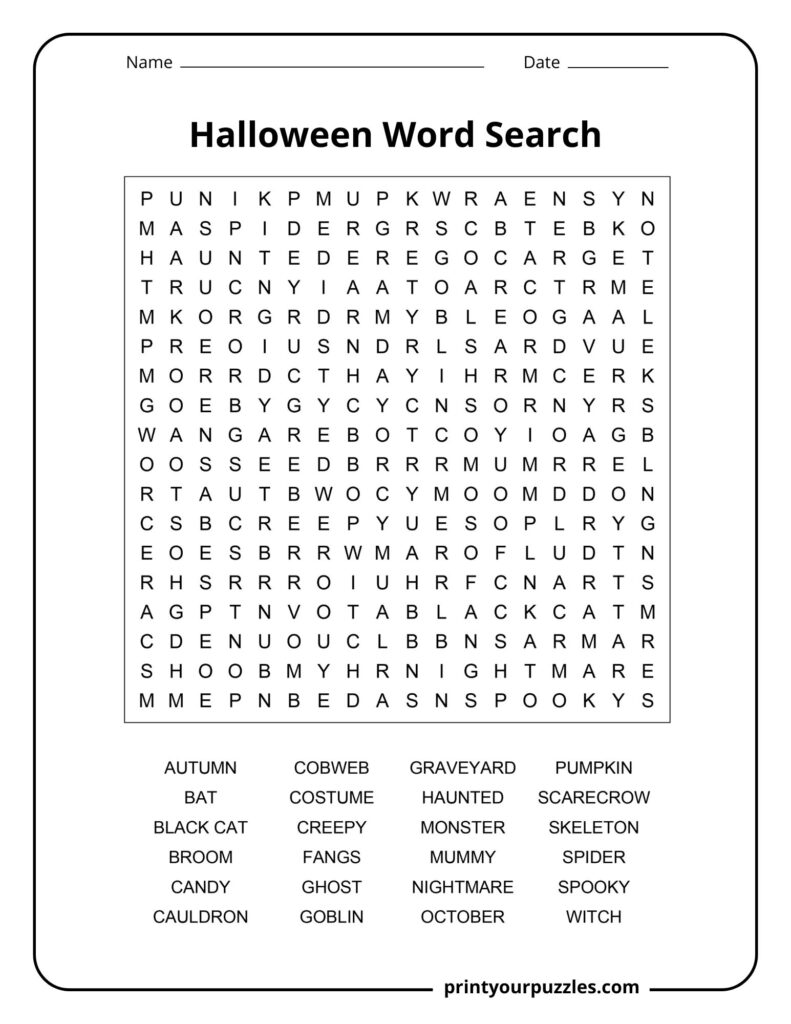
AUTUMN, BAT, BLACK CAT, BROOM, CANDY, CAULDRON, COBWEB, COSTUME, CREEPY, FANGS, GHOST, GOBLIN, GRAVEYARD, HAUNTED, MONSTER, MUMMY, NIGHTMARE, OCTOBER, PUMPKIN, SCARECROW, SKELETON, SPIDER, SPOOKY, WITCH
AUTUMN – The season between summer and winter when leaves change colors and fall, temperatures cool, and Halloween is celebrated. Also called fall in North America.
BAT – A nocturnal flying mammal with wings and echolocation abilities. Bats are strongly associated with Halloween due to their dark appearance and nighttime activity habits.
BLACK CAT – A cat with black fur traditionally considered unlucky or magical. Black cats are iconic Halloween symbols often associated with witches and supernatural folklore.
BROOM – A cleaning tool consisting of a long handle with bristles. In Halloween lore, witches supposedly fly through the night sky riding magical broomsticks.
CANDY – Sweet confections and treats given to children during trick-or-treating on Halloween night. Popular varieties include chocolate bars, gummies, and hard candies.
CAULDRON – A large metal pot used for cooking or brewing. Witches are depicted stirring bubbling potions and magical ingredients in cauldrons over fires.
COBWEB – The silky web spun by spiders to catch prey. Cobwebs create spooky atmospheres in haunted houses and abandoned places during Halloween decorations.
COSTUME – Special clothing and accessories worn to disguise oneself as a character, creature, or person. Wearing costumes is a central Halloween tradition for all ages.
CREEPY – Something that causes an unsettling feeling of fear or unease. This adjective describes the spooky, eerie atmosphere people create for Halloween celebrations.
FANGS – Long, sharp, pointed teeth possessed by predatory animals and fictional creatures. Vampires and monsters are depicted with prominent fangs for biting victims.
GHOST – The spirit or soul of a deceased person that appears to the living. Ghosts are portrayed as translucent, floating figures in white sheets.
GOBLIN – A mischievous, grotesque creature from folklore, often depicted as small, ugly, and troublesome. Goblins appear in many Halloween stories and decorations worldwide.
GRAVEYARD – A burial ground where deceased people are interred in graves, typically marked with tombstones. Graveyards are classic spooky Halloween settings for scary stories.
HAUNTED – A place or object supposedly inhabited or visited by ghosts or spirits. Haunted houses are popular Halloween attractions that aim to frighten visitors.
MONSTER – A frightening imaginary creature that is large, ugly, or terrifying. Monsters like Frankenstein’s creature are popular Halloween characters and costume choices.
MUMMY – An ancient preserved corpse wrapped in bandages, typically from Egyptian burial practices. Mummies are classic Halloween monsters depicted as walking undead beings.
NIGHTMARE – A frightening or unpleasant dream that causes anxiety, fear, or terror during sleep. Halloween themes often evoke nightmare imagery and scary dream scenarios.
OCTOBER – The tenth month of the year when autumn deepens and Halloween is celebrated on the thirty-first day in many countries worldwide.
PUMPKIN – A large orange squash harvested in autumn. Pumpkins are carved into jack-o’-lanterns with faces, becoming the most recognizable symbol of Halloween celebrations.
SCARECROW – A figure made from straw and old clothes placed in fields to frighten birds away from crops. Scarecrows create eerie figures in Halloween decorations.
SKELETON – The internal bone structure of vertebrates. During Halloween, skeletons represent death and are displayed as decorations showing human or animal bone structures.
SPIDER – An eight-legged arachnid that spins webs to catch insects. Spiders and their webs are common Halloween decorations representing creepy, crawling creatures.
SPOOKY – Causing a feeling of fear or unease in a fun, thrilling way. This word describes the eerie, supernatural atmosphere intentionally created during Halloween.
WITCH – A person, traditionally a woman, believed to possess magical powers and practice sorcery. Witches are iconic Halloween figures depicted with pointed hats and broomsticks.
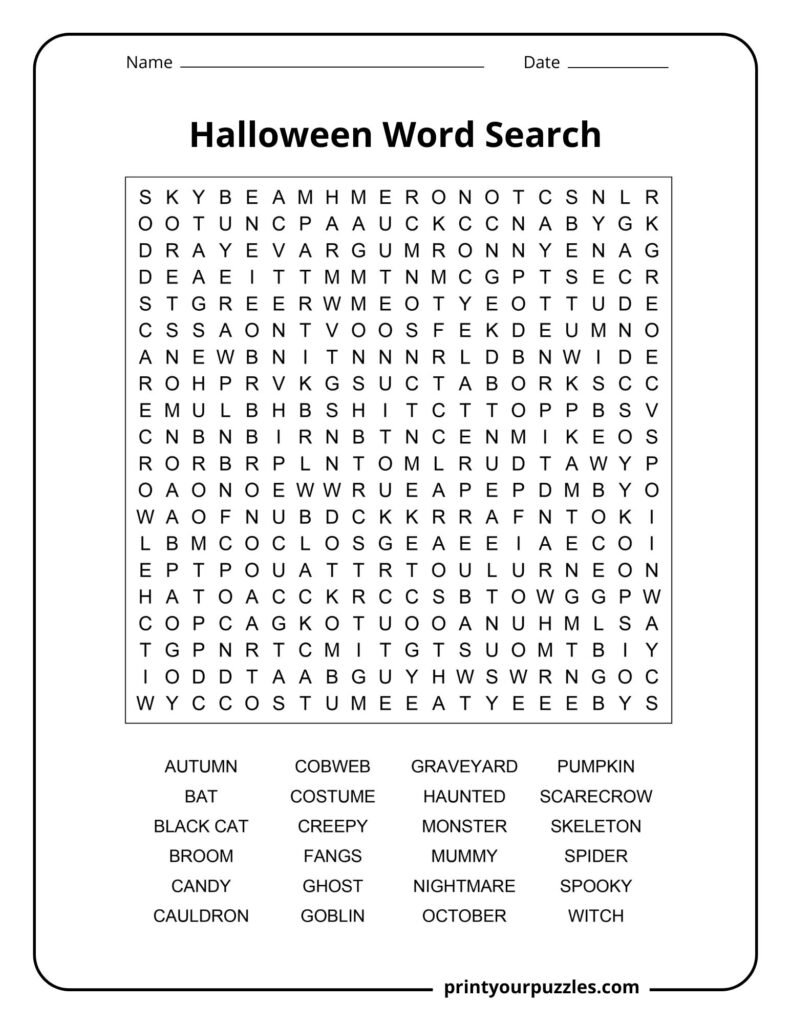
AUTUMN, BAT, BLACK CAT, BROOM, CANDY, CAULDRON, COBWEB, COSTUME, CREEPY, FANGS, GHOST, GOBLIN, GRAVEYARD, HAUNTED, MONSTER, MUMMY, NIGHTMARE, OCTOBER, PUMPKIN, SCARECROW, SKELETON, SPIDER, SPOOKY, WITCH
Halloween is celebrated annually on October 31st. The evening marks the end of autumn harvest season and precedes All Saints’ Day, which falls on November 1st each year.
Halloween originated from the ancient Celtic festival of Samhain, when people lit bonfires and wore costumes to ward off ghosts. Christian traditions later influenced the holiday’s evolution.
Trick-or-treating involves children wearing costumes and visiting neighbors’ homes to collect candy. This tradition evolved from medieval practices of offering food to the poor in exchange for prayers.
Jack-o’-lanterns are carved pumpkins with illuminated faces. They originated from Irish folklore about “Stingy Jack” and were originally carved from turnips before pumpkins became the standard in America.
Black cats became Halloween symbols due to medieval superstitions linking them to witches and bad luck. People believed witches could transform into black cats to avoid detection.
When candy corn was invented in the 1880s, it was marketed as “Chicken Feed” because corn was primarily associated with farm animals rather than human consumption.
The ancient Celtic festival of Samhain originated in Ireland over 2,000 years ago. Irish immigrants brought Halloween traditions to America during the 19th century, popularizing the holiday.
Americans spend approximately \$10 billion annually on Halloween, making it second only to Christmas in commercial spending. Costumes, decorations, and candy account for most purchases.
Some people suffer from Samhainophobia, an intense fear of Halloween. This phobia can involve anxiety about costumes, darkness, supernatural themes, or the holiday’s overall spooky atmosphere.
The heaviest pumpkin ever recorded weighed 2,749 pounds, grown in Minnesota in 2023. Giant pumpkin competitions are popular events during autumn harvest festivals worldwide.