Sacramento grew where two rivers meet, and that location helped transform it from a Gold Rush settlement into the capital of California. Today, the city combines historic districts, tree-lined neighborhoods, museums, public art, farm-to-fork dining, and easy access to some of the richest agricultural land in the country.
The city expanded rapidly after gold was discovered in California in 1848. Its position near the Sacramento and American rivers made it an important supply and transportation center for miners heading toward the Sierra Nevada. Steamboats, railroads, agriculture, and commerce all contributed to its growth, and Sacramento became the permanent state capital in the nineteenth century.
One of the most atmospheric places to explore is Old Sacramento Waterfront, where preserved nineteenth-century buildings, wooden sidewalks, shops, restaurants, and museums recall the city’s Gold Rush and railroad past. Nearby, the California State Railroad Museum tells the story of how railroads connected California with the rest of the country through restored locomotives, passenger cars, and historical exhibits.
Sacramento also has a lively artistic side. The Crocker Art Museum, founded in the nineteenth century, presents California art alongside European works, ceramics, photography, and contemporary exhibitions. Murals, galleries, theaters, and music venues have helped strengthen the city’s creative reputation in recent years.
Food is especially important here because Sacramento sits at the center of a major agricultural region. The city often promotes itself as a farm-to-fork capital, with restaurants using vegetables, fruits, nuts, meats, wine, and other ingredients produced throughout the surrounding valleys. Farmers markets, seasonal menus, international cuisines, and nearby wineries make eating locally one of the most enjoyable ways to experience the region.
Outdoor life is easy to include as well. Visitors can walk or cycle along riverfront trails, spend time in William Land Park, or explore the American River Parkway, where nature and recreation stretch for miles through the metropolitan area.
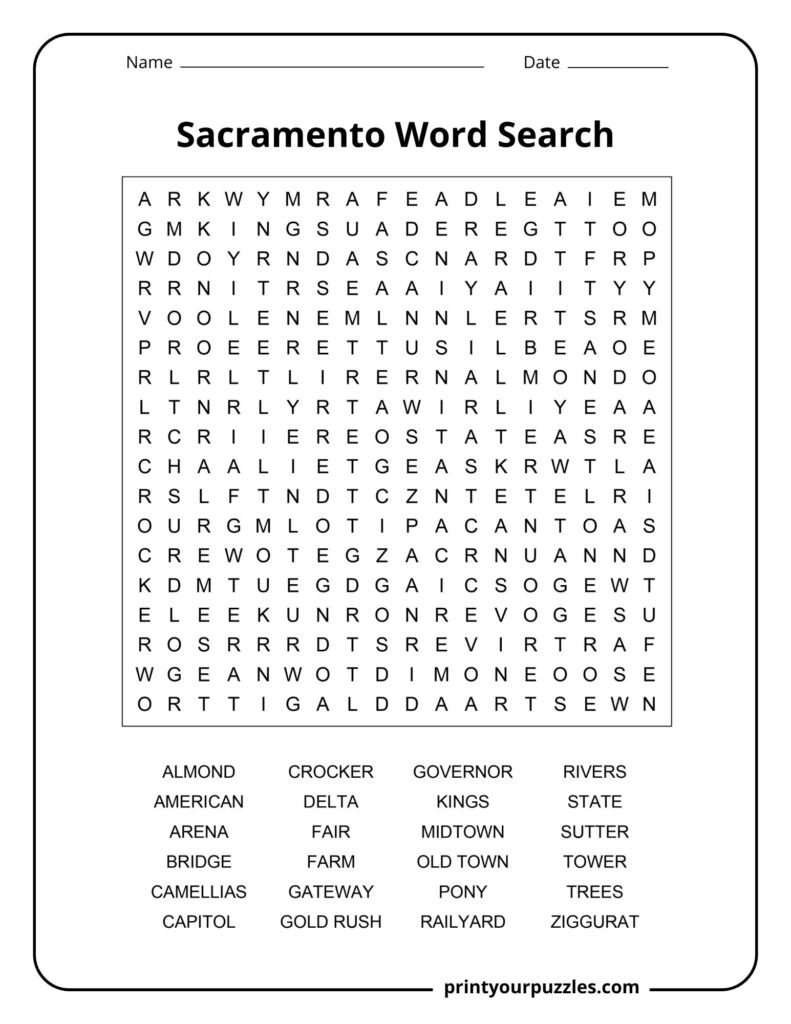
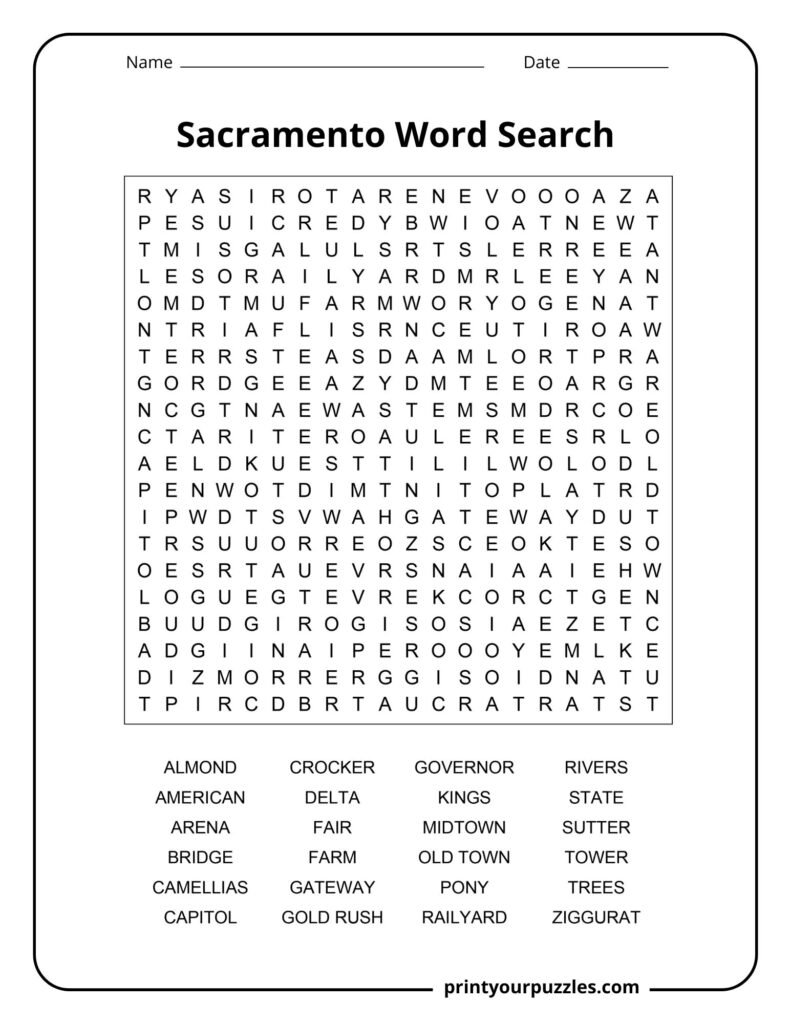
A Sacramento word search can introduce readers to vocabulary connected with the Gold Rush, railroads, rivers, agriculture, art, and California food culture. With historic streets, major museums, fertile countryside, and two rivers at its heart, Sacramento offers far more than its political role alone might suggest.
Related Word Searches:
California | Carson City | Salem | Phoenix | Olympia
ALMOND – Sacramento Valley is a major almond-growing region in California. The area’s Mediterranean climate and rich soil make it ideal for almond orchards, contributing significantly to the state’s agricultural economy.
AMERICAN – Refers to the American River, a major waterway flowing through Sacramento. This river played a crucial role in the Gold Rush and remains popular for recreation, rafting, and wildlife viewing today.
ARENA – Golden 1 Center, Sacramento’s modern downtown arena opened in 2016. Home to the Sacramento Kings NBA team, it hosts basketball games, concerts, and major events in the city’s urban core.
BRIDGE – The Tower Bridge is Sacramento’s iconic yellow vertical-lift bridge spanning the Sacramento River. Built in 1935, it connects downtown Sacramento with West Sacramento and symbolizes the city’s architectural heritage.
CAMELLIAS – Sacramento is known as the “Camellia Capital of the World.” The city’s mild winters allow these ornamental flowers to thrive, and they’re celebrated annually at the Camellia Festival each spring.
CAPITOL – The California State Capitol building houses the state legislature and governor’s office. This historic landmark, completed in 1874, features stunning neoclassical architecture and beautiful surrounding gardens open to visitors.
CROCKER – The Crocker Art Museum, founded in 1885, is California’s oldest public art museum. It houses an impressive collection of California art, European paintings, and Asian ceramics in downtown Sacramento.
DELTA – The Sacramento-San Joaquin River Delta is a vast inland river delta near Sacramento. This ecological treasure provides water for California, offers boating recreation, and supports diverse wildlife in its wetland ecosystem.
FAIR – The California State Fair is held annually at Cal Expo in Sacramento each July. This major event showcases agriculture, entertainment, food, carnival rides, and exhibits celebrating California’s diverse culture.
FARM – Sacramento County’s farm-to-fork movement celebrates local agriculture. The region’s farms produce diverse crops year-round, making Sacramento a leader in fresh, locally-sourced food and sustainable farming practices.
GATEWAY – Sacramento serves as the gateway to California’s Gold Country and Sierra Nevada mountains. The city’s strategic location makes it a natural starting point for exploring Northern California’s historic and natural attractions.
GOLD RUSH – Sacramento grew rapidly during the California Gold Rush starting in 1848. James Marshall’s gold discovery at Sutter’s Mill nearby transformed Sacramento from a small settlement into a booming supply center virtually overnight.
GOVERNOR – Sacramento has been California’s capital since 1854, housing the governor’s office. The governor’s mansion, both historic and current, represents the executive leadership of the nation’s most populous state.
KINGS – The Sacramento Kings are the city’s NBA basketball team, beloved by passionate local fans. Originally from Kansas City, the Kings moved to Sacramento in 1985 and remain the city’s only major professional sports franchise.
MIDTOWN – Midtown Sacramento is a vibrant urban neighborhood known for its arts scene, restaurants, and nightlife. This walkable district features tree-lined streets, Victorian homes, galleries, and farm-to-fork dining establishments.
OLD TOWN – Old Sacramento is a historic waterfront district preserving the city’s Gold Rush-era heritage. This 28-acre state historic park features wooden sidewalks, museums, restaurants, and 19th-century architecture attracting tourists year-round.
PONY – The Pony Express, America’s famous mail delivery service, had its western terminus in Old Sacramento. Though operating only 18 months in 1860-61, it remains an iconic symbol of American frontier communication history.
RAILYARD – The Railyards is Sacramento’s revitalized former rail hub now transformed into a mixed-use development. Once Central Pacific Railroad’s maintenance facility, it now features shopping, dining, and the new soccer stadium.
RIVERS – Two major rivers, the Sacramento and American, converge in Sacramento. These waterways shaped the city’s development, transportation, agriculture, and continue providing recreation, wildlife habitat, and natural beauty throughout the region.
STATE – As California’s state capital since 1854, Sacramento houses state government operations. The city hosts the legislature, numerous state agencies, and employs thousands in public service, defining its economic and political identity.
SUTTER – John Sutter founded Sutter’s Fort in 1839, establishing the first European settlement in Sacramento. This Swiss pioneer’s fort became Sacramento’s nucleus, and gold discovered on his property sparked the California Gold Rush.
TOWER – Tower Theatre in East Sacramento is a historic landmark and cultural icon. Built in 1938, this Art Deco cinema anchors the vibrant Tower District, known for bohemian culture, restaurants, and independent businesses.
TREES – Sacramento is nicknamed the “City of Trees” for its extensive urban forest canopy. The city boasts over 100 tree species creating shaded neighborhoods, parks, and tree-lined boulevards that provide natural beauty year-round.
ZIGGURAT – The Ziggurat Building is Sacramento’s distinctive pyramid-shaped office building completed in 1997. This modern architectural landmark visible from Interstate 80 features stepped terraces resembling ancient Mesopotamian ziggurats, symbolizing contemporary Sacramento.