
Reconciliation is an important Christian practice centered on forgiveness, repentance, healing, and restoring a person’s relationship with God. In the Catholic Church, it is one of the seven sacraments and is also called Confession or Penance. Through this sacrament, Christians acknowledge their sins, express sorrow, receive forgiveness, and commit themselves to making better choices.
The biblical foundation of Reconciliation appears throughout both the Old and New Testaments. The Bible repeatedly teaches that God is merciful and willing to forgive those who sincerely turn away from wrongdoing. Jesus often welcomed sinners, encouraged repentance, and taught His followers to forgive others. After His resurrection, He gave the apostles a special responsibility connected with the forgiveness of sins.
Before receiving the sacrament, a person usually prepares through an examination of conscience. This means carefully reflecting on thoughts, words, actions, and responsibilities to recognize where harm has been caused. The person is encouraged to approach Confession honestly, with genuine sorrow and a desire to change.
During the sacrament, the penitent confesses sins to a priest. The priest listens, may offer spiritual advice, and assigns a penance. Penance may include prayers, acts of kindness, repairing harm, or another action that helps express repentance. The priest then gives absolution, declaring God’s forgiveness through a special prayer.
Reconciliation is not meant simply to create feelings of guilt. Its purpose is healing and renewal. Catholics believe that sin damages a person’s relationship with God, other people, and the Church community. The sacrament offers an opportunity to begin again with peace, hope, and greater spiritual strength.
Confession is normally private, and priests are required to maintain complete secrecy about everything revealed during the sacrament. This obligation is known as the seal of Confession. Many Catholics receive Reconciliation before important celebrations such as Easter or Christmas, although it may be celebrated at any time.
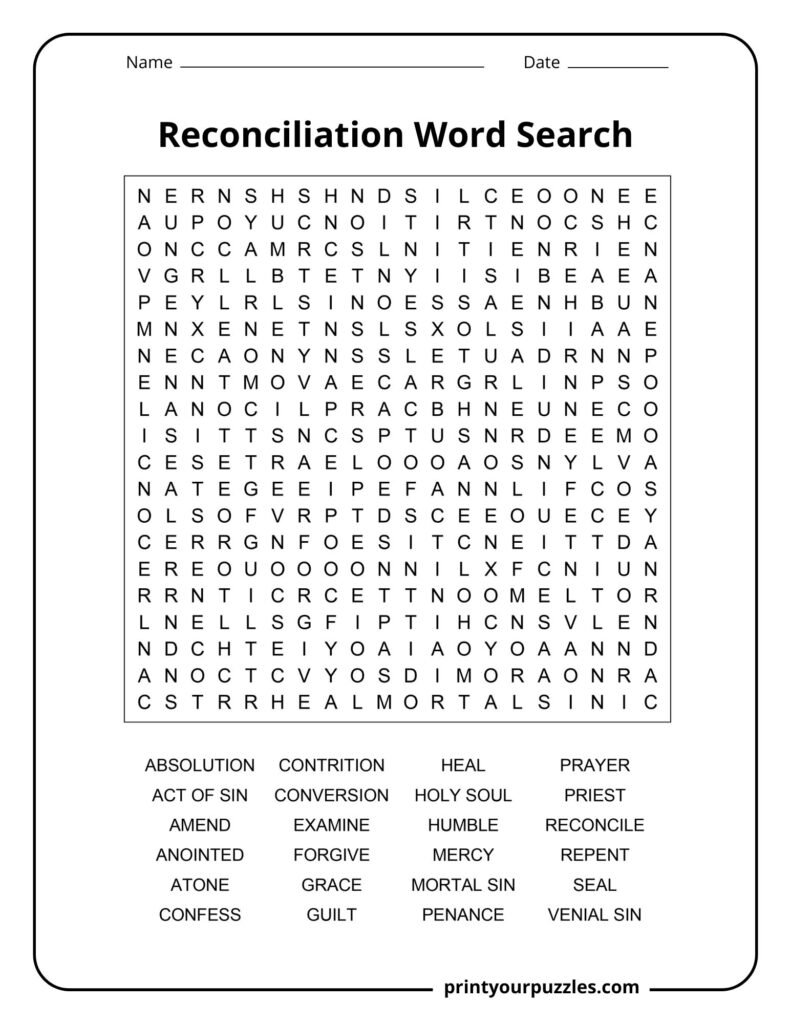
Forgiveness also involves making an effort to avoid repeating harmful behavior and, when possible, repairing the damage caused. Through a Reconciliation word search puzzle, readers can revisit essential concepts such as confession, repentance, conscience, penance, absolution, mercy, forgiveness, healing, and peace. These terms help explain how the sacrament encourages sincere change, renewed faith, and the rebuilding of relationships with God and others.
We’ve dedicated a post to each of the Seven Sacraments: Anointing of the Sick, Baptism, Confirmation, Eucharist, Holy Orders, Marriage, and Reconciliation.
We have also curated seven books on the Seven Sacraments, each offering a unique perspective on this sacred theme. All seven books cover the complete set of sacraments, not just one individual sacrament. Every post in our Seven Sacraments series features a different book recommendation. Don’t miss them — a great read awaits you!
Related Word Searches:
Baptism | Confirmation | Eucharist | Anointing of the Sick
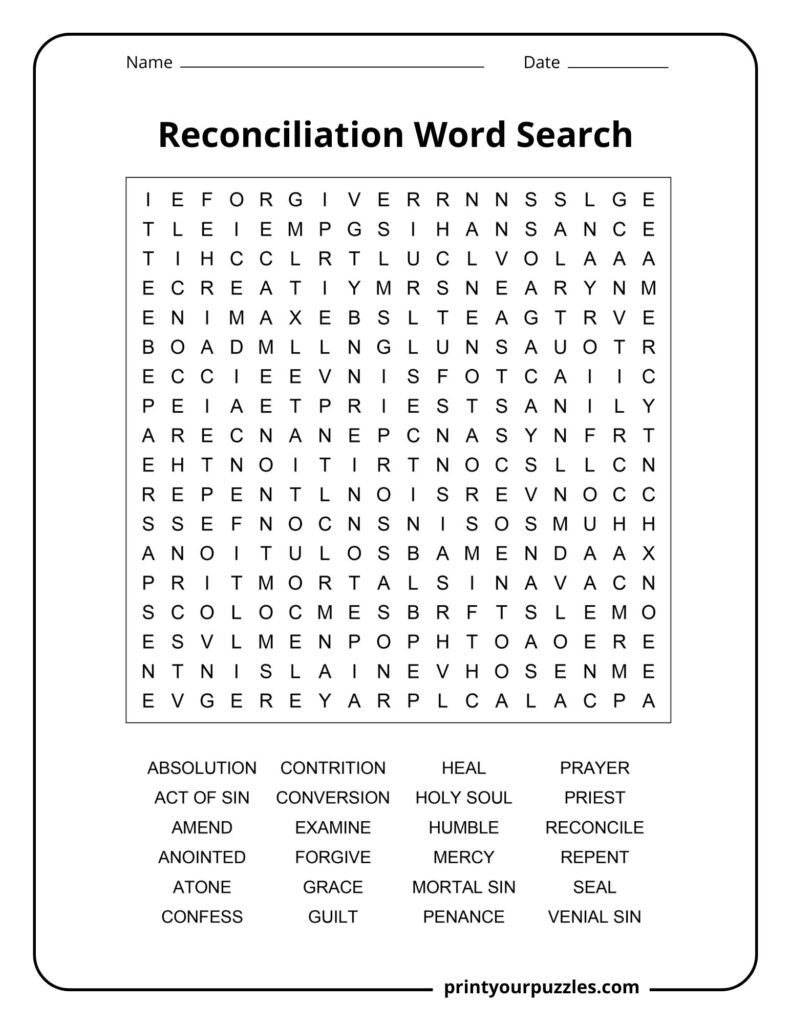
ABSOLUTION, ACT OF SIN, AMEND, ANOINTED, ATONE, CONFESS, CONTRITION, CONVERSION, EXAMINE, FORGIVE, GRACE, GUILT, HEAL, HOLY SOUL, HUMBLE, MERCY, MORTAL SIN, PENANCE, PRAYER, PRIEST, RECONCILE, REPENT, SEAL, VENIAL SIN
ABSOLUTION – The act by which a priest, in God’s name, forgives sins confessed by a penitent during the Sacrament of Reconciliation, restoring the soul to grace.
ACT OF SIN – A deliberate thought, word, deed, or omission that goes against God’s law, harming the relationship between the person and God.
AMEND – To sincerely commit to changing one’s sinful behavior, making a firm resolution not to repeat the offense and to repair any harm caused.
ANOINTED – Set apart and blessed by God through the sacraments; in Reconciliation, the soul is spiritually renewed and marked again by God’s saving love.
ATONE – To make reparation for sins committed, accepting the consequences of wrongdoing and seeking to restore the broken relationship with God and others.
CONFESS – To openly and honestly admit one’s sins to a priest in the Sacrament of Reconciliation, a necessary step toward receiving God’s forgiveness and healing.
CONTRITION – A deep and genuine sorrow for having sinned against God, born from love for Him, considered the most essential disposition for receiving valid absolution.
CONVERSION – A profound interior turning away from sin and toward God, involving a change of heart, mind, and life inspired by the Holy Spirit.
EXAMINE – To prayerfully review one’s thoughts, words, and actions in light of God’s commandments, identifying sins before approaching the Sacrament of Reconciliation.
FORGIVE – To pardon offenses freely and completely, as God does for repentant sinners; also the call for Christians to forgive those who have wronged them.
GRACE – God’s free and undeserved gift of divine life, restored to the soul through Reconciliation after being wounded or lost through personal sin.
GUILT – The moral awareness of having done wrong before God; a healthy recognition of sin that leads the penitent toward repentance and seeking reconciliation.
HEAL – The restorative action of God’s mercy in Reconciliation, mending the spiritual wounds caused by sin and renewing the soul’s relationship with Him.
HOLY SOUL – The human soul sanctified by baptism and God’s grace, called to remain pure and, when wounded by sin, restored through the sacraments.
HUMBLE – The disposition of recognizing one’s weakness and sinfulness before God, approaching Reconciliation with an open heart rather than pride or self-justification.
MERCY – God’s compassionate and unconditional love shown to sinners, the very foundation of the Sacrament of Reconciliation, offering pardon to all who truly repent.
MORTAL SIN – A grave offense committed with full knowledge and deliberate consent that severs the soul’s relationship with God, requiring confession to be forgiven.
PENANCE – A prayer, act, or sacrifice assigned by the priest after confession to express sorrow for sin and make reparation for the harm it caused.
PRAYER – A personal conversation with God that prepares the heart for confession, expresses contrition, and strengthens the soul’s commitment to ongoing conversion and holiness.
PRIEST – The ordained minister who acts in the person of Christ during Reconciliation, listening to confessions and pronouncing absolution in God’s name with delegated authority.
RECONCILE – To restore a broken relationship, particularly between the sinner and God, achieved through the sacrament that reunites the soul with divine love and community.
REPENT – To feel genuine sorrow for one’s sins and turn away from them, committing to a new direction in life guided by God’s commandments and love.
SEAL – The absolute and inviolable obligation of the priest to maintain complete secrecy about anything heard during confession, protecting the penitent under all circumstances whatsoever.
VENIAL SIN – A less serious offense that weakens but does not destroy the soul’s relationship with God, still requiring acknowledgment and healing through prayer and sacraments.
ABSOLUTION, ACT OF SIN, AMEND, ANOINTED, ATONE, CONFESS, CONTRITION, CONVERSION, EXAMINE, FORGIVE, GRACE, GUILT, HEAL, HOLY SOUL, HUMBLE, MERCY, MORTAL SIN, PENANCE, PRAYER, PRIEST, RECONCILE, REPENT, SEAL, VENIAL SIN
A sacrament instituted by Jesus Christ that allows baptized Catholics to confess sins to a priest, receive absolution, and restore their relationship with God.
The Church requires confession at least once a year, but recommends it frequently, especially after committing mortal sin, to maintain a healthy spiritual life.
All mortal sins must be confessed, specifying their nature and number. Venial sins are encouraged to be confessed but are not strictly required for absolution.
Yes. The Seal of Confession is absolute and inviolable. No priest may ever reveal anything heard during confession, under any circumstances, without exception.
Absolution is invalid without genuine contrition. God cannot forgive a heart that refuses to repent, making sincere sorrow an essential condition for receiving the sacrament.
The Spirit of the Liturgy by Cardinal Joseph Ratzinger (Pope Benedict XVI). A masterful reflection on the theological and spiritual foundations of Catholic liturgy and sacramental worship, this book deepens understanding of how the sacraments connect humanity to God’s eternal and divine presence.
The apostles themselves received from Jesus the power to forgive sins, as recorded in John 20:23, establishing confession as a foundational sacrament of the Church.
Before its invention by Cardinal Carlo Borromeo, confessions were heard openly in churches, often face to face between penitent and priest, without any physical barrier separating them.
It has been known as Penance, Confession, and Reconciliation, each name highlighting a different aspect of the same powerful encounter with God’s transforming mercy and forgiveness.
The Church requires children to confess their sins before receiving the Eucharist for the first time, ensuring their soul is properly prepared and in a state of grace.
Canon Law 1386 imposes automatic excommunication on any priest who directly betrays a penitent’s confession, reflecting how sacred and protected this sacrament truly is.