Introduction to the Santa Claus Word Search
Santa Claus is one of the most recognizable figures of the Christmas season. With his red suit, white beard, cheerful laugh, and sleigh pulled by reindeer, he has become a symbol of generosity, excitement, and holiday magic for children and families around the world. Although the modern image of Santa Claus is familiar almost everywhere, the story behind the character developed over many centuries and combines history, legend, folklore, and Christmas traditions from different countries.
The origins of Santa Claus are closely connected to Saint Nicholas, a Christian bishop who lived during the fourth century in the region that is now part of Turkey. Saint Nicholas became famous for stories about his generosity, especially his habit of secretly giving gifts to people in need. Over time, celebrations honoring Saint Nicholas spread across Europe, and different cultures developed their own versions of the gift-giving figure.
The name Santa Claus developed from the Dutch name Sinterklaas, which refers to Saint Nicholas. Dutch settlers brought their Christmas traditions to North America, where the character gradually changed. During the nineteenth century, poems, illustrations, and stories helped create many of the details now associated with Santa, including his sleigh, reindeer, journey on Christmas Eve, and habit of entering homes through the chimney.
Today, Santa Claus is usually imagined living at the North Pole, where he prepares Christmas presents with the help of elves. According to popular tradition, children send him letters describing the gifts they would like to receive. On Christmas Eve, Santa loads presents into his sleigh and travels around the world delivering them to children. Famous reindeer such as Rudolph have also become an important part of modern Santa stories.
Santa traditions can vary from one country to another, but the ideas of giving, kindness, and celebration remain central. Movies, books, songs, decorations, parades, and visits to Santa have helped keep the character popular across generations.
This Santa Claus word search explores vocabulary connected with Santa’s history, appearance, helpers, reindeer, Christmas Eve journey, and familiar holiday traditions. As you search for the hidden words, you can discover more about how one of Christmas’s most famous characters became such an enduring part of the holiday season.
Ho, ho, ho! The holiday fun doesn’t stop here! Explore our Christmas Word Searches collection, featuring 8 festive puzzles filled with Christmas magic, traditions, and cheer!
Related Word Searches:
Christmas | Christmas Tree | Christmas Eve | Christmas Traditions | Christmas Cookies | Christmas Decorations
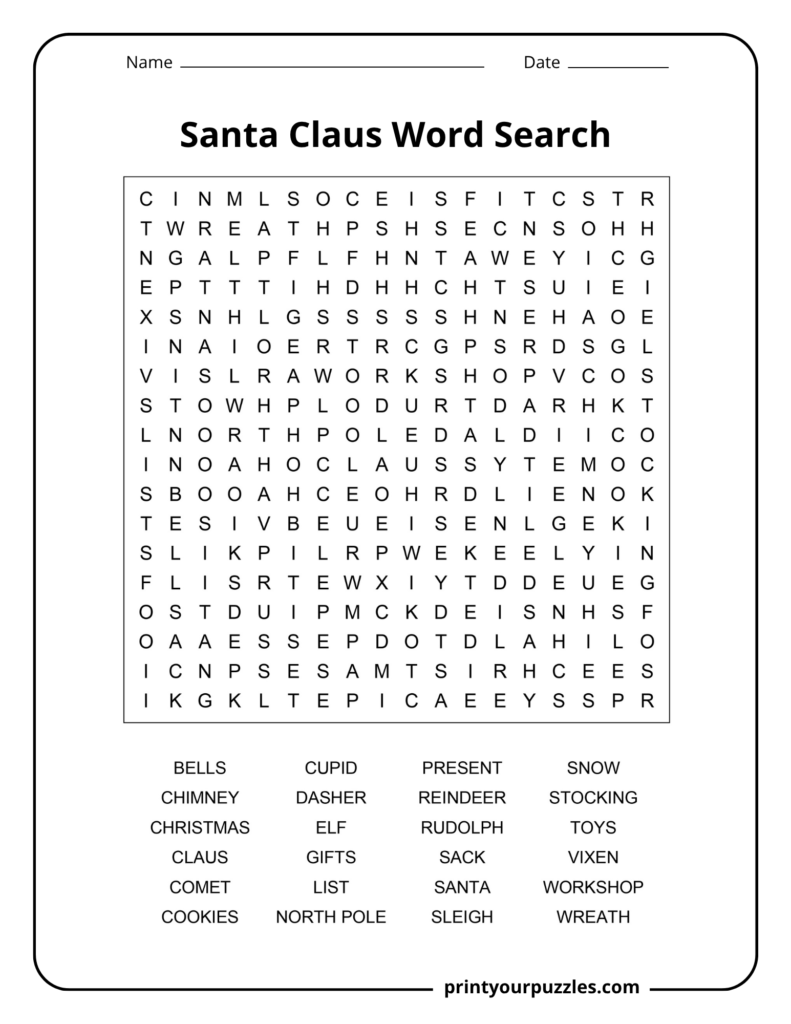
Medium Difficulty Word Search
Words to Find:
BELLS, CHIMNEY, CHRISTMAS, CLAUS, COMET, COOKIES, CUPID, DASHER, ELF, GIFTS, LIST, NORTH POLE, PRESENT, REINDEER, RUDOLPH, SACK, SANTA, SLEIGH, SNOW, STOCKING, TOYS, VIXEN, WORKSHOP, WREATH
All Words Defined
BELLS – Small metal objects that make a ringing sound when shaken. Bells are often attached to Santa’s sleigh and are commonly heard in Christmas songs and decorations.
CHIMNEY – A vertical passage that carries smoke from a fireplace out through the roof. In popular Christmas stories, Santa Claus enters homes by traveling down the chimney.
CHRISTMAS – An annual holiday celebrated on December 25, marking the birth of Jesus Christ and featuring traditions such as gift-giving, decorations, family gatherings, and Santa Claus.
CLAUS – The surname used in the name Santa Claus. It developed from the Dutch name Sinterklaas, a traditional figure based on the historical Christian bishop Saint Nicholas.
COMET – One of the eight traditional reindeer named in the famous nineteenth-century poem about Santa Claus. Comet helps pull Santa’s sleigh during his Christmas Eve gift-delivery journey.
COOKIES – Sweet baked treats often prepared during the Christmas season. Many children traditionally leave cookies, sometimes with milk, for Santa Claus to enjoy during his Christmas Eve journey.
CUPID – One of Santa Claus’s eight traditional reindeer, named in the classic poem describing his Christmas Eve arrival. Cupid is part of the team pulling Santa’s sleigh.
DASHER – One of Santa Claus’s traditional reindeer, first made famous in the 1823 poem commonly known as “A Visit from St. Nicholas,” which describes Santa’s Christmas Eve flight.
ELF – A small magical helper commonly associated with Santa Claus. In modern Christmas stories, elves work in Santa’s workshop making toys and preparing gifts for children.
GIFTS – Presents given to family, friends, and children during Christmas celebrations. Santa Claus is traditionally believed to deliver gifts to children around the world on Christmas Eve.
LIST – A record of children traditionally divided according to their behavior. Christmas stories often describe Santa checking his list to decide who has been naughty or nice.
NORTH POLE – The northernmost point on Earth and, in popular Christmas tradition, the magical home of Santa Claus, his elves, reindeer, workshop, and enormous supply of presents.
PRESENT – An item given to someone as a gift. Santa Claus is famous for delivering Christmas presents, especially toys, to children during his journey on Christmas Eve.
REINDEER – A species of deer native to Arctic and subarctic regions. In Christmas folklore, a team of magical flying reindeer pulls Santa Claus’s sleigh through the night sky.
RUDOLPH – The famous red-nosed reindeer who guides Santa’s sleigh through difficult weather. Rudolph first appeared in a 1939 Christmas story created for an American department store.
SACK – A large bag traditionally carried by Santa Claus and filled with toys and presents. Illustrations often show him carrying the sack over one shoulder while delivering gifts.
SANTA – A shortened name for Santa Claus, the legendary Christmas gift-giver. Children often use this familiar name when writing letters or talking about Christmas Eve traditions.
SLEIGH – A vehicle designed to travel over snow or ice. In Christmas folklore, Santa Claus uses a magical flying sleigh pulled by reindeer to deliver presents worldwide.
SNOW – Frozen precipitation made of ice crystals that falls during cold weather. Snow frequently appears in Santa Claus stories, Christmas cards, decorations, and images of the North Pole.
STOCKING – A large decorative sock traditionally hung near a fireplace at Christmas. Children expect Santa Claus to fill stockings with small gifts, candy, fruit, or other surprises.
TOYS – Objects designed for children to play with and enjoy. Christmas stories traditionally describe Santa’s elves making toys in his workshop before Santa delivers them on Christmas Eve.
VIXEN – One of the traditional reindeer that pull Santa Claus’s sleigh. Vixen appears among the eight reindeer named in the famous 1823 Christmas poem about Santa’s nighttime journey.
WORKSHOP – The imagined workplace where Santa Claus and his elves prepare toys and presents. Christmas stories usually place Santa’s busy workshop somewhere near his North Pole home.
WREATH – A circular arrangement of evergreen branches, leaves, or decorations commonly displayed during Christmas. Wreaths often decorate doors, fireplaces, and buildings throughout the holiday season.
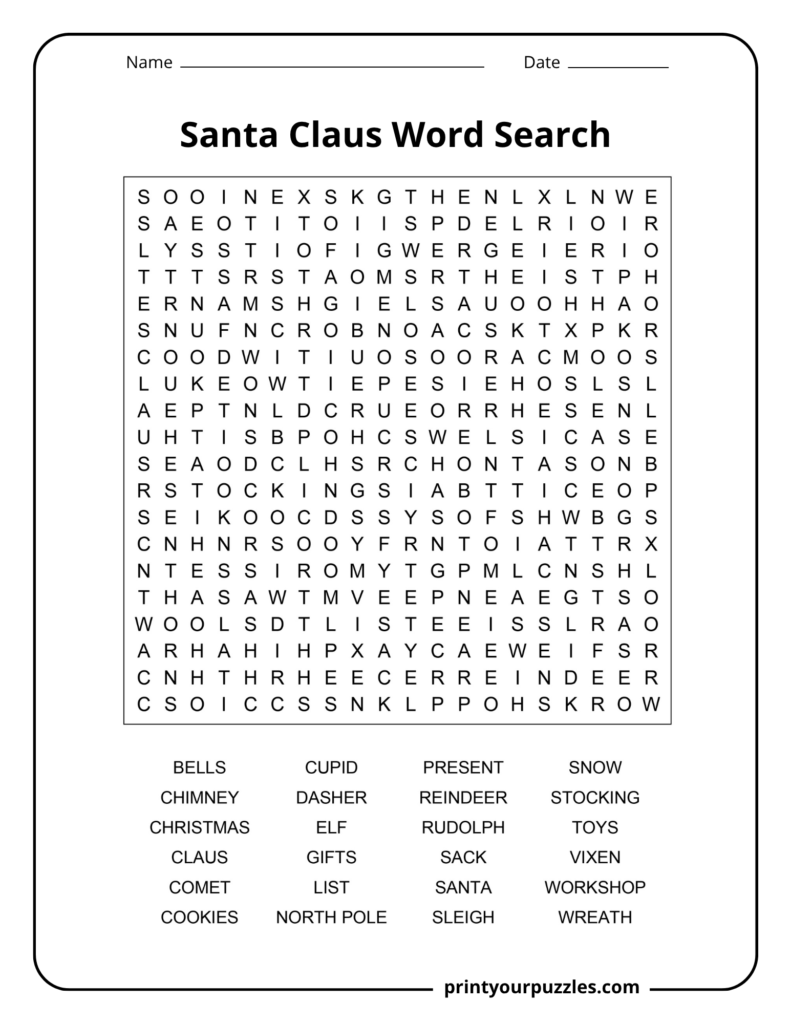
Hard Difficulty Word Search
Words to Find:
BELLS, CHIMNEY, CHRISTMAS, CLAUS, COMET, COOKIES, CUPID, DASHER, ELF, GIFTS, LIST, NORTH POLE, PRESENT, REINDEER, RUDOLPH, SACK, SANTA, SLEIGH, SNOW, STOCKING, TOYS, VIXEN, WORKSHOP, WREATH
5 Key FAQs About Santa Claus
5 Curious "Did You Know?" Facts About Santa Claus