Introduction to the Ten Commandments Word Search
The Ten Commandments are among the best-known teachings in the Bible. They are a set of laws given by God to Moses and the people of Israel after their escape from slavery in Egypt. The commandments appear in the books of Exodus and Deuteronomy and provide guidance about worship, family relationships, honesty, justice, and respect for others.
According to Exodus, the Israelites traveled through the wilderness and arrived at Mount Sinai. Moses went up the mountain, where God gave him the commandments written on two stone tablets. This event formed an important part of the covenant between God and Israel. The people were called to obey these laws and live as a faithful, responsible, and united community.
The first commandments focus mainly on a person’s relationship with God. They instruct the Israelites to worship only God, avoid creating idols, treat God’s name with respect, and remember the Sabbath day. The Sabbath provided a regular time for rest and worship, reminding the people that their lives and freedom came from God.
The remaining commandments guide relationships between people. They teach respect for parents and forbid murder, adultery, stealing, false testimony, and coveting what belongs to someone else. These instructions address both outward actions and inner desires. Together, they encourage responsibility, truthfulness, faithfulness, contentment, and respect for human life and property.
The exact wording and numbering of the commandments may vary slightly among Jewish, Catholic, Orthodox, and Protestant traditions. However, the main teachings remain closely connected. Christians also relate the Ten Commandments to Jesus’ instruction to love God and to love one’s neighbor. These two central duties summarize the deeper purpose of biblical law.
The commandments are not presented simply as a list of restrictions. They were intended to shape a community based on worship, justice, trust, and care for others. They also help readers consider how personal choices can affect families and society.
This Ten Commandments word search can reinforce important terms associated with this biblical event, including Moses, Mount Sinai, tablets, covenant, Sabbath, honor, truth, worship, and obedience. As readers solve the puzzle, they can review the commandments and reflect on their continuing influence upon Christian teaching, moral responsibility, and everyday decisions.
Related Word Searches:
Moses | Burning Bush | Red Sea Crossing | Old Testament
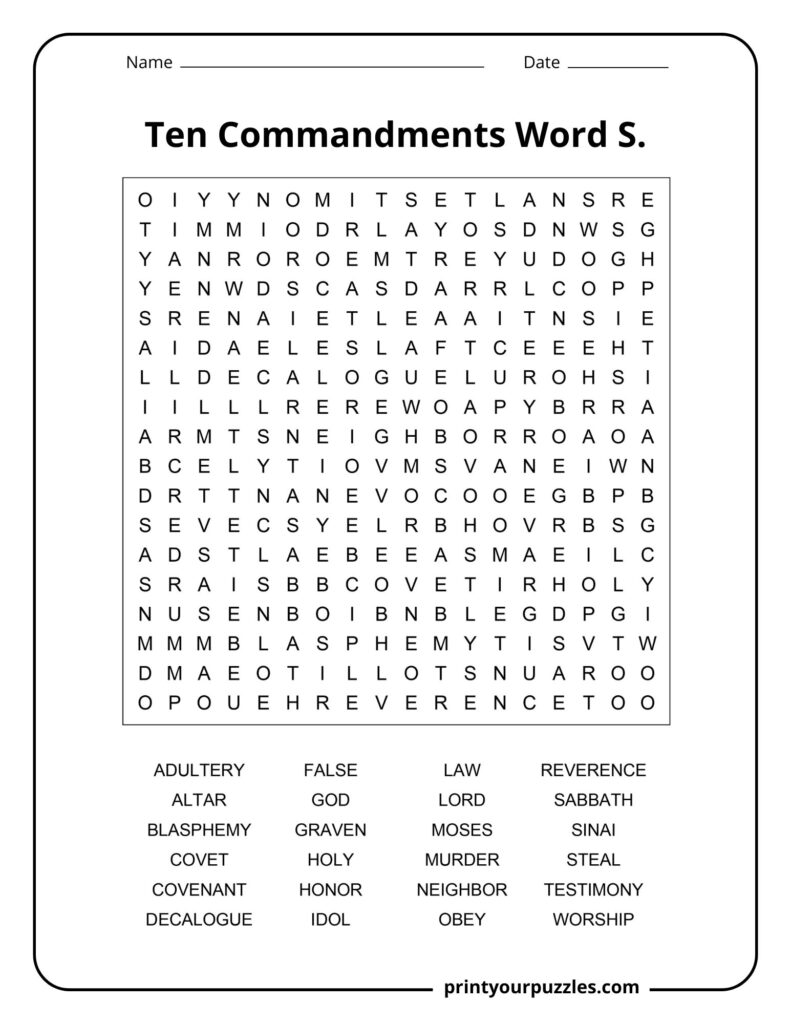
Medium Difficulty Word Search
Words to Find:
ADULTERY, ALTAR, BLASPHEMY, COVET, COVENANT, DECALOGUE, FALSE, GOD, GRAVEN HOLY, HONOR, IDOL, LAW, LORD, MOSES, MURDER, NEIGHBOR, OBEY REVERENCE, SABBATH, SINAI, STEAL, TESTIMONY, WORSHIP
All Words Defined
ADULTERY – The act of being unfaithful to one’s spouse through sexual relations with another person. The seventh commandment explicitly forbids this violation of marital trust and covenant.
ALTAR – A sacred structure or elevated platform used for offering sacrifices and worship to God. Altars were central to Israelite worship and covenant ceremonies throughout biblical history.
BLASPHEMY – Speaking irreverently or disrespectfully about God, using His name wrongly, or showing contempt for sacred things. This directly violates the third commandment regarding God’s holy name.
COVET – To desire or crave something that belongs to another person, whether possessions, relationships, or status. The tenth commandment specifically prohibits coveting your neighbor’s belongings or spouse.
COVENANT – A sacred agreement or binding promise between God and His people. The Ten Commandments represent the core terms of God’s covenant relationship established with Israel.
DECALOGUE – The formal term meaning “ten words” in Greek, referring specifically to the Ten Commandments given by God to Moses on Mount Sinai as foundational moral law.
FALSE – Untrue or deceptive, particularly referring to bearing false witness against others. The ninth commandment prohibits lying, especially testimony that could harm someone’s reputation or life.
GOD – The supreme divine being, Creator of the universe, and sole object of worship. The first commandment establishes that only God deserves worship and devotion.
GRAVEN – Carved or engraved, typically referring to idols or images. The second commandment forbids making graven images or idols to worship instead of the one true God.
HOLY – Set apart as sacred, pure, and consecrated to God. The Sabbath day is commanded to be kept holy, distinct from ordinary days for worship and rest.
HONOR – To show deep respect, reverence, and obedience. The fifth commandment specifically instructs children to honor their father and mother with dignity and care throughout life.
IDOL – A physical object, image, or false god worshiped instead of the true God. The second commandment explicitly prohibits making or worshiping idols of any kind.
LAW – Divine rules and commandments given by God to guide moral behavior and establish justice. The Ten Commandments form the foundational law of God’s covenant with Israel.
LORD – A title of authority and divinity referring to God. Used throughout the commandments to identify the divine lawgiver who brought Israel out of Egyptian bondage.
MOSES – The prophet and leader chosen by God to receive the Ten Commandments on Mount Sinai and deliver them to the Israelite people as divine law.
MURDER – The unlawful, intentional killing of another human being. The sixth commandment declares “You shall not murder,” protecting the sanctity and value of human life.
NEIGHBOR – Fellow human beings, particularly those in one’s community. Several commandments reference neighbors, emphasizing proper treatment, honesty, and respect for others’ property and relationships.
OBEY – To follow commands, submit to authority, and comply with instructions. Obedience to God’s commandments demonstrates faith, love, and reverence for the divine lawgiver.
REVERENCE – Deep respect, awe, and veneration shown toward God. The commandments call for reverence through proper worship, honoring God’s name, and observing holy days appropriately.
SABBATH – The seventh day of the week designated for rest and worship. The fourth commandment instructs keeping the Sabbath holy by ceasing work and focusing on God.
SINAI – The mountain where God appeared to Moses in fire and cloud, delivering the Ten Commandments amid thunder and earthquake to establish His covenant with Israel.
STEAL – To take someone else’s property without permission or right. The eighth commandment forbids stealing, protecting personal property rights and promoting honesty and trust in community.
TESTIMONY – A formal statement or witness bearing truth about events or character. The ninth commandment forbids false testimony, requiring truthfulness especially in legal and serious matters.
WORSHIP – The act of showing reverence, adoration, and devotion to God through prayer, sacrifice, and obedience. The first commandment demands exclusive worship of God alone.
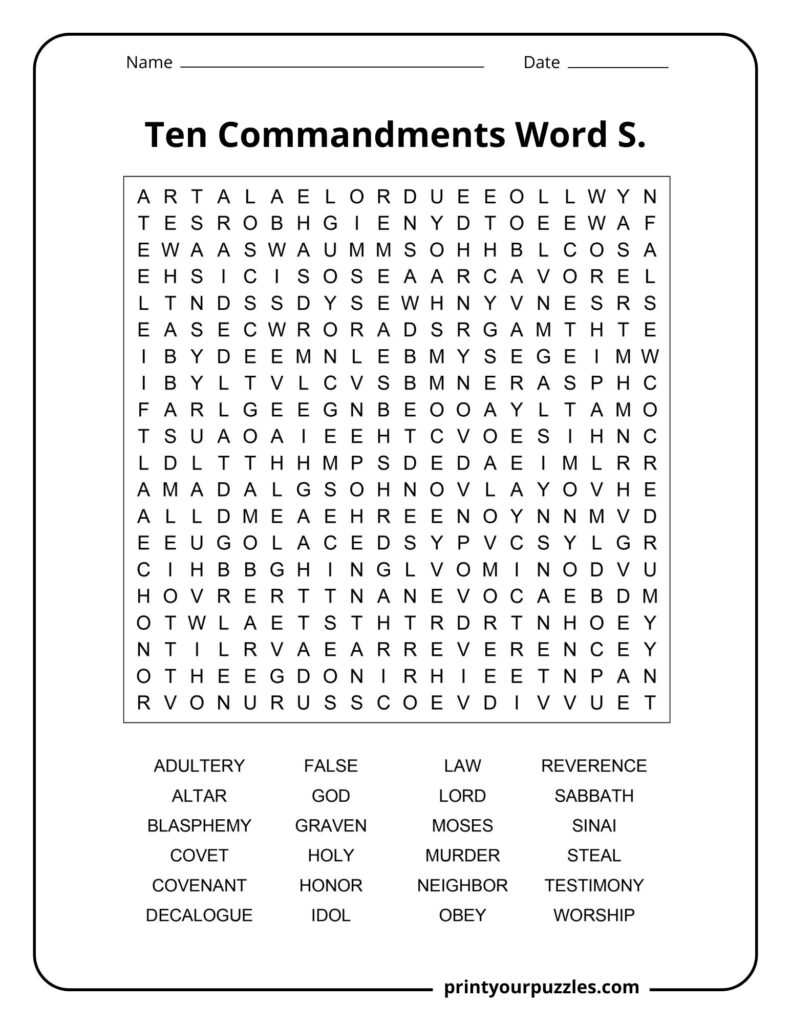
Hard Difficulty Word Search
Words to Find:
ADULTERY, ALTAR, BLASPHEMY, COVET, COVENANT, DECALOGUE, FALSE, GOD, GRAVEN HOLY, HONOR, IDOL, LAW, LORD, MOSES, MURDER, NEIGHBOR, OBEY REVERENCE, SABBATH, SINAI, STEAL, TESTIMONY, WORSHIP
6 Key FAQs About the Ten Commandments
5 Curious "Did You Know?" Facts About the Ten Commandments