

The Anointing of the Sick is a Christian sacrament that offers spiritual strength, comfort, and prayer to people facing serious illness, weakness, or the difficulties of old age. It is especially important in the Catholic Church, where it is recognized as one of the seven sacraments. Through this celebration, the Church asks God to support the sick person and give healing according to His will.
The sacrament has its roots in the Bible. In the Letter of James, Christians are told to call the elders of the Church when someone is sick. The elders are instructed to pray over the person and anoint them with oil in the name of the Lord. This passage connects prayer, faith, forgiveness, and care for those who are suffering.
During the Anointing of the Sick, a priest usually places blessed oil on the sick person’s forehead and hands while saying special prayers. The oil, often called the Oil of the Sick, symbolizes healing, strength, peace, and the presence of the Holy Spirit. The ceremony may take place in a church, hospital, care home, or private residence.
This sacrament is not only for people who are close to death. It may be received by anyone seriously ill, preparing for major surgery, experiencing declining health, or becoming weaker because of age. A person may also receive it again if the illness becomes more serious or if another serious condition develops.
The Anointing of the Sick may bring several spiritual benefits. It can provide courage during suffering, unite the sick person more closely with Christ, offer forgiveness of sins, and bring peace to both the individual and the family. Physical healing may also occur, although the sacrament mainly focuses on spiritual care and trust in God.
When death appears near, the sacrament may be celebrated together with Confession and Holy Communion. Communion received at this stage is sometimes called Viaticum, meaning spiritual food for the final journey. These rites help the person prepare with faith and hope.
An Anointing of the Sick word search puzzle can help readers review important terms connected with prayer, oil, healing, priests, faith, forgiveness, and compassionate care. While completing the puzzle, readers can better understand how this sacrament supports people during illness and reminds Christian communities to care for those who suffer.
We’ve dedicated a post to each of the Seven Sacraments: Anointing of the Sick, Baptism, Confirmation, Eucharist, Holy Orders, Marriage, and Reconciliation.
We have also curated seven books on the Seven Sacraments, each offering a unique perspective on this sacred theme. All seven books cover the complete set of sacraments, not just one individual sacrament. Every post in our Seven Sacraments series features a different book recommendation. Don’t miss them — a great read awaits you!
Related Word Searches:
Baptism | Confirmation | Eucharist | Reconciliation
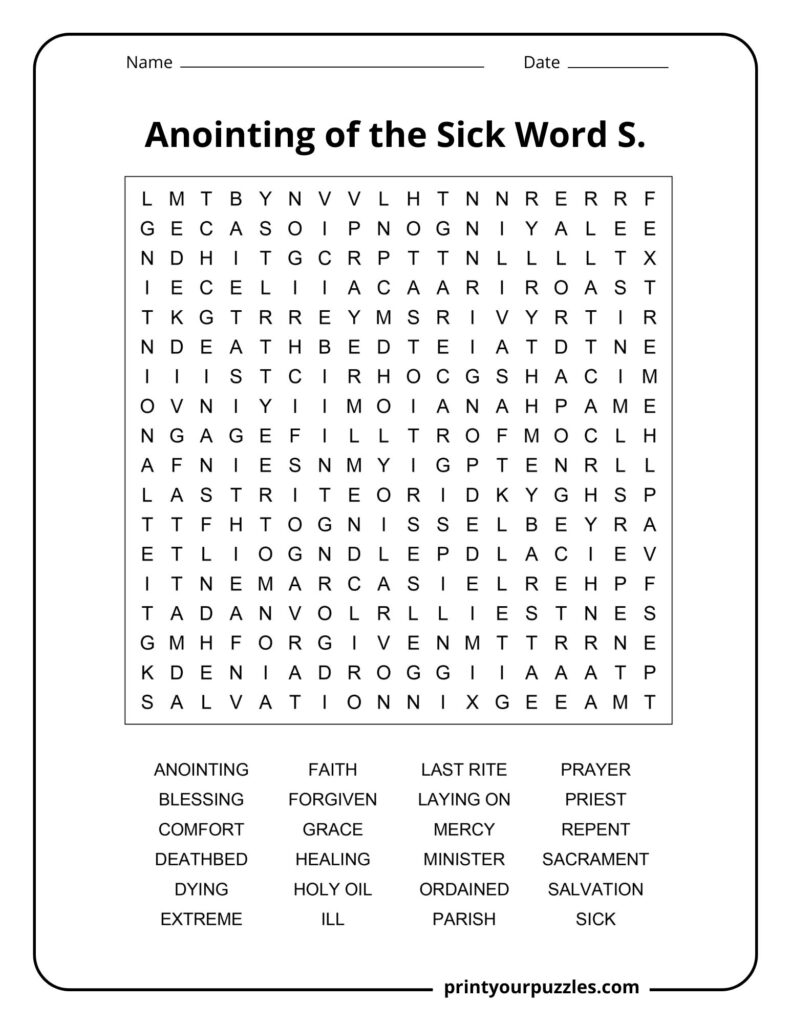
ANOINTING, BLESSING, COMFORT, DEATHBED, DYING, EXTREME, FAITH, FORGIVEN, GRACE, HEALING, HOLY OIL, ILL, LAST RITE, LAYING ON, MERCY, MINISTER, ORDAINED, PARISH, PRAYER, PRIEST, REPENT, SACRAMENT, SALVATION, SICK
ANOINTING – The sacred act of applying holy oil to a sick or dying person, performed by a priest as part of a Catholic sacramental ritual seeking healing and spiritual strength.
BLESSING – A prayer or spoken invocation asking God to grant favor, protection, and grace upon a sick person, conveying divine goodwill through an ordained minister’s words and gestures.
COMFORT – The spiritual and emotional relief given to the sick and dying through prayer, sacraments, and priestly presence, helping them face suffering and death with peace and hope.
DEATHBED – The place where a gravely ill or dying person lies, often where the Anointing of the Sick is administered, preparing the soul for its passage into eternal life.
DYING – The process of approaching death, during which the Church offers the Anointing of the Sick, Viaticum, and final prayers to spiritually accompany and strengthen the departing soul.
EXTREME – Historically referring to “Extreme Unction,” the last anointing given at the point of death, now broadened to include all seriously ill persons, not only those near death.
FAITH – The firm belief in God and the saving power of Jesus Christ, which underlies the sacrament, as the sick person and community trust in divine mercy, healing, and resurrection.
FORGIVEN – The state of having sins pardoned through God’s mercy, since the Anointing of the Sick also brings forgiveness of sins, restoring the soul’s relationship with God when needed.
GRACE – The free and unmerited gift of God’s divine life, strengthened through the sacrament, giving the sick person courage, peace, and spiritual fortitude to endure illness and suffering.
HEALING – The restoration of physical, emotional, or spiritual wholeness sought through the sacrament, where God may grant recovery of health or inner peace according to His holy will.
HOLY OIL – The blessed olive oil, known as Oil of the Sick, consecrated by the bishop, used by the priest to anoint the forehead and hands of the ill person during the sacrament.
ILL – The condition of being sick or suffering from a serious ailment, which qualifies a Catholic to receive the Anointing of the Sick and the Church’s spiritual care and support.
LAST RITE – The final sacramental rites offered to a dying Catholic, including Anointing of the Sick, Confession, and Viaticum, preparing the soul for its journey into eternal life with God.
LAYING ON – The ancient gesture by which the priest places his hands on the sick person’s head in silence, invoking the Holy Spirit’s presence, healing power, and divine comfort upon them.
MERCY – God’s compassionate love and forgiveness freely extended to the sick and suffering, central to the sacrament, reflecting Christ’s own ministry of healing the sick throughout the Gospels.
MINISTER – The ordained priest or bishop who administers the Anointing of the Sick, acting in the person of Christ to bring sacramental grace, prayer, and spiritual care to the ill.
ORDAINED – The state of a man who has received the Sacrament of Holy Orders, granting him the authority and duty to validly celebrate and administer the Anointing of the Sick.
PARISH – The local Catholic community to which the sick person belongs, called to pray for and support the ill, and through whose priest the sacrament is typically administered and celebrated.
PRAYER – The communal and personal conversation with God offered during the sacrament, including psalms, intercessions, and the prayer of faith over the sick, asking for healing and divine strength.
PRIEST – The ordained minister of the Catholic Church who alone has the authority to administer the Anointing of the Sick, anointing with holy oil and praying over the suffering person.
REPENT – The act of sincerely turning away from sin and returning to God, often accompanying the sacrament, as the sick person examines their conscience and seeks reconciliation and divine forgiveness.
SACRAMENT – One of the seven sacred rites of the Catholic Church instituted by Christ, through which grace is conferred, with the Anointing of the Sick being specifically dedicated to the ill.
SALVATION – The ultimate goal of all sacraments, including the Anointing of the Sick, referring to the deliverance of the human soul from sin and death into eternal communion with God.
SICK – A person suffering from serious illness or physical weakness, who is eligible and encouraged by the Church to receive the Anointing of the Sick for spiritual and possible physical healing.
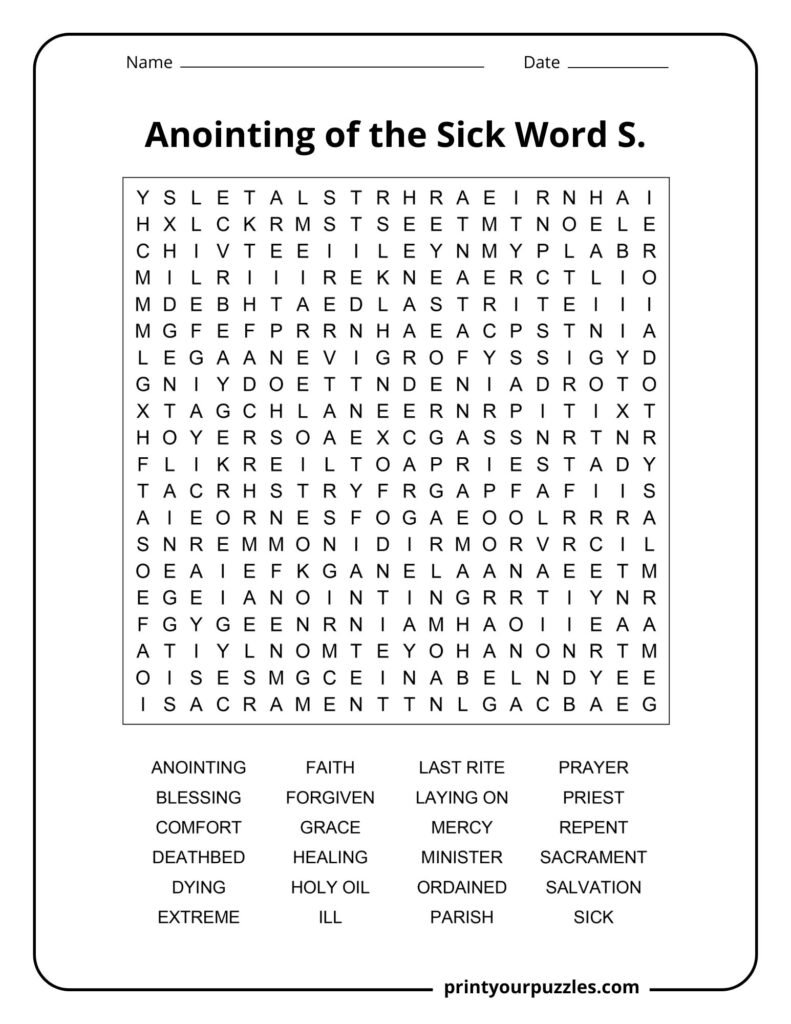
ANOINTING, BLESSING, COMFORT, DEATHBED, DYING, EXTREME, FAITH, FORGIVEN, GRACE, HEALING, HOLY OIL, ILL, LAST RITE, LAYING ON, MERCY, MINISTER, ORDAINED, PARISH, PRAYER, PRIEST, REPENT, SACRAMENT, SALVATION, SICK
Any Catholic facing serious illness, surgery, or the frailty of old age may receive this sacrament. It is not reserved exclusively for those who are dying.
Only an ordained priest or bishop may validly administer the Anointing of the Sick, acting in the person of Christ to bring sacramental grace to the suffering person.
A Catholic may receive the Anointing of the Sick multiple times, including each time a serious illness worsens or a new grave condition arises throughout their life.
The sacrament brings spiritual strength, peace, and courage, forgives sins when needed, unites the sick with Christ’s suffering, and may restore physical health if God wills it.
Last Rites is a broader term encompassing Confession, Anointing of the Sick, and Viaticum together, while the Anointing of the Sick is one specific sacrament within that final spiritual preparation.
The Seven Sacraments of the Catholic Church by Romanus Cessario. Rooted in Thomistic theology, this book offers a rigorous yet accessible exploration of all seven sacraments, explaining their necessity, causality, and role in sanctifying Christian life — essential for students and faithful alike.
This older name, meaning “final anointing,” was used for centuries but was updated after the Second Vatican Council to reflect its broader application to all seriously ill persons.
Every Holy Week, during the Chrism Mass, the diocesan bishop consecrates the Oil of the Sick, which is then distributed to all parishes throughout the entire diocese for sacramental use.
James 5:14-15 explicitly instructs elders to anoint the sick with oil and pray over them, making it one of the most scripturally grounded of all seven Catholic sacraments.
The Gospel of Mark records that the apostles anointed many sick people with oil and healed them, directly reflecting Christ’s own compassionate healing mission among the suffering.
Parish communities sometimes gather for a communal celebration of this sacrament, allowing multiple sick or elderly parishioners to receive anointing together during a special dedicated liturgical service.