
National Coffee Day is an informal celebration of one of the world’s most popular beverages and the people who help bring it from farms to cups. In the United States, it is observed each year on September 29. It should not be confused with International Coffee Day, which the International Coffee Organization celebrates worldwide on October 1.
Coffee begins with the seeds of fruit produced by coffee plants, commonly known as coffee beans. These plants grow best in warm regions near the equator, including parts of Central and South America, Africa, and Asia. After the ripe coffee cherries are harvested, the beans are removed, processed, dried, roasted, ground, and brewed. Each stage can influence the drink’s flavor, aroma, strength, and quality.
People prepare coffee in many different ways. A simple cup of brewed coffee remains a daily favorite, while espresso forms the base of drinks such as cappuccinos, lattes, americanos, and mochas. Coffee may be served hot or iced and flavored with milk, cream, sugar, syrups, cinnamon, chocolate, or other ingredients. Preparation methods include drip machines, French presses, moka pots, pour-over brewers, and espresso machines.
Coffee shops have also become popular places for conversation, reading, studying, working, and meeting friends. Baristas prepare drinks, explain different roasts, and sometimes create decorative patterns in milk foam. On National Coffee Day, cafés and coffee companies may offer special promotions, complimentary drinks, tastings, or limited-edition beverages.
The occasion can also encourage people to think about coffee’s long journey. Farmers, harvesters, exporters, roasters, delivery workers, and baristas all contribute to the final cup. Topics such as fair trade, sustainable farming, environmentally responsible packaging, and fair payment for producers have become increasingly important within the coffee industry.
National Coffee Day can be celebrated by trying a new roast, visiting an independent café, learning how coffee is produced, or sharing a cup with someone special. Tea drinkers and people who avoid caffeine can still enjoy decaffeinated coffee or simply learn about its cultural and economic importance.
Pour yourself a favorite drink and enjoy this tasty National Coffee Day word search, featuring 24 carefully selected words inspired by beans, brewing, cafés, aromas, roasts, baristas, popular drinks, and the comforting experience of a fresh cup of coffee.
Related Word Searches:
National Donut Day | National Book Lovers Day | National Ice Cream Day | September | Autumn
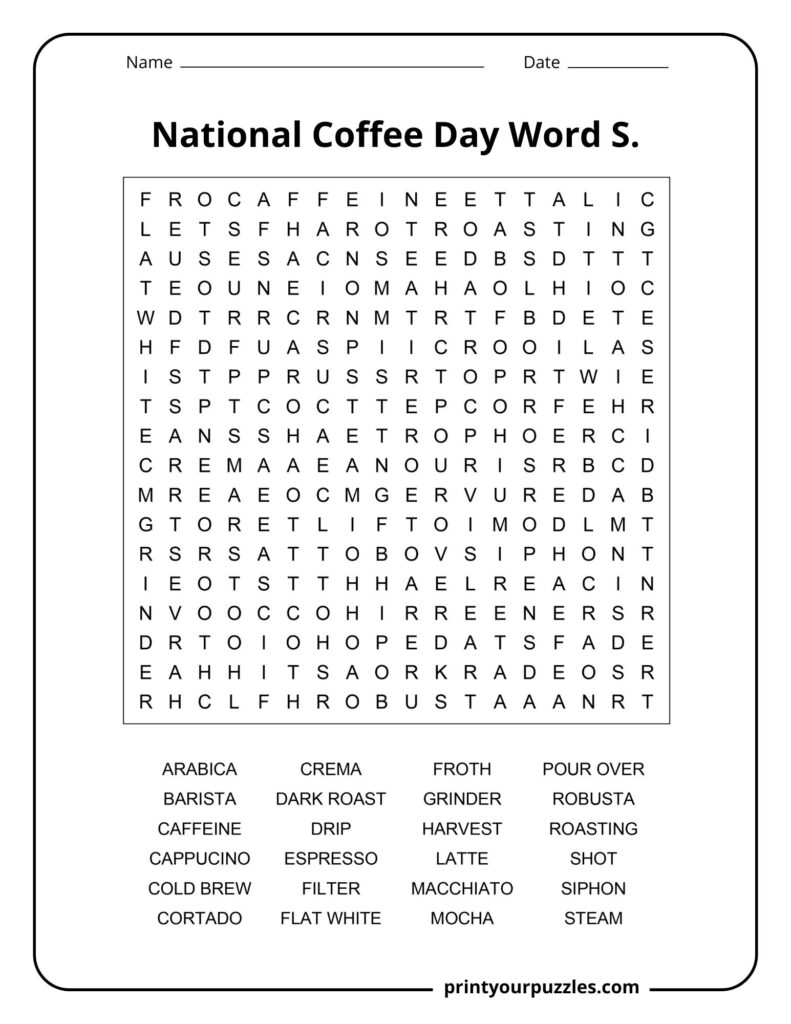
ARABICA, BARISTA, CAFFEINE, CAPPUCINO, COLD BREW, CORTADO, CREMA, DARK ROAST, DRIP, ESPRESSO, FILTER, FLAT, WHITE, FROTH, GRINDER, HARVEST, LATTE, MACCHIATO, MOCHA, POUR OVER, ROBUSTA, ROASTING, SHOT, SIPHON, STEAM
ARABICA – The most popular coffee species in the world, known for its smooth, mild flavor and slight acidity. Grown at high altitudes, it represents about 60% of global coffee production.
BARISTA – A trained coffee professional skilled in preparing and serving espresso-based drinks. A great barista masters milk steaming, extraction timing, and latte art to craft the perfect cup.
CAFFEINE – A natural stimulant found in coffee beans that blocks adenosine receptors in the brain, reducing fatigue and increasing alertness. It is the world’s most widely consumed psychoactive substance.
CAPPUCINO – A classic Italian espresso drink made with equal parts espresso, steamed milk, and thick milk foam. Traditionally served in a small cup and enjoyed as a morning beverage in Italy.
COLD BREW – Coffee made by steeping coarsely ground beans in cold water for 12 to 24 hours. The result is a smooth, naturally sweet, low-acidity concentrate served chilled over ice.
CORTADO – A Spanish espresso-based drink balanced with an equal amount of warm steamed milk to reduce acidity. Served in a small glass, it delivers bold flavor with a velvety, smooth texture.
CREMA – The golden-brown, creamy foam that forms on top of a freshly pulled espresso shot. It indicates proper extraction and adds a rich, slightly bitter layer of flavor to the coffee.
DARK ROAST – Coffee beans roasted at high temperatures until they develop a deep brown color and bold, smoky flavor. The extended roasting process reduces acidity and brings out rich, bittersweet chocolate notes.
DRIP – A common brewing method where hot water slowly passes through ground coffee held in a filter. It produces a clean, consistent cup and remains one of the most popular methods worldwide.
ESPRESSO – A concentrated coffee brewed by forcing hot pressurized water through finely ground beans. The foundation of many coffee drinks, it delivers an intense, rich flavor in a small but powerful shot.
FILTER – A porous paper, cloth, or metal barrier used in brewing to separate coffee grounds from the liquid. It produces a clean, clear cup by trapping oils and fine particles during extraction.
FLAT WHITE – An Australian espresso drink made with a double shot and a small amount of velvety, microfoam milk. Smaller and stronger than a latte, it highlights the espresso flavor with silky texture.
FROTH – The light, airy foam created by aerating steamed milk with a steam wand. Used to top cappuccinos and lattes, it adds a creamy, cloud-like texture and enhances the overall drinking experience.
GRINDER – A device used to crush roasted coffee beans into grounds of varying coarseness. Grind size directly affects extraction and flavor, making a quality grinder essential for brewing great coffee.
HARVEST – The seasonal process of picking ripe coffee cherries from trees, typically done once a year. Harvesting method, whether hand-picked or machine-stripped, greatly influences the final quality of the beans.
LATTE – A popular espresso-based drink made with a generous pour of steamed milk and a light layer of foam. Its mild, creamy flavor makes it one of the most widely ordered coffee drinks globally.
MACCHIATO – An Italian word meaning “stained,” this espresso drink is marked with just a small dollop of foamed milk. It delivers bold espresso flavor with a subtle creamy touch in every sip.
MOCHA – A delicious combination of espresso, steamed milk, and chocolate syrup or cocoa. Topped with whipped cream, it bridges the worlds of coffee and hot chocolate into one indulgent, sweet beverage.
POUR OVER – A manual brewing method where hot water is slowly poured in circular motions over ground coffee in a filter. It offers precise control over extraction, producing a clean, aromatic, and flavorful cup.
ROBUSTA – A hardy coffee species with a stronger, more bitter flavor than Arabica, and nearly double the caffeine content. Widely used in espresso blends and instant coffee for its full body and crema.
ROASTING – The heat-driven process that transforms raw green coffee beans into aromatic, flavorful brown beans ready for brewing. Temperature and duration during roasting determine the bean’s final taste, color, and aroma profile.
SHOT – A single serving of espresso, typically around 30 milliliters, extracted in 25 to 30 seconds. It forms the bold, concentrated base of countless coffee drinks and is the heart of espresso culture.
SIPHON – A theatrical and scientific brewing method that uses vapor pressure and vacuum to brew coffee. Known for producing an exceptionally clean and delicate cup, it is as visually impressive as it is delicious.
STEAM – The hot pressurized vapor produced by an espresso machine’s wand, used to heat and texture milk. Proper steaming technique creates silky microfoam essential for lattes, cappuccinos, and other espresso-based drinks.
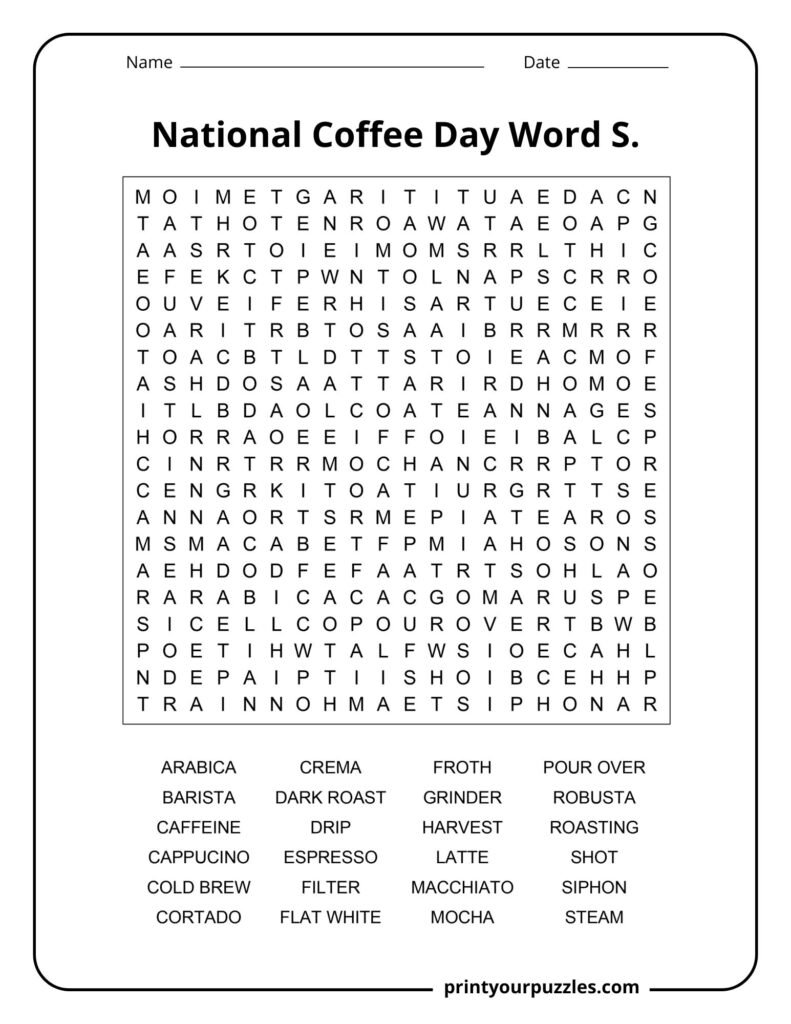
ARABICA, BARISTA, CAFFEINE, CAPPUCINO, COLD BREW, CORTADO, CREMA, DARK ROAST, DRIP, ESPRESSO, FILTER, FLAT, WHITE, FROTH, GRINDER, HARVEST, LATTE, MACCHIATO, MOCHA, POUR OVER, ROBUSTA, ROASTING, SHOT, SIPHON, STEAM
National Coffee Day is celebrated on September 29th every year in the United States and many other countries, bringing coffee lovers together to honor their favorite beverage.
The day aims to promote awareness of coffee culture, celebrate the hard work of farmers and baristas worldwide, and encourage people to explore and appreciate different coffee varieties and brewing methods.
You can celebrate by visiting your favorite local café, trying a new brewing method at home, sharing coffee with friends, or taking advantage of special deals and free coffee offers from major brands.
The holiday’s exact origins are unclear, but it gained widespread recognition in the early 2000s. The International Coffee Organization officially declared October 1st as International Coffee Day in 2015.
Yes, many popular coffee chains and independent cafés offer free cups, discounts, or special promotions on National Coffee Day, making it the perfect excuse to explore new drinks and reward your coffee habit.
Both of these websites specialize in celebrating unofficial national days and offer additional facts, history, and traditions about National Coffee Day:
National Today and National Day Calendar
But don’t forget to return—only Print Your Puzzles lets you download and print a National Coffee Day word search!
Only crude oil surpasses coffee in global trade volume, with over 2.25 billion cups consumed daily worldwide, making it one of humanity’s most beloved and economically significant beverages.
Major chains like Starbucks, Dunkin’, and McDonald’s give away enormous quantities of free coffee on September 29th, making it one of the most generous food-related celebration days in the United States.
Early African tribes mixed ground coffee beans with animal fat to create energy-rich snack balls. It took centuries before brewing coffee as a liquid drink became the worldwide standard we know today.
Finns drink an average of 12 kilograms of coffee per person annually, far surpassing American consumption. National Coffee Day celebrations in Nordic countries reflect a deeply rooted and passionate coffee culture.
Originally meaning wine or a dark beverage, “qahwa” evolved into the Turkish “kahve” and then the Dutch “koffie,” eventually becoming the universally recognized word coffee we use and celebrate today.