
Autumn is a season of change, known for cooler temperatures, colorful leaves, harvest traditions, and a gradual return to quieter routines. It is also called fall, especially in the United States and Canada, because leaves fall from many trees during this time of year. In the Northern Hemisphere, autumn generally begins in September and continues through November, while in the Southern Hemisphere it usually lasts from March to May.
One of the most noticeable features of autumn is the transformation of the natural landscape. As daylight hours become shorter and temperatures fall, the leaves of many deciduous trees change from green to shades of yellow, orange, red, and brown. Eventually, they drop to the ground, creating colorful paths and piles of leaves. Animals also respond to the changing season. Some gather food, grow thicker coats, or prepare for migration and hibernation.
Autumn has long been connected with the harvest. Farmers collect crops such as apples, corn, pumpkins, grapes, and squash, while markets fill with seasonal produce. In many places, people visit orchards, pumpkin patches, farms, and harvest festivals. Apple picking, hayrides, corn mazes, and countryside walks are popular activities that allow families and friends to enjoy the cooler weather.
The season also has a warm and comforting atmosphere. People begin wearing sweaters, jackets, boots, and scarves, while homes may be decorated with leaves, acorns, pumpkins, and candles. Seasonal foods often include soups, pies, roasted vegetables, baked apples, and dishes flavored with cinnamon or other warming spices. Hot drinks become especially welcome as evenings grow colder.
Several important celebrations take place during autumn. Halloween brings costumes, decorations, and trick-or-treating, while Thanksgiving in the United States focuses on gratitude, family gatherings, and traditional meals. Many cultures also hold festivals that celebrate crops, ancestors, light, or the changing season.
Although autumn marks the end of summer, it is not simply a season of endings. It can also represent preparation, reflection, and renewal. Schools begin new terms, routines return, and people often spend more time reading, crafting, cooking, or enjoying nature.
Our Autumn word search brings together vocabulary connected with changing leaves, harvest foods, seasonal weather, clothing, wildlife, and familiar fall activities. It offers a relaxing printable challenge for classrooms, families, or anyone who enjoys the colors and traditions of the season.
Related Word Searches:
September | October | November | Halloween | Thanksgiving
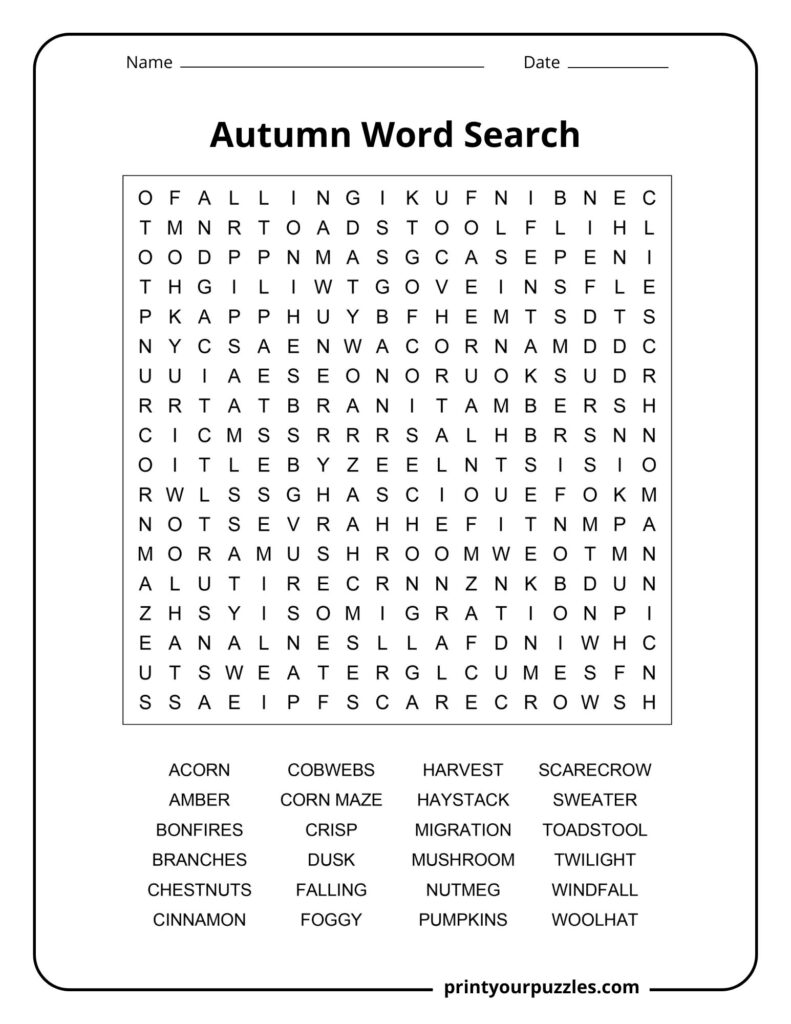
ACORN, AMBER, BONFIRES, BRANCHES, CHESTNUTS, CINNAMON, COBWEBS, CORN MAZE, CRISP, DUSK, FALLING, FOGGY, HARVEST, HAYSTACK, MIGRATION, MUSHROOM, NUTMEG, PUMPKINS, SCARECROW, SWEATER, TOADSTOOL, TWILIGHT, WINDFALL, WOOL HAT
ACORN – The small, oval-shaped nut of an oak tree, capped by a rough cup-like base, often gathered by squirrels as a vital food source stored for the cold winter months ahead.
AMBER – A warm golden-orange colour that perfectly captures the rich, glowing tones of autumn leaves as they change and drift slowly from the branches of deciduous trees in the cooling air.
BONFIRES – Large outdoor fires built from stacked wood and dry fallen leaves, traditionally lit during autumn evenings to celebrate seasonal festivals, clear garden debris, and provide welcome warmth against the chill.
BRANCHES – The woody extensions growing outward from a tree trunk that become increasingly bare and skeletal during autumn as their colourful leaves detach and fall gently to the ground below.
CHESTNUTS – Shiny, reddish-brown nuts encased in a spiky green shell that split open when ripe, commonly roasted over open fires during autumn and enjoyed as a warm, sweet seasonal treat.
CINNAMON – A fragrant spice derived from the dried inner bark of tropical trees, whose warm and sweet aroma becomes especially associated with autumn baking, hot drinks, and cosy seasonal recipes.
COBWEBS – Delicate silken threads spun by spiders and stretched between branches, fence posts, and garden corners, often made dramatically visible on misty autumn mornings when beaded with tiny droplets of dew.
CORN MAZE – A popular autumn attraction created by cutting winding paths through tall, dried-out maize fields, inviting families and visitors to navigate the twisting routes and enjoy the harvest season atmosphere.
CRISP – Describing the sharp, fresh, and invigorating quality of cool autumn air that carries a clean bite, especially noticeable on clear mornings when frost begins to settle lightly on the ground.
DUSK – The brief and atmospheric period of fading light just after sunset, which arrives noticeably earlier each evening during autumn as the days shorten and the nights grow longer and darker.
FALLING – The gentle, downward drifting motion of leaves released from their branches during autumn, tumbling and spinning slowly through the air before settling in rustling, colourful piles across the ground below.
FOGGY – Characterised by a thick, low-lying mist that frequently settles over fields, rivers, and towns during autumn mornings, softening outlines and creating an eerily quiet, atmospheric mood across the landscape.
HARVEST – The seasonal gathering of ripened crops from fields and orchards during autumn, representing a critical time for farmers to collect grain, fruit, and vegetables before the arrival of winter weather.
HAYSTACK – A large, neatly piled mound of dried hay gathered after the summer cut and stacked in fields during autumn, serving as essential winter fodder and feed for farm livestock.
MIGRATION – The seasonal mass movement of birds and other animals travelling from their summer habitats to warmer regions as temperatures drop during autumn, following ancient instinctive routes across continents and oceans.
MUSHROOM – A fleshy fungal growth that thrives in the damp, cool conditions of autumn forests, sprouting from decaying wood and leaf litter and eagerly sought by foragers for cooking and eating.
NUTMEG – A warm and aromatic spice ground from the hard seed of a tropical evergreen tree, widely used to flavour autumn desserts, mulled drinks, pumpkin dishes, and comforting baked goods.
PUMPKINS – Large, round, orange-skinned gourds harvested in autumn and used widely for seasonal decoration, carved into lanterns for Halloween, or cooked into soups, pies, and other warming seasonal dishes.
SCARECROW – A human-shaped figure dressed in old clothing and propped up in fields during the harvest season to frighten away birds and protect ripening crops from being eaten before collection.
SWEATER – A knitted woollen or fleece garment pulled over the head to cover the upper body, becoming an essential layer of clothing as autumn temperatures drop and the need for warmth increases daily.
TOADSTOOL – A wild mushroom with a distinctive umbrella-shaped cap, often vividly coloured in red or brown, that appears in woodland and grassy areas during the damp and cool conditions of autumn.
TWILIGHT – The soft, diffused glow of light that lingers in the sky after sunset, creating a brief, beautiful transition between day and night that feels especially magical and melancholic during autumn evenings.
WINDFALL – Ripe fruit blown from trees by strong autumn winds and found lying scattered across the ground, ready to be gathered and used before spoiling, often for cider pressing or jam making.
WOOL HAT – A snug knitted hat made from warm wool or similar fibre, pulled over the head to retain heat and protect the ears during cold, blustery autumn days spent outdoors.
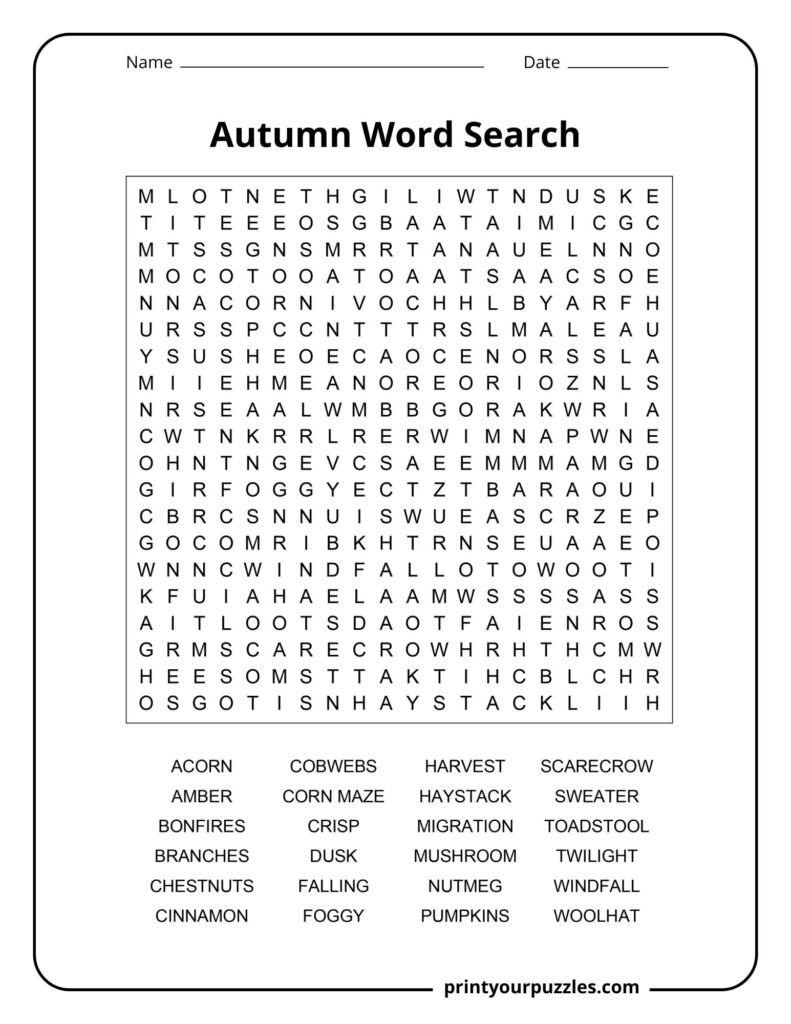
ACORN, AMBER, BONFIRES, BRANCHES, CHESTNUTS, CINNAMON, COBWEBS, CORN MAZE, CRISP, DUSK, FALLING, FOGGY, HARVEST, HAYSTACK, MIGRATION, MUSHROOM, NUTMEG, PUMPKINS, SCARECROW, SWEATER, TOADSTOOL, TWILIGHT, WINDFALL, WOOL HAT
Cooler temperatures and shorter days cause trees to stop producing chlorophyll, revealing hidden yellow and orange pigments while red pigments are newly produced before leaves fall.
Astronomically, autumn begins at the equinox — around 22 September in the Northern Hemisphere — when day and night are roughly equal in length before nights grow progressively longer.
Some animals hibernate, others migrate, and many spend autumn stockpiling food. These survival strategies are triggered by falling temperatures and reduced daylight signalling the approaching harshness of winter.
Before modern food storage, autumn was the critical window to gather crops before frost arrived. Communities celebrated together with gratitude, sharing the bounty and ensuring enough food to survive winter.
Yes. Reduced sunlight lowers serotonin and melatonin levels, which can affect sleep and mood. Many people experience low energy or seasonal affective disorder as daylight hours shorten through autumn.
Autumn is the most literary of seasons — the light turns golden, the air sharpens, and the world grows quietly, beautifully melancholy. These five books share autumn’s particular mood: reflective, rich, and tinged with the knowledge that things are passing.
Rebecca – Daphne du Maurier. Fog, a gothic mansion, buried secrets, and creeping dread. Du Maurier’s masterpiece is autumn distilled — beautiful, atmospheric, and deeply unsettling beneath the surface.
Cannery Row – John Steinbeck. Lazy, warm, a little melancholy — like the last golden afternoons before the cold arrives. Steinbeck’s tender world feels like autumn’s most generous, unhurried days.
Autumn – Ali Smith. A mosaic of memory, friendship, and a country changing beyond recognition. Written entirely in autumn’s reflective, shifting light — a book that thinks the way the season feels.
In the Woods – Tana French. A detective investigates a murder in an ancient Irish forest as the leaves turn. Atmospheric, twisting, and drenched in autumn’s uneasy, gorgeous darkness.
Something Wicked This Way Comes – Ray Bradbury. A dark carnival arrives in a small town as October closes in. Bradbury at his most magical and strange — autumn captured in all its wonder and dread.
The green chlorophyll in leaves masks yellow and orange pigments all year long. Autumn simply removes that green veil, finally revealing the colours that were always hidden underneath.
This forgetfulness is surprisingly beneficial — unrecovered acorns frequently germinate and grow into new oak trees, making squirrels accidental and highly effective planters of forests across the landscape.
The word “autumn” only became common after the French-speaking Normans arrived in England. Before that, English speakers simply called the season “harvest,” reflecting its most important practical purpose.
Male spiders leave their webs in search of mates during autumn, making them appear more frequently indoors and outdoors. It is mating season, not a mysterious seasonal invasion, explaining their sudden abundance.
That distinctive earthy autumn scent comes largely from geosmin, a chemical released by soil bacteria as they break down fallen, decaying leaves blanketing the damp forest and garden floors.