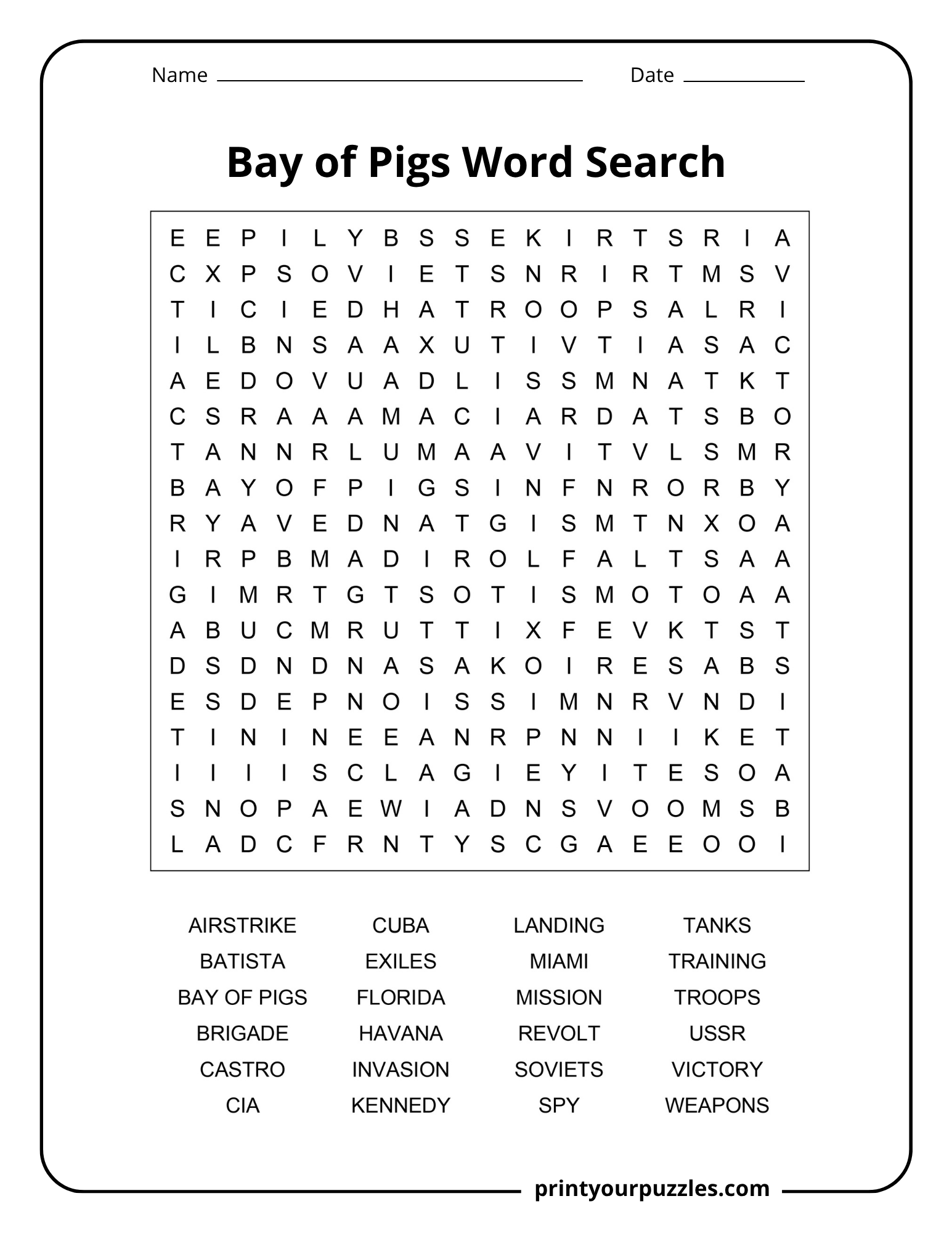
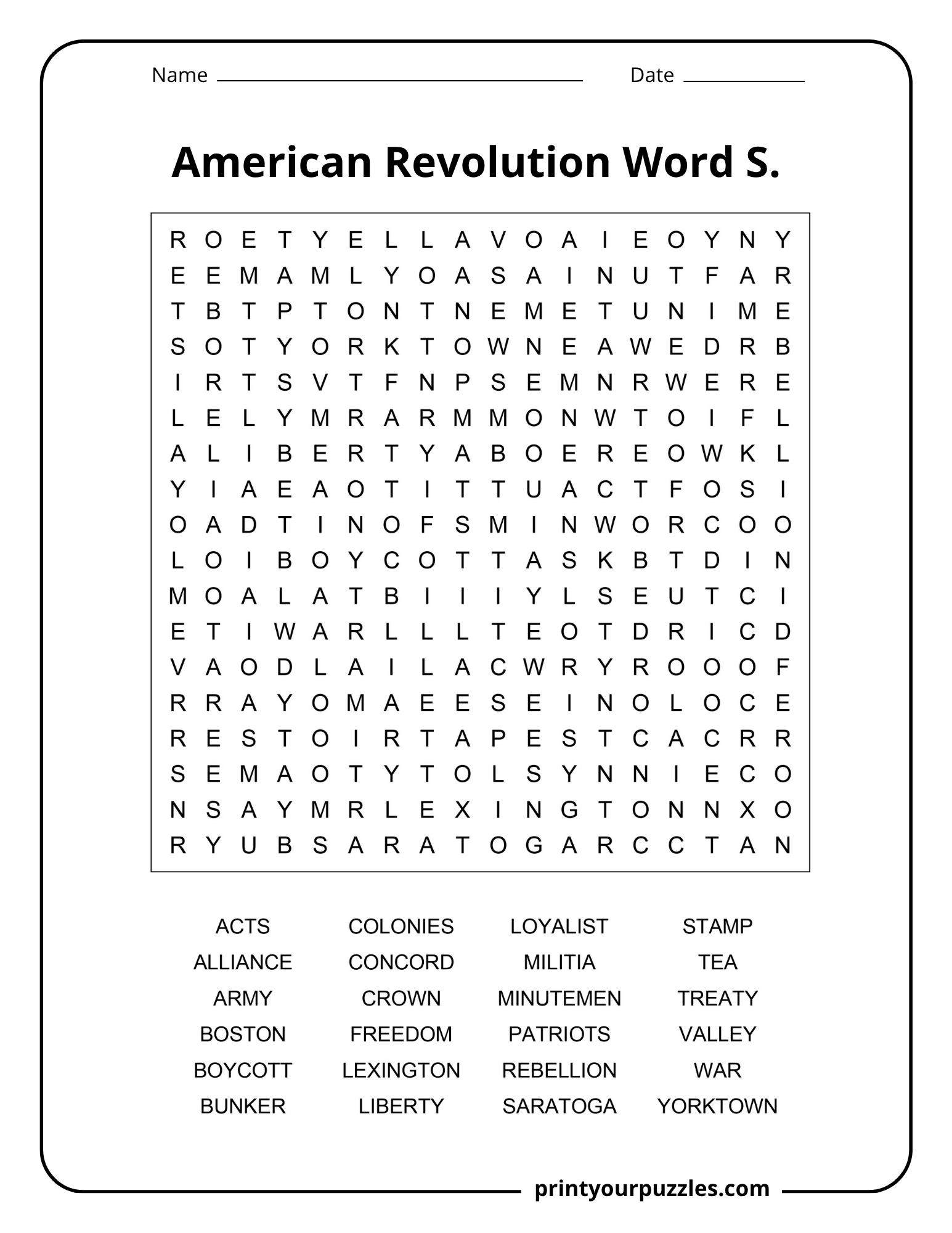
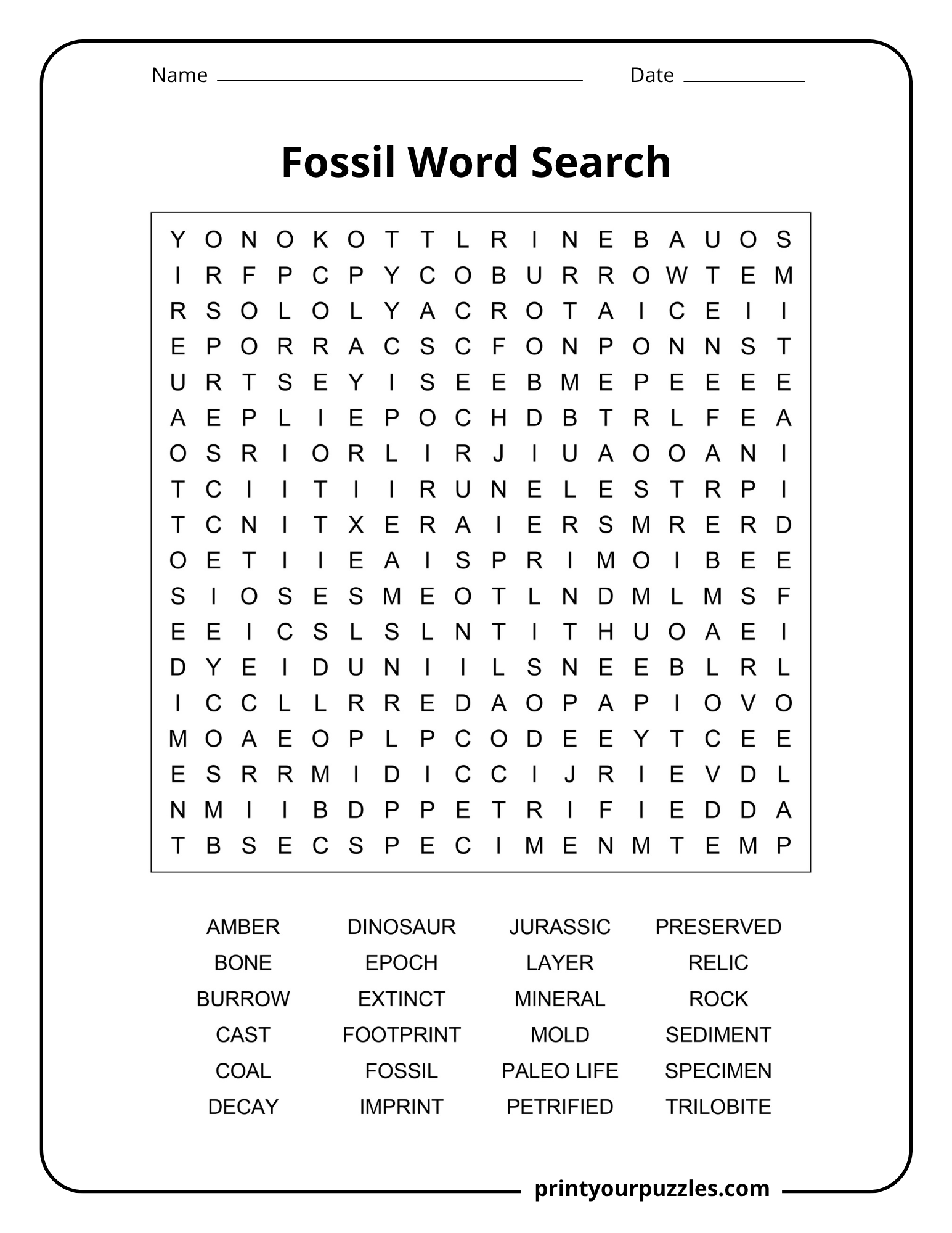
The Civil Rights Movement was a major struggle for equality and justice in the United States, especially during the 1950s and 1960s. Its main goal was to end racial segregation and discrimination against African Americans and to secure equal rights under the law. Although slavery had ended in 1865, many Black Americans continued to face unfair laws, violence, limited opportunities, and separation in schools, restaurants, transportation, housing, and public spaces.
In the Southern states, segregation was enforced through laws known as Jim Crow laws. These rules kept Black and white people separated and often prevented African Americans from voting. Civil rights activists challenged this system through peaceful protests, court cases, marches, boycotts, speeches, and community organizing.
One of the movement’s most important early events occurred in 1955, when Rosa Parks refused to give up her seat to a white passenger on a bus in Montgomery, Alabama. Her arrest led to the Montgomery Bus Boycott, which lasted more than a year and helped bring national attention to the fight against segregation. Martin Luther King Jr. became a leading figure during the boycott and later promoted nonviolent resistance as a powerful way to achieve change.
Other important events included the Freedom Rides, student sit-ins, the Birmingham Campaign, and the 1963 March on Washington. During that march, Martin Luther King Jr. delivered his famous “I Have a Dream” speech before a large crowd gathered near the Lincoln Memorial.
The movement helped bring about important federal laws. The Civil Rights Act of 1964 prohibited segregation and discrimination in many public places and workplaces. The Voting Rights Act of 1965 protected voting rights and challenged unfair practices designed to prevent African Americans from voting.
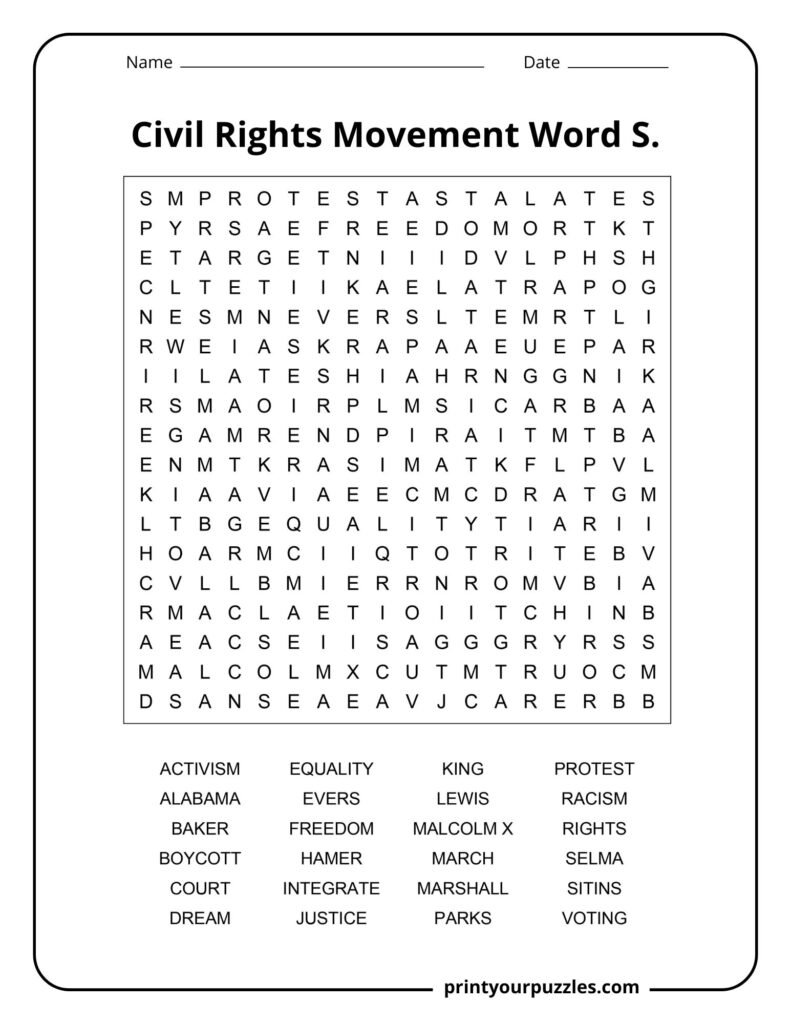
Learning about the movement also means recognizing the work of many people, including Ella Baker, John Lewis, Thurgood Marshall, Fannie Lou Hamer, Medgar Evers, and thousands of local activists. A printable Civil Rights Movement word search can introduce important names, places, events, and ideas connected to this historic struggle.
The movement changed American society, but its influence continues today. It reminds us that progress often requires courage, organization, persistence, and ordinary people working together to defend equality and human dignity.
Related Word Searches:
Civil Rights Act | Martin Luther King Jr. | Rosa Parks | Lyndon B. Johnson | John F. Kennedy | Reconstruction Era
ACTIVISM – Organized efforts to create political or social change through protests, education, community action, legal challenges, and public campaigns supporting equality and civil rights.
ALABAMA – Southern state where major Civil Rights Movement events occurred, including the Montgomery Bus Boycott, Birmingham Campaign, Selma marches, and attacks against peaceful demonstrators.
BAKER – Ella Baker was an influential organizer who supported grassroots leadership, helped establish the Student Nonviolent Coordinating Committee, and encouraged young activists to lead campaigns.
BOYCOTT – Organized refusal to purchase goods or use services as a form of protest, famously used during the Montgomery Bus Boycott against segregated transportation.
COURT – Legal institution where civil rights lawyers challenged segregation and discrimination, producing important decisions such as Brown v. Board of Education and stronger protections for equality.
DREAM – Symbol of Martin Luther King Jr.’s vision of racial equality, famously expressed during his 1963 speech at the March on Washington in Washington, D.C.
EQUALITY – Principle that every person should receive the same rights, opportunities, protection, and treatment regardless of race, ethnicity, religion, gender, or social background.
EVERS – Medgar Evers was a Mississippi civil rights activist who fought segregation and voting discrimination before being assassinated outside his home in 1963.
FREEDOM – Central goal of the Civil Rights Movement, representing equal opportunities, personal dignity, voting access, legal protection, and freedom from segregation and racial discrimination.
HAMER – Fannie Lou Hamer was a Mississippi voting rights activist who challenged racial discrimination and helped organize the Mississippi Freedom Democratic Party during the 1960s.
INTEGRATE – To end racial separation by allowing people of different races to attend the same schools, use the same facilities, and participate equally in society.
JUSTICE – Fair treatment under laws and institutions, including equal protection, voting rights, educational opportunities, and accountability for racial violence, discrimination, and other civil rights violations.
KING – Martin Luther King Jr. was a leading civil rights activist who promoted nonviolent protest, delivered inspiring speeches, and helped achieve major legal and social reforms.
LEWIS – John Lewis was a student activist, Freedom Rider, march organizer, and future congressman who remained dedicated to equality, voting rights, and peaceful social change.
MALCOLM X – Influential African American leader who promoted Black pride, self-determination, and human rights while challenging racism, segregation, and inequality during the Civil Rights era.
MARCH – Organized public demonstration where people walk together to demand change, including the March on Washington and the Selma-to-Montgomery marches for voting rights.
MARSHALL – Thurgood Marshall was a civil rights lawyer who challenged school segregation, won the Brown v. Board case, and later became the first Black Supreme Court justice.
PARKS – Rosa Parks was arrested after refusing to surrender her bus seat, inspiring the Montgomery Bus Boycott and becoming an important symbol of resistance against segregation.
PROTEST – Public action expressing opposition to injustice, often involving marches, sit-ins, speeches, boycotts, or demonstrations designed to pressure leaders and institutions to make reforms.
RACISM – Belief or system that treats people unfairly because of race, creating discrimination, segregation, unequal opportunities, violence, and barriers to voting, education, housing, and employment.
RIGHTS – Legal and moral freedoms guaranteed to individuals, including equal protection, voting access, education, fair employment, public accommodations, and freedom from racial discrimination and segregation.
SELMA – Alabama city associated with the 1965 voting rights marches, including Bloody Sunday, when peaceful demonstrators were violently attacked while crossing the Edmund Pettus Bridge.
SITINS – Peaceful protests where activists remained seated in segregated restaurants or public spaces, refusing to leave until they received equal service or were arrested.
VOTING – Essential democratic right that civil rights activists defended by challenging literacy tests, intimidation, poll taxes, and other practices preventing African Americans from participating in elections.