Introduction to the Montgomery Word Search
Few state capitals are connected to the modern history of civil rights as deeply as Montgomery. Alabama’s capital became the setting for events that changed the United States, especially during the 1950s and 1960s, when local activism helped challenge segregation and reshape national laws
Montgomery’s story stretches back much further. Located along the Alabama River, the city developed as a major center for trade, transportation, and agriculture. It also served as the first capital of the Confederacy in 1861, placing it at the center of another important chapter in American history. Nearly a century later, Montgomery would become known for a very different struggle: the fight for racial equality.
In 1955, Rosa Parks refused to give up her bus seat to a white passenger, leading to the Montgomery Bus Boycott. The protest lasted more than a year and brought national attention to a young pastor named Martin Luther King Jr., who emerged as one of the movement’s most influential leaders. Visitors can explore this history at the Rosa Parks Museum, which explains the boycott and the people who organized it.
Another important place to visit is Dexter Avenue King Memorial Baptist Church, where King served as pastor. Nearby, the Civil Rights Memorial Center honors people who lost their lives during the struggle for equality and helps place Montgomery’s local events within the broader national movement.
The city also has a strong cultural side. Museums, historic districts, music, public art, and preserved architecture reflect different periods of Alabama history. The Legacy Museum offers a powerful examination of slavery, segregation, racial violence, and mass incarceration, adding another major educational experience.
Montgomery’s food scene is rooted in Southern traditions. Fried chicken, barbecue, catfish, cornbread, greens, pecan desserts, and other comfort foods appear alongside newer restaurants and international influences.
A Montgomery word search puzzle can introduce readers to vocabulary connected with Rosa Parks, Martin Luther King Jr., civil rights, Southern culture, museums, and Alabama history. Few capitals offer such a direct connection to events that helped transform American society.
Related Word Searches:
Alabama | Atlanta | Jackson | Tallahassee | Nashville
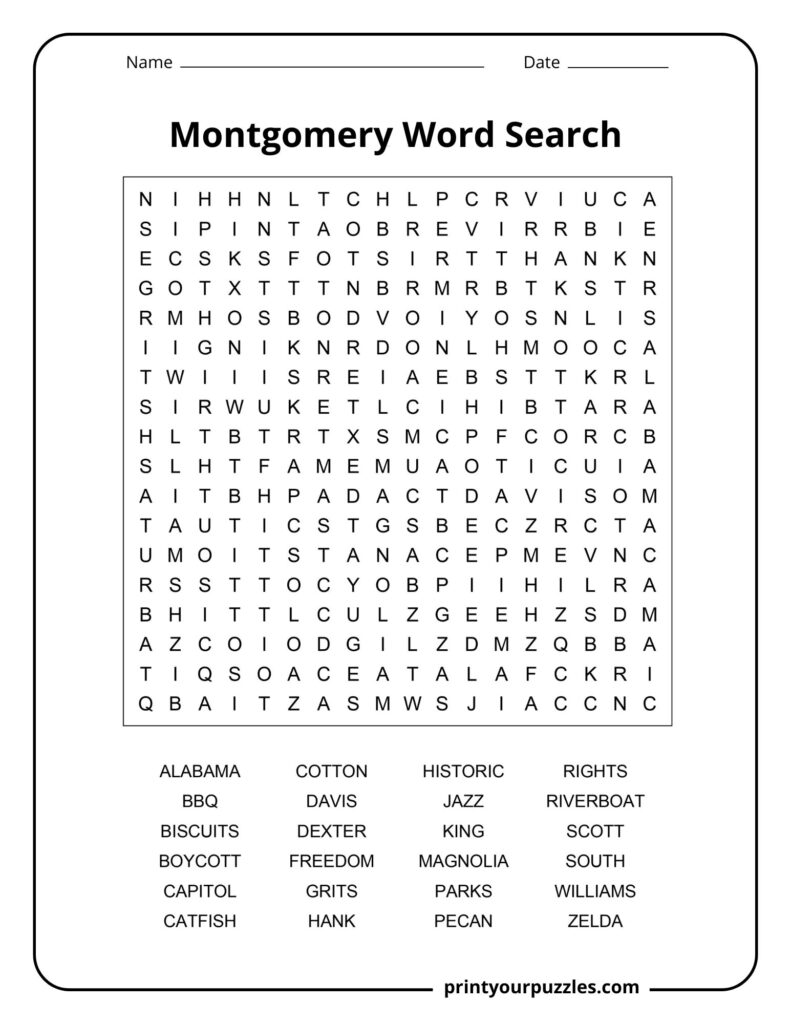
Medium Difficulty Word Search
Words to Find:
ALABAMA, BBQ, BISCUITS, BOYCOTT, CAPITOL, CATFISH, COTTON, DAVIS, DEXTER, FREEDOM, GRITS, HANK, HISTORIC, JAZZ, KING, MAGNOLIA, PARKS, PECAN, RIGHTS, RIVERBOAT, SCOTT, SOUTH, WILLIAMS, ZELDA
All Words Defined
ALABAMA – The southeastern state where Montgomery serves as capital, known for its pivotal role in American civil rights history and rich Southern cultural heritage.
BBQ – Traditional Southern barbecue featuring slow-smoked meats with tangy sauces, representing Montgomery’s deep culinary roots in authentic Alabama comfort food and regional flavors.
BISCUITS – Fluffy, buttery Southern staple served at breakfast throughout Montgomery, often paired with gravy, symbolizing the city’s traditional home-style cooking and hospitality.
BOYCOTT – The historic Montgomery Bus Boycott of 1955-1956, sparked by Rosa Parks’ arrest, which lasted 381 days and became a pivotal civil rights movement.
CAPITOL – Alabama’s state capitol building in Montgomery, a National Historic Landmark where Jefferson Davis was inaugurated and significant political events have unfolded since 1851.
CATFISH – Popular Southern fried fish dish served throughout Montgomery restaurants, representing the region’s connection to river resources and traditional soul food cuisine.
COTTON – The agricultural crop that dominated Montgomery’s economy during the nineteenth century, shaping the city’s development as a major commercial and trading center.
DAVIS – Jefferson Davis, President of the Confederate States, who was inaugurated in Montgomery in 1861 when the city briefly served as the Confederacy’s first capital.
DEXTER – Dexter Avenue Baptist Church where Dr. Martin Luther King Jr. served as pastor during the Montgomery Bus Boycott, now a historic civil rights landmark.
FREEDOM – The pursuit of civil rights and equality that defined Montgomery during the 1950s-60s, making it the birthplace of America’s modern freedom movement.
GRITS – Ground corn porridge that’s a quintessential Southern breakfast food, served throughout Montgomery as a beloved staple representing regional culinary traditions.
HANK – Hank Williams, legendary country music singer and Montgomery native, whose profound influence on American music still resonates through the city’s cultural identity.
HISTORIC – Montgomery’s defining characteristic as a city where pivotal American events occurred, from Confederate history to the civil rights movement’s transformative beginnings.
JAZZ – Musical genre that flourished in Montgomery’s historic entertainment districts, contributing to the city’s rich cultural scene alongside blues and country music.
KING – Dr. Martin Luther King Jr., pastor at Dexter Avenue Baptist Church who led the Montgomery Bus Boycott, launching his legendary civil rights leadership.
MAGNOLIA – Iconic flowering tree throughout Montgomery, symbolizing Southern beauty and grace with its large white blossoms and glossy leaves dotting the landscape.
PARKS – Rosa Parks, whose courageous refusal to give up her bus seat on December 1, 1955, sparked the Montgomery Bus Boycott and energized the civil rights movement.
PECAN – Native Southern nut used in classic desserts like pecan pie, representing Montgomery’s agricultural heritage and traditional sweet treats enjoyed throughout Alabama.
RIGHTS – Civil rights activism that transformed Montgomery into the movement’s birthplace, where peaceful protests challenged segregation and fought for equality and justice.
RIVERBOAT – Historic vessels that traveled the Alabama River, connecting Montgomery to Mobile Bay and establishing the city as an important nineteenth-century commercial port.
SCOTT – F. Scott Fitzgerald, celebrated author of “The Great Gatsby” who met and married Montgomery native Zelda Sayre, connecting the city to American literary history.
SOUTH – Montgomery’s geographical and cultural identity as a quintessential Southern city, embodying the region’s complex history, traditions, hospitality, and transformation.
WILLIAMS – Hank Williams’ surname, honoring Montgomery’s most famous musical son whose country songs like “Your Cheatin’ Heart” became American classics.
ZELDA – Zelda Fitzgerald, Montgomery native and wife of author F. Scott Fitzgerald, known for her literary talent, free spirit, and tragic life story.
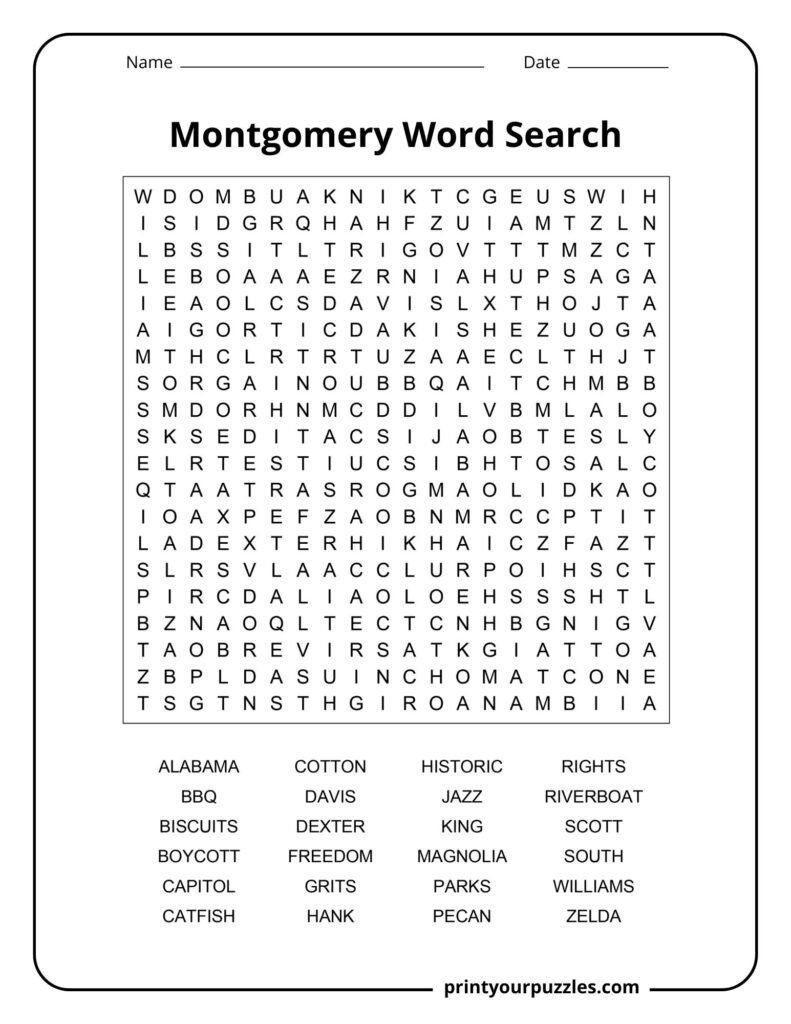
Hard Difficulty Word Search
Words to Find:
ALABAMA, BBQ, BISCUITS, BOYCOTT, CAPITOL, CATFISH, COTTON, DAVIS, DEXTER, FREEDOM, GRITS, HANK, HISTORIC, JAZZ, KING, MAGNOLIA, PARKS, PECAN, RIGHTS, RIVERBOAT, SCOTT, SOUTH, WILLIAMS, ZELDA
6 Key FAQs About Montgomery
5 Curious "Did You Know?" Facts About Montgomery