The Montgomery Bus Boycott was one of the most important protests of the Civil Rights Movement. It began in Montgomery, Alabama, in December 1955 after Rosa Parks, an African American seamstress and civil rights activist, refused to give up her bus seat to a white passenger. Her arrest became the immediate spark for a large, organized campaign against racial segregation on the city’s public buses.
At the time, segregation laws required Black passengers in Montgomery to sit in designated sections of buses and often surrender their seats when white sections became full. African American residents made up a large percentage of the city’s bus passengers, yet they faced discrimination, humiliation, and unfair treatment. After Parks was arrested on December 1, local civil rights leaders decided that coordinated action could challenge this system.
The boycott officially began on December 5, 1955. Thousands of African American residents refused to ride Montgomery’s buses. Instead, they walked, shared cars, organized carpools, and found other ways to travel to work, school, and church. What was initially planned as a one-day protest developed into a sustained campaign lasting more than a year.
The Montgomery Improvement Association was created to organize the boycott, and a young Baptist minister named Martin Luther King Jr. was chosen as its president. The protest helped establish King as a major national civil rights leader. Other important figures included Ralph Abernathy, E. D. Nixon, and Jo Ann Robinson, whose organizing efforts played crucial roles in keeping the movement active.
The boycott lasted 381 days and placed significant economic pressure on Montgomery’s bus system. Meanwhile, civil rights activists challenged bus segregation through the courts. In 1956, the U.S. Supreme Court upheld a federal court decision declaring segregation on public buses unconstitutional. The boycott ended in December after Montgomery’s buses were legally integrated.
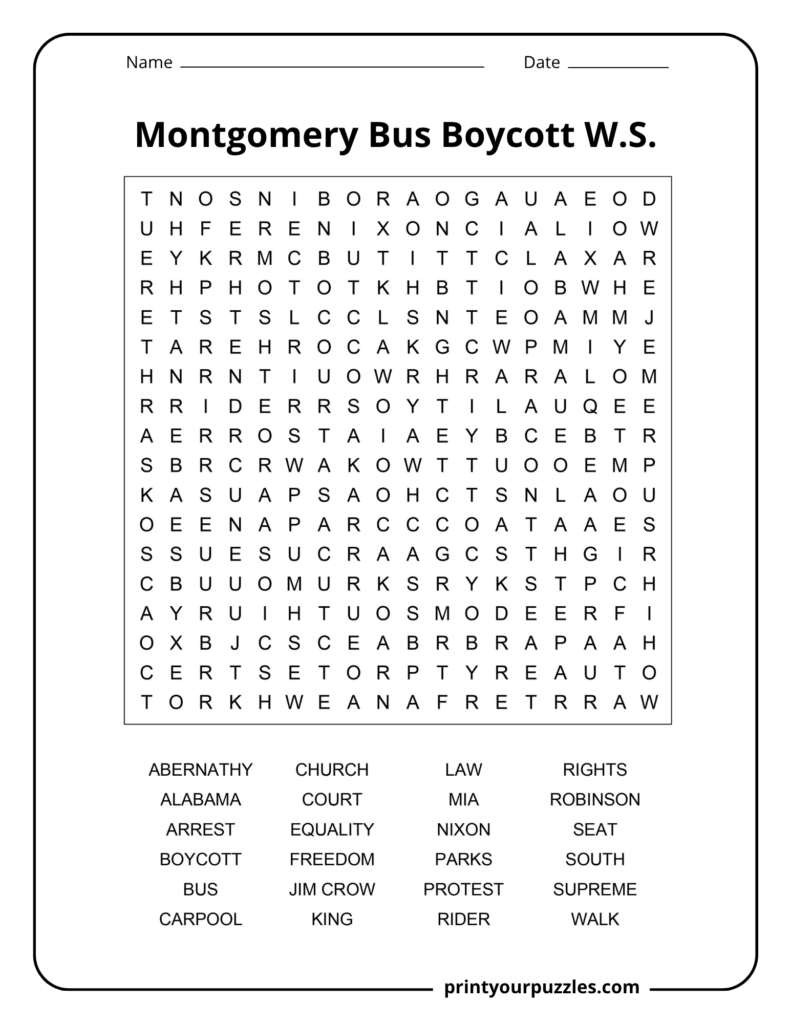
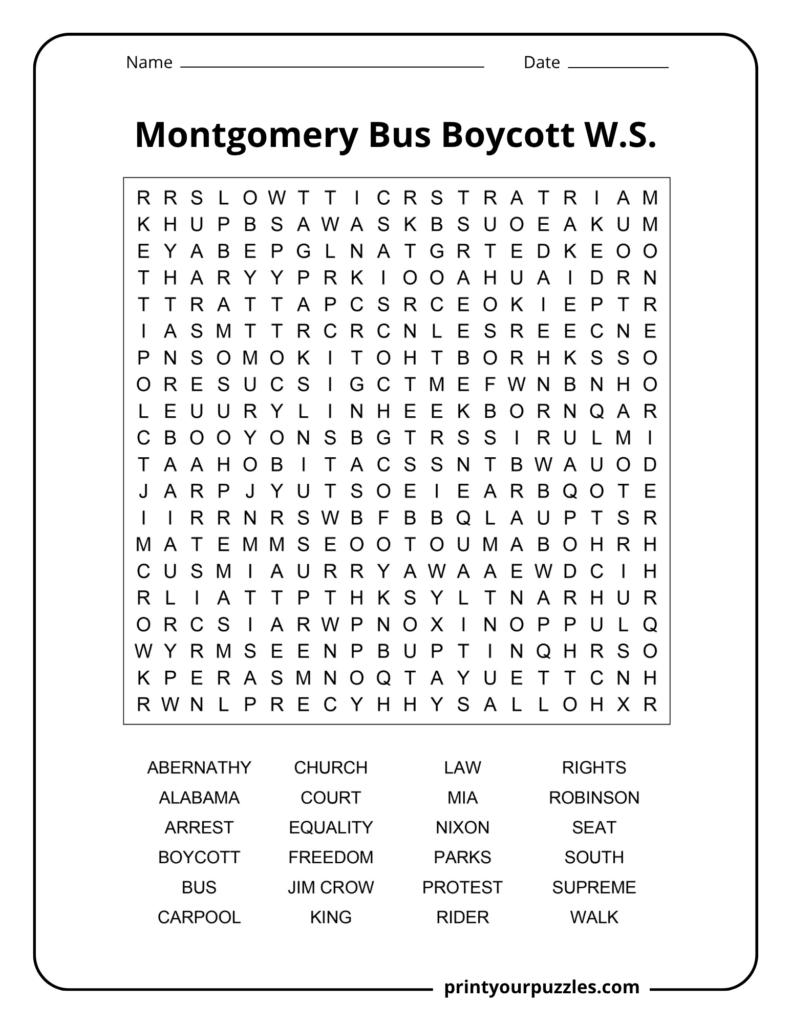
This Montgomery Bus Boycott word search introduces important people, places, events, and ideas connected with this historic protest. The boycott demonstrated how organized, nonviolent resistance could challenge unjust laws and showed the power of ordinary citizens working together. Its success energized the wider Civil Rights Movement and helped inspire future campaigns against segregation and racial discrimination throughout the United States.
Related Word Searches:
Rosa Parks | Martin Luther King Jr. | Civil Rights Movement | Civil Rights Act | Lyndon B. Johnson | Black History Month
ABERNATHY, ALABAMA, ARREST, BOYCOTT, BUS, CARPOOL, CHURCH, COURT, EQUALITY, FREEDOM, JIM CROW, KING, LAW, MIA, NIXON, PARKS, PROTEST, RIDER, RIGHTS, ROBINSON, SEAT, SOUTH, SUPREME, WALK
ABERNATHY – Ralph Abernathy was a Baptist minister and close associate of Martin Luther King Jr. who helped organize and lead the Montgomery Bus Boycott.
ALABAMA – Southern U.S. state where Montgomery is located and where segregation laws strongly affected African Americans during the early years of the Civil Rights Movement.
ARREST – Rosa Parks’s arrest on December 1, 1955, for refusing to surrender her bus seat became the immediate event that triggered the Montgomery Bus Boycott.
BOYCOTT – Organized protest in which African American residents refused to use Montgomery buses for 381 days, challenging segregation and placing economic pressure on the transit system.
BUS – Main form of public transportation involved in the protest, where segregation rules forced Black and white passengers to sit in separate sections.
CARPOOL – Transportation system organized by boycott leaders and volunteers to help African American residents travel to work, school, church, and other destinations without using buses.
CHURCH – Important meeting place during the boycott, where ministers, activists, and community members gathered to organize protests, share information, raise funds, and encourage participants.
COURT – Legal institution that played a crucial role in ending bus segregation after federal judges ruled that Alabama’s segregated public transportation system was unconstitutional.
EQUALITY – Central goal of the Civil Rights Movement, demanding that African Americans receive the same legal rights, opportunities, treatment, and protections as white Americans.
FREEDOM – Important principle motivating boycott participants, who sought freedom from racial discrimination, unfair segregation laws, and restrictions that limited African Americans’ rights and dignity.
JIM CROW – Name for laws and customs that enforced racial segregation across much of the American South, including separate seating rules on Montgomery public buses.
KING – Martin Luther King Jr., young Baptist minister chosen to lead the Montgomery Improvement Association, who became a major national figure during the boycott.
LAW – Rules enforcing racial segregation shaped everyday life in Montgomery, while later court decisions demonstrated that discriminatory laws could be challenged and overturned.
MIA – Montgomery Improvement Association, organization created in 1955 to coordinate the bus boycott, arrange transportation, manage community meetings, and represent African American protesters.
NIXON – E. D. Nixon was a Montgomery civil rights leader who supported Rosa Parks, helped organize the boycott, and played an important role forming the MIA.
PARKS – Rosa Parks was a civil rights activist whose refusal to give up her bus seat to a white passenger led to her arrest and inspired the boycott.
PROTEST – Public action expressing opposition to injustice; the Montgomery Bus Boycott used peaceful protest, economic pressure, organization, and legal challenges to fight racial segregation.
RIDER – Passenger using public transportation; Black riders in Montgomery faced discriminatory seating rules and treatment, helping create widespread support for challenging the segregated bus system.
RIGHTS – Legal and social freedoms demanded by African American activists, including equal treatment, voting access, fair public services, and protection from discrimination and segregation.
ROBINSON – Jo Ann Robinson was a professor and activist who helped organize the boycott by distributing thousands of notices encouraging African Americans to avoid Montgomery buses.
SEAT – Rosa Parks’s refusal to surrender her seat became a powerful symbol of resistance against segregation and helped inspire organized action throughout Montgomery’s Black community.
SOUTH – Region of the United States where racial segregation was especially widespread under Jim Crow laws and where many major Civil Rights Movement campaigns occurred.
SUPREME – Refers to the U.S. Supreme Court, which upheld a federal ruling that declared segregated public buses unconstitutional, helping bring the Montgomery boycott to an end.
WALK – Many boycott participants walked long distances instead of riding segregated buses, demonstrating determination, sacrifice, and community solidarity throughout the 381-day protest.
ABERNATHY, ALABAMA, ARREST, BOYCOTT, BUS, CARPOOL, CHURCH, COURT, EQUALITY, FREEDOM, JIM CROW, KING, LAW, MIA, NIXON, PARKS, PROTEST, RIDER, RIGHTS, ROBINSON, SEAT, SOUTH, SUPREME, WALK