Introduction to the Labor Day Word Search
Labor Day is a federal holiday in the United States that honors workers and recognizes their contributions to the country’s economy, communities, and everyday life. It is celebrated on the first Monday in September, creating a three-day weekend for many families. Although the holiday is often associated with barbecues, travel, and the unofficial end of summer, its origins are closely connected with the history of the labor movement.
During the nineteenth century, many industrial workers faced long hours, low wages, dangerous workplaces, and few legal protections. Labor unions began organizing marches, strikes, and public events to demand safer conditions, fairer pay, and reasonable working hours. One of the earliest Labor Day parades took place in New York City on September 5, 1882, when thousands of workers marched through the streets to show unity and support for labor rights.
The idea gradually spread to other cities and states. In 1894, Congress passed legislation establishing Labor Day as a national holiday, and President Grover Cleveland signed it into law. The occasion helped recognize the importance of workers in factories, farms, offices, transportation, construction, education, healthcare, and many other fields. It also reflected growing public awareness that economic progress depended on the effort and skill of millions of people.
Today, Labor Day is celebrated in different ways. Some communities organize parades, speeches, union gatherings, concerts, fairs, or public ceremonies. Many families enjoy picnics, cookouts, beach trips, camping, and sporting events. Retailers often hold major sales, while schools and businesses may close for the day.
Labor Day also marks a seasonal transition. In many parts of the country, it comes near the end of summer vacation and the beginning of a new school year. Swimming pools may close, fall sports begin, and families prepare for cooler weather and autumn routines.
Beyond the celebrations, the holiday offers an opportunity to think about workplace rights, economic fairness, and the changing nature of employment. It recognizes both past achievements and continuing discussions about wages, safety, benefits, and work-life balance.
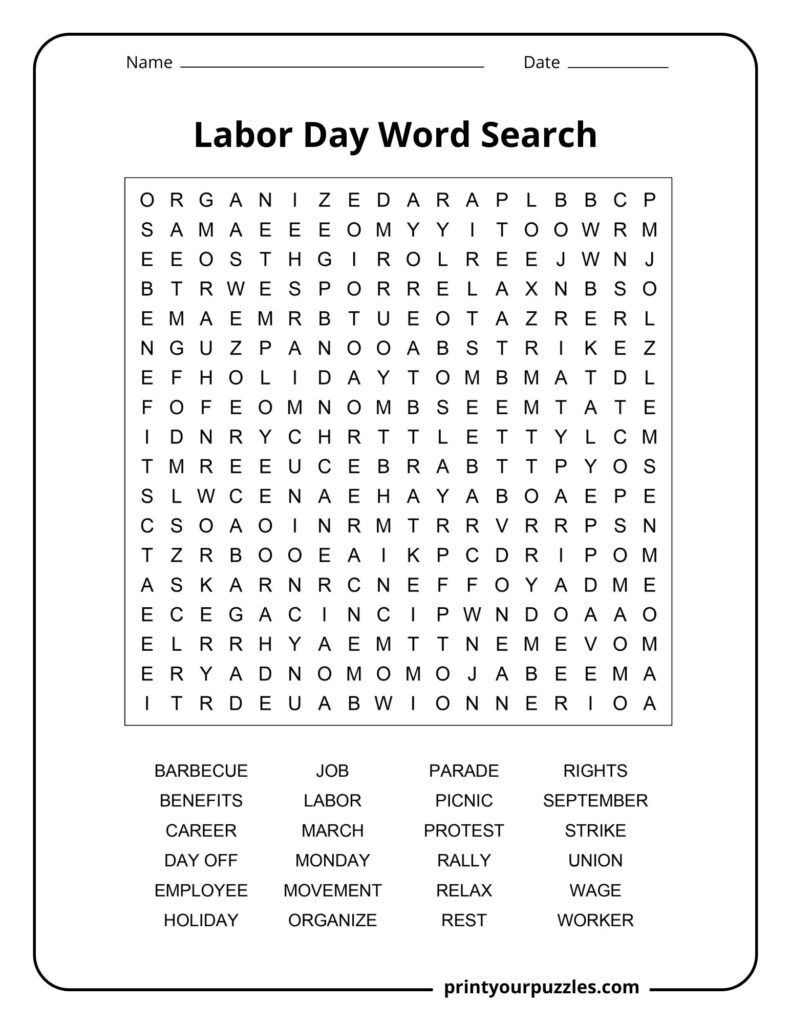
Explore the history, people, occupations, traditions, and ideas connected with American workers through this Labor Day word search printable, featuring 24 carefully selected words inspired by unions, jobs, parades, teamwork, rights, industry, and the contributions of working people.
Related Word Searches:
September | Summer | Autumn | Memorial Day | 4th of July
Medium Difficulty Word Search
Words to Find:
BARBECUE, BENEFITS, CAREER, DAY OFF, EMPLOYEE, HOLIDAY, JOB, LABOR, MARCH, MONDAY, MOVEMENT, ORGANIZE, PARADE, PICNIC, PROTEST, RALLY, RELAX, REST, RIGHTS, SEPTEMBER, STRIKE, UNION, WAGE, WORKER
All Words Defined
BARBECUE – An outdoor cooking method and social gathering where food is grilled over fire, commonly enjoyed during Labor Day celebrations with family and friends.
BENEFITS – Compensation beyond wages that employers provide
to workers, including health insurance, retirement plans, paid vacation, and other perks that improve quality of life.
CAREER – A person’s professional journey and long-term occupation through which they develop skills, advance positions, and earn income to support themselves throughout their working life.
DAY OFF – A scheduled period when an employee is not required to work, allowing time for rest, personal activities, or celebration of holidays like Labor Day.
EMPLOYEE – An individual hired by an organization or employer to perform specific tasks and services in exchange for wages, salary, and often additional benefits.
HOLIDAY – A designated day of celebration or observance when most businesses close and workers are given time off, such as Labor Day each September.
JOB – A specific position of employment where a person performs particular duties and responsibilities in exchange for compensation from an employer or organization.
LABOR – Physical or mental work performed by individuals to produce goods or services, often involving effort and skill to accomplish tasks and earn income.
MARCH – An organized procession where workers walk together publicly to demonstrate solidarity, advocate for labor rights, or celebrate achievements during labor movements.
MONDAY – The first day of the traditional work week and the specific weekday when Labor Day is officially observed in the United States.
MOVEMENT – A collective social and political effort by workers and labor organizations to achieve better working conditions, fair wages, and legal protections, ultimately leading to Labor Day’s establishment.
ORGANIZE – The act of workers forming unions or groups to collectively bargain for better wages, conditions, and rights, strengthening their voice with employers.
PARADE – A public procession featuring floats, marching bands, and participants celebrating Labor Day, showcasing workers’ pride and unity in many American cities.
PICNIC – An outdoor meal enjoyed in parks or backyards, a popular Labor Day activity where families and friends gather to eat and socialize together.
PROTEST – A public demonstration where workers express dissatisfaction with working conditions, unfair treatment, or demand changes in labor policies and practices from employers.
RALLY – A large gathering of workers and supporters who meet to show unity, hear speeches, and demonstrate strength in numbers for labor causes.
RELAX – To rest and unwind from work-related stress, which is a primary purpose of Labor Day as workers take time off to recharge.
REST – A period of recovery and cessation from work activities, essential for worker health and productivity, especially enjoyed during Labor Day weekend.
RIGHTS – Legal entitlements and protections that workers possess, including fair wages, safe conditions, reasonable hours, and freedom from discrimination in the workplace.
SEPTEMBER – The ninth month of the year when Labor Day is celebrated on the first Monday, marking the unofficial end of summer.
STRIKE – A work stoppage where employees refuse to perform duties to pressure employers into meeting demands for better pay, conditions, or benefits.
UNION – An organized association of workers formed to protect their rights, negotiate with employers, and improve wages, benefits, and working conditions collectively.
WAGE – The monetary compensation paid to workers for their labor, typically calculated hourly or as a salary, essential for supporting livelihoods and families.
WORKER – Any person who performs labor or services for compensation, whether physical or intellectual, contributing to the economy and society’s functioning.
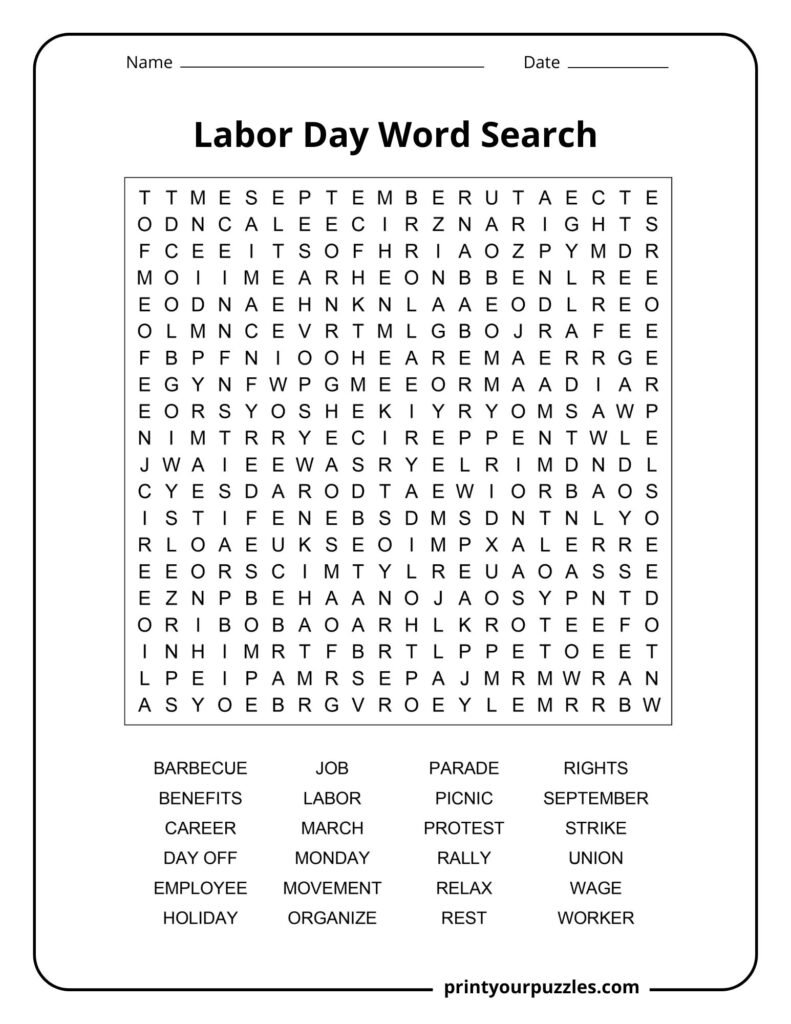
Hard Difficulty Word Search
Words to Find:
BARBECUE, BENEFITS, CAREER, DAY OFF, EMPLOYEE, HOLIDAY, JOB, LABOR, MARCH, MONDAY, MOVEMENT, ORGANIZE, PARADE, PICNIC, PROTEST, RALLY, RELAX, REST, RIGHTS, SEPTEMBER, STRIKE, UNION, WAGE, WORKER
5 Key FAQs About Labor Day
5 Curious "Did You Know?" Facts About Labor Day