
Cowboy culture is not merely a historical theme in Cheyenne—it remains part of the city’s identity. Wyoming’s capital blends Old West traditions, railroad history, rodeo culture, public art, and open prairie landscapes, creating a place that feels closely connected to the frontier story of the American West.
Cheyenne was founded in 1867 during construction of the Union Pacific Railroad. Its position along the transcontinental route brought workers, merchants, ranchers, and travelers, and the settlement grew quickly. When Wyoming became a state in 1890, Cheyenne continued as its capital and developed into an important administrative and commercial center for the surrounding region.
Railroad history is still easy to discover. The Cheyenne Depot Museum, located in a historic Union Pacific station, explores the role trains played in the city’s growth and in the development of the West. Visitors can also walk through downtown to see preserved buildings, oversized cowboy boot sculptures, murals, and other public artworks that give the city a playful visual character.
Cheyenne is especially famous for Cheyenne Frontier Days, a major annual celebration of rodeo and western heritage. The event includes competitions, concerts, parades, exhibitions, and traditions that attract visitors from across the country. Even outside festival season, the city’s western atmosphere can be experienced through museums, ranching history, and local shops.
Food here often reflects the hearty traditions of the Great Plains and Mountain West. Steaks, burgers, barbecue, bison dishes, and regional comfort food appear on local menus, while modern restaurants and breweries add more contemporary choices. Wyoming beef naturally plays an important role in the area’s culinary identity.
Nature is never far away. Visitors can explore nearby parks, enjoy walking trails, or drive toward the foothills west of the city for broader views of southeastern Wyoming. The surrounding landscape of grasslands, distant mountains, and expansive skies helps explain why ranching became so important to the region.
A Cheyenne word search puzzle can introduce readers to vocabulary connected with railroads, rodeos, ranching, western art, prairie landscapes, and Wyoming history. With its strong frontier personality and lively cultural traditions, Cheyenne offers one of the most distinctly western experiences among American state capitals.
Related Word Searches:
Wyoming | Denver | Helena | Salt Lake City | Pierre
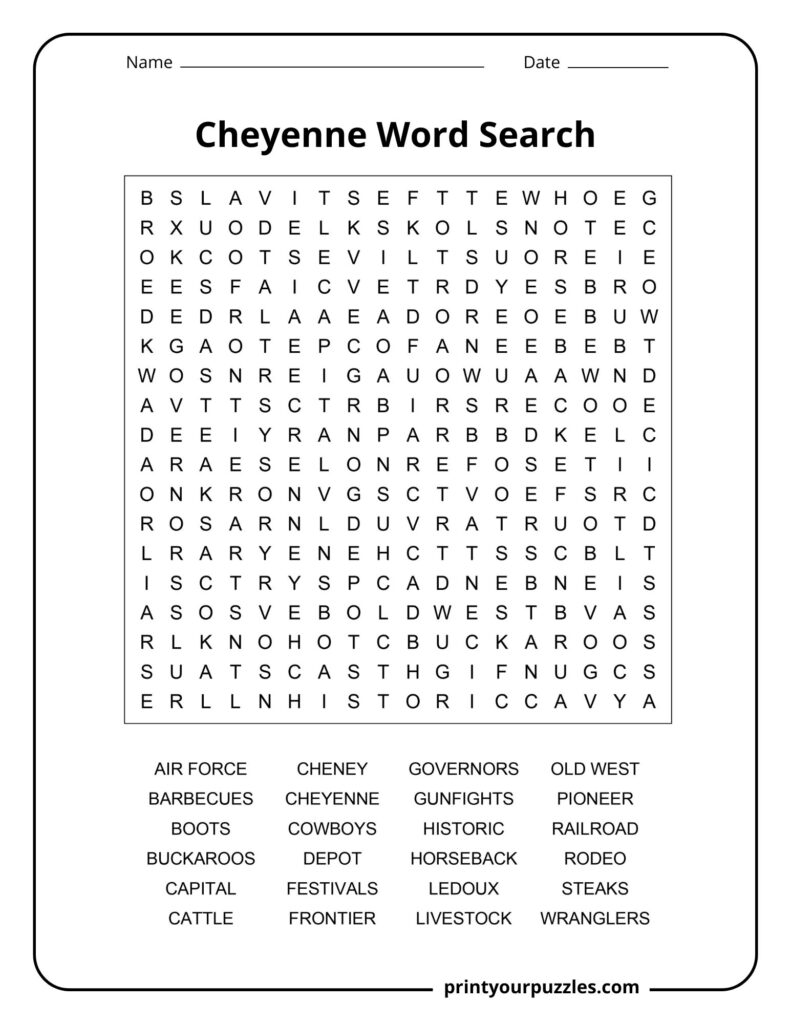
AIR FORCE, BARBECUES, BOOTS, BUCKAROOS, CAPITAL, CATTLE, CHENEY, CHEYENNE, COWBOYS, DEPOT, FESTIVALS, FRONTIER, GOVERNORS, GUNFIGHTS, HISTORIC, HORSEBACK, LEDOUX, LIVESTOCK, OLD WEST, PIONEER, RAILROAD, RODEO, STEAKS, WRANGLERS
AIR FORCE – F.E. Warren Air Force Base is a major military installation near Cheyenne, serving as a strategic missile base and one of the city’s largest employers since 1930.
BARBECUES – Outdoor cooking traditions are deeply rooted in Cheyenne’s western culture, featuring beef and gathering communities during Frontier Days and summer celebrations throughout Wyoming.
BOOTS – Cowboy boots symbolize Cheyenne’s ranching heritage and western identity, worn daily by residents and essential attire during rodeos, festivals, and the famous Frontier Days celebration.
BUCKAROOS – Term for cowboys in the American West,
representing Cheyenne’s ranching culture and the skilled horsemen who work cattle ranches throughout Wyoming’s high plains region.
CAPITAL – Cheyenne has served as Wyoming’s state capital since 1869, housing the State Capitol building with its distinctive gold-leaf dome, government offices, and legislative chambers.
CATTLE – Livestock ranching forms Cheyenne’s economic foundation, with vast herds grazing surrounding grasslands, supporting the beef industry and connecting to the city’s cowboy heritage and culture.
CHENEY – The Cheney family, including former Vice President Dick Cheney and Representative Liz Cheney, represents Wyoming’s political legacy with deep roots in the state’s governance and history.
CHEYENNE – Named after the Cheyenne Native American tribe, this city became Wyoming’s capital in 1869, embodying frontier spirit, western heritage, and serving as a railroad hub.
COWBOYS – Professional and working cowboys define Cheyenne’s identity, competing in rodeos, working ranches, and preserving authentic western traditions through Frontier Days and daily ranch life.
DEPOT – The historic Union Pacific Railroad Depot, built in 1886, symbolizes Cheyenne’s railroad heritage as a crucial transcontinental stop, now serving as a museum and landmark.
FESTIVALS – Cheyenne Frontier Days, called “The Daddy of ’em All,” is the world’s largest outdoor rodeo celebration, attracting hundreds of thousands annually since 1897 with entertainment.
FRONTIER – Cheyenne Frontier Days celebrates the city’s pioneer past with the world’s premier rodeo, parades, concerts, and western traditions maintained continuously for over 125 years.
GOVERNORS – Wyoming’s governors have resided in Cheyenne since territorial days, leading state government from the capital and shaping policies affecting Wyoming’s energy, ranching, and tourism industries.
GUNFIGHTS – Old West shootouts are reenacted downtown during summer months, recreating Cheyenne’s wild frontier past when outlaws, lawmen, and cowboys created legendary confrontations in saloons.
HISTORIC – Cheyenne preserves numerous Victorian-era buildings, museums, and landmarks from its 1867 founding, maintaining authentic Old West architecture and stories from railroad and frontier days.
HORSEBACK – Riding horses remains integral to Cheyenne’s culture, from working ranches to rodeo competitions, trail riding, and cavalry demonstrations, connecting modern residents to western heritage.
LEDOUX – Chris LeDoux, world champion bareback rider and country music star, embodied Cheyenne’s rodeo spirit through songs celebrating cowboy life, becoming Wyoming’s cultural icon.
LIVESTOCK – Cattle, horses, and sheep ranching drive Cheyenne’s agricultural economy, with stockyards, auctions, and ranches surrounding the city, maintaining Wyoming’s reputation as ranching country.
OLD WEST – Cheyenne preserves authentic frontier atmosphere through historic buildings, cowboy culture, rodeos, and museums showcasing 1800s pioneer life, gunfighters, and railroad expansion heritage.
PIONEER – Early settlers established Cheyenne in 1867 along the transcontinental railroad, building Wyoming’s capital from frontier outpost into a thriving city while preserving western traditions.
RAILROAD – Union Pacific Railroad made Cheyenne a major hub in 1867, driving growth and commerce, connecting east to west, and establishing the city’s foundation as transportation center.
RODEO – Competitive events featuring bronc riding, bull riding, roping, and barrel racing showcase cowboy skills at Cheyenne Frontier Days, celebrating authentic western traditions and athletic prowess.
STEAKS – Wyoming beef, especially locally raised cattle, provides premium steaks served throughout Cheyenne’s restaurants, celebrating the state’s ranching heritage and high-quality meat production reputation.
WRANGLERS – Ranch hands and rodeo competitors who work with horses and cattle, representing Cheyenne’s authentic cowboy culture through skilled horsemanship, roping abilities, and western lifestyle.
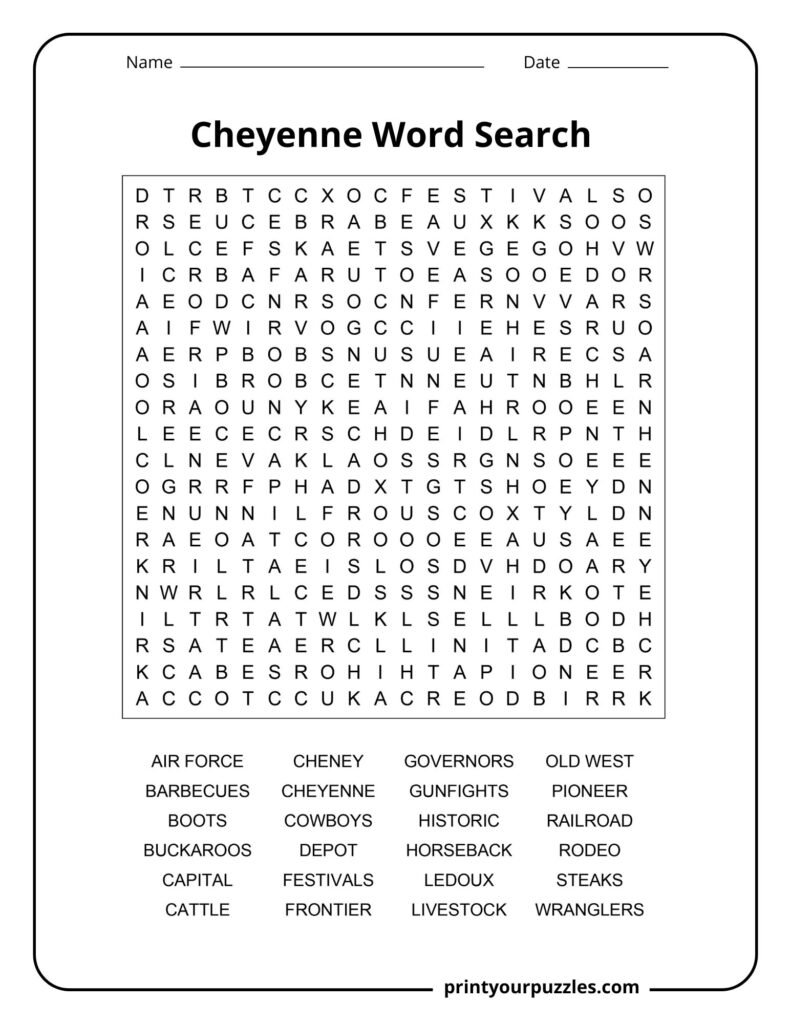
AIR FORCE, BARBECUES, BOOTS, BUCKAROOS, CAPITAL, CATTLE, CHENEY, CHEYENNE, COWBOYS, DEPOT, FESTIVALS, FRONTIER, GOVERNORS, GUNFIGHTS, HISTORIC, HORSEBACK, LEDOUX, LIVESTOCK, OLD WEST, PIONEER, RAILROAD, RODEO, STEAKS, WRANGLERS
Cheyenne is renowned for hosting Cheyenne Frontier Days, the world’s largest outdoor rodeo, and serving as Wyoming’s capital city with rich Old West heritage, cowboy culture, and historic architecture.
Cheyenne is Wyoming’s most populous city with approximately 65,000 residents in the city proper and around 100,000 in the metropolitan area, making it the state’s urban center.
Cheyenne sits at 6,062 feet elevation, making it one of America’s highest capital cities. The semi-arid climate features cold winters, mild summers, low humidity, and frequent sunshine year-round.
Late July during Cheyenne Frontier Days offers the ultimate experience, though summer months (June-August) provide ideal weather for exploring historic sites, museums, and outdoor activities throughout the region.
Cheyenne is located just 100 miles north of Denver along Interstate 25, making it approximately a 90-minute drive and easily accessible for day trips or weekend visits from Colorado’s capital.
For official city information, government updates, and public services, visit the City of Cheyenne website. If you are planning a trip, check out the official tourism portal, Visit Cheyenne.
Since 1897, this 10-day July festival attracts over 200,000 visitors annually, earning its nickname “The Daddy of ’em All” with professional rodeos and concerts.
The name “Cheyenne” came from a Sioux word meaning “people of alien speech,” not what the tribe called themselves originally.
This makes Cheyenne one of America’s most strategically important military locations, protecting national security since its establishment in 1867 as a cavalry post.
The city planners in 1867 created these broad streets anticipating heavy freight traffic along the transcontinental railroad route.
Completed in 1890, Cheyenne’s Capitol building required 1,400 books of gold leaf for its distinctive dome, making it a sparkling landmark visible throughout the city.