Introduction to the Salt Lake City Word Search
Salt Lake City is framed by some of the most dramatic scenery of any American state capital. The Wasatch Mountains rise just east of downtown, while the vast Great Salt Lake stretches to the west, giving Utah’s capital a setting shaped by mountains, desert, and water.
The city was founded in 1847 by Mormon pioneers led by Brigham Young, who arrived in the Salt Lake Valley after traveling west in search of a place to establish a permanent community. Their settlement grew rapidly through irrigation, agriculture, trade, and migration, eventually becoming the political and economic center of Utah.
One of the most recognizable areas is Temple Square, closely associated with The Church of Jesus Christ of Latter-day Saints. Its historic buildings, gardens, and visitor facilities reflect an important part of the city’s religious and architectural history. Nearby streets also contain museums, shops, restaurants, and cultural venues.
For a completely different experience, visitors can explore the Natural History Museum of Utah, where exhibits cover dinosaurs, geology, Indigenous cultures, biodiversity, and the landscapes of the Intermountain West. Its modern building sits near the foothills and offers impressive views over the valley.
Outdoor recreation is central to life in Salt Lake City. Hiking and mountain biking trails begin close to urban neighborhoods, while world-famous ski areas lie within easy reach. The Great Salt Lake itself offers birdwatching, unusual scenery, and a chance to learn about one of North America’s most distinctive ecosystems.
The city’s artistic life includes galleries, theaters, live music, public art, and institutions such as the Utah Museum of Fine Arts. Its food scene has also become increasingly diverse, combining Western comfort food, locally sourced ingredients, international cuisines, bakeries, coffee shops, and distinctive regional favorites such as fry sauce.
A Salt Lake City word search can introduce readers to vocabulary connected with pioneer history, mountains, the Great Salt Lake, art, religion, food, and outdoor life. With alpine scenery on one side and desert landscapes on the other, Salt Lake City offers a capital experience shaped by both history and geography.
Related Word Searches:
Utah | Denver | Cheyenne | Carson City | Boise
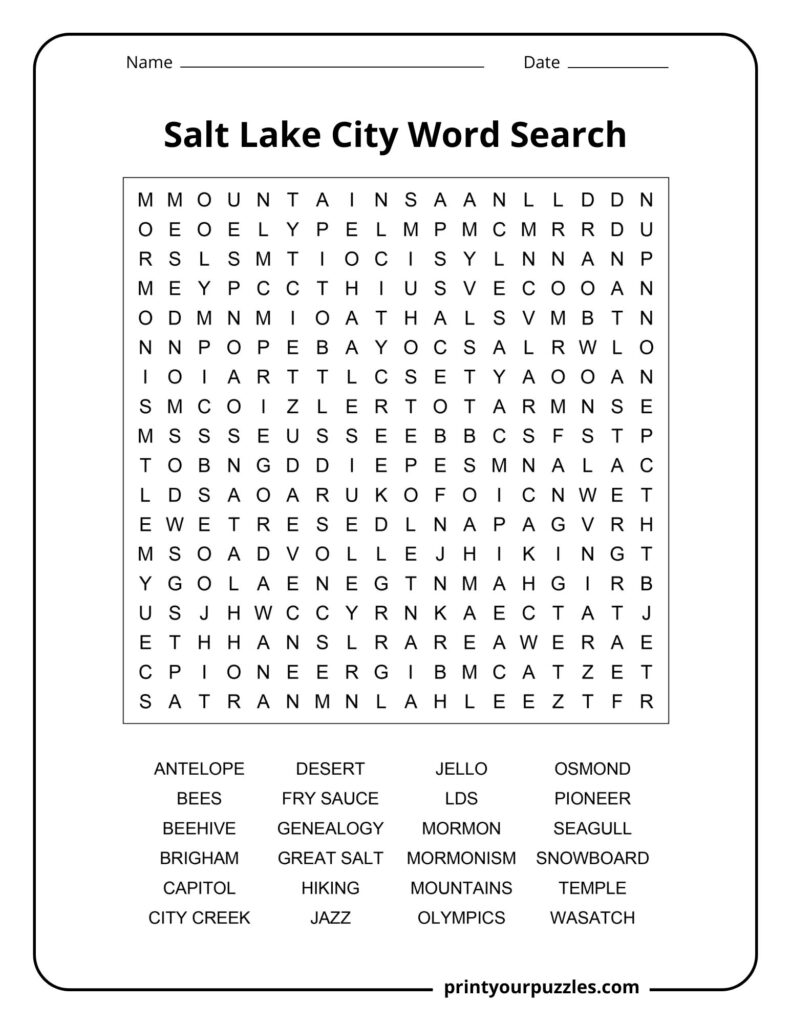
Medium Difficulty Word Search
Words to Find:
ANTELOPE, BEES, BEEHIVE, BRIGHAM, CAPITOL, CITY CREEK, DESERT, FRY SAUCE, GENEALOGY, GREAT SALT, HIKING, JAZZ, JELLO, LDS, MORMON, MORMONISM, MOUNTAINS, OLYMPICS, OSMOND, PIONEER, SEAGULL, SNOWBOARD, TEMPLE, WASATCH
All Words Defined
ANTELOPE – Antelope Island is the largest island in the Great Salt Lake, featuring free-roaming bison herds, hiking trails, and stunning views of the surrounding mountains and salt flats.
BEES – The Salt Lake Bees are a Triple-A minor league baseball team affiliated with the Los Angeles Angels, playing at Smith’s Ballpark and providing family-friendly entertainment throughout the summer season.
BEEHIVE – The beehive symbolizes industry and hard work, serving as Utah’s official state emblem. It appears on the state flag and represents the industrious pioneer spirit of early settlers.
BRIGHAM – Brigham Young was the Mormon pioneer leader who founded Salt Lake City in 1847, leading thousands of settlers westward and establishing the city as the headquarters of the Latter-day Saints Church.
CAPITOL – The Utah State Capitol building sits prominently on Capitol Hill, featuring neoclassical architecture with a distinctive copper dome, housing the state legislature and offering panoramic views of the valley below.
CITY CREEK – City Creek Center is a premier downtown shopping and residential complex featuring a retractable roof, flowing creek, upscale retailers, restaurants, and serving as a major urban renewal project for the city.
DESERT – The Great Salt Lake Desert stretches west of the city, a vast, arid expanse where the Bonneville Salt Flats are located, famous for land speed records and stark, otherworldly landscapes.
FRY SAUCE – Fry sauce is a beloved Utah condiment combining ketchup and mayonnaise, served with french fries throughout the region. It’s considered a distinctive local culinary tradition by Salt Lake residents.
GENEALOGY – Salt Lake City houses the world’s largest genealogical library, operated by the LDS Church. The Family History Library attracts researchers worldwide seeking to trace their ancestry and family heritage.
GREAT SALT – The Great Salt Lake is a massive saltwater lake northwest of the city, one of the largest terminal lakes in the Western Hemisphere, known for its high salinity and unique ecosystem.
HIKING – Hiking is a defining activity in Salt Lake City, with immediate access to Wasatch Mountain trails offering varied difficulty levels, stunning vistas, and year-round outdoor recreation opportunities for all skill levels.
JAZZ – The Utah Jazz are Salt Lake City’s NBA franchise, relocated from New Orleans in 1979. They play at the Delta Center and have a passionate fanbase throughout the state.
JELLO – Jello consumption in Utah is among the highest per capita in America, considered a cultural staple at potlucks, family gatherings, and social events, often served in elaborate salads.
LDS – LDS stands for Latter-day Saints, referring to The Church of Jesus Christ of Latter-day Saints, headquartered in Salt Lake City and profoundly influencing the city’s culture and architecture.
MORMON – Mormon refers to members of the LDS Church and the religious culture that has shaped Salt Lake City since its founding, influencing local customs, architecture, and community values throughout generations.
MORMONISM – Mormonism is the religious tradition founded by Joseph Smith, with Salt Lake City serving as its global headquarters. The faith emphasizes family values, missionary work, and community service worldwide.
MOUNTAINS – The Wasatch Mountains rise dramatically east of Salt Lake City, providing world-class skiing, hiking, climbing, and outdoor recreation while creating the stunning backdrop that defines the city’s landscape.
OLYMPICS – Salt Lake City hosted the 2002 Winter Olympics, transforming the city’s infrastructure, boosting international recognition, and leaving lasting venues for winter sports training and competition that continue operating today.
OSMOND – The Osmonds are a famous musical family from Utah who achieved international fame in the 1970s with pop hits. Donny and Marie Osmond remain the most recognized members.
PIONEER – Pioneers refer to the Mormon settlers who arrived in 1847, establishing Salt Lake City. Pioneer Day (July 24th) celebrates their arrival and contributions to building the city and state.
SEAGULL – The California seagull is Utah’s state bird, honored for reportedly saving pioneer crops from cricket infestations in 1848. A monument on Temple Square commemorates this miraculous event in Mormon history.
SNOWBOARD – Snowboarding thrives in Salt Lake City with easy access to world-renowned resorts like Park City, Brighton, and Snowbird. The region’s powder snow attracts enthusiasts globally for winter sports.
TEMPLE – The Salt Lake Temple is the iconic centerpiece of Temple Square, taking forty years to build. This granite structure serves as the most recognizable symbol of the city worldwide.
WASATCH – The Wasatch Range is the mountain chain forming Salt Lake City’s eastern border, providing recreation, water resources, and defining the valley’s geography with peaks exceeding eleven thousand feet elevation.
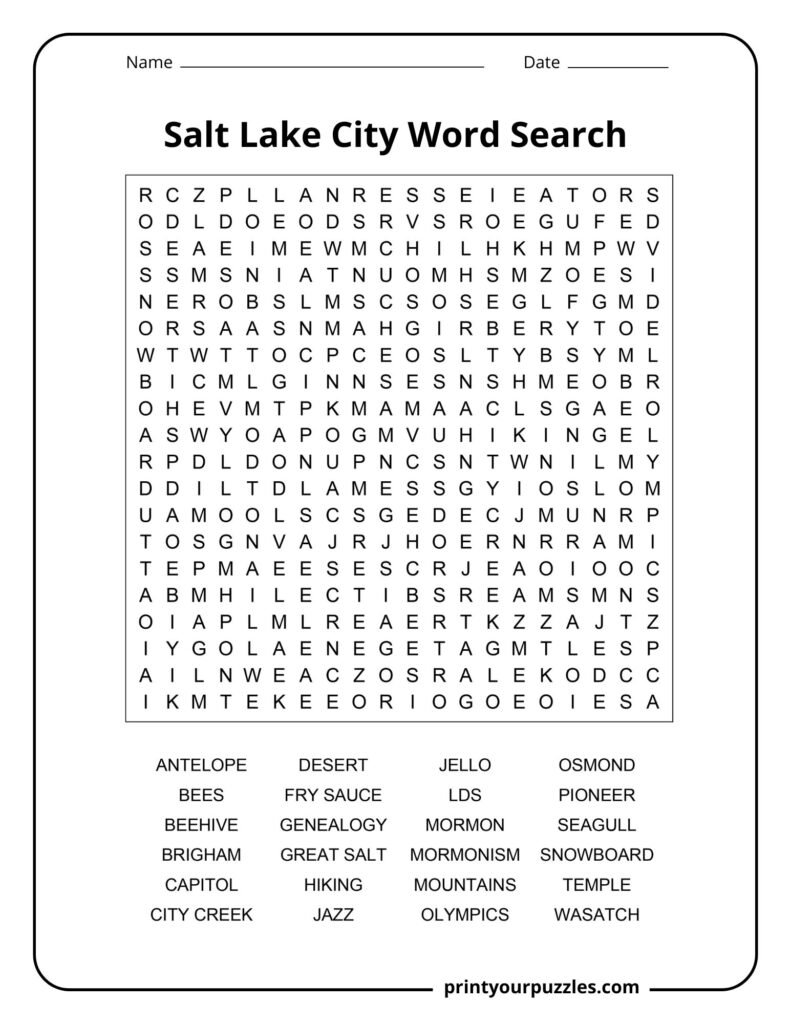
Hard Difficulty Word Search
Words to Find:
ANTELOPE, BEES, BEEHIVE, BRIGHAM, CAPITOL, CITY CREEK, DESERT, FRY SAUCE, GENEALOGY, GREAT SALT, HIKING, JAZZ, JELLO, LDS, MORMON, MORMONISM, MOUNTAINS, OLYMPICS, OSMOND, PIONEER, SEAGULL, SNOWBOARD, TEMPLE, WASATCH
6 Key FAQs About Salt Lake City
5 Curious "Did You Know?" Facts About Salt Lake City