Introduction to the Cinco de Mayo Word Search
Cinco de Mayo is a celebration held each year on May 5, especially in parts of Mexico and throughout many Mexican American communities in the United States. The date is often confused with Mexican Independence Day, but the two events are different. Mexico celebrates its independence on September 16, while Cinco de Mayo commemorates the Mexican army’s victory over French forces at the Battle of Puebla in 1862.
At that time, France had invaded Mexico and possessed one of the most powerful armies in the world. On May 5, a smaller and less-equipped Mexican force, led by General Ignacio Zaragoza, successfully defended the city of Puebla. The victory did not end the conflict, and French troops later occupied Mexico City, but the battle became an important symbol of courage, determination, and resistance against a stronger opponent.
In Mexico, Cinco de Mayo is observed most prominently in Puebla, where the historic battle took place. Celebrations may include military parades, historical reenactments, concerts, speeches, and cultural events. It is not a major nationwide holiday in the same way as Independence Day, and daily life continues normally in many parts of the country.
In the United States, Cinco de Mayo developed into a broader celebration of Mexican heritage and culture. Community festivals may feature mariachi music, folkloric dancing, colorful costumes, art, crafts, and educational programs. Restaurants and families often prepare Mexican or Mexican American dishes such as tacos, enchiladas, tamales, guacamole, and salsa. However, Mexican cuisine is extremely diverse, and its traditions vary greatly among regions and families.
Bright colors, papel picado banners, flowers, flags, and traditional music help create a lively atmosphere. Schools and cultural organizations may use the occasion to introduce students to Mexican history, geography, art, and notable historical figures. Thoughtful celebrations focus on the meaning of the Battle of Puebla and avoid reducing Mexican culture to decorations or food alone.
Cinco de Mayo combines history, community pride, music, dance, and cultural traditions. It offers an opportunity to learn why the events of May 5, 1862, remain memorable and how the celebration has changed over time.
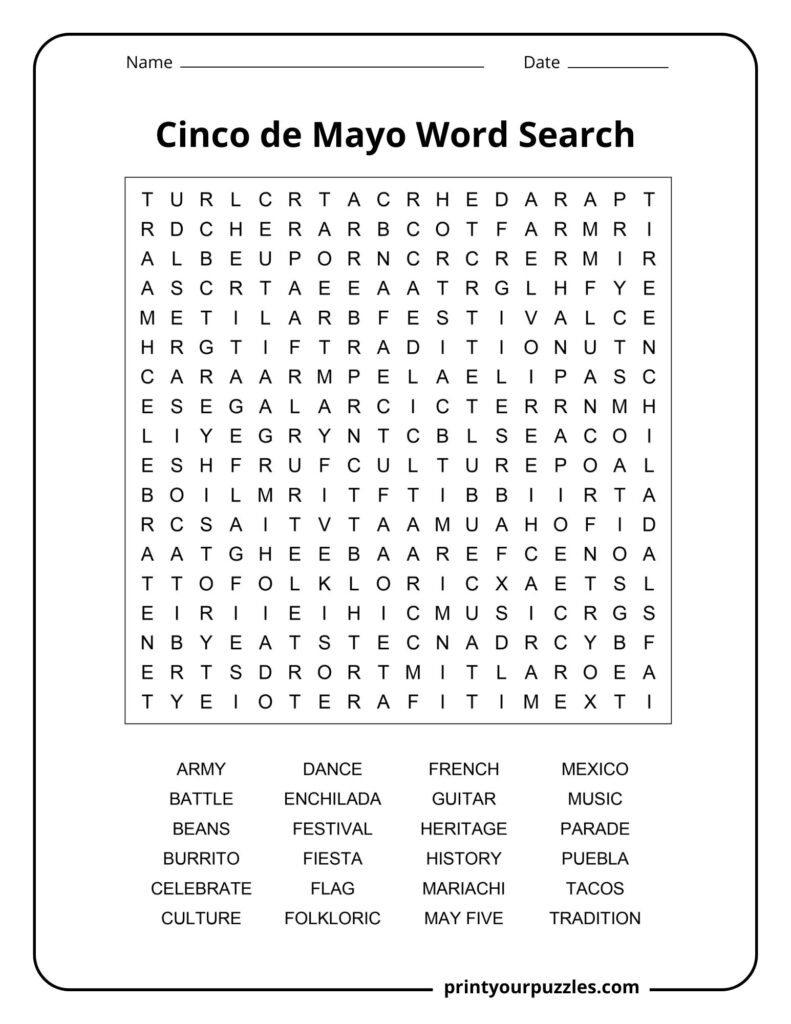
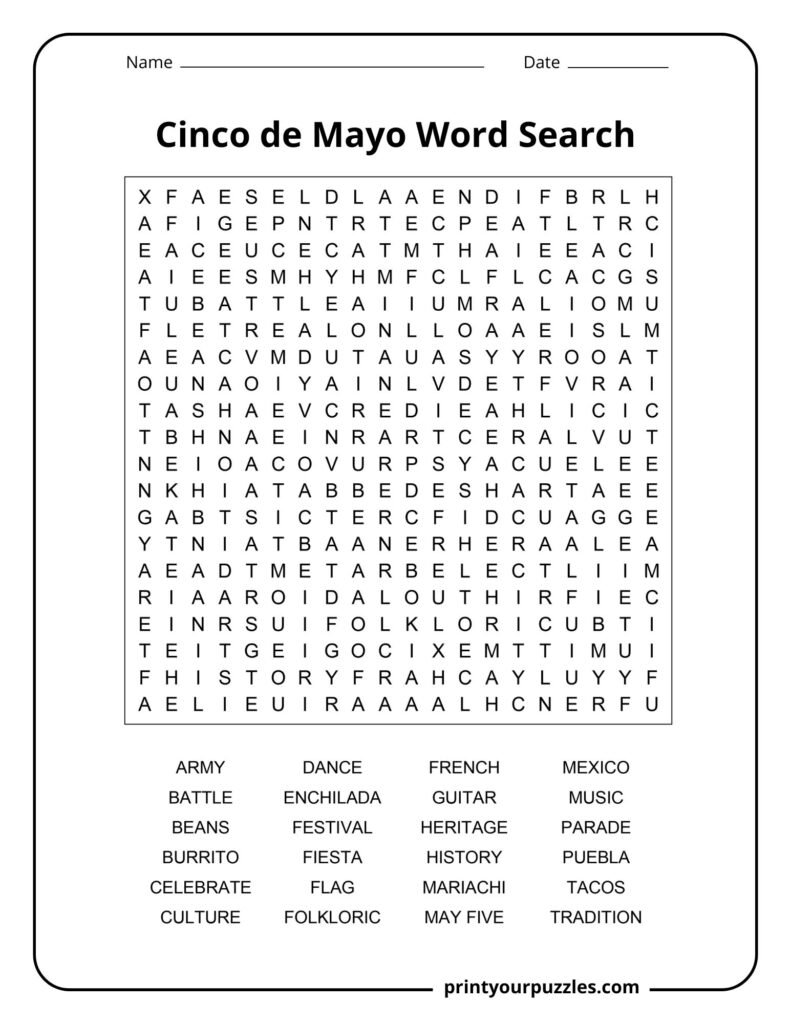
Explore the history and festive spirit of May 5 with this Cinco de Mayo word search, featuring vocabulary inspired by the Battle of Puebla, Mexican culture, traditional music, colorful decorations, popular foods, and community celebrations.
Related Word Searches:
May | Spring | Memorial Day | Mother’s Day | 4th of July
Medium Difficulty Word Search
Words to Find
ARMY, BATTLE, BEANS, BURRITO, CELEBRATE, CULTURE, DANCE, ENCHILADA, FESTIVAL, FIESTA, FLAG, FOLKLORIC, FRENCH, GUITAR, HERITAGE, HISTORY, MARIACHI, MAY FIVE, MEXICO, MUSIC, PARADE, PUEBLA, TACOS, TRADITION
All Words Defined
ARMY – Military forces organized for combat. On Cinco de Mayo, refers to the Mexican army that defended against French invasion at the Battle of Puebla in 1862.
BATTLE – A military engagement between opposing forces. The Battle of Puebla on May 5, 1862, was the decisive confrontation where Mexican forces defeated the French army unexpectedly.
BEANS – Legumes that are a staple in Mexican cuisine, often served refried or whole. Black beans and pinto beans are commonly featured in traditional celebrations and meals.
BURRITO – A Mexican dish consisting of a flour tortilla wrapped around various fillings like beans, rice, meat, and cheese. Popular food enjoyed during Cinco de Mayo festivities.
CELEBRATE – To observe a significant occasion with festivities and joy. Cinco de Mayo celebrates Mexican heritage, culture, and the victory over French forces at the Battle of Puebla.
CULTURE – The customs, arts, social institutions, and achievements of a particular nation or people. Cinco de Mayo honors Mexican culture through music, dance, food, and traditional celebrations.
DANCE – Rhythmic movement to music, often expressing cultural traditions. Mexican folk dances like Jarabe Tapatío and Ballet Folklórico are performed during Cinco de Mayo celebrations nationwide.
ENCHILADA – A Mexican dish featuring corn tortillas rolled around filling and covered with chili sauce. Traditional food often served at Cinco de Mayo parties and restaurant celebrations.
FESTIVAL – A celebration featuring entertainment, cultural activities, and community gathering. Cinco de Mayo festivals include parades, music performances, traditional dancing, and authentic Mexican food offerings.
FIESTA – Spanish word meaning party or celebration. Represents the festive spirit of Cinco de Mayo with colorful decorations, lively music, dancing, and communal gathering for enjoyment.
FLAG – National banner of Mexico featuring green, white, and red vertical stripes with an eagle emblem. Proudly displayed during Cinco de Mayo to represent Mexican national pride.
FOLKLORIC – Relating to traditional customs, stories, music, and dances of a culture. Ballet Folklórico performances showcase regional Mexican dances during Cinco de Mayo celebrations with colorful costumes.
FRENCH – Pertaining to France or its people. The French army invaded Mexico in 1862, leading to the Battle of Puebla commemorated on Cinco de Mayo annually.
GUITAR – String instrument central to Mexican music traditions. Acoustic and classical guitars feature prominently in mariachi bands and conjunto music played during Cinco de Mayo celebrations.
HERITAGE – Cultural traditions, history, and legacy passed down through generations. Cinco de Mayo celebrates Mexican heritage, encouraging pride in ancestry, history, and cultural contributions to society.
HISTORY – Record of past events and their significance. Cinco de Mayo commemorates the historical Battle of Puebla victory, reminding people of Mexican resilience and courage against invasion.
MARIACHI – Traditional Mexican musical ensemble featuring violins, trumpets, guitars, and vocalists wearing charro outfits. Mariachi bands are iconic features of Cinco de Mayo celebrations and Mexican culture.
MAY FIVE – The fifth day of May, the date when Mexican forces defeated the French army at Puebla in 1862, creating the holiday celebrated as Cinco de Mayo.
MEXICO – North American country with rich cultural heritage and history. Cinco de Mayo honors Mexico’s victory over French forces and celebrates Mexican culture, traditions, and national pride.
MUSIC – Organized sound expressing culture and emotion. Traditional Mexican music including mariachi, ranchera, and regional folk songs are performed during Cinco de Mayo celebrations to honor heritage.
PARADE – Public procession celebrating an event with marching bands, floats, and performers. Cinco de Mayo parades feature colorful displays, traditional dancers, music, and community participation nationwide.
PUEBLA – Mexican city where the historic Battle of Puebla occurred on May 5, 1862. General Ignacio Zaragoza led Mexican forces to unexpected victory over French troops there.
TACOS – Traditional Mexican dish with folded tortillas filled with meat, vegetables, and toppings. Popular food served at Cinco de Mayo celebrations, representing authentic Mexican culinary traditions.
TRADITION – Customs and practices passed through generations within a culture. Cinco de Mayo traditions include folk dancing, authentic cuisine, mariachi music, and family gatherings celebrating Mexican heritage.
Hard Difficulty Word Search
Words to Find
ARMY, BATTLE, BEANS, BURRITO, CELEBRATE, CULTURE, DANCE, ENCHILADA, FESTIVAL, FIESTA, FLAG, FOLKLORIC, FRENCH, GUITAR, HERITAGE, HISTORY, MARIACHI, MAY FIVE, MEXICO, MUSIC, PARADE, PUEBLA, TACOS, TRADITION
5 Key FAQs About Cinco de Mayo
5 Curious "Did You Know?" Facts About Cinco de Mayo