
Cyber Monday is one of the biggest online shopping events of the year, giving millions of people the chance to find discounts without leaving home. It takes place on the Monday after Thanksgiving in the United States, following Black Friday weekend. While Black Friday traditionally became known for crowded stores and early-morning sales, Cyber Monday developed as its online counterpart, with retailers offering special promotions through websites and shopping apps.
The term “Cyber Monday” was introduced in 2005 by the National Retail Federation’s online division, Shop.org. Retailers had noticed that many consumers returned to work after Thanksgiving weekend and used faster workplace internet connections to shop online. At the time, home broadband was not as widespread as it is today, so Monday provided a convenient opportunity for people to continue their holiday shopping from a computer.
Since then, Cyber Monday has grown dramatically. Major retailers, small businesses, and independent online stores now participate, offering discounts on electronics, clothing, toys, home products, beauty items, books, and many other categories. Some companies begin their promotions days before Monday, turning the event into part of a longer period sometimes called Cyber Week.
Technology has also changed the way people experience the event. Shoppers can compare prices, read customer reviews, receive promotional emails, use discount codes, and make purchases from smartphones or tablets. Retailers often create limited-time deals to encourage quick decisions, while consumers may prepare shopping lists in advance to avoid unnecessary purchases.
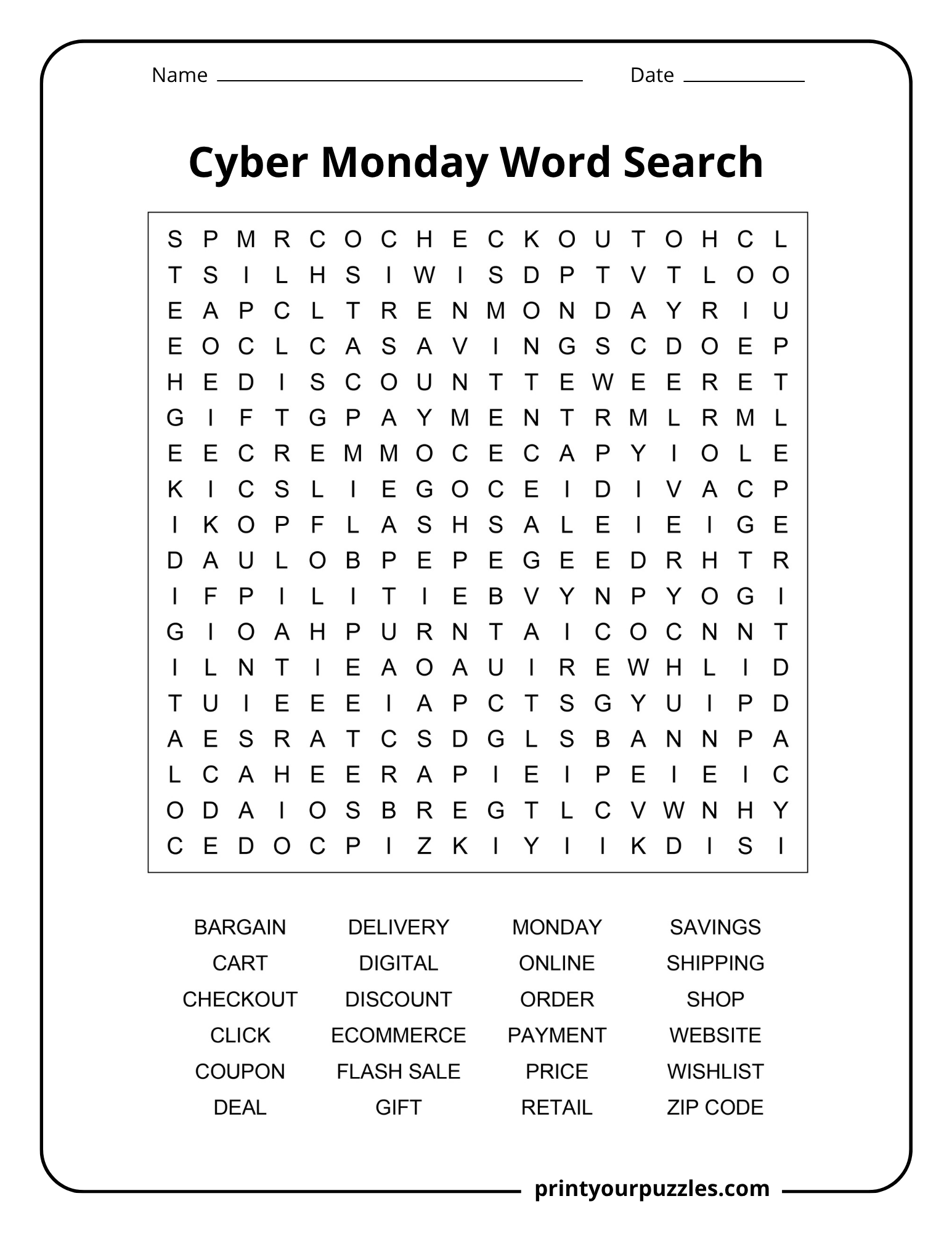
A Cyber Monday word search is a fun way to explore vocabulary connected with this modern shopping tradition. Words related to online stores, bargains, discounts, delivery, websites, carts, and technology can help players understand how Cyber Monday works while enjoying a relaxing puzzle.
Beyond the excitement of finding a bargain, Cyber Monday also shows how dramatically shopping habits have changed. What began as a marketing idea connected with desktop computers has become a major part of the holiday shopping season. Today, it reflects the growing importance of e-commerce, mobile technology, digital payments, and the convenience of buying products from almost anywhere.
Related Word Searches:
Black Friday | Thanksgiving | November | Christmas | December
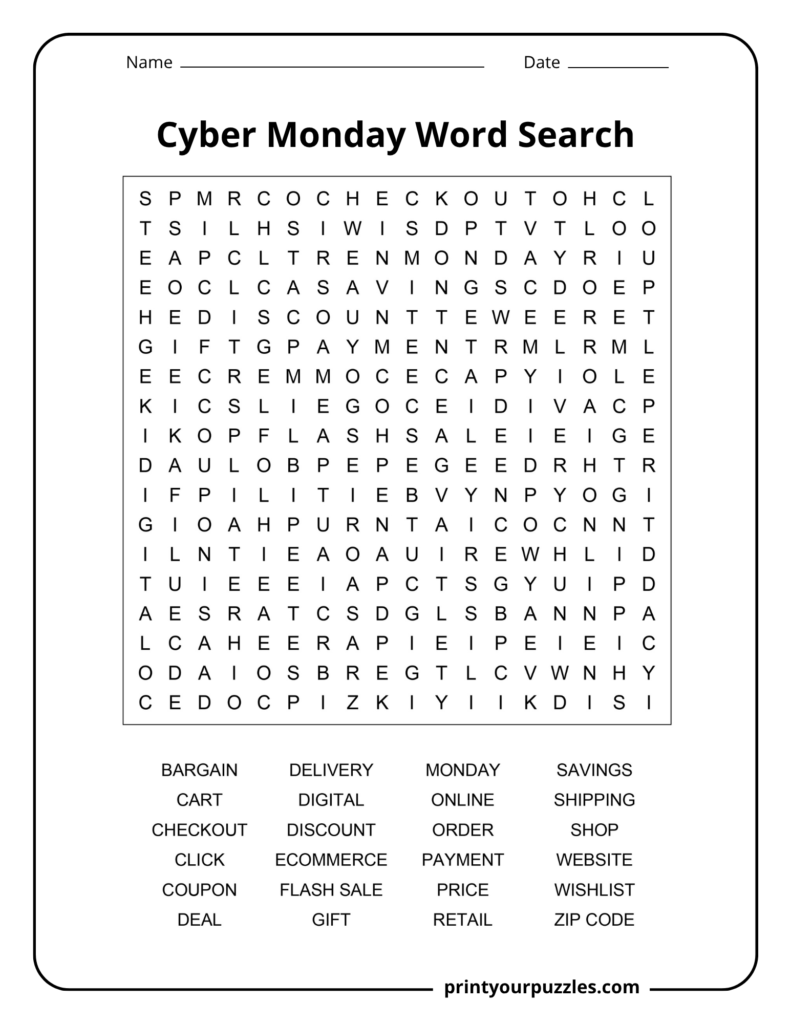
BARGAIN, CART, CHECKOUT, CLICK, COUPON, DEAL, DELIVERY, DIGITAL, DISCOUNT, ECOMMERCE, FLASH SALE, GIFT, MONDAY, ONLINE, ORDER, PAYMENT, PRICE, RETAIL, SAVINGS, SHIPPING, SHOP, WEBSITE, WISHLIST, ZIP CODE
BARGAIN – A bargain is a product offered at an especially attractive price, often encouraging Cyber Monday shoppers to buy items they have been waiting to purchase.
CART – An online cart is the virtual space where shoppers collect products before paying, allowing them to review quantities, prices, discounts, and their final purchase choices.
CHECKOUT – Checkout is the final stage of online shopping, when customers confirm their items, enter delivery and payment information, apply available discounts, and complete the purchase.
CLICK – A click is the simple action shoppers use to open deals, select products, add items to carts, or move through different pages during online shopping.
COUPON – A coupon provides a special discount or promotional benefit, often through a code entered at checkout to reduce the price of a Cyber Monday purchase.
DEAL – A deal is a promotional offer that gives shoppers better value, such as a lower price, bundle, free shipping, or a limited-time Cyber Monday discount.
DELIVERY – Delivery is the process of transporting an online purchase from the seller or warehouse to the customer, usually through postal services or private shipping companies.
DIGITAL – Digital describes technology-based activities conducted through computers, smartphones, websites, or apps, including the online browsing, purchasing, payment, advertising, and promotions central to Cyber Monday shopping.
DISCOUNT – A discount is a reduction from the regular price of a product or service, making Cyber Monday purchases more attractive to shoppers looking for savings.
ECOMMERCE – Ecommerce is the buying and selling of products or services over the internet, making it the central form of retail activity associated with Cyber Monday.
FLASH SALE – A flash sale is a short-term promotion offering reduced prices for a limited period, encouraging Cyber Monday shoppers to make purchasing decisions quickly before time expires.
GIFT – A gift is an item purchased for another person, and Cyber Monday is popular for finding discounted presents before Christmas and other important holiday celebrations.
MONDAY – Monday is the weekday on which Cyber Monday occurs, immediately after Thanksgiving weekend, when online retailers traditionally promote major discounts and special digital shopping offers.
ONLINE – Online refers to activities performed through the internet, including browsing stores, comparing prices, using coupons, making payments, reading reviews, and ordering products during Cyber Monday.
ORDER – An order is a confirmed request to purchase goods online, created after shoppers choose products, provide payment details, and successfully submit their Cyber Monday checkout.
PAYMENT – Payment is the transfer of money for an online purchase, commonly completed with credit cards, debit cards, digital wallets, or other electronic methods during Cyber Monday.
PRICE – Price is the amount of money required to buy a product, and Cyber Monday shoppers often compare prices carefully to identify the strongest available deals.
RETAIL – Retail is the business of selling products directly to consumers, whether through physical stores or websites, and it plays a central role in Cyber Monday.
SAVINGS – Savings are the amounts shoppers avoid spending because of discounts, coupons, lower prices, special offers, or promotions, making them one of Cyber Monday’s biggest attractions.
SHIPPING – Shipping is the process of sending purchased products to customers, and Cyber Monday retailers may offer free or reduced shipping to make online deals more appealing.
SHOP – To shop means to search for and purchase products, and on Cyber Monday many consumers shop online for discounted gifts, electronics, clothing, and household goods.
WEBSITE – A website is a collection of internet pages where retailers display products, prices, promotions, reviews, information, and checkout options for customers shopping during Cyber Monday.
WISHLIST – A wishlist is a saved collection of desired products that shoppers may prepare before Cyber Monday, helping them monitor prices and quickly find planned purchases.
ZIP CODE – A ZIP code is a United States postal code used during checkout to identify delivery areas, calculate shipping costs, and help ensure packages reach correct destinations.
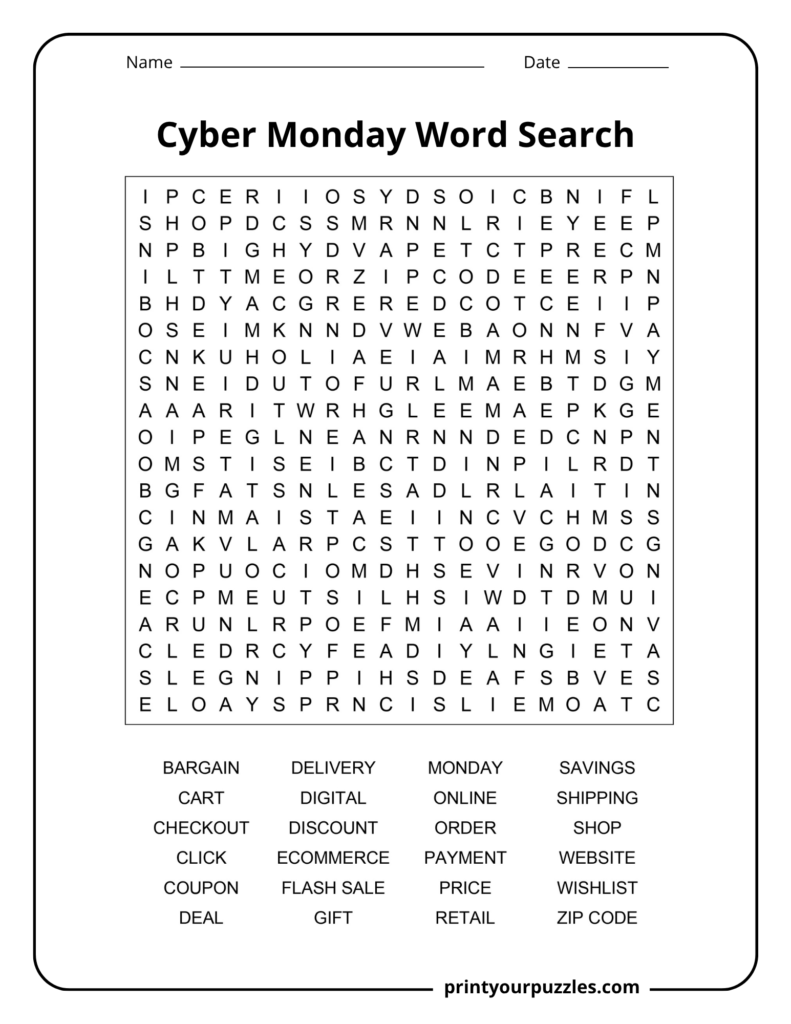
BARGAIN, CART, CHECKOUT, CLICK, COUPON, DEAL, DELIVERY, DIGITAL, DISCOUNT, ECOMMERCE, FLASH SALE, GIFT, MONDAY, ONLINE, ORDER, PAYMENT, PRICE, RETAIL, SAVINGS, SHIPPING, SHOP, WEBSITE, WISHLIST, ZIP CODE
Cyber Monday is a major online shopping event held after Thanksgiving, when retailers offer discounts, special promotions, and limited-time deals through websites and apps.
Cyber Monday takes place on the Monday after Thanksgiving in the United States, immediately following the traditional Black Friday shopping weekend.
The term Cyber Monday was introduced in 2005 after retailers noticed strong online shopping activity on the Monday following Thanksgiving and Black Friday.
Popular Cyber Monday purchases include electronics, clothing, toys, beauty products, home goods, books, and holiday gifts offered with online discounts and promotions.
No. Large retailers, small businesses, independent shops, and online marketplaces can all participate by offering discounts, free shipping, coupons, or other special promotions.
The term Cyber Monday was introduced in 2005 by Shop.org after retailers noticed increased online shopping on the Monday following Thanksgiving weekend.
In the early 2000s, many people had faster internet connections at work than at home, making Monday convenient for continuing their holiday shopping online.
Many retailers now extend their promotions before and after Monday, creating longer online sales periods that are often marketed as part of Cyber Week.
Mobile devices allow shoppers to compare prices, receive alerts, use digital coupons, and complete purchases from almost anywhere without needing a desktop computer.
Many online retailers use free or reduced-cost shipping alongside discounts, helping make purchases more appealing and encouraging customers to complete their orders.