Introduction to the Chinese New Year Word Search
Chinese New Year is one of the most important traditional celebrations in Chinese culture. It marks the beginning of a new year according to the traditional lunisolar calendar and usually falls between late January and mid-February. The exact date changes each year because it is connected with the cycles of both the moon and the sun. The celebration is also commonly called the Spring Festival, especially in China, where it welcomes the approach of a new agricultural season.
Preparations often begin before New Year’s Day. Families clean their homes to remove bad luck from the previous year and make space for good fortune. Red decorations, lanterns, banners, and paper cuttings are placed around houses, streets, and businesses. Red is strongly associated with happiness, prosperity, and protection, making it one of the most recognizable colors of the festival.
Family reunions are at the heart of Chinese New Year. Many people travel long distances to return home and share a special meal on New Year’s Eve. Foods are often chosen for their symbolic meanings. Dumplings may represent wealth, fish can suggest abundance, and long noodles are connected with longevity. Oranges and tangerines are also popular because they are associated with good luck and success.
Children and younger relatives may receive red envelopes containing money. These gifts, known as “hongbao”, express good wishes for health, happiness, and prosperity. Firecrackers, fireworks, lion dances, dragon dances, music, and public performances create a lively atmosphere in many communities. Temples, markets, and streets may become especially busy during the festivities.
Each year is linked to one of twelve animals in the Chinese zodiac, including the Rat, Ox, Tiger, Rabbit, Dragon, Snake, Horse, Goat, Monkey, Rooster, Dog, and Pig. People sometimes discuss the qualities traditionally associated with the animal of the year, although customs and beliefs vary between families and regions.
The celebration traditionally lasts for fifteen days and concludes with the Lantern Festival. During this final event, people may display lanterns, solve riddles, watch performances, and eat sweet rice balls.
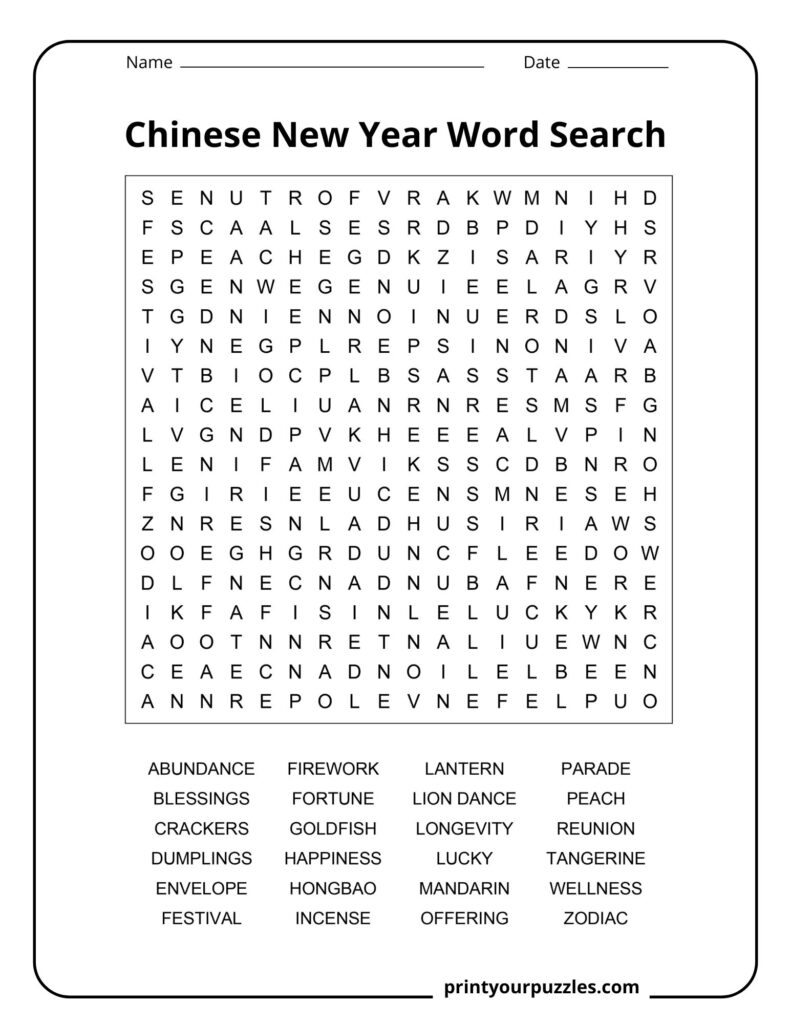
Celebrate the traditions and joyful atmosphere of the Spring Festival with this printable Chinese New Year word search, featuring 24 carefully selected words inspired by family reunions, symbolic foods, red decorations, zodiac animals, lanterns, good fortune, and other customs associated with the new year.
Related Word Searches:
New Year’s Day | January | February | Winter | Valentine’s Day
Medium Difficulty Word Search
Words to Find
ABUNDANCE, BLESSINGS, CRACKERS, DUMPLINGS, ENVELOPE, FESTIVAL, FIREWORK, FORTUNE, GOLDFISH, HAPPINESS, HONGBAO, INCENSE, LANTERN, LION DANCE, LONGEVITY, LUCKY, MANDARIN, OFFERING, PARADE, PEACH, REUNION, TANGERINE, WELLNESS, ZODIAC
All Words Defined
ABUNDANCE – A state of having more than enough of good things, symbolizing plentiful food, wealth, and happiness wished upon families during the Chinese New Year celebrations.
BLESSINGS – Gifts of good fortune and divine favor traditionally exchanged through words, gestures, and red envelopes during Chinese New Year to wish loved ones health and prosperity.
CRACKERS – Loud explosive devices lit during Chinese New Year to scare away evil spirits and bad luck, filling streets with noise, smoke, and festive excitement at midnight.
DUMPLINGS – Folded dough pockets filled with meat or vegetables, shaped like ancient gold ingots and traditionally eaten during Chinese New Year to attract wealth and good fortune.
ENVELOPE – Small red paper packets called hongbao, filled with money and given as gifts during Chinese New Year to transfer luck, blessings, and good wishes to recipients.
FESTIVAL – A joyful public celebration filled with traditions, food, family gatherings, and colorful performances marking the beginning of the lunar new year across Chinese communities worldwide.
FIREWORK – Brilliant explosive displays lighting up the night sky during Chinese New Year, originally meant to frighten evil spirits away and now celebrated as dazzling communal spectacles.
FORTUNE – The desired flow of luck, wealth, and favorable destiny that Chinese New Year rituals, foods, decorations, and customs are all intended to attract and maintain throughout the year.
GOLDFISH – A symbol of luck, abundance, and positive energy in Chinese culture, often kept in homes or gifted during New Year as living embodiments of prosperity and good wishes.
HAPPINESS – The ultimate wish exchanged during Chinese New Year greetings, representing joy, contentment, and emotional well-being hoped for every family member throughout the coming year.
HONGBAO – Traditional red envelopes containing money gifted during Chinese New Year by elders to younger generations, symbolizing the transfer of good luck, protection, and heartfelt blessings.
INCENSE – Fragrant sticks burned at temples and home altars during Chinese New Year to honor ancestors, invite divine blessings, and purify spaces for a fresh and auspicious start.
LANTERN – Colorful glowing decorations hung during Chinese New Year and the Lantern Festival, symbolizing brightness, hope, and the guiding light of good luck into the new year.
LION DANCE – A vibrant traditional performance where dancers in elaborate lion costumes mimic the animal’s movements to chase away evil and invite luck into homes and businesses.
LONGEVITY – A cherished wish for long and healthy life celebrated during Chinese New Year through symbolic foods like noodles, peaches, and special rituals honoring elderly family members.
LUCKY – A quality actively invited during Chinese New Year through red decorations, specific foods, lucky numbers, and auspicious phrases meant to attract favorable outcomes all year long.
MANDARIN – Small bright orange citrus fruits exchanged as gifts during Chinese New Year because their name sounds like gold in Chinese, symbolizing wealth, luck, and sweet abundance.
OFFERING – Food, incense, fruit, and other items respectfully placed on home altars during Chinese New Year to honor ancestors and deities, seeking their protection and blessings for the family.
PARADE – A lively procession through streets featuring dragon dancers, musicians, floats, and performers celebrating Chinese New Year with color, sound, and community spirit in cities worldwide.
PEACH – A fruit deeply associated with immortality and longevity in Chinese culture, used as decoration and offering during New Year celebrations to symbolize wishes for long, healthy lives.
REUNION – The most important gathering of the Chinese New Year season, bringing family members together for a special dinner on New Year’s Eve to share food, love, and togetherness.
TANGERINE – A small citrus fruit symbolizing luck and wealth during Chinese New Year, commonly displayed in homes and exchanged as gifts because their golden color represents coins and fortune.
WELLNESS – The state of good physical and mental health actively wished for during Chinese New Year through special foods, herbal teas, temple prayers, and heartfelt greetings among loved ones.
ZODIAC – The Chinese astrological system of twelve animal signs rotating in a yearly cycle, with each New Year celebrating a new animal whose traits are said to influence the year ahead.
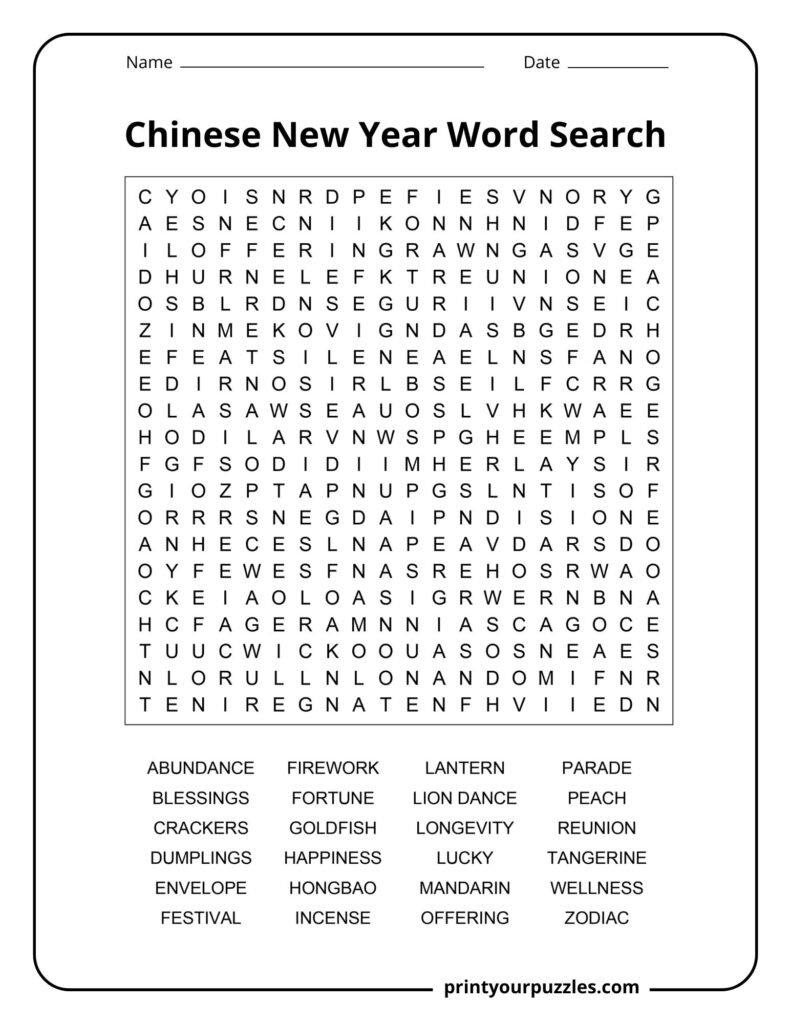
Hard Difficulty Word Search
Words to Find
ABUNDANCE, BLESSINGS, CRACKERS, DUMPLINGS, ENVELOPE, FESTIVAL, FIREWORK, FORTUNE, GOLDFISH, HAPPINESS, HONGBAO, INCENSE, LANTERN, LION DANCE, LONGEVITY, LUCKY, MANDARIN, OFFERING, PARADE, PEACH, REUNION, TANGERINE, WELLNESS, ZODIAC
5 Key FAQs About Chinese New Year
5 Curious "Did You Know?" Facts About Chinese New Year