
New Year’s Day is celebrated on January 1 and marks the beginning of a new calendar year. It is a public holiday in many countries and is often associated with fresh starts, personal goals, family gatherings, and hopes for the months ahead. Although customs vary around the world, the day usually combines celebration with reflection.
The modern date of January 1 comes from the Gregorian calendar, which is used internationally for civil purposes. The month of January was named after Janus, the ancient Roman god of beginnings, transitions, and doorways. He was often shown with two faces, one looking toward the past and the other toward the future. This image closely matches the spirit of New Year’s Day, when people remember the previous year while preparing for a new one.
Celebrations often begin on New Year’s Eve, December 31. Friends and families may attend parties, enjoy special meals, listen to music, and watch public countdowns. At midnight, fireworks, bells, cheers, and songs welcome the arrival of January 1. In the United States, the ball drop in New York City’s Times Square is one of the best-known traditions, attracting large crowds and television viewers.
New Year’s Day itself is often quieter. Some people rest after the previous night’s celebrations, visit relatives, watch parades or sporting events, or share a special lunch. Traditional foods may be chosen because they symbolize luck, prosperity, or long life. In the southern United States, black-eyed peas and greens are popular, while other cultures serve lentils, noodles, grapes, cakes, or round foods.
Making resolutions is another familiar custom. People may set goals related to exercise, education, finances, travel, relationships, or personal habits. Resolutions are not required, but they reflect the idea that a new year offers an opportunity to improve, learn, or begin again.
Not every culture celebrates the new year on January 1. Lunar, religious, and traditional calendars may place New Year festivals on different dates. However, January 1 remains a widely recognized international occasion.
Welcome a fresh beginning with this New Year’s Day word search puzzle, featuring 24 carefully selected words inspired by countdowns, fireworks, resolutions, calendars, celebrations, good luck, new goals, and the excitement of starting another year.
Related Word Searches:
January | December | Christmas | Winter | Chinese New Year
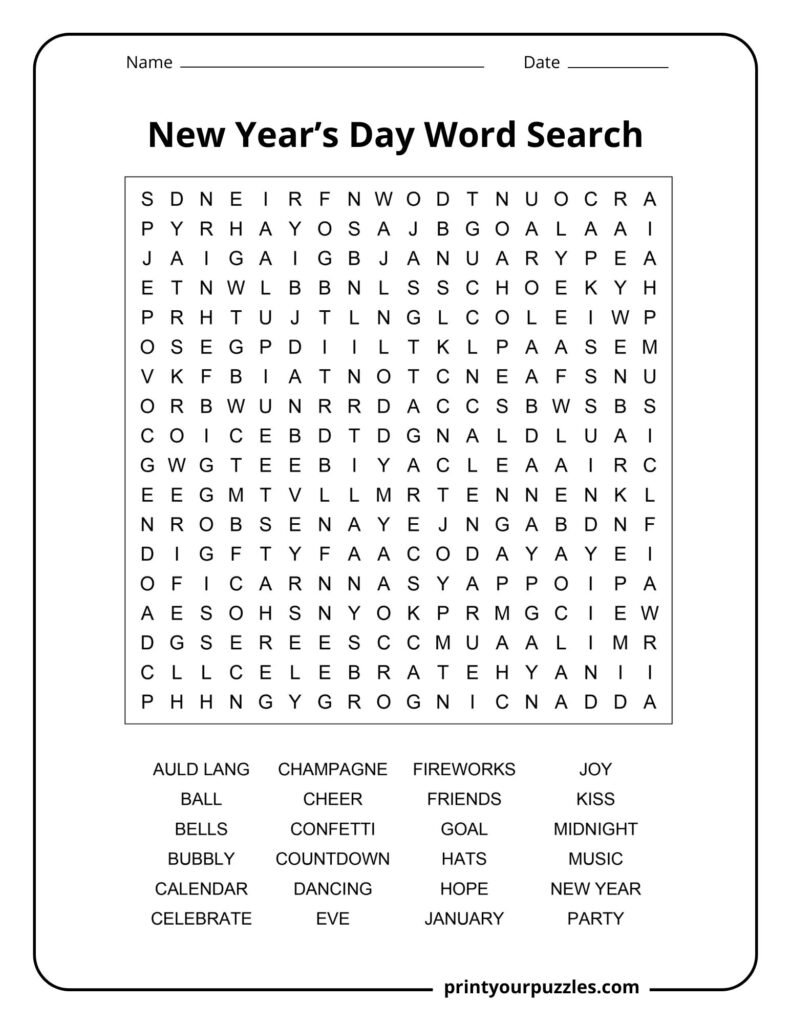
AULD LANG, BALL, BELLS, BUBBLY, CALENDAR, CELEBRATE, CHAMPAGNE, CHEER, CONFETTI, COUNTDOWN, DANCING, EVE, FIREWORKS, FRIENDS, GOAL, HATS, HOPE, JANUARY, JOY, KISS, MIDNIGHT, MUSIC, NEW YEAR, PARTY
AULD LANG – Scottish phrase meaning “old long since” or “days gone by,” famously used in the traditional New Year’s song that reflects on friendship and memories of the past.
BALL – The iconic crystal sphere that descends in Times Square, New York City, at midnight on New Year’s Eve, symbolizing the transition from one year to the next.
BELLS – Traditional instruments rung at midnight to announce the arrival of the new year, creating joyful sounds that echo through churches, town squares, and celebration venues worldwide.
BUBBLY – Informal term for champagne or sparkling wine, the festive beverage traditionally consumed during New Year’s celebrations to toast the incoming year with friends and loved ones.
CALENDAR – The annual time-keeping system that resets on January first, marking a fresh beginning and new opportunities for planning, goal-setting, and organizing the upcoming twelve months ahead.
CELEBRATE – To observe and honor the arrival of the new year through parties, gatherings, special meals, and festivities that bring people together in joy, hope, and anticipation.
CHAMPAGNE – The luxurious sparkling wine from France’s Champagne region, traditionally popped open at midnight to toast new beginnings, prosperity, and happiness for the coming year.
CHEER – The enthusiastic shouts, applause, and expressions of joy that erupt at midnight when people welcome the new year together with excitement, optimism, and collective happiness.
CONFETTI – Colorful paper pieces or metallic streamers thrown into the air during New Year’s celebrations, creating a festive shower that symbolizes joy, excitement, and new beginnings.
COUNTDOWN – The exciting tradition of counting backward from ten to zero as midnight approaches, building anticipation and uniting celebrants in the final seconds before the new year arrives.
DANCING – The lively movement to music that occurs at New Year’s parties, expressing joy and celebration as people move rhythmically together to welcome the upcoming year.
EVE – Short for New Year’s Eve, the final night of December thirty-first when people gather for parties and celebrations before midnight marks the beginning of January first.
FIREWORKS – Explosive pyrotechnic displays launched at midnight, creating brilliant colors and patterns in the night sky to commemorate the new year with spectacular visual entertainment and excitement.
FRIENDS – The companions and loved ones with whom people gather to celebrate New Year’s, sharing food, drinks, laughter, and the meaningful tradition of welcoming new beginnings together.
GOAL – A personal objective or resolution set for the new year, representing desired changes, improvements, or achievements individuals hope to accomplish during the upcoming twelve months.
HATS – Festive party headwear, often glittery or featuring year numbers, worn during New Year’s celebrations to add visual fun, festivity, and playful spirit to the evening’s activities.
HOPE – The optimistic feeling associated with new beginnings on January first, when people anticipate positive changes, fresh opportunities, and better outcomes in the year stretching ahead.
JANUARY – The first month of the calendar year, named after Janus, the Roman god of beginnings and transitions, representing fresh starts and the opening chapter of twelve months.
JOY – The profound happiness and positive emotion experienced during New Year’s celebrations, stemming from gratitude, togetherness, optimism, and the exciting promise of new possibilities ahead.
KISS – The romantic tradition of sharing a kiss with a loved one precisely at midnight on New Year’s Eve, believed to strengthen bonds and ensure affection throughout the year.
MIDNIGHT – The precise moment when one year transitions to the next at twelve o’clock, marked by countdown celebrations, cheers, fireworks, and the collective welcoming of new beginnings.
MUSIC – The songs, melodies, and rhythms played during New Year’s celebrations, including traditional tunes like “Auld Lang Syne” and upbeat party music that encourages dancing and merriment.
NEW YEAR – The annual milestone marking January first, representing a fresh start, renewed hope, and the opportunity to set goals, make changes, and embrace possibilities in the months ahead.
PARTY – A festive gathering held on New Year’s Eve where people eat, drink, dance, socialize, and celebrate together, creating memorable experiences while awaiting midnight and new beginnings.
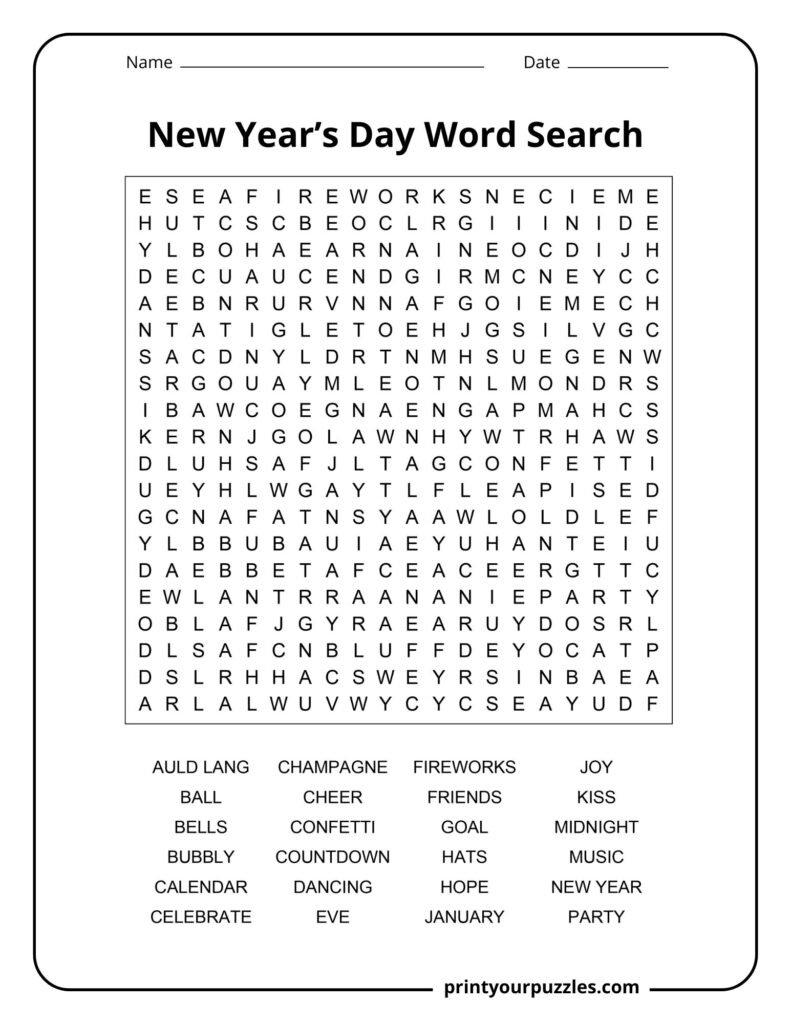
AULD LANG, BALL, BELLS, BUBBLY, CALENDAR, CELEBRATE, CHAMPAGNE, CHEER, CONFETTI, COUNTDOWN, DANCING, EVE, FIREWORKS, FRIENDS, GOAL, HATS, HOPE, JANUARY, JOY, KISS, MIDNIGHT, MUSIC, NEW YEAR, PARTY
New Year’s Day is celebrated annually on January first, marking the beginning of the new calendar year and representing fresh starts, new opportunities, and renewed hope worldwide.
Resolutions are personal commitments to improve oneself or achieve specific goals, embracing the symbolic fresh start that January first provides to make positive changes and better habits.
Kissing at midnight is believed to ensure affection and close bonds throughout the coming year, symbolizing love, warmth, and connection as couples welcome new beginnings together.
This Scottish folk song celebrates friendship and memories of the past, creating a nostalgic, meaningful moment that honors relationships while transitioning hopefully into the future ahead.
Traditional lucky foods include black-eyed peas, pork, cabbage, lentils, and round fruits, symbolizing prosperity, progress, wealth, and good fortune throughout the upcoming twelve months.
The iconic crystal ball features 2,688 Waterford Crystal triangles and 32,256 LED lights, descending 141 feet during the final sixty seconds before midnight in New York City.
Kiribati’s Line Islands celebrate first, while American Samoa welcomes the new year last, creating a 26-hour span between the world’s first and final midnight celebrations.
Before 46 BCE, Romans celebrated New Year in March. Caesar’s Julian calendar reforms established January first, honoring Janus, the god of beginnings and doorways.
Held annually in Pasadena, California, this spectacular New Year’s Day parade features elaborate flower-covered floats, marching bands, and equestrian units, attracting millions of viewers worldwide.
People believed loud sounds from bells, fireworks, and horns would frighten away evil spirits and bad luck, ensuring protection and prosperity throughout the coming year.