
Spring is a season of renewal, warmer weather, blooming flowers, and increasing daylight. It arrives between winter and summer, bringing noticeable changes to nature and everyday life. In the Northern Hemisphere, spring usually begins in March and continues through May, while in the Southern Hemisphere it generally lasts from September to November.
The season begins astronomically with the spring equinox. Around March 20 or 21 in the Northern Hemisphere, and September 22 or 23 in the Southern Hemisphere, day and night are approximately equal in length. After the equinox, daylight continues to increase, temperatures gradually rise, and the natural world becomes more active.
One of the most recognizable signs of spring is the return of plant growth. Trees produce fresh leaves, gardens begin to bloom, and flowers such as tulips, daffodils, crocuses, and cherry blossoms add bright colors to parks and neighborhoods. Rain showers help nourish the soil, while warmer sunshine encourages farmers and gardeners to plant seeds, vegetables, herbs, and flowers.
Animals also respond to the changing season. Birds return from migration, build nests, and fill mornings with song. Bees and butterflies visit flowering plants, helping with pollination. Many animals give birth during spring because warmer weather and increased food make it easier for their young to survive.
People often spend more time outdoors as conditions improve. Popular activities include walking, cycling, gardening, picnicking, hiking, playing sports, and visiting parks or botanical gardens. Families may open windows, organize their homes, and begin spring cleaning after the colder months. Lighter clothing gradually replaces heavy coats, although spring weather can still be unpredictable, with rain, wind, chilly mornings, and occasional late snow.
Several important celebrations may take place during spring, including Easter, Passover, Earth Day, Mother’s Day, and May Day. Traditions vary between countries and cultures, but many of these occasions share themes of hope, growth, family, nature, and new beginnings.
Spring often creates an energetic and optimistic atmosphere. It reminds people that change can bring fresh opportunities and that life continues to grow after winter.
Celebrate the flowers, animals, weather, outdoor activities, and joyful feeling of a new season with this printable spring word search puzzle, featuring 24 carefully selected words inspired by sunshine, rain, gardens, blossoms, wildlife, fresh air, and the colorful return of nature.
Related Word Searches:
March | April | May | Easter | Earth Day
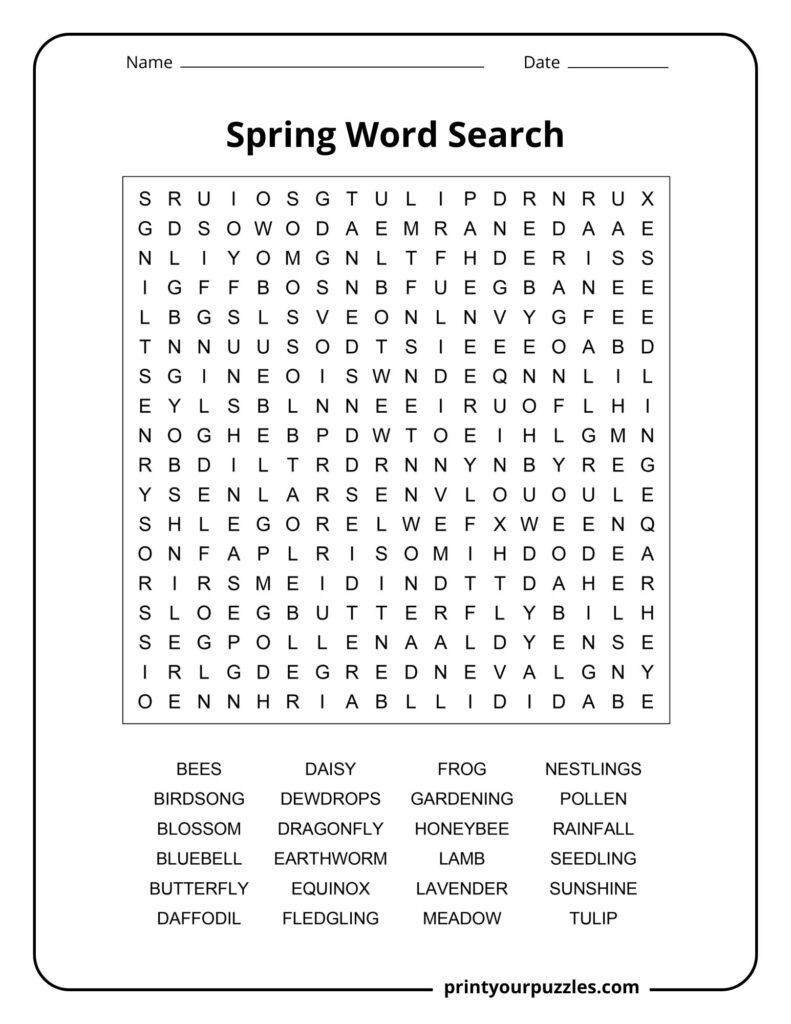
BEES, BIRDSONG, BLOSSOM, BLUEBELL, BUTTERFLY, DAFFODIL, DAISY, DEWDROPS, DRAGONFLY, EARTHWORM, EQUINOX, FLEDGLING, FROG, GARDENING, HONEYBEE, LAMB, LAVENDER, MEADOW, NESTLINGS, POLLEN, RAINFALL, SEEDLING, SUNSHINE, TULIP
BEES – Small, winged insects that fly from flower to flower collecting nectar and pollen. They are essential pollinators in spring, helping plants reproduce and produce fruit throughout the season.
BIRDSONG – The musical calls and melodies produced by birds, especially prominent in spring mornings. Males sing to attract mates and defend their territory as the warmer season begins.
BLOSSOM – The delicate flowers that appear on fruit trees and bushes in spring. Blossoms signal the end of winter and are vital for pollination, eventually developing into fruits later in the year.
BLUEBELL – A woodland wildflower with small, bell-shaped blue-violet blooms that carpets forest floors in spring. Bluebells are a beloved sign of the season and provide nectar for early bumblebees.
BUTTERFLY – A colourful winged insect that emerges in spring after overwintering as a chrysalis. Butterflies are important pollinators and their appearance is widely regarded as a joyful symbol of the new season.
DAFFODIL – A bright yellow spring flower with a distinctive trumpet-shaped centre. Daffodils are among the first bulbs to bloom after winter, pushing through cold soil and symbolising hope and new beginnings.
DAISY – A small, cheerful wildflower with white petals surrounding a yellow centre, commonly found in lawns and meadows in spring. Daisies are one of the most recognisable and widespread flowers in temperate regions.
DEWDROPS – Tiny droplets of water that form on grass, leaves, and petals overnight as temperatures cool. In spring mornings, dewdrops catch the early sunlight and give the garden a fresh, sparkling appearance.
DRAGONFLY – A large, slender insect with two pairs of transparent wings that begins appearing near ponds and streams in spring. Dragonflies are skilled aerial hunters, feeding on smaller insects throughout the warmer months.
EARTHWORM – A soft, segmented creature that lives in soil and becomes more active in the damp, mild conditions of spring. Earthworms are vital to healthy gardens, aerating soil and breaking down organic matter into nutrients.
EQUINOX – The astronomical moment in spring when day and night are of equal length across the entire world. The spring equinox, around 20 March, officially marks the start of the season in the Northern Hemisphere.
FLEDGLING – A young bird that has recently grown its first feathers and is learning to fly for the very first time. Spring is the season when most fledglings leave the nest and begin their independent lives.
FROG – A small, smooth-skinned amphibian that emerges from hibernation in spring to breed in ponds and lakes. Frogs lay large masses of spawn in shallow water, and their croaking calls are a classic sound of the season.
GARDENING – The activity of growing and tending plants, flowers, and vegetables in outdoor spaces. Spring is the most popular time for gardening as the soil warms up, seeds are sown, and new growth begins across the garden.
HONEYBEE – A species of social bee that lives in large colonies and produces honey. In spring, honeybees become highly active after winter, leaving the hive to forage for pollen and nectar from freshly blooming flowers.
LAMB – A young sheep, typically born in early spring on farms across the countryside. Lambs are playful and energetic, and the sight of them leaping in green fields is one of the most iconic images of the season.
LAVENDER – A fragrant flowering plant with tall spikes of purple blooms that begins to grow vigorously in spring. Lavender is highly attractive to bees and butterflies, and its soothing scent makes it a favourite in gardens and homes.
MEADOW – An open area of grassland rich in wildflowers, grasses, and insects that flourishes particularly well in spring. Meadows provide essential habitat and food for many species of butterflies, bees, birds, and small mammals.
NESTLINGS – Newly hatched baby birds that are too young to leave the nest and depend entirely on their parents for warmth and food. Spring is the peak nesting season, with many bird species raising their first brood of the year.
POLLEN – A fine, powdery substance produced by flowering plants and trees in spring. Pollen is carried by wind, bees, and other insects between flowers to enable fertilisation, though it also causes seasonal allergies in many people.
RAINFALL – Precipitation in the form of water droplets falling from clouds, which increases in many regions during spring. Spring rainfall is essential for nourishing new plant growth, replenishing rivers and reservoirs, and sustaining wildlife across the landscape.
SEEDLING – A young plant that has just sprouted from a seed and begun to grow its first small leaves. Spring is the ideal time to nurture seedlings, as warming temperatures and longer daylight hours encourage rapid and healthy plant development.
SUNSHINE – The warm, bright light produced by the sun, which becomes stronger and longer-lasting as spring progresses. Sunshine triggers the growth of plants, lifts the mood of people and animals alike, and signals the end of the cold winter months.
TULIP – A popular spring bulb flower with smooth, cup-shaped blooms available in a wide range of vivid colours. Tulips are originally from Central Asia and are now grown worldwide, symbolising the arrival of spring in gardens and parks everywhere.
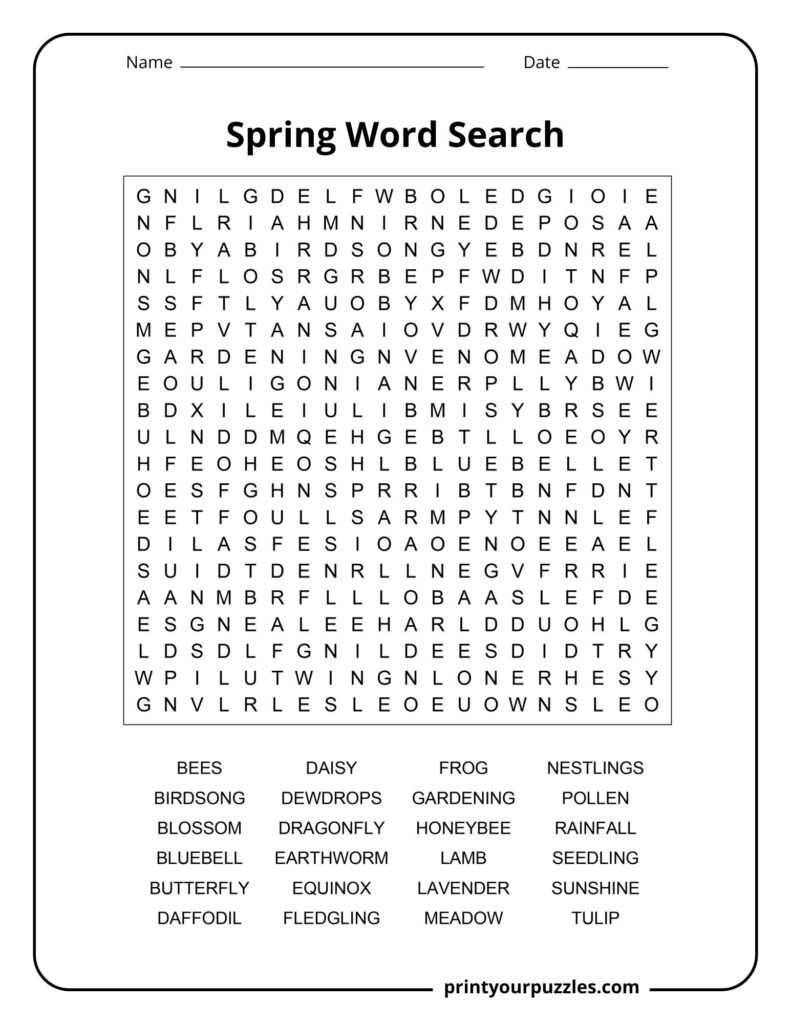
BEES, BIRDSONG, BLOSSOM, BLUEBELL, BUTTERFLY, DAFFODIL, DAISY, DEWDROPS, DRAGONFLY, EARTHWORM, EQUINOX, FLEDGLING, FROG, GARDENING, HONEYBEE, LAMB, LAVENDER, MEADOW, NESTLINGS, POLLEN, RAINFALL, SEEDLING, SUNSHINE, TULIP
Spring officially starts at the vernal equinox, around 20 March in the Northern Hemisphere, when day and night are of equal length and daylight begins to increase.
Rising temperatures and longer daylight hours trigger hormonal changes in plants, signalling them to produce flowers. Blooming in spring maximises pollination opportunities as insects also become more active.
Warmer temperatures and greater food availability encourage animals to emerge from hibernation, begin breeding, and raise young. Longer days also stimulate hormonal changes that drive mating behaviour across many species.
As the sun warms the earth unevenly, warm air rises and meets cooler air above, forming rain clouds. This process is more frequent in spring, producing the characteristic showers that nourish new plant growth.
Increased sunlight boosts serotonin and vitamin D levels in the body, improving mood and energy. The return of colour, warmth, and birdsong after winter also has a well-documented positive effect on mental wellbeing.
Spring arrives like a held breath finally released — the world wakes up, colour returns, and anything feels possible again. These five books share that same energy: alive, transformative, and full of quiet wonder.
The Secret Garden – Frances Hodgson Burnett. A neglected garden slowly blooms back to life, mirroring everything spring promises. A book about renewal, hope, and the unstoppable force of growing things.
Their Eyes Were Watching God – Zora Neale Hurston. A woman steps boldly into her own life with the energy of a season reborn. Lush, powerful, and overflowing with the joy of new beginnings.
Middlemarch – George Eliot. A whole community stirring with ambition, love, and possibility. As expansive and generous as spring itself — everything is opening, everything is still to come.
A Room with a View – E.M. Forster. A young Englishwoman discovers passion and freedom beneath an Italian sky. Warm, liberating, and quietly revolutionary — spring for the soul.
The Enchanted April – Elizabeth von Arnim. Four women flee grey lives for a sun-drenched Italian castle and slowly come alive again. The most perfectly spring book ever written — gentle, radiant, and transformative.
As daylight increases, the brain produces less melatonin and more serotonin, causing a genuine boost in energy, restlessness, and mood that scientists recognise as a physiological response to seasonal change.
Through underground fungal networks connecting their roots, trees exchange nutrients and chemical signals with neighbouring plants. This activity intensifies in spring as sap rises and new growth demands greater resources across the forest floor.
Snowdrops and crocuses produce a natural antifreeze protein in their cells that allows them to bloom even in freezing temperatures, making them among the very first flowers to appear each year.
The season took its name from the Old English expression “spring of the year,” describing how plants visibly burst from the ground with sudden energy after the long stillness of winter.
Many species, such as the Arctic tern, travel from the Southern Hemisphere to the Northern Hemisphere every year, following warmth and daylight to take full advantage of spring’s abundance of food and nesting opportunities.