
December is the twelfth and final month of the year, known for winter weather, festive celebrations, family gatherings, and a strong sense of reflection. It has 31 days and comes between November and January. In the Northern Hemisphere, December brings some of the shortest days and longest nights of the year, while in the Southern Hemisphere it marks the beginning of summer and a season of warmer temperatures.
The month takes its name from the Latin word “decem”, meaning “ten,” because December was originally the tenth month in the early Roman calendar. When January and February were later added to the beginning of the year, December became the twelfth month, but its original name remained.
In many northern regions, December is associated with cold temperatures, frost, snow, and icy landscapes. People may wear coats, scarves, gloves, and boots while enjoying activities such as sledding, skating, skiing, or building snowmen. Homes often feel especially warm and welcoming, with blankets, candles, fireplaces, and hot drinks creating a cozy atmosphere during the darker evenings.
December is also filled with holidays and cultural traditions. Christmas is celebrated on December 25 by Christians and by many families as a cultural occasion centered on decorations, gifts, music, food, and togetherness. Hanukkah sometimes falls partly or entirely in December, while Kwanzaa begins on December 26. Saint Nicholas Day, Boxing Day, and other regional observances also give the month a varied and festive character.
Seasonal foods may include cookies, pies, roasted dishes, chocolate, gingerbread, and warm beverages. Families and communities often attend concerts, visit holiday markets, decorate trees, exchange cards, volunteer, or donate food and gifts. Streets and public spaces may be illuminated with colorful lights, making December one of the brightest-looking months despite its long nights.
The final days of December encourage people to look back on the year and prepare for the next one. New Year’s Eve on December 31 is celebrated with parties, countdowns, fireworks, music, and personal resolutions.
Celebrate the weather, traditions, foods, holidays, and joyful activities of the final month of the year with this December word search, featuring vocabulary inspired by winter, decorations, family time, seasonal events, and the excitement of welcoming a new year.
Related Word Searches:
Christmas | Boxing Day | Winter | New Year’s Day | November
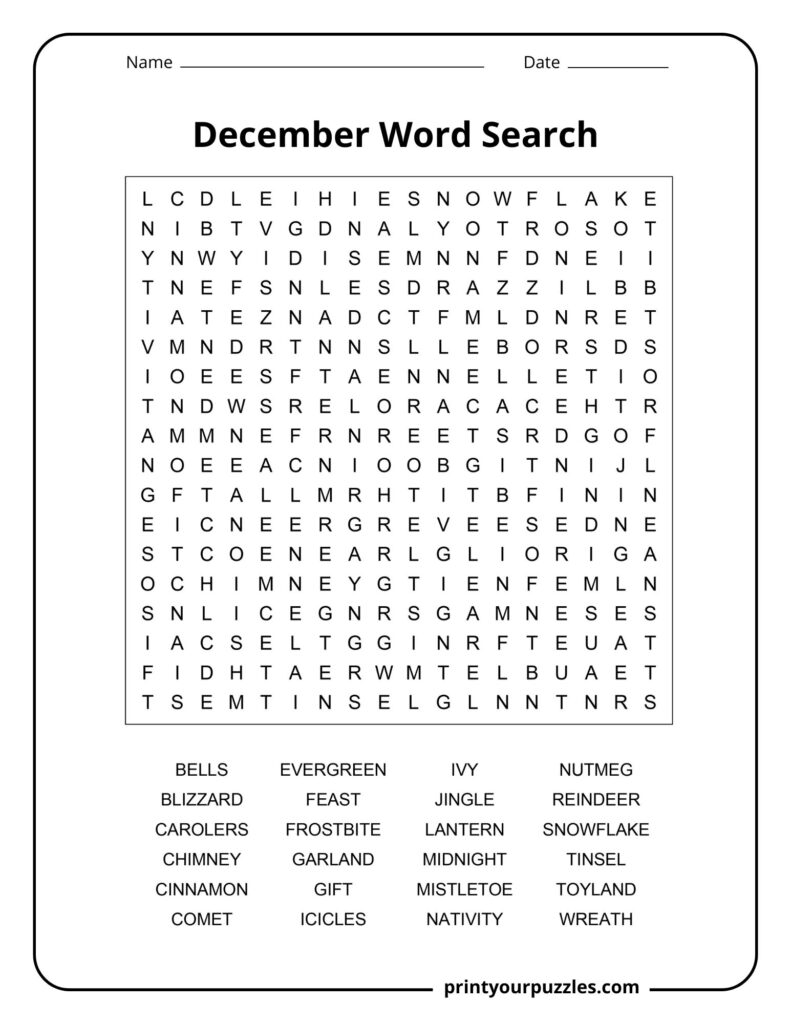
BELLS, BLIZZARD, CAROLERS, CHIMNEY, CINNAMON, COMET, EVERGREEN, FEAST, FROSTBITE, GARLAND, GIFT, ICICLES, IVY, JINGLE, LANTERN, MIDNIGHT, MISTLETOE, NATIVITY, NUTMEG, REINDEER, SNOWFLAKE, TINSEL, TOYLAND, WREATH
BELLS – Metal objects that produce a ringing sound when struck, traditionally hung and rung during Christmas celebrations to announce joy and the festive season.
BLIZZARD – A severe snowstorm characterized by strong winds, low temperatures, and heavy snowfall that reduces visibility, often associated with harsh December winter conditions.
CAROLERS – Groups of singers who travel through neighborhoods during the Christmas season, performing traditional festive songs at doorsteps to spread holiday cheer and goodwill.
CHIMNEY – A vertical structure through which smoke exits a fireplace, famously known in Christmas folklore as the magical entry point through which Santa Claus delivers gifts.
CINNAMON – A warm, aromatic spice derived from tree bark, widely used during December in holiday baking, mulled wine, and scented decorations, evoking cozy winter comfort.
COMET – One of Santa Claus’s legendary flying reindeer, also referring to a bright celestial body with a glowing tail that streaks across the dark winter night sky.
EVERGREEN – A tree or plant that retains its leaves throughout winter, symbolizing eternal life and hope, most famously represented by the decorated Christmas tree tradition.
FEAST – A large, elaborate celebratory meal shared among family and friends during the Christmas season, typically featuring roasted meats, seasonal vegetables, and indulgent festive desserts.
FROSTBITE – A serious medical condition caused by prolonged exposure to freezing temperatures, where skin and underlying tissues freeze, posing a real danger during harsh December winters.
GARLAND – A decorative rope or chain made from woven flowers, foliage, or artificial materials, draped across mantels, staircases, and doorways as traditional Christmas decoration.
GIFT – A present given freely to someone as an expression of love, appreciation, or celebration, central to the Christmas tradition of exchanging tokens of affection and generosity.
ICICLES – Slender, pointed spikes of ice formed by the freezing of dripping water, hanging from rooftops and branches during cold December days, creating a magical winter landscape.
IVY – A climbing evergreen plant with dark glossy leaves, traditionally used in Christmas and winter decorations, symbolizing friendship, fidelity, and the enduring nature of life.
JINGLE – A light, cheerful ringing sound produced by small bells, most famously associated with the beloved Christmas song about a horse-drawn sleigh riding through snowy winter landscapes.
LANTERN – A portable light source enclosed in a protective frame, used during December evenings to illuminate pathways, decorate homes, and create a warm, welcoming festive atmosphere.
MIDNIGHT – The exact moment when one day transitions to the next, holding special significance during Christmas Eve when celebrations peak and the magic of Christmas Day officially begins.
MISTLETOE – A parasitic evergreen plant traditionally hung in doorways during Christmas, under which people are invited by custom to exchange a kiss as a gesture of affection.
NATIVITY – A representation of the birth scene of Jesus Christ in Bethlehem, typically depicted through figurines or live performances, forming the religious heart of Christmas celebrations worldwide.
NUTMEG – A warm, fragrant spice ground from the seed of a tropical tree, commonly grated into eggnog, Christmas puddings, and festive baked goods for its distinctive seasonal flavor.
REINDEER – Large Arctic deer famous in Christmas folklore as the magical animals that pull Santa Claus’s sleigh across the sky on Christmas Eve to deliver gifts worldwide.
SNOWFLAKE – A delicate, uniquely patterned crystal of ice that falls from winter clouds, each one structurally distinct, forming the beautiful white blanket associated with a traditional white Christmas.
TINSEL – Shiny, thin strips of metallic material draped over Christmas tree branches to mimic the glittering effect of ice, adding a sparkling, festive brilliance to holiday decorations.
TOYLAND – A magical, imaginary land filled with toys and wonder, famously referenced in classic Christmas songs and stories, symbolizing the enchanting world of childhood joy and imagination.
WREATH – A circular decorative arrangement made from evergreen branches, berries, and ribbons, traditionally hung on front doors during December as a welcoming symbol of the Christmas season.
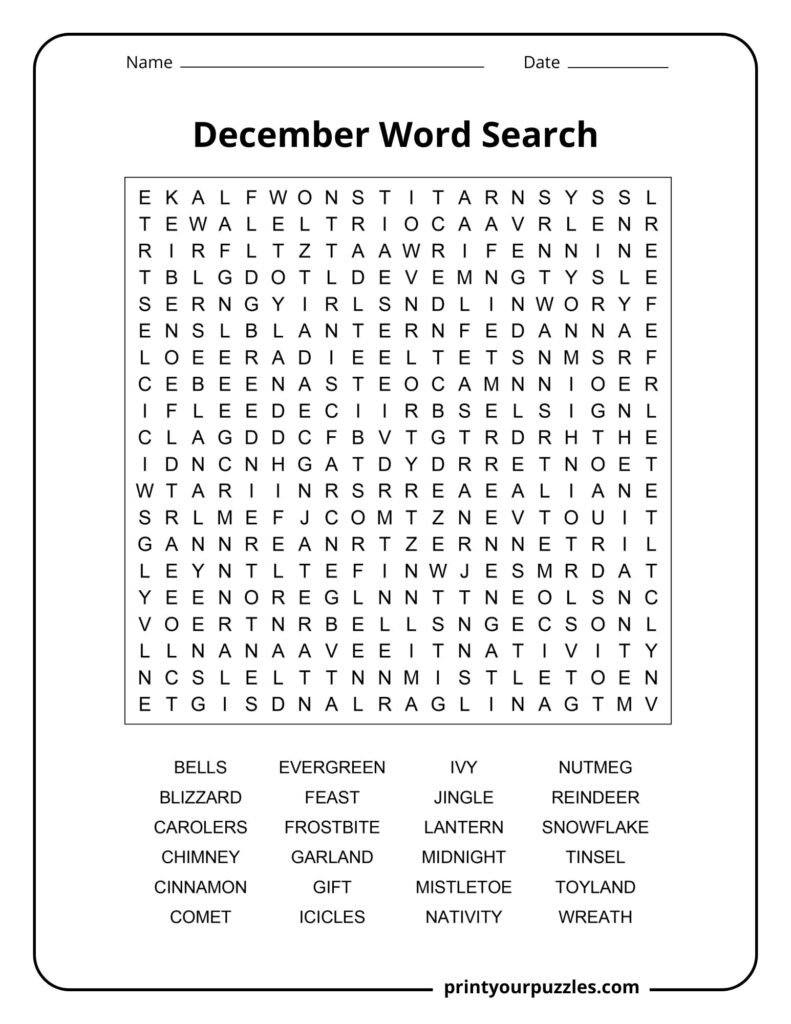
BELLS, BLIZZARD, CAROLERS, CHIMNEY, CINNAMON, COMET, EVERGREEN, FEAST, FROSTBITE, GARLAND, GIFT, ICICLES, IVY, JINGLE, LANTERN, MIDNIGHT, MISTLETOE, NATIVITY, NUTMEG, REINDEER, SNOWFLAKE, TINSEL, TOYLAND, WREATH
December hosts major holidays across many cultures, including Christmas, Hanukkah, and New Year’s Eve, filling the month with celebrations, family gatherings, and widespread feelings of joy.
The winter solstice occurs in December, when Earth’s axial tilt positions the Northern Hemisphere farthest from the sun, producing the fewest daylight hours of the entire year.
Gift-giving traces back to ancient Roman festivals like Saturnalia and later Christian traditions honoring Saint Nicholas, eventually evolving into the widespread Christmas custom practiced globally today.
Evergreens retain their color and life through the coldest months, making them powerful ancient symbols of hope, resilience, and the promise that warmth and growth will return.
December’s long dark nights inspired ancient peoples worldwide to light candles and fires, symbolizing hope and the return of light, a tradition continued through Hanukkah, Diwali, and Christmas.
The year draws to a close in darkness and candlelight, in memory and reunion, in the strange mixture of joy and melancholy that only December brings. These three books hold all of that — the warmth, the shadows, and the wonder.
A Christmas Carol – Charles Dickens. Snow, ghosts, redemption, and warmth reclaimed in the darkest days. Dickens invented December as we feel it.
The Corrections – Jonathan Franzen. A family gathering for one last Christmas, full of tension, love, and reckoning. Messy, brilliant, and deeply true to December’s complicated warmth.
The Master and Margarita – Mikhail Bulgakov. The devil visits Moscow in winter, turning everything upside down with dark wit and magic. Strange, dazzling, and perfect for December’s long, mysterious nights.
In the ancient Roman calendar, December held the tenth position, which is reflected in its name, derived from the Latin word decem, meaning ten.
Early Christians celebrated Christmas on various dates throughout the year, and December 25th was only officially established by the Roman Church during the fourth century.
According to folklore, Saint Nicholas tossed bags of gold through a window, which landed in stockings hung by the fireplace to dry, inspiring the beloved Christmas tradition.
Christmas, Hanukkah, and New Year’s Eve all fall within December, making it uniquely packed with internationally celebrated festivities observed by billions of people across different cultures and religions.
James Lord Pierpont wrote and published the song in 1857 intending it to celebrate Thanksgiving sleigh races, but it quickly became one of the most iconic Christmas songs ever written.