Introduction to the Day of the Dead Word Search
Day of the Dead is a traditional celebration that honors relatives and friends who have died. Known in Spanish as “Día de los Muertos”, it is observed mainly on November 1 and November 2, especially in Mexico and in communities with Mexican heritage. Rather than treating death only as something frightening or sorrowful, the occasion remembers loved ones through family gatherings, meaningful symbols, favorite foods, music, and colorful decorations.
The celebration developed from a combination of Indigenous traditions and Catholic observances introduced during the Spanish colonial period. November 1 is often associated with children who have died, while November 2 is commonly dedicated to deceased adults. However, customs vary among regions, families, and communities, so there is no single way to observe the occasion.
One of the best-known traditions is creating an “ofrenda”, or altar, in a home, school, cemetery, or public space. Families may decorate it with photographs, candles, flowers, religious images, and personal objects connected with the people being remembered. Food and drinks that the deceased enjoyed may also be included. These offerings are intended to welcome their memory and show that they remain an important part of the family’s story.
Marigolds are among the most recognizable flowers of the celebration. Their bright orange and yellow colors are often used to decorate altars and graves. Other familiar symbols include decorated skulls, skeleton figures, papel picado banners, and candles. Although skulls appear frequently, they are usually presented in a lively and artistic way rather than as frightening images.
Food also plays an important role. Families may prepare “pan de muerto”, a sweet bread made especially for the occasion, along with tamales, mole, fruit, or regional dishes. Sugar skulls may be decorated with colorful icing and sometimes marked with a person’s name. Many people also visit cemeteries to clean graves, arrange flowers, share meals, play music, and spend time remembering relatives.
Day of the Dead is sometimes confused with Halloween, but the two traditions have different origins and meanings. Its main purpose is remembrance, family connection, and respect for those who came before.
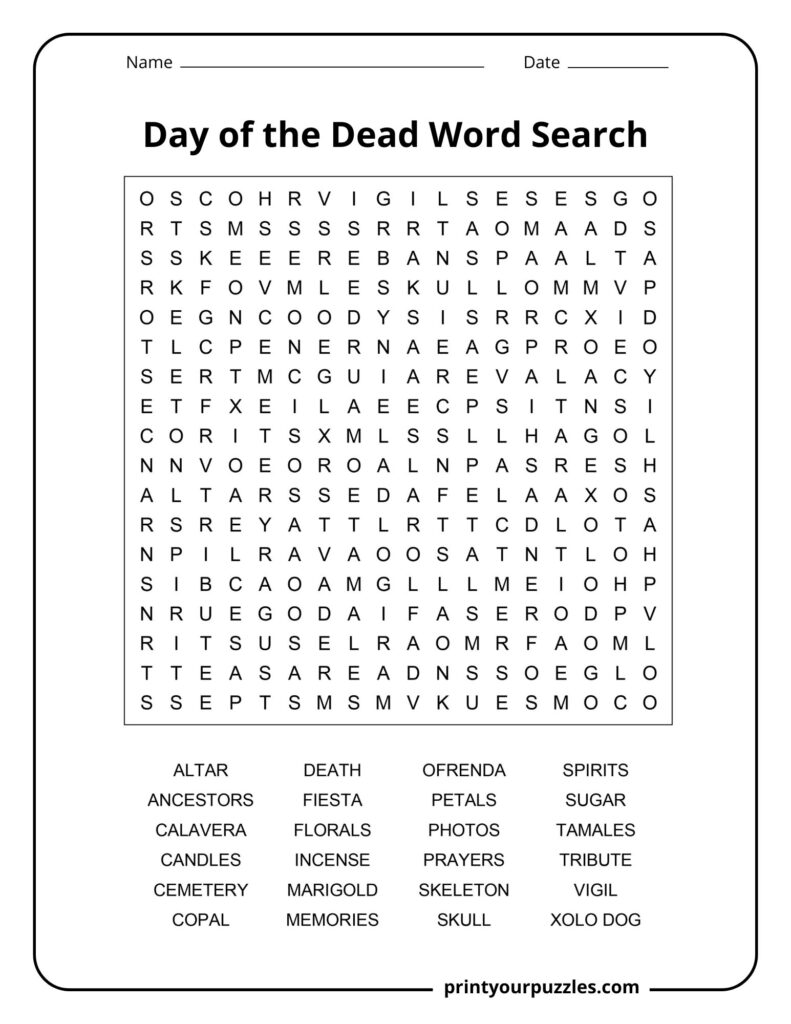
Explore the symbols, foods, flowers, family traditions, and meaningful customs of this celebration with this Day of the Dead word search, featuring vocabulary inspired by altars, marigolds, candles, memories, music, and colorful decorations.
Related Word Searches:
Halloween | October | November | Autumn | Cinco de Mayo
Medium Difficulty Word Search
Words to Find
ALTAR, ANCESTORS, CALAVERA, CANDLES, CEMETERY, COPAL, DEATH, FIESTA, FLORALS, INCENSE, MARIGOLD, MEMORIES, OFRENDA, PETALS, PHOTOS, PRAYERS, SKELETON, SKULL, SPIRITS, SUGAR, TAMALES, TRIBUTE, VIGIL, XOLO DOG
All Words Defined
ALTAR – A sacred table or surface decorated with offerings, photos, candles, and marigolds to honor and welcome the spirits of deceased loved ones during Day of the Dead celebrations.
ANCESTORS – The deceased family members and relatives from previous generations who are remembered, honored, and spiritually invited back to visit the living during this sacred holiday.
CALAVERA – A decorative skull, either made from sugar or illustrated, symbolizing death in a joyful, colorful way and representing the souls of those who have passed away.
CANDLES – Lit flames placed on the ofrenda to guide the souls of the departed back home, providing light along the spiritual path between the world of the dead and living.
CEMETERY – The sacred grounds where deceased loved ones are buried, visited and decorated with flowers, candles, and offerings during Day of the Dead as a place of reunion.
COPAL – A fragrant tree resin burned as incense during Day of the Dead rituals, believed to purify sacred spaces, attract spirits, and carry prayers upward toward the heavens.
DEATH – The natural end of physical life, viewed during Day of the Dead not with fear but as a continuation of existence, celebrated and honored rather than mourned with sorrow.
FIESTA – A festive celebration filled with music, dancing, food, and colorful decorations that honors the lives of the departed through joyful community gatherings during Day of the Dead.
FLORALS – Colorful flower arrangements, primarily marigolds, used to decorate altars, graves, and pathways, creating beautiful displays that attract spirits and symbolize the fragility of life.
INCENSE – Aromatic smoke produced by burning copal or other resins, used to cleanse sacred spaces, honor the spirits, and create a fragrant bridge between the living and the dead.
MARIGOLD – The vibrant orange flower known as cempasúchil, whose strong scent is believed to guide spirits home, making it the most iconic and essential flower of Day of the Dead.
MEMORIES – The cherished recollections of deceased loved ones kept alive through storytelling, photographs, and offerings, forming the emotional and spiritual foundation of the entire Day of the Dead tradition.
OFRENDA – A carefully arranged altar built in homes or cemeteries, layered with photographs, food, water, candles, and meaningful objects to welcome and honor returning spirits of the dead.
PETALS – Marigold flower petals scattered along pathways from the cemetery to the home, creating a fragrant, colorful trail that guides the souls of the departed back to their families.
PHOTOS – Framed portraits of deceased loved ones placed prominently on the ofrenda, serving as a personal connection and visual reminder of the souls being honored and welcomed back.
PRAYERS – Sacred words and intentions spoken or sung in honor of the departed, offering gratitude, love, and spiritual guidance to souls visiting from the afterlife during the celebration.
SKELETON – A bony figure used as a festive symbol throughout Day of the Dead, often depicted dancing or performing daily activities, representing death as a natural and humorous part of life.
SKULL – A powerful symbol of death and remembrance, often decorated with colorful flowers and patterns, representing the faces of the departed with beauty, dignity, and celebratory spirit.
SPIRITS – The souls of deceased loved ones believed to temporarily return to the world of the living during Day of the Dead, welcomed with food, flowers, music, and heartfelt offerings.
SUGAR – The sweet material used to craft decorative calaveras and skulls, crafted by hand and often personalized with the names of loved ones as cheerful, edible tributes to the dead.
TAMALES – Traditional Mexican corn dough filled with meats or sweets, steamed in husks, and placed on the ofrenda as a beloved food offering for returning spirits to enjoy symbolically.
TRIBUTE – An act of honor and respect shown to deceased loved ones through offerings, decorations, prayers, and celebrations that acknowledge their lives and keep their memory eternally alive.
VIGIL – A nighttime watch kept at the cemetery or beside the ofrenda, where families gather to pray, share stories, and remain present alongside the spirits of their beloved deceased.
XOLO DOG – The hairless Xoloitzcuintli dog, believed in Mexican tradition to guide the souls of the deceased safely through the underworld on their journey to the land of the dead.
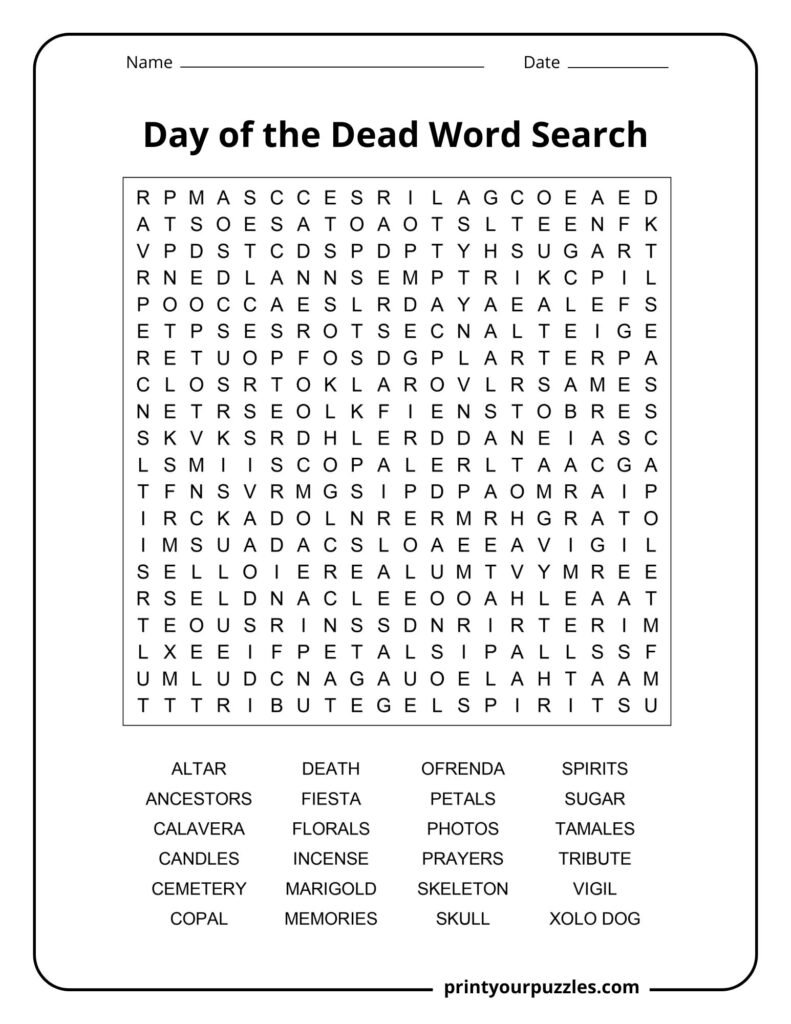
Hard Difficulty Word Search
Words to Find
ALTAR, ANCESTORS, CALAVERA, CANDLES, CEMETERY, COPAL, DEATH, FIESTA, FLORALS, INCENSE, MARIGOLD, MEMORIES, OFRENDA, PETALS, PHOTOS, PRAYERS, SKELETON, SKULL, SPIRITS, SUGAR, TAMALES, TRIBUTE, VIGIL, XOLO DOG
5 Key FAQs About Day of the Dead
5 Curious "Did You Know?" Facts About Day of the Dead