Diwali is one of the most important and widely celebrated festivals in India and in Hindu communities around the world. Often called the Festival of Lights, it represents the victory of light over darkness, knowledge over ignorance, and good over evil. The festival usually takes place in October or November, although the exact date changes each year because it follows a traditional lunar calendar.
Diwali is celebrated by Hindus, Jains, Sikhs, and some Buddhists, but its meaning and traditions can differ among religions, regions, and families. Many Hindus connect the festival with the return of Lord Rama to Ayodhya after defeating the demon king Ravana. In other traditions, Diwali honors Lakshmi, the goddess associated with prosperity and good fortune. Sikhs may remember the release of Guru Hargobind from imprisonment, while Jains commemorate the spiritual liberation of Mahavira.
Light is the most recognizable symbol of Diwali. Families place small oil lamps called “diyas” around their homes, balconies, gardens, and doorways. Colorful electric lights, candles, and lanterns also brighten streets and public spaces. These lights symbolize hope, wisdom, and the removal of darkness.
Preparations often begin several days before the main celebration. People clean and decorate their homes, buy new clothes, and create detailed floor designs called “rangoli” using colored powder, rice, flowers, or sand. Families may visit temples, offer prayers, exchange gifts, and spend time with relatives and friends. Fireworks are also common in some places, although concerns about noise and air pollution have encouraged quieter and more environmentally friendly celebrations.
Food is an important part of Diwali. Families prepare and share sweets such as “laddu”, “barfi”, and “jalebi”, along with savory snacks and festive meals. Gifts of sweets, dried fruit, and decorative items are often given to neighbors, coworkers, and loved ones.
Diwali usually lasts several days, with each day having its own traditions and meaning. The festival combines faith, family, generosity, beauty, and celebration, creating a joyful atmosphere filled with light and color.
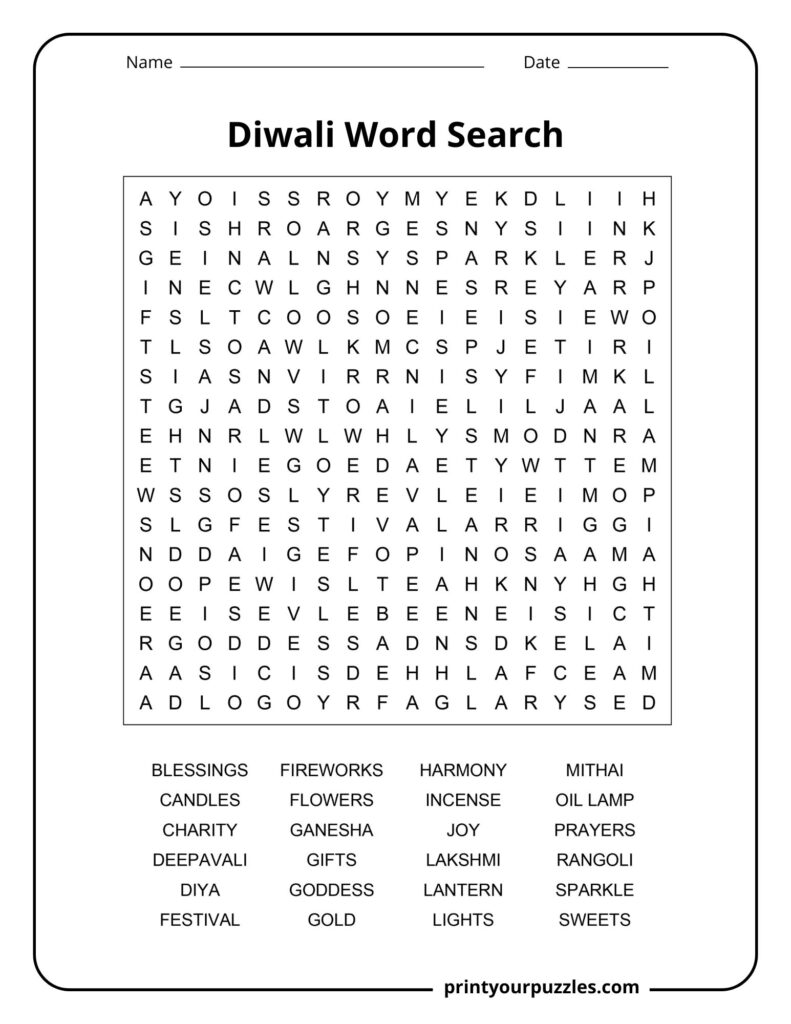
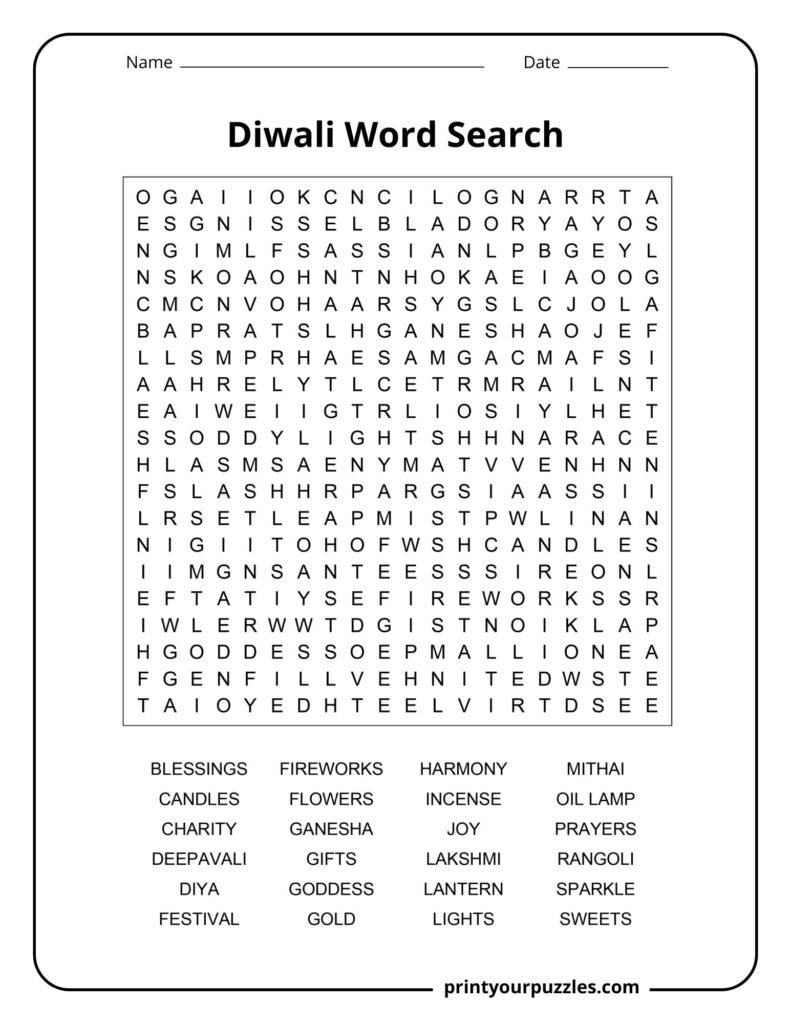
Celebrate the symbols, foods, decorations, traditions, and uplifting spirit of the Festival of Lights with this Diwali word search printable, featuring vocabulary inspired by lamps, rangoli, family gatherings, sweets, prayers, gifts, and the triumph of light over darkness.
Related Word Searches:
October | November | Autumn | Halloween | Thanksgiving
BLESSINGS – Sacred wishes and divine favours bestowed upon people during Diwali, believed to bring happiness, prosperity, and protection into homes and families throughout the festive season.
CANDLES – Slender wax lights burned during Diwali celebrations to symbolise the triumph of light over darkness, creating a warm and welcoming glow in homes and sacred spaces.
CHARITY – The generous act of giving to those in need during Diwali, reflecting the Hindu value of dana, which encourages sharing wealth, food, and kindness with the less fortunate.
DEEPAVALI – The full Sanskrit name for Diwali, meaning “row of lights,” referring to the ancient tradition of lighting rows of oil lamps to welcome the goddess Lakshmi into the home.
DIYA – A small clay oil lamp filled with ghee or oil and a cotton wick, traditionally hand-crafted and lit during Diwali to illuminate homes and invite divine blessings inside.
FESTIVAL – A joyous cultural and religious celebration marked by rituals, lights, sweets, and gatherings, with Diwali being one of the most important and widely observed festivals across India.
FIREWORKS – Colourful explosive displays launched into the night sky during Diwali to celebrate the victory of good over evil, filling neighbourhoods with vibrant bursts of light, colour, and sound.
FLOWERS – Fresh blooms such as marigolds and roses used to decorate altars, doorways, and rangoli during Diwali, symbolising beauty, purity, and a warm, fragrant welcome for divine guests.
GANESHA – The beloved elephant-headed Hindu deity worshipped at the start of Diwali prayers as the remover of obstacles, blessing families with a smooth and auspicious beginning to new ventures.
GIFTS – Presents exchanged between family, friends, and colleagues during Diwali as tokens of love, appreciation, and goodwill, often including sweets, dry fruits, clothing, jewellery, and decorative household items.
GODDESS – A divine female deity in Hinduism, with Lakshmi being the principal goddess worshipped during Diwali for her power to bestow wealth, fortune, beauty, and abundance upon devoted families.
GOLD – A precious yellow metal considered highly auspicious during Diwali, traditionally purchased as jewellery or coins on Dhanteras to attract the blessings of Lakshmi and ensure lasting prosperity.
HARMONY – The spirit of peace, unity, and togetherness that Diwali promotes among families and communities, encouraging people of all backgrounds to share in the celebration and embrace mutual goodwill.
INCENSE – Fragrant sticks or cones burned during Diwali prayers and rituals to purify the atmosphere, create a sacred environment, and carry devotional intentions upward to the gods through scented smoke.
JOY – The deep feeling of happiness and delight that fills homes and hearts during Diwali, expressed through laughter, music, dancing, feasting, and the shared warmth of family and community gatherings.
LAKSHMI – The Hindu goddess of wealth, fortune, and prosperity, central to Diwali worship, believed to visit clean and brightly lit homes on the main night to bestow her blessings.
LANTERN – A decorative light source made from paper, metal, or clay, hung outside homes and temples during Diwali to guide the goddess Lakshmi and illuminate the path against darkness.
LIGHTS – The defining symbol of Diwali, representing the victory of knowledge over ignorance and good over evil, displayed through diyas, candles, lanterns, and electric strings adorning homes and streets.
MITHAI – Traditional Indian sweets prepared and shared during Diwali, including ladoo, barfi, and halwa, made from ingredients like milk, sugar, and nuts, symbolizing the sweetness of life and celebration.
OIL LAMP – A traditional vessel filled with sesame or mustard oil and a cotton wick, lit during Diwali to represent inner spiritual light and the ancient custom of welcoming prosperity and divinity.
PRAYERS – Devotional offerings of words, songs, and rituals directed to Hindu deities during Diwali, especially Lakshmi and Ganesha, expressing gratitude, seeking blessings, and renewing faith for the coming year.
RANGOLI – Intricate and colourful patterns drawn on floors at home entrances using powders, rice, or petals during Diwali, designed to welcome guests and deities while bringing good luck and beauty.
SPARKLE – The magical shimmering quality of Diwali celebrations, created by the combined glow of thousands of diyas, fireworks, and fairy lights that transform homes, streets, and temples into radiant, enchanting spaces.
SWEETS – Sugary treats lovingly prepared and distributed among neighbours, relatives, and friends during Diwali as a gesture of affection and festive cheer, forming an essential and cherished part of celebrations.