
Back to school season marks the beginning of a fresh chapter for students, teachers, and families. After the long summer break, classrooms fill again with notebooks, backpacks, pencils, new schedules, and plenty of excitement. For some students, returning to school means meeting new teachers and classmates, while others look forward to seeing familiar friends and continuing their learning journey.
Preparing for a new school year involves much more than buying supplies. Students may organize their backpacks, learn classroom routines, receive new textbooks, discover their daily schedules, and begin studying subjects such as math, science, reading, history, and art. Teachers also spend time preparing classrooms, planning lessons, arranging desks, and creating welcoming spaces where students can learn and participate.
The first days of school are especially important because they help establish routines for the months ahead. Students learn classroom rules, locate important areas of the school, become familiar with their teachers’ expectations, and begin adjusting to new schedules. Activities during these early days often focus on introductions, teamwork, organization, and helping everyone feel comfortable in the classroom.
School also provides opportunities beyond traditional lessons. Students can participate in sports, music, art, clubs, science projects, field trips, and other activities that encourage creativity and cooperation. These experiences help children develop communication skills, responsibility, confidence, and friendships while discovering new interests.
This back to school word search offers a fun way to explore vocabulary connected with the beginning of the school year. The puzzle includes familiar words associated with classrooms, learning, school routines, supplies, teachers, and students. Searching for each hidden word can reinforce vocabulary while providing an enjoyable activity for home or classroom use.
Back to school is only the beginning of a much larger world of school-related topics. From the first day of school and classroom life to school supplies, subjects, teachers, homework, and everyday routines, there are many interesting themes to explore. Whether you are a student preparing for a new year, a teacher looking for an educational activity, or a parent searching for something fun to print, this word search is a simple way to celebrate the return to learning.
Related Word Searches:
August | September | Summer | Labor Day | Autumn
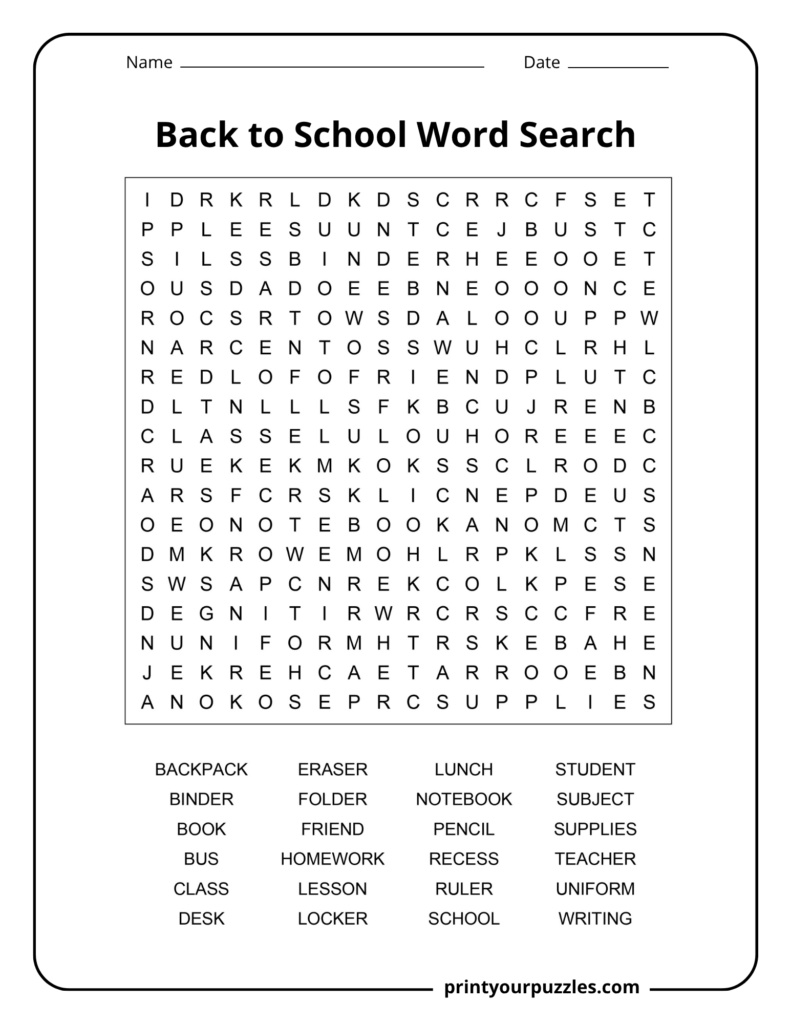
BACKPACK, BINDER, BOOK, BUS, CLASS, DESK, ERASER, FOLDER, FRIEND, HOMEWORK, LESSON, LOCKER, LUNCH, NOTEBOOK, PENCIL, RECESS, RULER, SCHOOL, STUDENT, SUBJECT, SUPPLIES, TEACHER, UNIFORM, WRITING
BACKPACK – A bag carried on the back and used by students to transport books, notebooks, folders, lunch, school supplies, and other items throughout the school day.
BINDER – A school organizer with rings or clips that holds loose papers, worksheets, notes, and dividers, helping students keep different subjects and assignments neatly arranged.
BOOK – A collection of printed or digital pages containing stories, information, lessons, or exercises that students read and use for learning, studying, and completing schoolwork.
BUS – A vehicle that transports students between home and school, usually following scheduled routes and designated stops before classes begin and after the school day ends.
CLASS – A group of students learning together with a teacher, or a scheduled period during the school day devoted to studying a particular subject or activity.
DESK – A table or workstation used by students for reading, writing, completing assignments, organizing materials, and participating in lessons during the school day.
ERASER – A small tool used to remove pencil marks from paper, allowing students to correct mistakes, revise answers, and keep written schoolwork neat and readable.
FOLDER – A paper or plastic cover used to store worksheets, homework, notes, and other documents, helping students organize materials for different subjects and classes.
FRIEND – A classmate or school companion with whom a student shares conversation, activities, support, games, and experiences, often making the school day more enjoyable.
HOMEWORK – School assignments that students complete outside regular classroom hours to review lessons, practice skills, prepare for future topics, or finish work begun during class.
LESSON – A planned period of teaching focused on a particular topic, skill, or subject, often including explanations, examples, discussions, activities, and practice exercises.
LOCKER – A small personal storage compartment at school where students may keep books, coats, sports equipment, supplies, and other belongings safely during the school day.
LUNCH – A midday meal eaten during the school day, often in a cafeteria or designated area, giving students time to eat, relax, and socialize with classmates.
NOTEBOOK – A collection of bound or spiral pages used by students to write notes, complete exercises, record ideas, organize information, and keep work for different subjects.
PENCIL – A common writing and drawing tool used by students for assignments, notes, tests, sketches, and calculations, with marks that can usually be erased easily.
RECESS – A scheduled break during the school day when students can relax, play, talk with friends, and enjoy physical activity before returning to classroom lessons.
RULER – A straight measuring tool marked with units such as inches or centimeters, used by students to measure objects, draw lines, and complete math activities.
SCHOOL – A place where students receive education, attend classes, learn different subjects, develop skills, meet classmates, and participate in academic, creative, and social activities.
STUDENT – A person who attends school or another educational program to learn, practice skills, complete assignments, participate in lessons, and gain new knowledge and experience.
SUBJECT – A specific area of study taught at school, such as math, science, history, art, or reading, usually covered through lessons, assignments, and classroom activities.
SUPPLIES – Materials and tools students use at school, including pencils, notebooks, folders, rulers, markers, and other items needed for lessons, assignments, and classroom activities.
TEACHER – A person who educates students by explaining lessons, answering questions, planning activities, giving assignments, checking progress, and helping learners develop knowledge and skills.
UNIFORM – A standard set of clothing required by some schools, designed to create a consistent appearance among students and reduce differences in everyday school clothing.
WRITING – The activity of forming words and sentences to communicate ideas, answer questions, create stories, take notes, and complete many different types of school assignments.
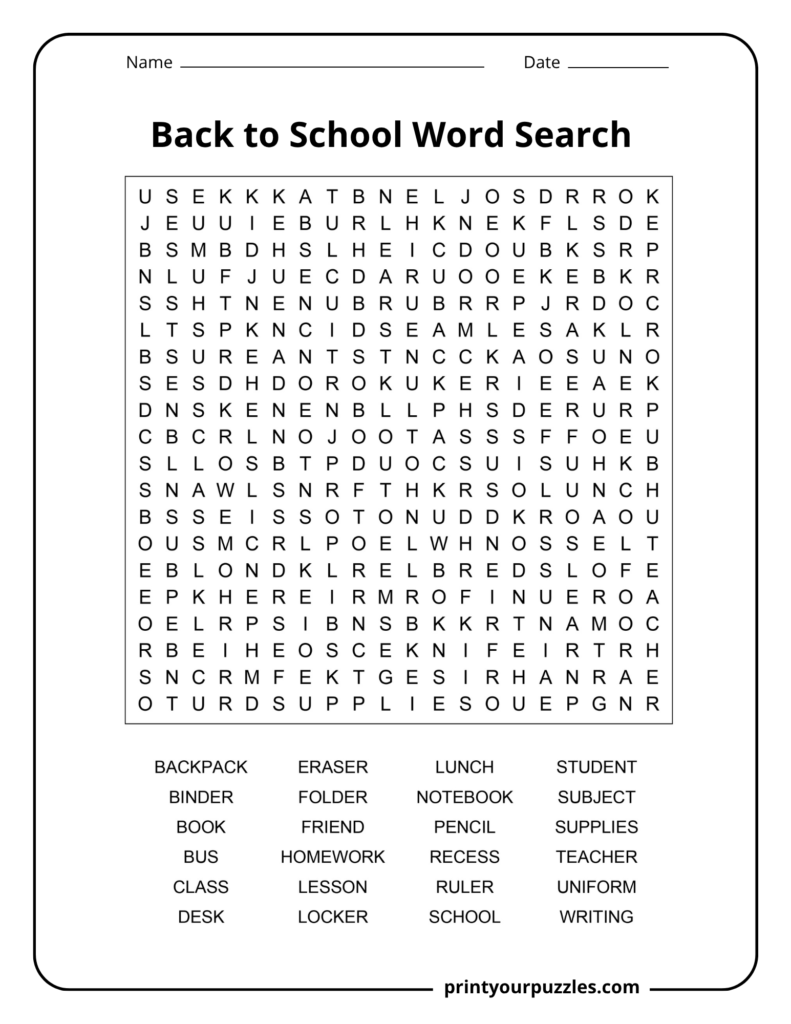
BACKPACK, BINDER, BOOK, BUS, CLASS, DESK, ERASER, FOLDER, FRIEND, HOMEWORK, LESSON, LOCKER, LUNCH, NOTEBOOK, PENCIL, RECESS, RULER, SCHOOL, STUDENT, SUBJECT, SUPPLIES, TEACHER, UNIFORM, WRITING
Back to school refers to the period when students return to classes after a summer or seasonal break and begin a new academic year.
In the United States, many schools begin between August and September, although exact dates vary by state, district, school type, and local calendar.
Common school supplies include pencils, notebooks, folders, binders, rulers, backpacks, erasers, and other materials required for classroom activities and homework.
Students can prepare by organizing supplies, checking schedules, setting regular sleep routines, planning transportation, and becoming familiar with classroom expectations before school begins.
Back to school activities help students review routines, learn classroom vocabulary, meet classmates, build confidence, and become more comfortable with the new school year.
School calendars are usually determined locally, so students in different states and districts may return to classrooms on very different dates.
Yellow school buses are a familiar part of American education and help many students travel safely between their homes and schools every weekday.
Pencils are widely used because they are inexpensive, easy to carry, suitable for many subjects, and allow students to erase and correct mistakes.
Regular breaks give students opportunities to move, socialize, and relax, which can help them return to lessons feeling more focused and ready to learn.
Consistent schedules and clear expectations help students understand what happens during the school day, making transitions between lessons and activities easier to manage.