Starbucks is one of the most recognizable coffeehouse brands in the world, but its beginnings were much simpler than the café experience people know today. The company was founded in Seattle, Washington, in 1971 by Jerry Baldwin, Zev Siegl, and Gordon Bowker. Their first store focused mainly on selling high-quality coffee beans, tea, and brewing equipment rather than prepared espresso drinks.
The business began to change after Howard Schultz joined Starbucks in the early 1980s. During a trip to Italy, Schultz became fascinated by the country’s espresso bars and the social role they played in everyday life. He believed a similar idea could work in the United States: a place where people could enjoy coffee, meet friends, talk, read, or spend time between home and work.
At first, the founders were cautious about changing the original retail concept. Schultz eventually left to start his own coffeehouse business, but later acquired Starbucks and began expanding the café model more aggressively. Espresso drinks, comfortable interiors, and a consistent customer experience became central to the company’s identity. As new stores opened across the United States, Starbucks helped popularize drinks such as lattes, cappuccinos, mochas, and macchiatos among a much wider audience.
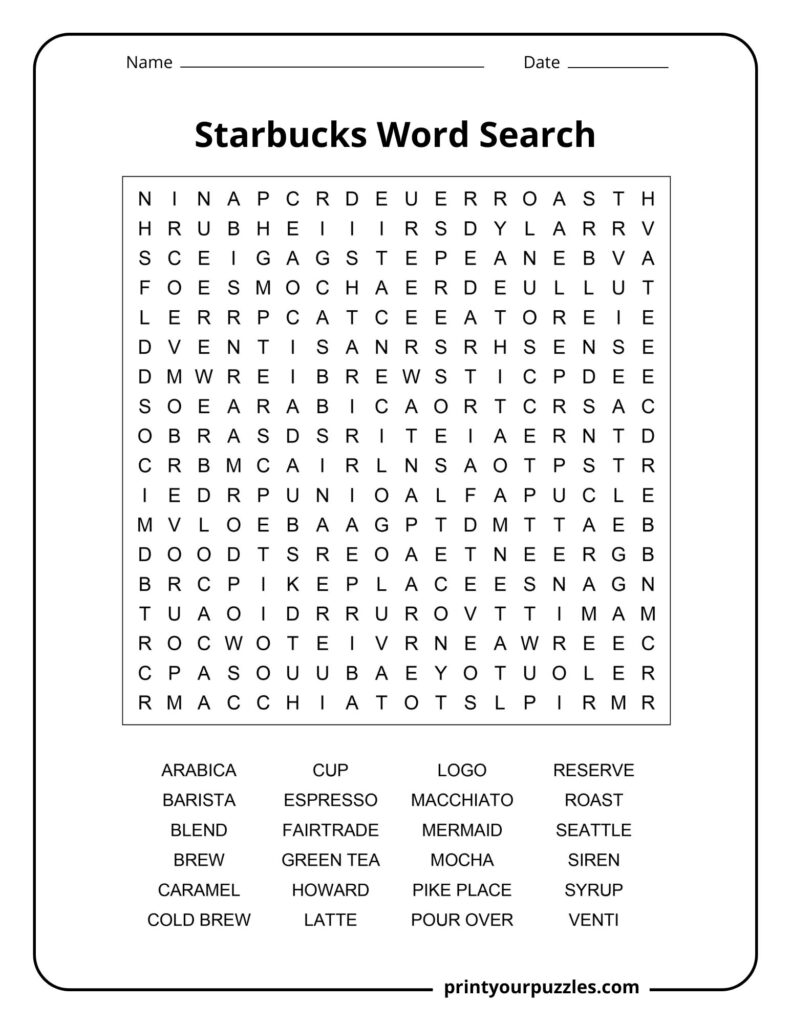
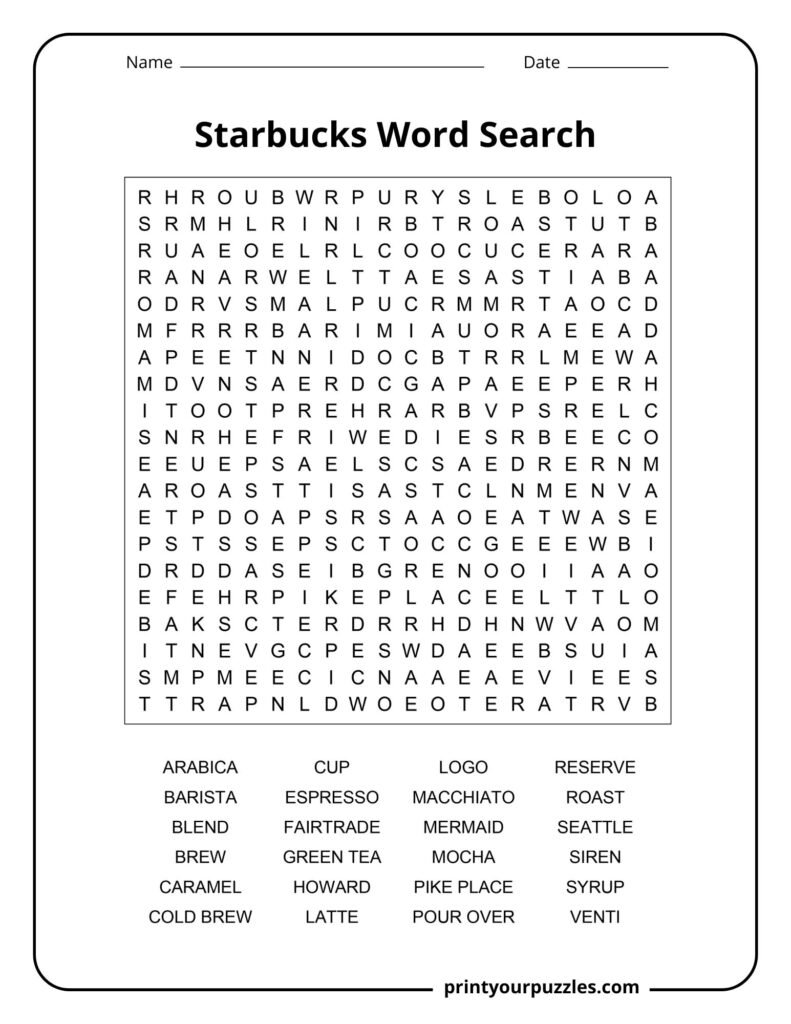
A Starbucks word search puzzle can connect this growth story through terms such as Seattle, espresso, barista, latte, Frappuccino, roast, siren, coffeehouse, mugs, and café culture.
The company continued expanding internationally and added many new products, including cold brew, teas, breakfast foods, seasonal drinks, and customizable beverages. The Frappuccino became especially recognizable, while limited-time favorites helped create excitement throughout the year.
Starbucks also built a strong visual identity around its green siren logo, takeaway cups, store design, and the idea of the “third place,” a welcoming social space between home and work.
From a small Seattle store selling coffee beans to a global coffeehouse network, Starbucks grew by combining quality coffee, hospitality, branding, and a new way of thinking about cafés. Its history shows how a simple retail business can evolve into a cultural experience built around daily routines and social connection.
Related Word Searches:
Coca-Cola | McDonald’s | Heinz | Red Bull
ARABICA – The premium coffee bean species used by Starbucks, known for its smooth, complex flavors and lower caffeine content compared to Robusta beans, grown in high-altitude regions worldwide.
BARISTA – A trained coffee professional who crafts espresso-based beverages with skill and precision, serving as the heart of the Starbucks customer experience in every store globally.
BLEND – A carefully crafted combination of different coffee beans from various origins, roasted and mixed by Starbucks experts to create a consistent, signature flavor profile customers love.
BREW – The fundamental process of extracting flavor from coffee grounds using hot water, forming the foundation of every Starbucks beverage from simple drip coffee to complex specialty drinks.
CARAMEL – One of Starbucks’ most beloved flavor additions, a rich, sweet, golden sauce drizzled over drinks and desserts, famously featured in the iconic Caramel Macchiato since 1996.
COLD BREW – A slow-steeped coffee method where grounds soak in cold water for 20 hours, producing a smooth, naturally sweet, low-acidity concentrate that Starbucks popularized worldwide.
CUP – More than just a container, the Starbucks cup became a cultural icon, especially the festive holiday red cup, sparking conversations and customer excitement every single year.
ESPRESSO – The bold, concentrated coffee shot at the heart of Starbucks’ menu, brewed by forcing hot water through finely ground beans, forming the base of lattes, cappuccinos and mochas.
FAIRTRADE – A certification Starbucks pursues to ensure coffee farmers receive fair compensation, supporting ethical sourcing practices and sustainable livelihoods for growing communities across multiple continents.
GREEN TEA – A signature Starbucks ingredient, particularly the vibrant matcha powder sourced from Japan, used in popular drinks like the Green Tea Latte, appealing to health-conscious customers globally.
HOWARD – Howard Schultz, the visionary entrepreneur who joined Starbucks in 1982 and transformed it from a small Seattle coffee bean retailer into the world’s largest coffeehouse chain.
LATTE – Starbucks’ most popular drink category, combining rich espresso shots with steamed milk and a light foam layer, available in countless seasonal and customizable flavor variations year-round.
LOGO – The iconic circular green emblem featuring a twin-tailed siren, one of the world’s most recognizable brand symbols, evolved and refined since Starbucks’ founding in Seattle in 1971.
MACCHIATO – An espresso-based drink meaning “marked” in Italian, famously reinterpreted by Starbucks in the Caramel Macchiato, layering vanilla, milk, espresso and caramel in a visually stunning presentation.
MERMAID – The mythical twin-tailed sea figure, inspired by a 16th-century Norse woodcut, that became the Starbucks logo symbol, representing the alluring, seductive nature of their coffee.
MOCHA – A beloved Starbucks classic blending rich espresso with chocolate sauce and steamed milk, topped with whipped cream, combining two of the world’s most comforting flavors perfectly.
PIKE PLACE – The historic Seattle market location where the original Starbucks store opened in 1971, still operating today as a beloved landmark and pilgrimage destination for coffee enthusiasts worldwide.
POUR OVER – A precise, artisanal brewing method offered at select Starbucks Reserve locations, where hot water is carefully poured over grounds in a filter, producing an exceptionally clean, nuanced cup.
RESERVE – Starbucks’ premium tier brand featuring rare, single-origin coffees and elaborate Roastery locations in cities like Seattle, Milan and Tokyo, offering an elevated, theatrical coffee experience.
ROAST – Starbucks classifies its coffees into Blonde, Medium and Dark roast levels, each delivering distinct flavor characteristics from light and mellow to bold and smoky profiles customers enjoy.
SEATTLE – The Pacific Northwest city where Starbucks was born in 1971, whose coffee culture and rainy, cozy atmosphere deeply shaped the brand’s identity, aesthetic and global coffeehouse concept.
SIREN – The twin-tailed mythological sea creature at the center of the Starbucks logo, symbolizing the irresistible call of coffee, inspired by maritime tradition and the seafaring history of early coffee trade.
SYRUP – Flavored liquid sweeteners that allow endless Starbucks drink customization, from classic vanilla and hazelnut to seasonal favorites like pumpkin spice, making every beverage a uniquely personal creation.
VENTI – Italian for “twenty,” this Starbucks cup size holds 20 ounces of cold or hot beverage, part of the brand’s distinctive Italian-inspired sizing language that replaced ordinary small, medium and large.