
Heinz is one of the most familiar names in the food industry, best known for ketchup but connected with a much wider range of sauces, beans, soups, condiments, and prepared foods. Its story began in Pennsylvania in the nineteenth century with Henry J. Heinz, who showed an early interest in growing, preparing, and selling food. As a young businessman, he began marketing products such as horseradish, emphasizing quality and careful preparation at a time when packaged foods did not always inspire consumer confidence.
Heinz’s first company eventually failed during a difficult economic period, but he did not abandon the idea. He returned to the food business with relatives and gradually rebuilt his reputation. This second effort became the foundation of the company that would carry the Heinz name around the world. Tomato ketchup, introduced in the 1870s, became especially important because it combined a familiar ingredient with a consistent recipe, attractive packaging, and a strong emphasis on cleanliness.
As the business expanded, Heinz produced pickles, sauces, preserves, and other foods, while developing a national distribution network. Henry Heinz also understood the value of memorable advertising. The phrase “57 Varieties” became one of the company’s best-known slogans, even though Heinz already sold more than 57 products when it was introduced. The number was chosen for its marketing appeal and quickly became part of the brand’s identity.
Packaging also helped Heinz stand out. The clear glass ketchup bottle allowed customers to see the product inside, while the label and bottle shape became familiar elements of kitchens and restaurants. Later, plastic squeeze bottles made serving ketchup faster and easier.
A Heinz word search can explore this history through terms connected with tomatoes, ketchup, horseradish, bottles, sauces, beans, advertising, and family meals. These words reflect both the company’s beginnings and the products that helped it grow.
From a small Pennsylvania food business to an international brand, Heinz expanded through persistence, product quality, distribution, memorable marketing, and recognizable packaging. Its history shows how everyday foods can become trusted household staples when a company builds a strong identity around consistency and familiarity.
Related Word Searches:
Coca-Cola | McDonald’s | Starbucks | Walmart
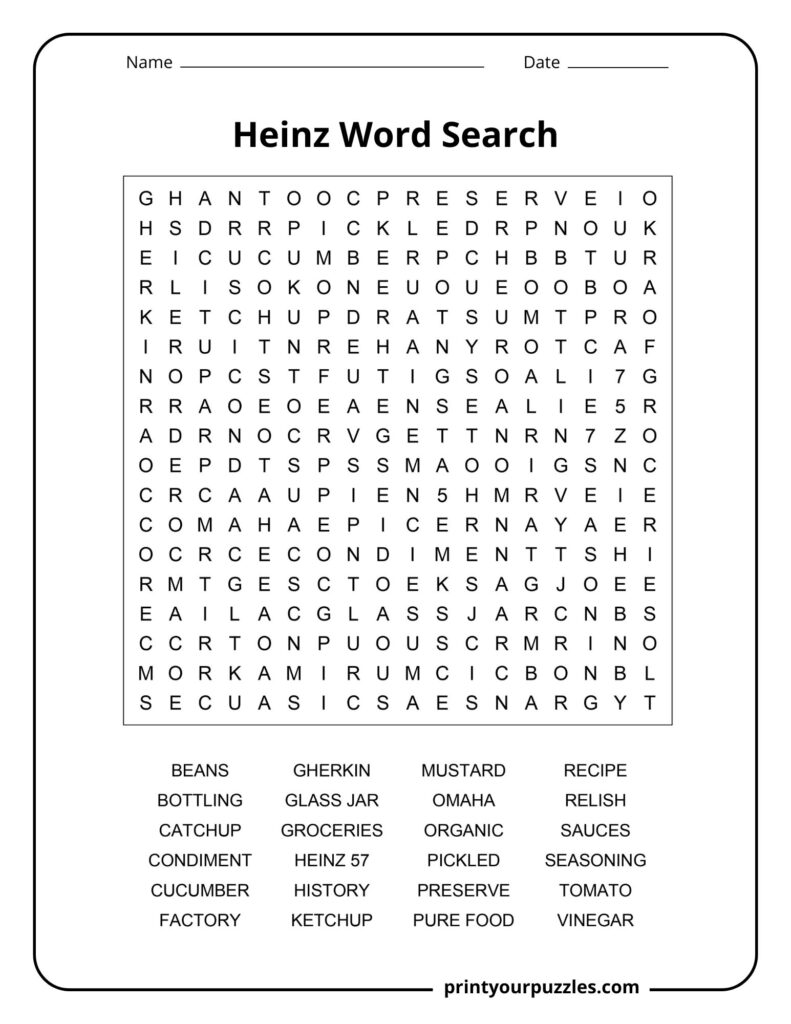
BEANS, BOTTLING, CATCHUP, CONDIMENT, CUCUMBER, FACTORY, GHERKIN, GLASS JAR, GROCERIES, HEINZ 57, HISTORY, KETCHUP, MUSTARD, OMAHA, ORGANIC, PICKLED, PRESERVE, PURE FOOD, RECIPE, RELISH, SAUCES, SEASONING, TOMATO, VINEGAR
BEANS – Heinz baked beans, slow-cooked in tomato sauce, became one of the brand’s most iconic and beloved products, sold globally since the late nineteenth century.
BOTTLING – Heinz pioneered industrial bottling techniques to preserve and package condiments hygienically, ensuring consistent quality and long shelf life for consumers across the world.
CATCHUP – An early spelling variant of ketchup, used in the nineteenth century to describe Heinz’s tangy tomato-based sauce, one of the first mass-produced condiments in America.
CONDIMENT – Heinz built its empire on condiments, producing sauces, relishes, and spreads designed to enhance the flavor of everyday meals for households worldwide.
CUCUMBER – Fresh cucumbers were the base ingredient for Heinz’s original pickling operation, launched by Henry J. Heinz in the 1860s in Sharpsburg, Pennsylvania.
FACTORY – Heinz constructed large, modern food processing factories, setting new standards for cleanliness, worker welfare, and industrial food production in the late nineteenth century.
GHERKIN – Small pickled gherkins were among Heinz’s earliest products, reflecting the company’s roots in cucumber preservation and its commitment to tangy, high-quality condiments.
GLASS JAR – Heinz was among the first food companies to use clear glass jars, allowing customers to see the product inside and building consumer trust through transparency.
GROCERIES – Heinz products became staples on grocery store shelves worldwide, transforming the way families stocked their kitchens with ready-made sauces, pickles, and preserved foods.
HEINZ 57 – The famous “57 Varieties” slogan was coined by Henry J. Heinz in 1896, inspired by a shoe advertisement, even though the company already produced far more products.
HISTORY – Heinz’s history spans over 150 years, from a small horseradish bottling business in 1869 to one of the world’s most recognized and trusted food brands.
KETCHUP – Heinz tomato ketchup, introduced in 1876, became the company’s signature product, setting the global standard for flavor, consistency, and the iconic glass bottle design.
MUSTARD – Heinz yellow mustard joined its growing condiment lineup, offering a smooth, mild flavor that paired perfectly with hot dogs and sandwiches across American households.
OMAHA – Omaha, Nebraska, played a role in Heinz’s early distribution network, helping the brand expand its reach across the American Midwest during the late nineteenth century.
ORGANIC – In modern times, Heinz expanded into organic product lines, responding to consumer demand for natural, sustainably sourced ingredients without artificial preservatives or additives.
PICKLED – Pickling was the foundation of the Heinz business, with Henry Heinz preserving vegetables in vinegar brine to create flavorful, shelf-stable foods for American households.
PRESERVE – Heinz developed preservation methods using vinegar, salt, and sugar to extend the shelf life of fruits and vegetables, making nutritious food accessible year-round to consumers.
PURE FOOD – Heinz was a leading advocate for pure food legislation, supporting the US Pure Food and Drug Act of 1906, which established safety standards for all food products.
RECIPE – Each Heinz product was built on carefully tested recipes, refined over decades to deliver a consistent taste that generations of families came to recognize and trust.
RELISH – Heinz sweet pickle relish, made from chopped pickled cucumbers and spices, became a classic American condiment used on hot dogs, burgers, and sandwiches everywhere.
SAUCES – Beyond ketchup, Heinz developed a wide range of sauces including Worcestershire, chili, and HP sauce, establishing the brand as a global leader in condiment variety.
SEASONING – Seasoning with salt, vinegar, and spices was central to Heinz’s preservation process, giving its pickles, sauces, and condiments their distinctive, well-balanced, and recognizable flavors.
TOMATO – The tomato became the cornerstone ingredient of Heinz’s most famous products, from ketchup to soups, cementing the brand’s identity as synonymous with quality tomato-based foods.
VINEGAR – Vinegar was essential to Heinz’s early pickling and preservation methods, providing the sharp acidity needed to safely preserve vegetables and create the brand’s signature tangy taste.
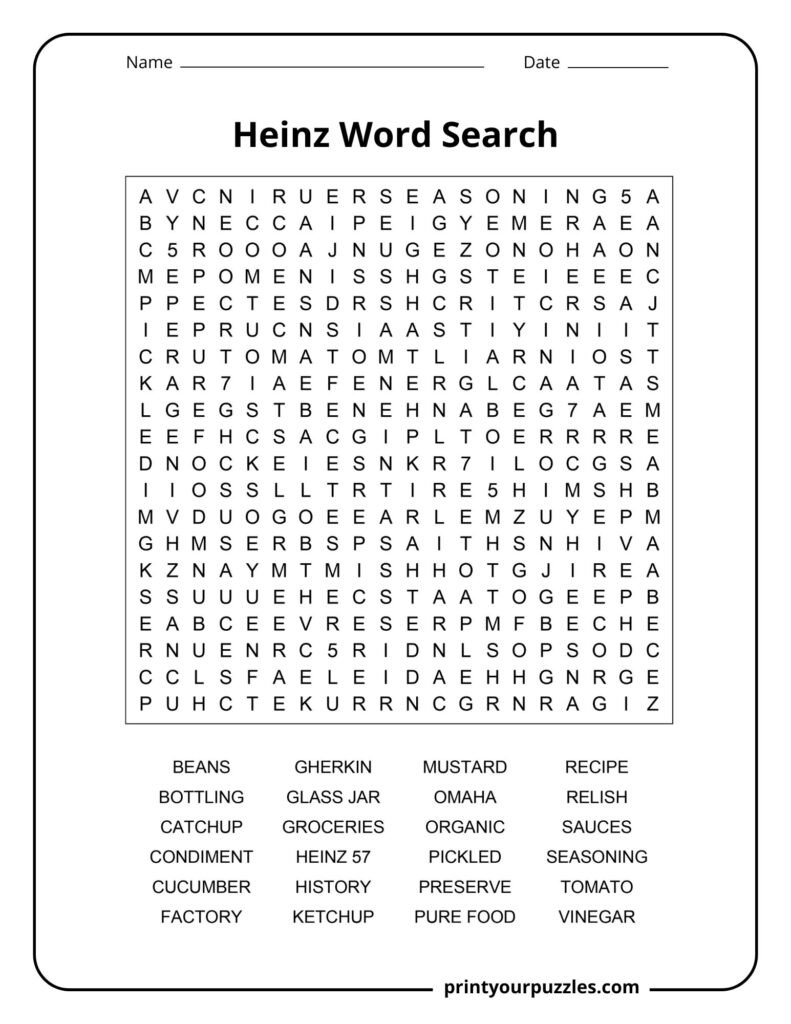
BEANS, BOTTLING, CATCHUP, CONDIMENT, CUCUMBER, FACTORY, GHERKIN, GLASS JAR, GROCERIES, HEINZ 57, HISTORY, KETCHUP, MUSTARD, OMAHA, ORGANIC, PICKLED, PRESERVE, PURE FOOD, RECIPE, RELISH, SAUCES, SEASONING, TOMATO, VINEGAR
Henry J. Heinz founded the company in 1869 in Sharpsburg, Pennsylvania, initially selling bottled horseradish before expanding into pickles, sauces, and condiments.
Coined by Henry Heinz in 1896, the slogan was inspired by a shoe advertisement. The number 57 was chosen for luck, despite the company producing far more products.
Heinz’s very first product was bottled horseradish, sold from his family garden. He later added pickled cucumbers, sauerkraut, and vinegar before launching his iconic tomato ketchup in 1876.
Henry Heinz actively campaigned for stricter food standards, helping shape the US Pure Food and Drug Act of 1906, which revolutionized hygiene and transparency across the entire food industry.
Through aggressive international expansion, innovative packaging, and consistent product quality, Heinz established operations across Europe and beyond, becoming one of the world’s most recognized and trusted food companies.
The Good Provider: H.J. Heinz and His 57 Varieties by Robert C. Alberts. Alberts masterfully weaves meticulous archival research into an entertaining, warmly human portrait of Heinz’s rise from a Pennsylvania horseradish seller to a pioneering American food industry titan.
In the late 1800s, Henry J. Heinz provided employees with benefits like free medical care, recreational facilities, and paid holidays, revolutionary workplace practices for that era.
Tapping the embossed number 57 on the glass bottle is the most effective way to get ketchup flowing, a little-known trick officially confirmed by Heinz themselves.
In the 1830s, tomato-based products were marketed as medicine for liver and digestive ailments. Heinz later transformed ketchup into a beloved everyday condiment enjoyed by millions worldwide.
Henry Heinz constructed a state-of-the-art facility featuring swimming pools, gardens, and a gymnasium, believing happy and healthy workers would produce higher quality food products.
Heinz handed out small pickle-shaped charms to attract visitors to its booth, distributing over one million souvenirs and turning the humble pickle into an enduring brand symbol.