
Mardi Gras is a lively celebration known for colorful parades, elaborate costumes, music, dancing, and festive food. Its name comes from French and means “Fat Tuesday,” referring to the final day before Lent begins in many Christian traditions. Because Easter changes date each year, Mardi Gras also falls on a different date, usually sometime in February or early March.
The celebration developed from older European customs connected with Carnival, a season of feasting and entertainment before the quieter and more reflective period of Lent. Traditionally, people used up rich foods such as meat, butter, eggs, and sugar before beginning religious fasting or giving up certain foods. This helps explain why Mardi Gras became associated with large meals, sweets, parties, and public festivities.
In the United States, New Orleans is especially famous for its Mardi Gras traditions. The celebration there includes weeks of parades organized by social groups called krewes. Floats travel through the streets while riders toss beads, coins known as doubloons, cups, toys, and other small items to the crowds. People often wear masks, wigs, feathers, and clothing in the traditional colors of purple, green, and gold. Purple represents justice, green symbolizes faith, and gold stands for power.
Music is another central part of the celebration. Brass bands, jazz, drums, and dancing create an energetic atmosphere throughout the city. Families may attend daytime parades, while other events are designed mainly for adults. Mardi Gras celebrations also take place in Mobile, Alabama, and in communities across Louisiana, the Gulf Coast, Europe, the Caribbean, and South America.
Food plays an important role during the season. Popular dishes may include gumbo, jambalaya, red beans and rice, seafood, and other Louisiana specialties. King cake is one of the best-known treats. This ring-shaped pastry is decorated with purple, green, and gold sugar and often contains a small plastic baby hidden inside.
Although Mardi Gras is famous for excitement and spectacle, it also reflects history, religion, community pride, creativity, and regional culture. Enjoy its festive spirit with this Mardi Gras word search, featuring 24 carefully selected words inspired by parades, masks, beads, music, king cake, costumes, krewes, and the colorful traditions of Carnival.
Related Word Searches:
February | March | Spring | Easter | St. Patrick’s Day
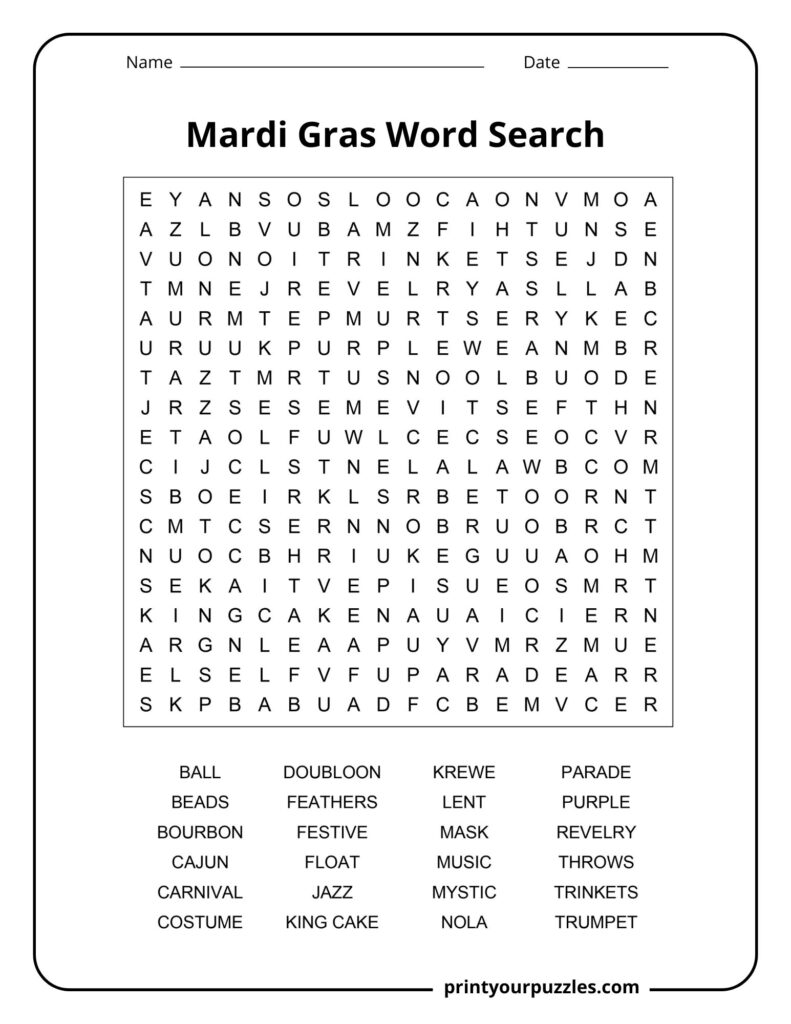
BALL, BEADS, BOURBON, CAJUN, CARNIVAL, COSTUME, DOUBLOON, FEATHERS, FESTIVE, FLOAT, JAZZ, KING CAKE, KREWE, LENT, MASK, MUSIC, MYSTIC, NOLA, PARADE, PURPLE, REVELRY, THROWS, TRINKETS, TRUMPET
BALL – A grand, formal dance and celebration held during the Mardi Gras season, featuring elaborate costumes, live music, and festivities organized by krewes or social clubs.
BEADS – Colorful plastic necklaces thrown from parade floats to spectators lining the streets, considered the most iconic and recognizable symbol of Mardi Gras celebrations.
BOURBON – The most famous street in New Orleans’ French Quarter, known for its lively bars, music venues, and crowds of revelers during the Mardi Gras festival season.
CAJUN – A cultural and culinary tradition rooted in Louisiana’s French-descended communities, bringing spicy food, zydeco music, and unique customs to Mardi Gras celebrations.
CARNIVAL – The festive season leading up to Mardi Gras, beginning on January 6th (Epiphany), filled with parades, balls, parties, and increasingly elaborate public celebrations.
COSTUME – Creative, often extravagant outfits worn by parade participants and revelers, ranging from traditional masks and feathered ensembles to wildly imaginative themed characters and figures.
DOUBLOON – A commemorative aluminum coin stamped with a krewe’s emblem, tossed from floats during parades and eagerly collected by spectators as a prized Mardi Gras souvenir.
FEATHERS – Decorative plumes used extensively in Mardi Gras costumes, headdresses, and float designs, adding dramatic flair and a sense of theatrical glamour to the festivities.
FESTIVE – Describing the joyful, celebratory atmosphere that defines Mardi Gras, with vibrant colors, music, dancing, and a spirit of communal excitement filling the streets.
FLOAT – A decorated parade vehicle, often elaborately themed and built by krewe members, from which riders toss beads, doubloons, and other coveted throws to the crowd.
JAZZ – The soulful musical genre born in New Orleans, providing the rhythmic heartbeat of Mardi Gras through brass bands, street performers, and lively club performances throughout the city.
KING CAKE – A traditional oval pastry decorated in purple, gold, and green sugar, hiding a tiny plastic baby inside, shared among friends and family throughout the Carnival season.
KREWE – A private social organization responsible for organizing and funding Mardi Gras parades and balls, with some krewes dating back over a century in New Orleans tradition.
LENT – The 40-day Christian period of fasting and reflection beginning on Ash Wednesday, the solemn occasion that Mardi Gras celebrations precede with one final night of indulgence.
MASK – A decorative face covering worn by parade riders and revelers, rooted in the tradition of anonymity during Carnival, allowing people to freely celebrate beyond social boundaries.
MUSIC – The living soul of Mardi Gras, encompassing jazz, blues, zydeco, and brass band sounds that fill every street corner, parade route, and venue throughout the entire celebration.
MYSTIC – Referring to the secretive, mysterious nature of many krewes, whose members traditionally conceal their identities while riding floats, adding an air of enchantment to the parades.
NOLA – The beloved nickname for New Orleans, Louisiana, the birthplace and undisputed capital of American Mardi Gras, renowned worldwide for its unmatched culture and festive spirit.
PARADE – A procession of decorated floats, marching bands, and costumed krewe members rolling through city streets while throwing coveted trinkets and beads to cheering, outstretched crowds.
PURPLE – One of the three official Mardi Gras colors, symbolizing justice, displayed alongside gold and green on decorations, costumes, king cakes, and throughout all festive celebrations.
REVELRY – The spirited, uninhibited merrymaking and joyful carousing that characterizes Mardi Gras, as crowds of people come together to dance, sing, and celebrate before the Lenten season.
THROWS – The assorted items tossed from float riders to parade spectators, including beads, doubloons, cups, and small toys, with rare or unique throws becoming highly sought-after collectibles.
TRINKETS – Small novelty items and collectible souvenirs distributed during Mardi Gras parades, including plastic cups, toys, and medallions that spectators eagerly catch and keep as cherished mementos.
TRUMPET – A brass instrument central to New Orleans jazz and Mardi Gras music, its bold and expressive sound echoing through the city streets during parades and festive gatherings.
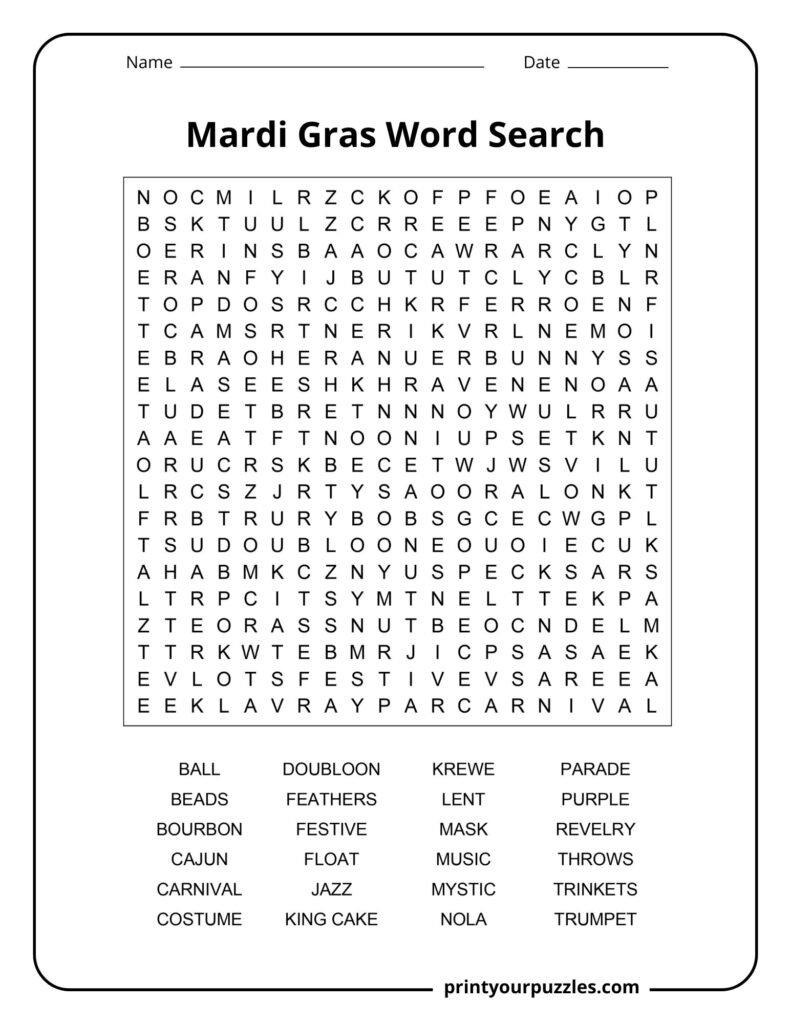
BALL, BEADS, BOURBON, CAJUN, CARNIVAL, COSTUME, DOUBLOON, FEATHERS, FESTIVE, FLOAT, JAZZ, KING CAKE, KREWE, LENT, MASK, MUSIC, MYSTIC, NOLA, PARADE, PURPLE, REVELRY, THROWS, TRINKETS, TRUMPET
Mardi Gras falls on Fat Tuesday, the day before Ash Wednesday, occurring between February 3rd and March 9th depending on the Easter calendar each year.
Purple symbolizes justice, gold represents power, and green stands for faith. These three official colors were first assigned by Rex, the King of Carnival, in 1872.
Mardi Gras traces its roots to ancient Roman festivals, later adopted by Catholics in Europe and brought to North America by French explorers settling in Louisiana around 1699.
“Mardi Gras” is French for “Fat Tuesday,” referring to the tradition of eating rich, fatty foods before the fasting and abstinence required during the Christian season of Lent.
Beads were originally glass trinkets exchanged as gifts during celebrations. Today plastic strands are tossed from floats to crowds as a fun, symbolic gesture of festive generosity.
Louisiana is the only U.S. state where Mardi Gras is a legal public holiday, meaning schools, courts, and many businesses officially close for the day’s celebrations.
The very first American Mardi Gras took place in Mobile, Alabama in 1703, predating New Orleans’ celebrations by nearly two decades, and Mobile still hosts its own proud annual tradition.
Certain prestigious krewes, like the Mystick Krewe of Comus founded in 1857, never publicly reveal their members’ identities, maintaining a centuries-old tradition of mystery and exclusivity.
The staggering amount of plastic beads tossed annually has raised serious environmental concerns, prompting activists and organizers to encourage more sustainable and eco-friendly throw alternatives.
Whoever finds the tiny plastic baby baked inside the king cake is traditionally considered blessed with good luck and is obligated to buy the next king cake for everyone.