- What erosion is and how it gradually reshapes Earth’s surface.
- How water, wind, glaciers, waves, and gravity cause erosion.
- How erosion differs from weathering and deposition.
- How plants and responsible land management can help reduce soil erosion.

Erosion is the natural process that gradually wears away and moves soil, rock, and other materials from one place to another. It helps shape landscapes over time, creating valleys, cliffs, canyons, beaches, and many other landforms. Although erosion usually happens slowly, powerful storms, floods, or strong winds can sometimes change the land very quickly.
Water is one of the main causes of erosion. Rain can loosen soil, while rivers and streams carry sediment downstream. Ocean waves slowly wear away coastlines, especially during storms. Glaciers also cause erosion by moving across the land and scraping away rock beneath them. As glaciers travel, they can carve wide valleys and transport large pieces of rock over long distances.
Wind erosion is especially common in dry regions where the ground has little vegetation. Strong winds can lift and carry sand, dust, and small particles. Over time, this movement can create sand dunes, smooth rock surfaces, and reshape desert landscapes. Gravity also contributes to erosion through landslides, rockfalls, and the slow movement of soil down slopes.
Erosion is closely connected to weathering, but the two processes are different. Weathering breaks rocks into smaller pieces, while erosion transports those pieces to a new location. The deposited material may later form beaches, riverbanks, deltas, or new layers of sedimentary rock.
Human activities can increase the speed of erosion. Removing forests, overgrazing animals, constructing roads, and farming without protecting the soil can leave the ground exposed. Without plant roots to hold soil together, rain and wind can carry it away more easily. Farmers and environmental specialists use methods such as planting trees, building terraces, and covering the soil with vegetation to reduce erosion.
An erosion word search offers an enjoyable way to become familiar with important terms connected to this topic. As you look for words related to water, wind, soil, glaciers, and landforms, you can review the forces that constantly reshape Earth’s surface. Erosion may be a slow process, but its effects can be seen almost everywhere, from mountain valleys and riverbanks to beaches, deserts, and agricultural fields.
Related Word Searches:
Rock Cycle | Water Cycle | Plate Tectonics | Weather | Earth Layers | Volcano
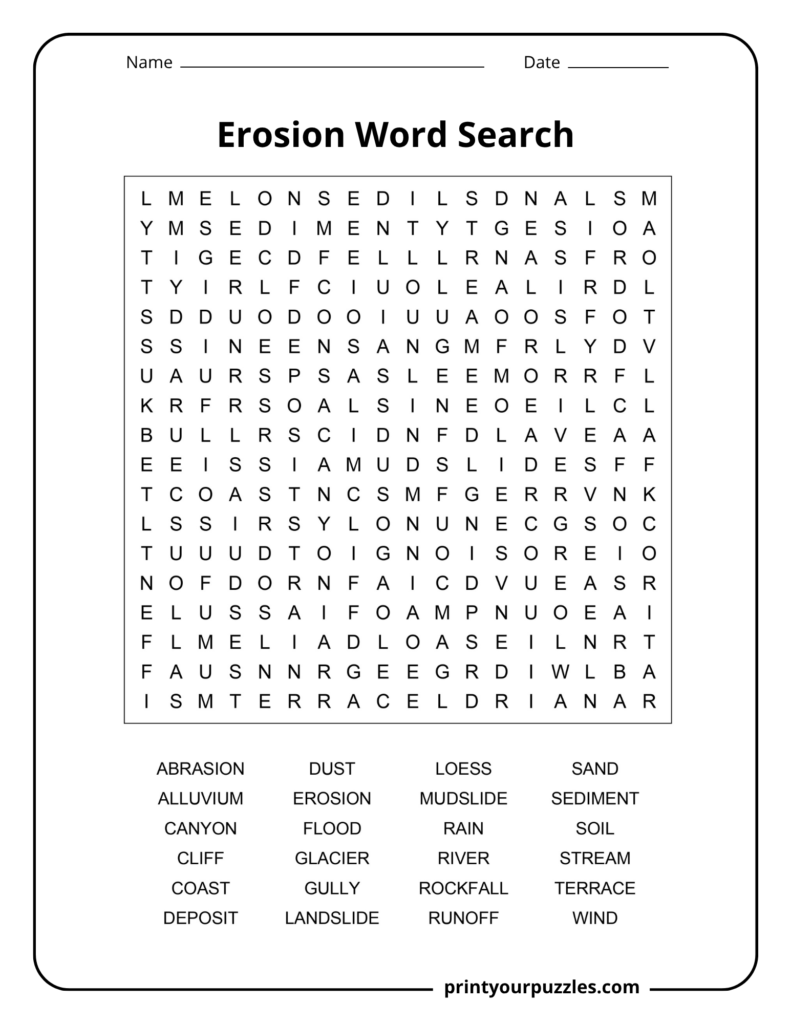
ABRASION, ALLUVIUM, CANYON, CLIFF, COAST, DEPOSIT, DUST, EROSION, FLOOD, GLACIER, GULLY, LANDSLIDE, LOESS, MUDSLIDE, RAIN, RIVER, ROCKFALL, RUNOFF, SAND, SEDIMENT, SOIL, STREAM, TERRACE, WIND
ABRASION – The wearing away of rock surfaces when sand, pebbles, or other particles scrape against them, often moved by wind, rivers, waves, glaciers, or flowing water.
ALLUVIUM – Loose soil, sand, clay, and gravel deposited by flowing water, commonly found along riverbanks, floodplains, and deltas after erosion transports material downstream over long periods.
CANYON – A deep, narrow valley with steep sides, usually formed over long periods as a river cuts through layers of rock by erosion and continuous weathering.
CLIFF – A high, steep rock face created when waves, rivers, glaciers, or weathering remove surrounding material and leave a sharply exposed slope above nearby landforms.
COAST – The area where land meets the sea, constantly reshaped by waves, tides, currents, storms, erosion, and the deposition of sand, gravel, and coastal sediment.
DEPOSIT – Material such as sand, soil, or gravel left behind after wind, water, ice, or gravity loses enough energy to carry it any farther forward.
DUST – Very fine particles of soil, rock, or organic matter that wind can lift, transport, and deposit across landscapes during erosion, storms, or extremely dry conditions.
EROSION – The natural process that wears away and transports soil, rock, and sediment through the action of water, wind, ice, gravity, waves, or damaging human activity.
FLOOD – An overflow of water onto normally dry land that can rapidly remove soil, reshape riverbanks, damage vegetation, and transport large amounts of loose sediment.
GLACIER – A large, slow-moving mass of ice that erodes land by scraping rock, carrying debris, and carving broad valleys as it moves gradually downhill over time.
GULLY – A deep channel cut into soil by concentrated runoff, usually larger than a small rill and often caused by severe or repeated water erosion events.
LANDSLIDE – The rapid movement of rock, soil, and debris down a slope, triggered by gravity, heavy rain, earthquakes, erosion, volcanic activity, or disruptive human disturbance.
LOESS – A soft, fertile deposit of fine windblown sediment, usually pale yellow or brown, that can form thick layers across broad landscapes and productive farming regions.
MUDSLIDE – A fast-moving flow of water-soaked soil and debris down a slope, often occurring after intense rainfall, wildfire, earthquakes, or severe erosion of unstable ground.
RAIN – Water droplets falling from clouds that can loosen soil, create surface runoff, carve channels, erode exposed slopes, and transport sediment across the surrounding ground.
RIVER – A natural flowing waterway that erodes its banks and bed, carries sediment downstream, and helps create valleys, floodplains, meanders, canyons, deltas, and other landforms.
ROCKFALL – The sudden fall of rocks from a cliff or steep slope, often caused by weathering, erosion, earthquakes, gravity, or repeated seasonal freezing and thawing.
RUNOFF – Water that flows over the land after rain or melting snow, carrying loose soil, nutrients, pollutants, organic matter, and sediment into nearby rivers and waterways.
SAND – Small grains of weathered rock and minerals that water or wind can transport, forming beaches, dunes, riverbanks, desert surfaces, and layered deposits of sediment.
SEDIMENT – Particles of rock, soil, minerals, or organic material transported and deposited by water, wind, ice, waves, or gravity after natural erosion has occurred.
SOIL – The upper layer of Earth containing minerals, organic matter, water, and air, which supports plant life but can be removed or seriously damaged by erosion.
STREAM – A small flowing body of water that erodes channels, transports sediment, shapes nearby land, and may join larger rivers as it travels steadily downhill.
TERRACE – A level step cut into a hillside naturally or by people, often used in farming to slow runoff, conserve water, and reduce damaging soil erosion.
WIND – Moving air that lifts and carries dust, sand, and soil, especially in dry regions, gradually wearing exposed surfaces and reshaping dunes and other natural landscapes.
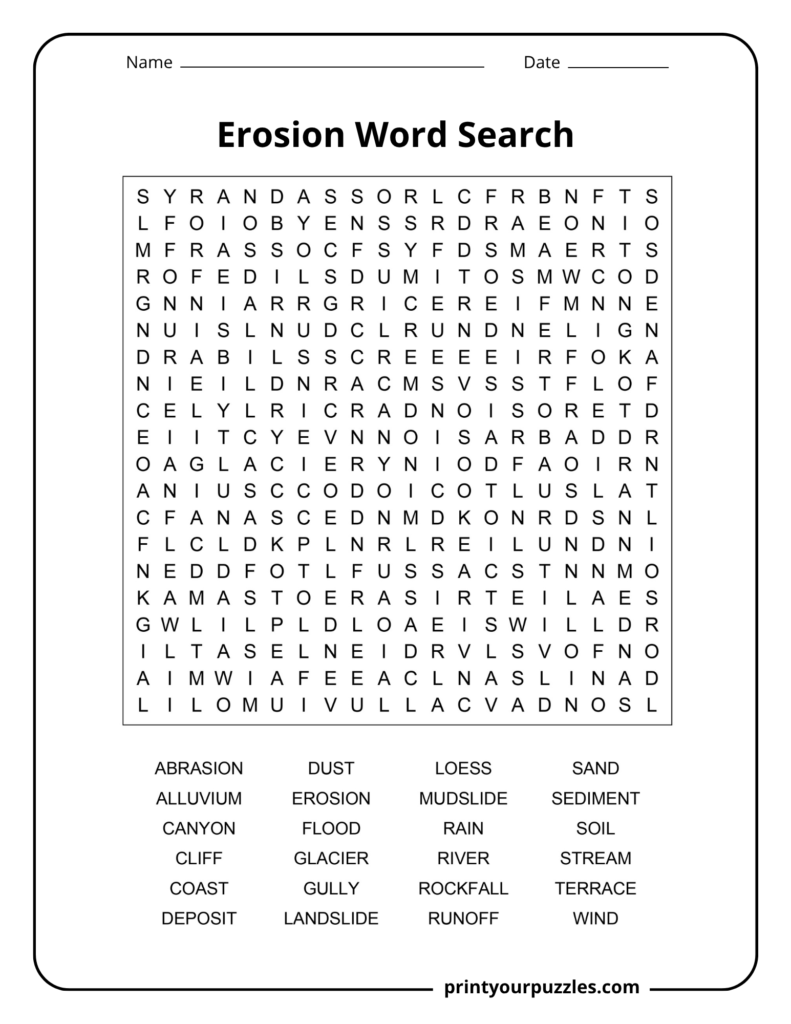
ABRASION, ALLUVIUM, CANYON, CLIFF, COAST, DEPOSIT, DUST, EROSION, FLOOD, GLACIER, GULLY, LANDSLIDE, LOESS, MUDSLIDE, RAIN, RIVER, ROCKFALL, RUNOFF, SAND, SEDIMENT, SOIL, STREAM, TERRACE, WIND
Erosion is the process that wears away and moves soil, rock, and sediment through water, wind, ice, waves, gravity, or certain human activities.
The main causes are flowing water, rainfall, ocean waves, wind, glaciers, and gravity, although farming, construction, and deforestation can increase erosion considerably.
Weathering breaks rocks into smaller pieces, while erosion carries those pieces away and transports them to new locations through natural forces.
Erosion can remove fertile soil, damage farmland, weaken riverbanks, threaten buildings, pollute waterways, and destroy habitats when it happens too quickly.
People can reduce erosion by planting vegetation, protecting forests, building terraces, covering exposed soil, controlling runoff, and using responsible farming and construction methods.
The Colorado River gradually removed rock over millions of years, deepening and widening the canyon while exposing colorful layers of Earth’s geological history.
Plant roots hold soil together, while leaves soften the impact of rainfall and slow surface runoff before it carries loose soil away.
As glaciers travel slowly downhill, they scrape the ground, collect rock fragments, and transport large boulders across considerable distances before depositing them elsewhere.
Powerful winds can lift fine dust high into the atmosphere and carry it thousands of miles before depositing it in distant regions or oceans.
Deforestation, overgrazing, construction, and poorly managed farming expose soil, making it easier for rain and wind to remove valuable fertile material.
1. What is the main difference between weathering and erosion?
A. Weathering moves rocks, while erosion creates them
B. Weathering breaks rocks down, while erosion transports the pieces
C. Weathering only occurs near oceans
2. Which of these is a major cause of erosion?
A. Flowing water
B. Moonlight
C. Plant growth
3. How do plant roots help reduce erosion?
A. They increase the speed of runoff
B. They turn soil into rock
C. They hold the soil together
4. What is alluvium?
A. Sediment deposited by flowing water
B. Ice found inside a glacier
C. Rock falling from a cliff
5. Which human activity can accelerate erosion?
A. Protecting forests
B. Planting vegetation
C. Removing trees
Answers
1. B. Weathering breaks rocks down, while erosion transports the pieces. Weathering produces smaller rock fragments, and erosion carries those fragments to different locations.
2. A. Flowing water. Rivers, rainfall, runoff, and ocean waves wear away surfaces and transport soil, rock, and sediment.
3. C. They hold the soil together. Roots stabilize the ground, while leaves reduce rainfall impact and slow water moving across the surface.
4. A. Sediment deposited by flowing water. Alluvium includes sand, soil, clay, and gravel left along rivers, floodplains, and deltas.
5. C. Removing trees. Deforestation leaves soil exposed and removes roots that would normally protect it from wind and water.