
Chanel is one of the most famous names in fashion, known for elegance, simplicity, and a style that helped change the way women dressed in the twentieth century. The brand was founded by Gabrielle “Coco” Chanel, who began her career in France making and selling hats. Her early success came from understanding that many women were ready for clothing and accessories that felt less restrictive and more modern than traditional fashions of the time.
Chanel opened her first hat shop in Paris in 1910 and later expanded to fashionable French resort towns such as Deauville and Biarritz. These locations gave her access to wealthy customers and helped her experiment with a new kind of wardrobe. She used comfortable fabrics, simple shapes, and practical designs influenced partly by menswear and sportswear. Her clothes stood apart from heavily decorated styles and quickly attracted attention.
As the business grew, Chanel introduced pieces that became closely associated with the brand. The little black dress, elegant jersey clothing, tweed suits, costume jewelry, and quilted handbags all helped define a look based on clean lines and understated sophistication. Her designs encouraged greater freedom of movement and helped make simplicity itself feel luxurious.
Perfume became another major turning point. Chanel No. 5 was introduced in 1921 and developed into one of the best-known fragrances in the world. Its minimalist bottle, memorable name, and distinctive scent expanded Chanel’s identity beyond clothing and helped turn the company into a broader luxury brand.
A Chanel word search can therefore explore much more than fashion alone. Terms connected with Coco Chanel, Paris, hats, tweed, perfume, pearls, handbags, couture, and the double-C logo all represent important parts of the brand’s development.
Chanel continued to evolve after its founder’s lifetime, expanding into accessories, beauty, watches, jewelry, and global retail. Its growth from a small Parisian hat shop into an international fashion house shows how a clear design philosophy, strong branding, and a willingness to challenge established conventions can create a lasting cultural influence.
Related Word Searches:
Gucci | Louis Vuitton | Sephora | Levi’s
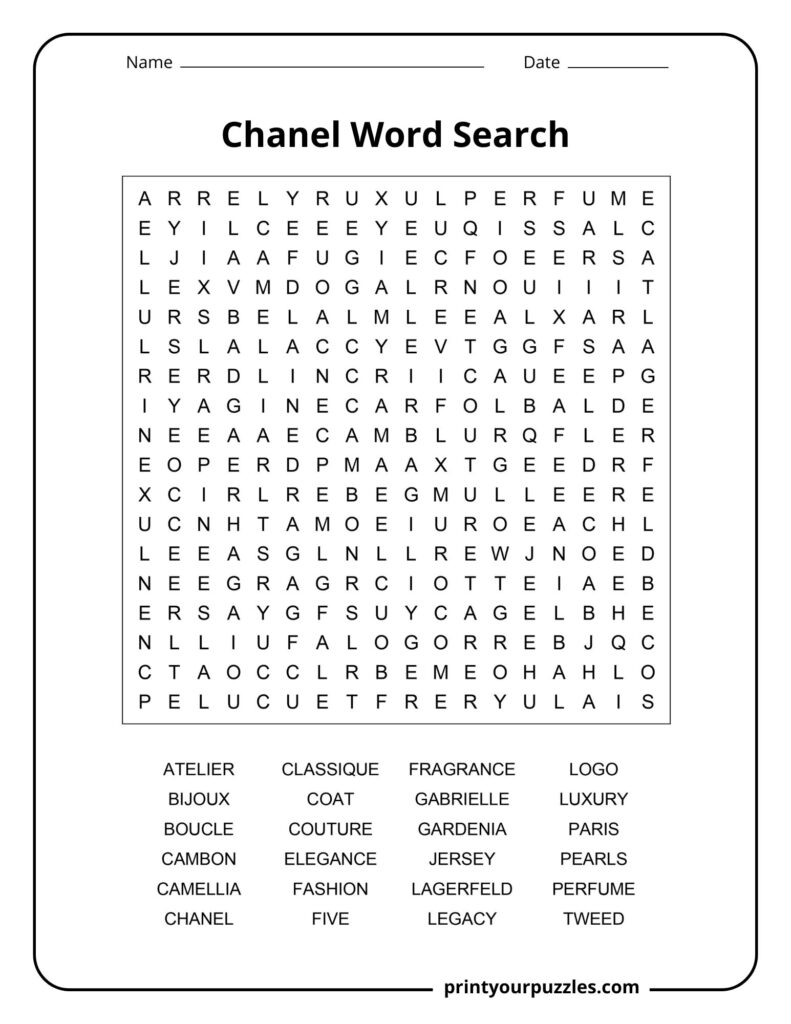
ATELIER, BIJOUX, BOUCLE, CAMBON, CAMELLIA, CHANEL, CLASSIQUE, COAT, COUTURE, ELEGANCE, FASHION, FIVE, FRAGRANCE, GABRIELLE, GARDENIA, JERSEY, LAGERFELD, LEGACY, LOGO, LUXURY, PARIS, PEARLS, PERFUME, TWEED
ATELIER – A private workshop or studio where Chanel’s skilled artisans crafted haute couture pieces by hand, representing the heart of French fashion craftsmanship and elegance.
BIJOUX – Chanel revolutionized jewelry by popularizing costume bijoux, mixing faux pearls and gems with fine materials, making bold accessories available and fashionable for modern women everywhere.
BOUCLE – A textured looped yarn fabric that became synonymous with Chanel’s iconic tweed suits, offering a distinctive tactile quality that defined the brand’s elegant yet comfortable aesthetic.
CAMBON – Rue Cambon in Paris is the legendary address of Chanel’s first boutique and headquarters, where Gabrielle Chanel built her empire and where the maison still operates today.
CAMELLIA – Gabrielle Chanel’s favorite flower, the camellia became an enduring house symbol, appearing across jewelry, accessories and garments as a timeless emblem of Chanel’s refined and sophisticated identity.
CHANEL – The iconic French luxury fashion house founded by Gabrielle Bonheur Chanel in the early twentieth century, synonymous worldwide with elegance, innovation, modernity and timeless sophisticated style.
CLASSIQUE – Chanel’s design philosophy centered on classique aesthetics, creating timeless silhouettes that transcended fleeting trends, establishing a standard of enduring elegance still celebrated and referenced in fashion today.
COAT – Chanel redefined women’s outerwear by designing relaxed, functional coats inspired by menswear, liberating women from restrictive fashion conventions and introducing a new standard of comfortable yet refined dressing.
COUTURE – Haute couture represents Chanel’s highest expression of craftsmanship, with each garment meticulously handmade to precise measurements, embodying the pinnacle of Parisian fashion artistry and luxurious sartorial excellence.
ELEGANCE – For Chanel, true elegance meant simplicity, refinement and effortlessness, rejecting excessive ornamentation in favor of clean lines and understated sophistication that empowered women with confidence and grace.
FASHION – Chanel fundamentally transformed twentieth century fashion by liberating women from corsets, introducing jersey fabrics, and creating a modern wardrobe that balanced practicality with unparalleled Parisian style and chicness.
FIVE – Chanel Nº 5, created in 1921 with perfumer Ernest Beaux, was the world’s first abstract fragrance, becoming a cultural icon immortalized by Marilyn Monroe and representing the pinnacle of perfumery.
FRAGRANCE – Chanel entered perfumery in 1921 with Nº 5, revolutionizing the fragrance industry by creating an abstract synthetic scent that became the world’s most iconic and best-selling perfume.
GABRIELLE – Gabrielle Bonheur Chanel, born in 1883, was the visionary founder whose revolutionary ideas about women’s clothing, freedom and style permanently transformed global fashion and established an enduring luxury empire.
GARDENIA – A sophisticated floral fragrance created by Chanel in 1925, Gardenia reflected the founder’s deep love of flowers and her talent for translating natural beauty into memorable olfactory masterpieces.
JERSEY – Chanel pioneered the use of jersey fabric, previously reserved for men’s underwear, transforming it into elegant women’s garments that offered unprecedented comfort, movement and a revolutionary modern silhouette.
LAGERFELD – Karl Lagerfeld became Chanel’s creative director in 1983, brilliantly revitalizing the house by honoring its heritage while fearlessly reinventing its codes with theatrical runway shows and contemporary cultural references.
LEGACY – Chanel’s enduring legacy lies in its revolutionary impact on women’s fashion, fragrance and lifestyle, creating timeless codes of elegance that continue inspiring designers and captivating generations of devoted admirers worldwide.
LOGO – The interlocking double C monogram, designed by Gabrielle Chanel herself, became one of fashion’s most recognized symbols, appearing on everything from handbags to buttons as a mark of luxury.
LUXURY – Chanel redefined luxury not through excess but through quality, simplicity and exclusivity, establishing that true refinement lies in impeccable materials, masterful craftsmanship and the confidence to embrace understated sophistication.
PARIS – Paris is inseparable from Chanel’s identity, with the city’s elegance, culture and artistic spirit deeply influencing the founder’s aesthetic vision and establishing the maison as a pillar of French luxury.
PEARLS – Chanel popularized the layering of faux pearl necklaces as a bold fashion statement, transforming costume jewelry into high style and encouraging women to wear accessories with confidence and playful sophistication.
PERFUME – Beyond clothing, Chanel built a perfume empire that democratized luxury fragrance, creating legendary scents that became cultural touchstones and established the brand as a complete lifestyle symbol worldwide.
TWEED – Inspired by Scottish and English country fabrics, Chanel elevated tweed into a symbol of refined luxury, using it to craft her legendary suits that remain central to the house’s identity.
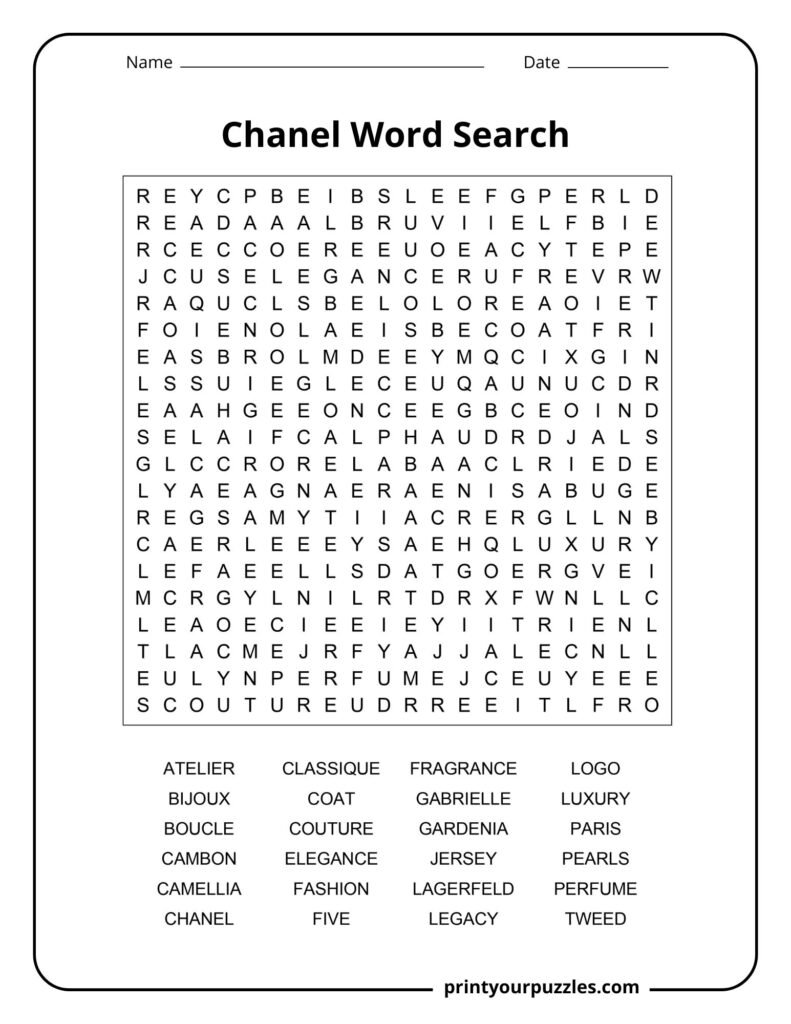
ATELIER, BIJOUX, BOUCLE, CAMBON, CAMELLIA, CHANEL, CLASSIQUE, COAT, COUTURE, ELEGANCE, FASHION, FIVE, FRAGRANCE, GABRIELLE, GARDENIA, JERSEY, LAGERFELD, LEGACY, LOGO, LUXURY, PARIS, PEARLS, PERFUME, TWEED
Gabrielle Chanel opened her first millinery shop in Paris in 1910, on Rue Cambon, marking the humble beginning of what would become the world’s most iconic luxury fashion house.
Gabrielle Chanel was a visionary designer who revolutionized women’s fashion by replacing restrictive corsets with comfortable, elegant clothing, permanently liberating women’s silhouettes and redefining modern femininity throughout the twentieth century.
Launched in 1921, Nº 5 was the world’s first abstract synthetic fragrance, combining over eighty ingredients into an unprecedented scent that became a global cultural icon and history’s best-selling perfume.
Appointed creative director in 1983, Lagerfeld brilliantly revived a declining Chanel by honoring its founding codes while injecting bold contemporary energy, transforming the house into a dominant force in modern luxury fashion.
Chanel’s iconic signatures include the interlocking CC logo, the little black dress, tweed suits, quilted leather handbags, faux pearl jewelry, camellia flowers and the legendary Nº 5 fragrance.
Coco Chanel: The Legend and the Life by Justine Picardie. Picardie masterfully unpicks the seams between Chanel’s carefully constructed myth and the darker truth beneath, weaving archive research, rare interviews, and Parisian glamour into a spellbinding, impossible-to-put-down portrait.
Despite building a couture empire, Chanel designed primarily by draping fabric directly onto models, using scissors and pins rather than traditional patternmaking techniques learned through formal fashion training.
Perfumer Ernest Beaux presented Gabrielle Chanel with several fragrance samples numbered one through five, and she instinctively selected the fifth vial, giving the world’s most famous perfume its legendary name.
After accidentally getting sunburned on a yacht in 1923, Chanel made bronzed skin fashionable overnight, completely reversing centuries of European beauty tradition that associated pale skin with aristocratic elegance and status.
Following World War Two, Chanel shuttered her maison in 1939 and only returned to fashion in 1954, staging a remarkable comeback at age seventy that initially shocked but ultimately conquered the Paris fashion world.
Gabrielle Chanel borrowed elements from men’s sporting and workwear clothing, transforming traditionally masculine fabrics like jersey and tweed into revolutionary feminine suits that gave women unprecedented freedom, comfort and sophisticated modern style.