
Sephora is one of the best-known beauty retailers in the world, recognized for bringing together makeup, skincare, fragrance, haircare, and other personal-care products in one place. Its modern story is closely connected with French entrepreneur Dominique Mandonnaud, who developed a different approach to selling cosmetics during the late twentieth century. Instead of keeping beauty products mainly behind counters, he encouraged customers to browse more freely, compare brands, and test products for themselves.
That idea helped make beauty shopping feel more open and interactive. Mandonnaud expanded his retail business and eventually combined it with Sephora, a French perfume chain whose name became the identity of the growing company. The concept stood out because customers could explore many brands in the same store rather than depending entirely on sales assistants or separate brand counters.
Sephora grew rapidly in France before becoming part of the luxury group LVMH in 1997. With the support of a major international company, the retailer expanded into new markets and opened stores in many countries. Its black-and-white branding, modern interiors, and broad product selection helped create a consistent identity wherever it appeared.
A Sephora word search puzzle can reflect this evolution through terms connected with perfume, makeup, skincare, lipstick, mascara, beauty advisors, samples, brands, and cosmetics.
The retailer also developed its own Sephora Collection while continuing to sell products from established and emerging beauty companies. This wide selection became an important part of its appeal, giving customers the opportunity to discover new colors, formulas, ingredients, and trends.
As shopping moved online, Sephora expanded through websites, mobile apps, loyalty programs, reviews, tutorials, and personalized recommendations. Digital tools allowed the company to combine the discovery experience of its physical stores with the convenience of online retail.
From an innovative French beauty-store concept to an international retail network, Sephora grew by changing how customers interact with cosmetics. Its history shows how product choice, experimentation, strong branding, and a more open shopping environment can transform a traditional retail category into a modern beauty experience.
Related Word Searches:
Chanel | Gucci | Louis Vuitton | Levi’s
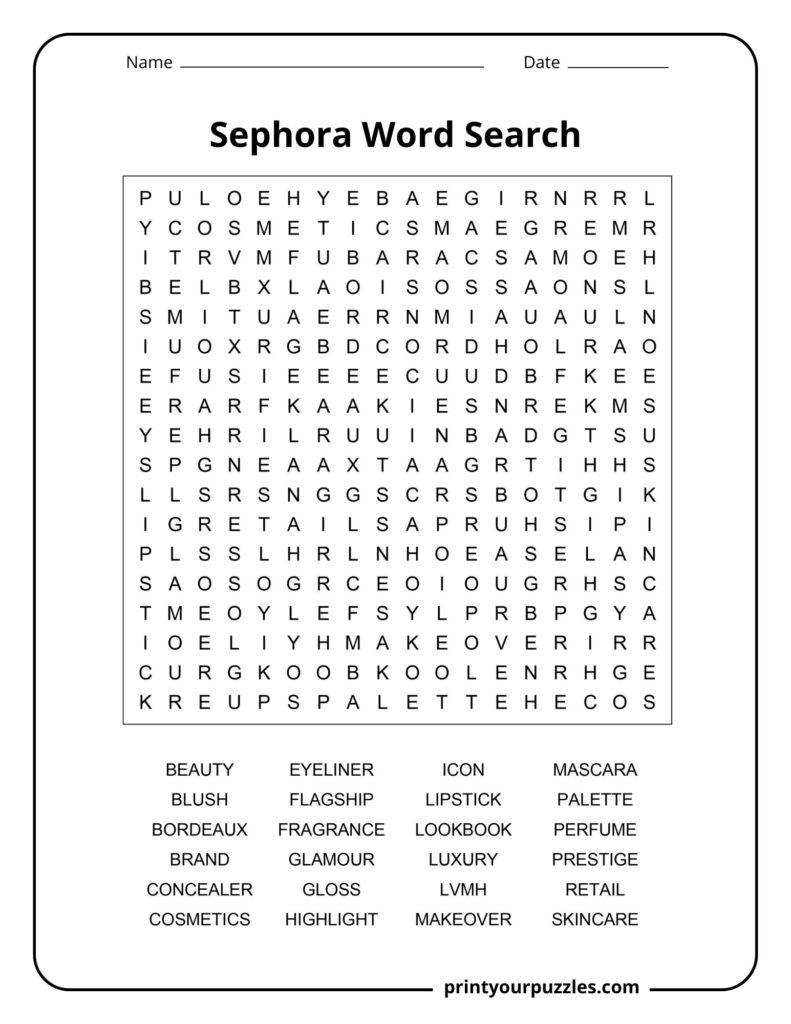
BEAUTY, BLUSH, BORDEAUX, BRAND, CONCEALER, COSMETICS, EYELINER, FLAGSHIP, FRAGRANCE, GLAMOUR, GLOSS, HIGHLIGHT, ICON, LIPSTICK, LOOKBOOK, LUXURY, LMVH, MAKEOVER, MASCARA, PALETTE, PERFUME, PRESTIGE, RETAIL, SKINCARE
BEAUTY – The core mission of Sephora, offering products and experiences that enhance natural appearance and boost confidence through makeup, skincare, and fragrance since its founding in 1969.
BLUSH – A cosmetic powder or cream applied to the cheeks to add color and a healthy glow, one of Sephora’s consistently bestselling product categories across all its global stores.
BORDEAUX – The French city where Dominique Mandonnaud opened the first Sephora store in 1969, marking the humble beginning of what would become a global beauty retail empire.
BRAND – Sephora’s powerful identity, recognized worldwide for its black-and-white striped packaging, open-sell retail concept, and commitment to offering both luxury and accessible beauty products.
CONCEALER – A skin-toned cosmetic used to cover blemishes, dark circles, and imperfections, representing one of the most sought-after complexion products available across Sephora’s extensive makeup assortment.
COSMETICS – The broad category of beauty products including makeup, skincare, and fragrance that forms the foundation of Sephora’s retail offering, stocking hundreds of brands under one roof.
EYELINER – A defining eye makeup product used to outline and accentuate the eyes, available in pencil, liquid, and gel formulas across dozens of brands carried by Sephora globally.
FLAGSHIP – Sephora’s landmark stores located in major cities worldwide, designed as immersive beauty destinations offering exclusive experiences, technology, and the widest product selections within the brand’s retail network.
FRAGRANCE – One of Sephora’s most prestigious and historical product categories, offering hundreds of perfumes and colognes from iconic luxury houses and niche indie brands in dedicated store sections.
GLAMOUR – The sense of allure and sophistication that Sephora has cultivated through its carefully curated brand selection, luxurious store design, and aspirational marketing campaigns since joining the LVMH group.
GLOSS – A shiny, light-reflecting lip product beloved for adding volume and luminosity to lips, remaining a perennial bestseller and staple of Sephora’s extensive and ever-evolving lip product category.
HIGHLIGHT – A luminous cosmetic product applied to the high points of the face to create a radiant, lit-from-within glow, popularized globally through Sephora’s influential beauty trend platform.
ICON – A status Sephora has achieved in global beauty retail, becoming a cultural symbol of modern beauty, self-expression, and accessible luxury recognized by consumers across more than 35 countries.
LIPSTICK – One of beauty’s most iconic and timeless products, representing a cornerstone of Sephora’s makeup offering with thousands of shades, finishes, and formulas available from prestige and indie brands.
LOOKBOOK – A curated collection of beauty inspirations and editorial imagery that Sephora produces seasonally to guide customers toward trending products, color stories, and complete looks across all beauty categories.
LUXURY – A defining pillar of Sephora’s brand identity, positioning itself as an accessible luxury retailer by stocking prestigious brands alongside emerging ones, making high-end beauty available to everyday consumers.
LVMH – The world’s leading luxury goods conglomerate, founded by Bernard Arnault, that acquired Sephora in 1997 and provided the global infrastructure, financial backing, and prestige network to transform it into an international beauty powerhouse.
MAKEOVER – A transformative beauty service offered in Sephora stores worldwide, where expert beauty advisors apply makeup, recommend products, and teach application techniques tailored to each individual customer’s preferences.
MASCARA – An essential eye makeup product that darkens, lengthens, and volumizes lashes, consistently ranking among Sephora’s top-selling items and serving as many customers’ first prestige beauty purchase.
PALETTE – A multi-pan product containing coordinated shades of eyeshadow, blush, or highlight, beloved by beauty enthusiasts and a signature Sephora category that drives seasonal gifting and collector culture.
PERFUME – A fragrant liquid crafted from aromatic compounds and essential oils, representing one of Sephora’s most historically rich categories, connecting the brand to France’s deep and storied perfumery heritage.
PRESTIGE – The elevated positioning that distinguishes Sephora from mass-market retailers, achieved through exclusive brand partnerships, high-quality store environments, and a curated assortment of respected luxury and niche beauty labels.
RETAIL – The commercial backbone of Sephora’s business model, spanning physical stores, e-commerce platforms, and in-store services across more than 35 countries, continuously evolving to meet modern consumer shopping expectations.
SKINCARE – A rapidly growing and now dominant category within Sephora, encompassing cleansers, serums, moisturizers, and treatments from both science-driven and natural brands catering to every skin type and concern.
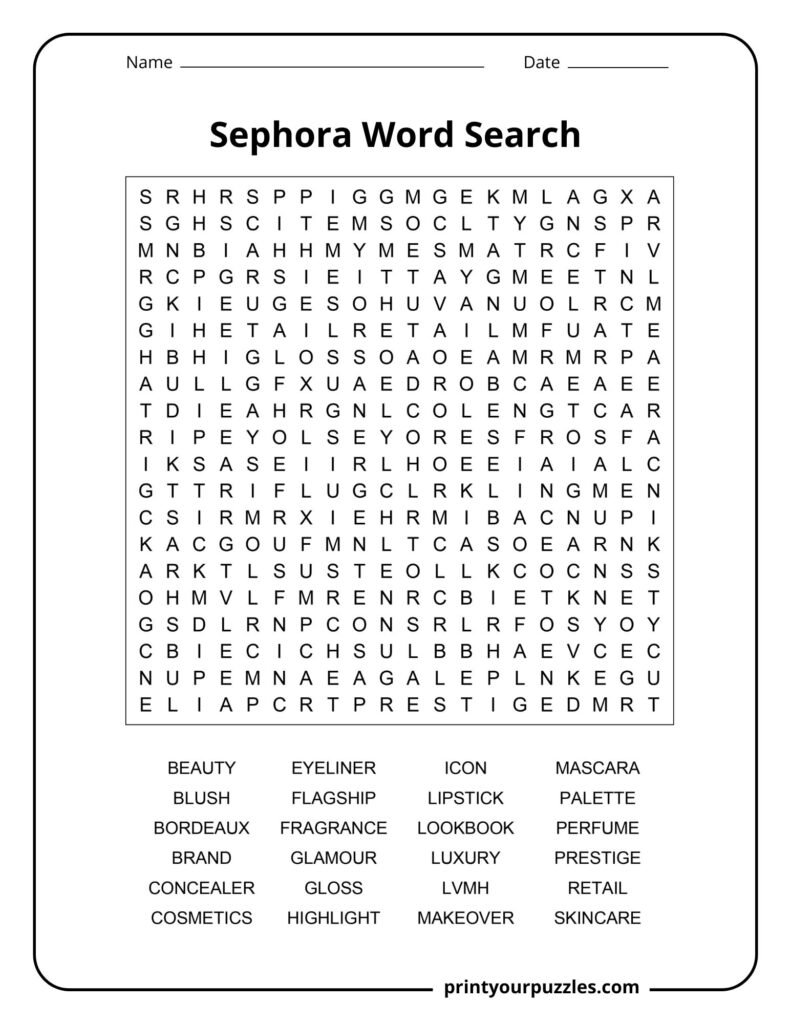
BEAUTY, BLUSH, BORDEAUX, BRAND, CONCEALER, COSMETICS, EYELINER, FLAGSHIP, FRAGRANCE, GLAMOUR, GLOSS, HIGHLIGHT, ICON, LIPSTICK, LOOKBOOK, LUXURY, LVMH, MAKEOVER, MASCARA, PALETTE, PERFUME, PRESTIGE, RETAIL, SKINCARE
Sephora was founded in 1969 in Limoges, France, by Dominique Mandonnaud, who revolutionized beauty retail by introducing an open-sell concept allowing customers to freely test products.
The name combines “Zipporah,” the beautiful wife of Moses in the Bible, with the Greek word “sephos” meaning beauty, creating a name that elegantly reflects the brand’s core identity.
LVMH, the French luxury conglomerate led by Bernard Arnault, acquired Sephora in 1997, providing the financial resources and global network that enabled the brand’s rapid international expansion.
Sephora pioneered the open-sell beauty retail model, allowing customers to freely browse, test, and explore hundreds of brands independently, fundamentally changing how consumers experience and purchase beauty products worldwide.
Since its LVMH acquisition, Sephora has grown to operate over 2,700 stores across more than 35 countries, establishing itself as the world’s leading prestige beauty retailer with a powerful e-commerce presence.
Dominique Mandonnaud earned this playful nickname for his obsessive passion for fragrance, which directly inspired his revolutionary vision of creating an immersive, self-service beauty shopping experience in France.
The bold striped branding was intentionally designed to convey elegance and modernity simultaneously, becoming one of the most instantly recognizable visual identities in global luxury beauty retail history.
Before becoming a beauty destination, Mandonnaud originally operated a small gift and fragrance shop in Limoges, gradually transforming his retail concept after recognizing customers’ desire to test products freely.
Sephora’s Beauty Insider program, launched in 2007, became an industry benchmark for customer retention, rewarding millions of members with points, exclusive products, and personalized experiences across all purchase channels.
When Sephora expanded into Japan in 1999, local consumers were unfamiliar with the self-service model and preferred traditional assisted shopping, ultimately forcing the brand to withdraw from the market entirely.