
Spotify is one of the best-known music streaming services in the world, but its beginnings were closely connected with a major problem facing the music industry: online piracy. The company was founded in Sweden in 2006 by Daniel Ek and Martin Lorentzon, who believed listeners wanted the speed and convenience of digital music without having to download songs illegally.
Their idea was to create a legal service that could give users almost instant access to a huge catalog of music while also providing revenue to record labels and artists. Building the platform required agreements with major music companies, reliable streaming technology, and a business model that could support both free and paid listening. Spotify officially launched in 2008 in several European markets and gradually expanded into more countries.
Its early growth was driven by simplicity. Instead of buying individual songs or albums, users could search for music and begin listening within seconds. Spotify offered a free version supported by advertising alongside a subscription option with additional features. This model helped introduce millions of people to the idea that music could be accessed as a service rather than owned as a physical CD or digital file.
A printable Spotify word search puzzle can reflect this transformation through terms such as streaming, playlists, artists, albums, podcasts, Sweden, Premium, Discover Weekly, Wrapped, and recommendations.
Personalization became one of Spotify’s greatest strengths. Features such as Discover Weekly and Release Radar used listening habits to suggest new music, while Spotify Wrapped turned each user’s annual listening history into a highly shareable summary. Playlists also became central to the platform, allowing users, artists, editors, and algorithms to organize music for moods, activities, genres, and occasions.
Spotify later expanded beyond songs into podcasts and audiobooks, while continuing to develop tools for creators, advertisers, and listeners.
From a Swedish startup trying to offer a legal alternative to music piracy to a global audio platform, Spotify grew by combining licensing, technology, personalization, and convenience. Its history shows how streaming changed not only how people listen to music, but also how they discover, organize, and share it.
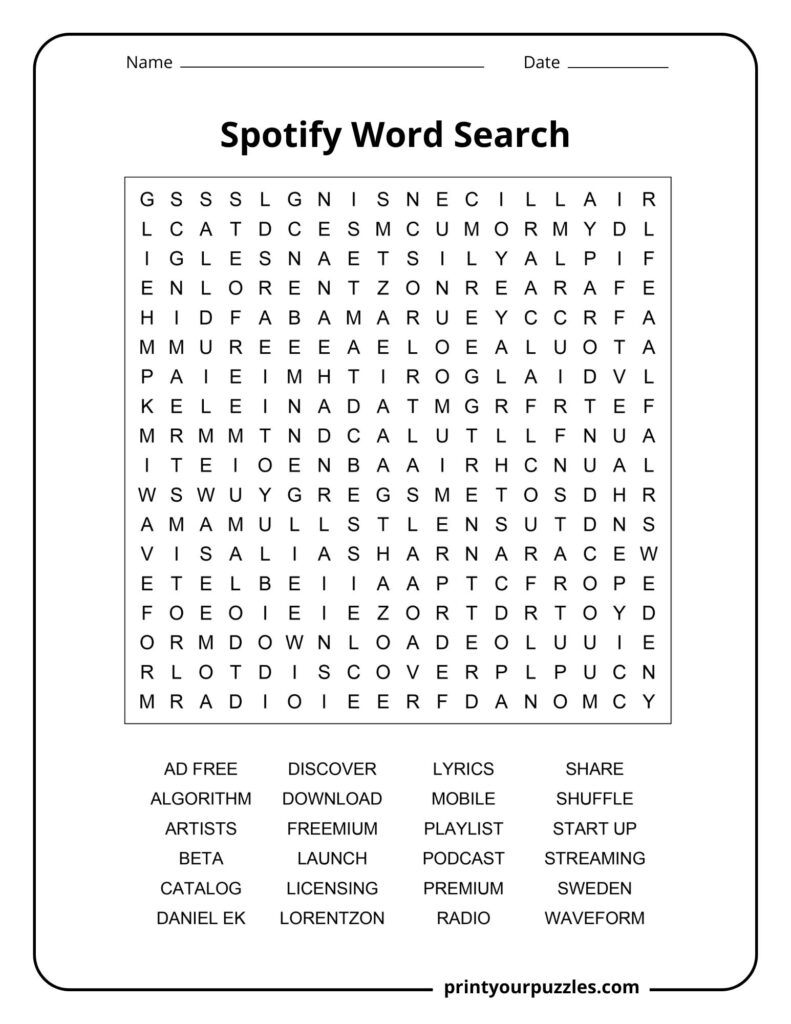
AD FREE, ALGORITHM, ARTISTS, BETA, CATALOG, DANIEL EK, DISCOVER, DOWNLOAD, FREEMIUM, LAUNCH, LICENSING, LORENTZON, LYRICS, MOBILE, PLAYLIST, PODCAST, PREMIUM, RADIO, SHARE, SHUFFLE, START UP, STREAMING, SWEDEN, WAVEFORM
AD FREE – A premium Spotify feature allowing users to listen to music without any commercial interruptions, offering an uninterrupted and enhanced listening experience for paying subscribers.
ALGORITHM – Spotify’s powerful recommendation engine that analyzes listening habits, preferences, and behaviors to suggest personalized playlists, artists, and songs tailored to each user.
ARTISTS – Musicians, bands, and creators who upload and distribute their music through Spotify, gaining global exposure, streaming royalties, and direct connection with millions of listeners worldwide.
BETA – The early testing phase of Spotify’s platform launched in 2006, where a limited group of users helped identify bugs and refine features before the official public release.
CATALOG – The vast and ever-growing library of songs, albums, podcasts, and audio content available on Spotify, currently exceeding 100 million tracks from countless genres and eras.
DANIEL EK – Swedish entrepreneur and co-founder who launched Spotify in 2008, revolutionizing the music industry by championing legal streaming as a powerful alternative to piracy.
DISCOVER – A core Spotify feature enabling users to explore new music, emerging artists, and fresh genres through curated playlists like Discover Weekly, powered by intelligent algorithms.
DOWNLOAD – Spotify’s offline listening functionality that allows premium subscribers to save songs, albums, and playlists directly to their devices for playback without requiring an internet connection.
FREEMIUM – Spotify’s foundational business model offering free ad-supported access alongside a paid premium tier, successfully converting millions of free users into loyal paying subscribers globally.
LAUNCH – Spotify officially launched to the public in October 2008, initially available in select European countries, marking a historic turning point in how people consume music digitally.
LICENSING – The complex legal agreements Spotify negotiates with record labels, publishers, and rights holders to legally stream music, forming the backbone of its entire content operation.
LORENTZON – Martin Lorentzon, Swedish co-founder of Spotify, previously co-founded the digital marketing company Tradedoubler. His experience and financial backing were instrumental in transforming Daniel Ek’s streaming vision into reality in Stockholm, 2006
LYRICS – A feature integrated into Spotify allowing listeners to follow along with real-time song lyrics while music plays, deepening user engagement and enhancing the overall listening experience.
MOBILE – Spotify’s smartphone application, launched to extend the platform beyond desktop, enabling users to stream music anytime and anywhere, dramatically accelerating worldwide adoption and subscriber growth.
PLAYLIST – A curated or user-created collection of songs organized around themes, moods, or genres, becoming one of Spotify’s most beloved and socially shareable features since its launch.
PODCAST – Audio shows and spoken-word content that Spotify aggressively expanded into after 2019, acquiring major networks and exclusive deals to become a leading global podcasting destination.
PREMIUM – Spotify’s paid subscription tier offering ad-free listening, offline downloads, unlimited skips, and higher audio quality, representing the company’s primary and most profitable revenue stream.
RADIO – Spotify’s station-style feature that generates endless streams of songs based on a chosen artist, song, or genre, offering effortless and personalized passive listening for all users.
SHARE – Spotify’s social functionality allowing users to share songs, playlists, and albums directly with friends across platforms like Instagram, WhatsApp, and Facebook, fueling organic viral growth.
SHUFFLE – A playback feature that randomizes song order within playlists or albums, so popular that Spotify made it the default free-tier listening mode for albums for several years.
START UP – Spotify began as a small Stockholm-based startup in 2006, founded with the mission to combat music piracy by creating a legal, convenient, and affordable music streaming solution.
STREAMING – The core technology behind Spotify, delivering music instantly over the internet without requiring downloads, fundamentally disrupting traditional music ownership and transforming the entire global music industry.
SWEDEN – Spotify’s birthplace, founded in Stockholm in 2006, making Sweden one of the most influential countries in modern tech history and a proud symbol of European startup success.
WAVEFORM – The visual audio representation symbolizing sound and music, closely associated with Spotify’s identity, player interface, and brand imagery reflecting its core mission of delivering audio experiences.
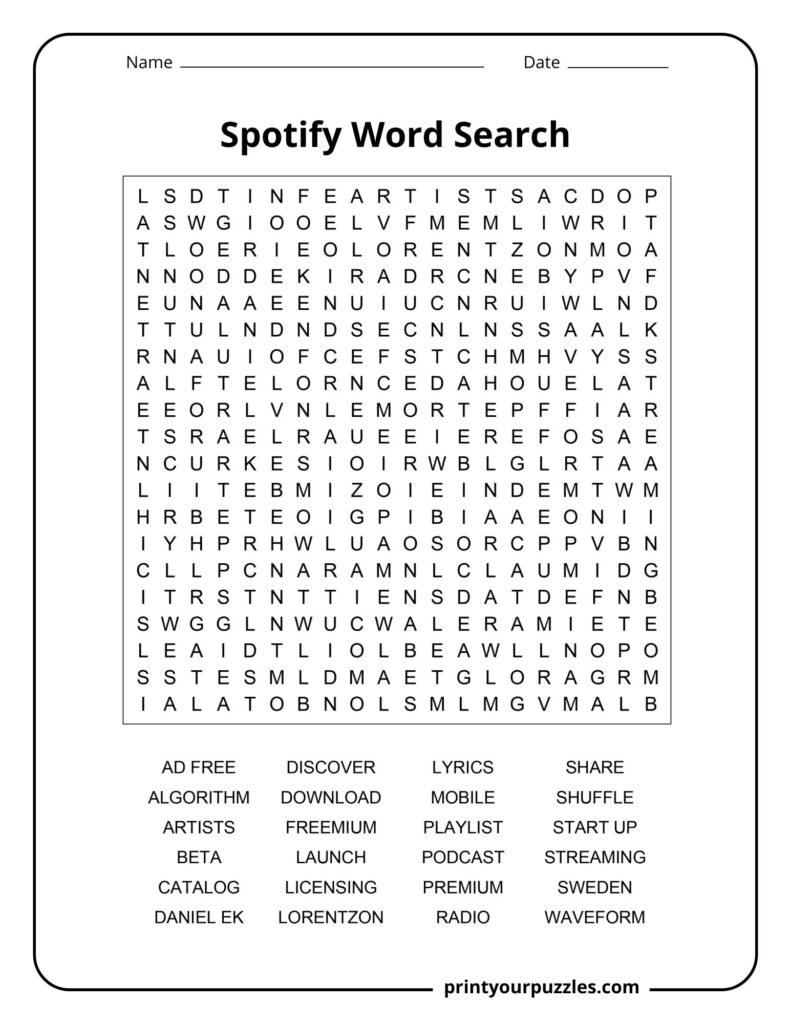
AD FREE, ALGORITHM, ARTISTS, BETA, CATALOG, DANIEL EK, DISCOVER, DOWNLOAD, FREEMIUM, LAUNCH, LICENSING, LORENTZON, LYRICS, MOBILE, PLAYLIST, PODCAST, PREMIUM, RADIO, SHARE, SHUFFLE, START UP, STREAMING, SWEDEN, WAVEFORM
Spotify was founded in Stockholm, Sweden, in 2006 by Daniel Ek and Martin Lorentzon, officially launching to the public across several European countries in October 2008.
Spotify was built to combat rampant music piracy by offering a legal, affordable, and convenient streaming alternative that benefited both listeners and the music industry simultaneously.
Spotify expanded rapidly through its freemium model, strategic licensing deals with major labels, Facebook social integration in 2011, and its eventual launch in the United States that same year.
Spotify went public on the New York Stock Exchange in April 2018 through an unconventional direct listing, bypassing a traditional IPO and reaching a valuation of approximately 30 billion dollars.
From 2019 onward, Spotify aggressively acquired podcast companies including Gimlet, Anchor, and Parcast, transforming itself from a pure music platform into the world’s leading audio streaming destination.
The Spotify Play: How CEO and Founder Daniel Ek Beat Apple, Google, and Amazon in the Race for Audio Dominance by Sven Carlsson and Jonas Leijonhufvud. Carlsson and Leijonhufvud masterfully reconstruct Spotify’s David-vs-Goliath rise — from a Stockholm garage to global dominance — drawing on insider access to reveal the secret deals and fierce battles that made streaming history.
Daniel Ek and Martin Lorentzon actually misheard each other when brainstorming names, accidentally coining “Spotify,” which they later backfilled as a blend of “spot” and “identify.”
Spotify’s founders were directly inspired by the massive piracy platform The Pirate Bay, also Swedish, aiming to make legal streaming faster and easier than illegal downloading.
The very first track ever played on Spotify was “Shadows” by RE-FLEX, streamed internally during testing in 2006, long before any public user accessed the platform.
Around 2013, Mark Zuckerberg reportedly explored acquiring Spotify, but Daniel Ek declined, choosing to keep Spotify independent and pursue its own global expansion strategy instead.
Spotify’s signature bright green was chosen to feel fresh, energetic, and distinctly non-corporate, deliberately avoiding the blues and reds dominating tech and music industry branding at the time.