
Easter is one of the most important celebrations in Christianity, commemorating the resurrection of Jesus Christ after his crucifixion. It represents hope, renewal, faith, and new life. Easter Sunday does not fall on the same date every year because it is determined by a traditional calendar calculation connected with the spring equinox and the full moon. In Western Christianity, it is usually celebrated between late March and late April.
The religious observance follows Holy Week, which recalls the final days of Jesus’s life. Palm Sunday remembers his entry into Jerusalem, while Good Friday marks his crucifixion. Easter Sunday celebrates the belief that he rose from the dead. Many Christians attend special church services, listen to music, pray, and gather with their communities. Some services begin before sunrise to symbolize the arrival of light and hope.
Easter is also associated with several familiar seasonal traditions. Eggs are among its best-known symbols because they have long represented new life and rebirth. Families may decorate hard-boiled eggs with paint, dye, stickers, or detailed patterns. Children often take part in Easter egg hunts, searching for hidden eggs filled with candy, small toys, or other surprises.
The Easter Bunny is another popular figure, especially in the United States and parts of Europe. According to modern tradition, the rabbit delivers baskets containing chocolate eggs, sweets, and gifts. Rabbits became connected with the season because of their association with fertility and the return of life during spring.
Food plays an important role in many Easter gatherings. Families may prepare roasted meats, vegetables, bread, cakes, chocolate, and regional specialties. Hot cross buns are traditional in some countries, while decorated breads and sweet pastries appear in others. Easter meals often bring relatives together after church services or holiday activities.
Customs differ widely between countries and communities. Some places hold parades, processions, public performances, or traditional games, while others focus mainly on worship and family time. In the Southern Hemisphere, Easter arrives during autumn rather than spring, but its themes of hope and renewal remain central.
Celebrate the religious meaning, seasonal symbols, foods, family traditions, and cheerful activities of the holiday with this printable Easter word search puzzle, featuring vocabulary inspired by eggs, baskets, springtime, church, flowers, chocolate, and new beginnings.
Related Word Searches:
Good Friday | April | Spring | Passover | Mother’s Day
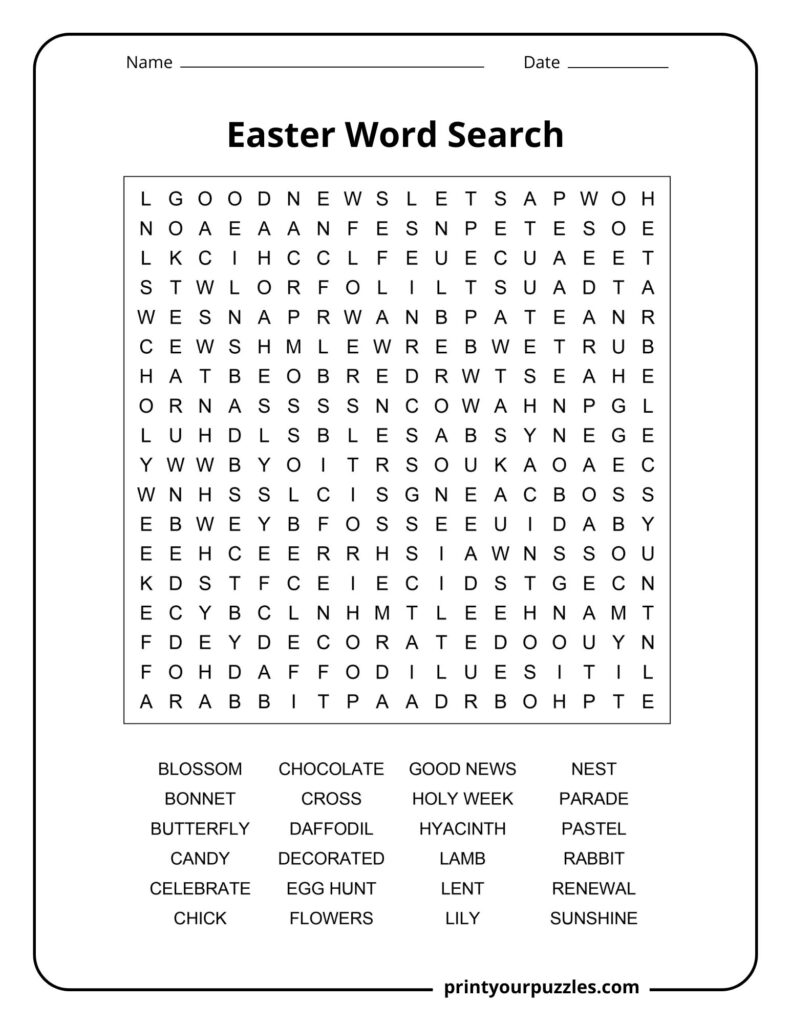
BLOSSOM, BONNET, BUTTERFLY, CANDY, CELEBRATE, CHICK, CHOCOLATE, CROSS, DAFFODIL, DECORATED, EGG HUNT, FLOWERS, GOOD NEWS, HOLY WEEK, HYACINTH, LAMB, LENT, LILY, NEST, PARADE, PASTEL, RABBIT, RENEWAL, SUNSHINE
BLOSSOM – The process of flowers opening and blooming during spring, symbolizing new life, renewal, and the beauty of nature awakening after the cold winter months.
BONNET – A traditional Easter hat, often decorated with ribbons, flowers, and spring ornaments, worn during Easter parades and celebrations as a festive seasonal accessory.
BUTTERFLY – A delicate winged insect that emerges from its chrysalis in spring, symbolizing transformation, resurrection, and new beginnings, making it a powerful Easter symbol.
CANDY – Sweet treats and sugary confections traditionally given in Easter baskets, including jelly beans, marshmallow chicks, and chocolate eggs enjoyed by children during celebrations.
CELEBRATE – To honor and rejoice during the Easter season through gatherings, traditions, prayers, and festivities shared with family and friends, marking this important religious and cultural holiday.
CHICK – A newly hatched baby bird, most commonly associated with baby chickens, representing new life, innocence, and the arrival of spring during the Easter season.
CHOCOLATE – A beloved sweet treat crafted into eggs, bunnies, and various Easter shapes, exchanged as gifts and enjoyed by people of all ages throughout the holiday weekend.
CROSS – The central Christian symbol representing the crucifixion and sacrifice of Jesus Christ, commemorated during Good Friday and central to the religious meaning of Easter.
DAFFODIL – A bright yellow spring flower that blooms around Easter time, symbolizing hope, renewal, and the return of warmth, commonly used in Easter decorations and arrangements.
DECORATED – The art of adorning Easter eggs with colorful paints, dyes, and intricate patterns, a beloved tradition practiced by families worldwide to celebrate the holiday season.
EGG HUNT – A fun outdoor activity where hidden eggs are searched for and collected by children, a beloved Easter tradition bringing joy, excitement, and laughter to family gatherings.
FLOWERS – Colorful blooms that fill gardens and homes during Easter, representing beauty, new life, and the arrival of spring, commonly used in church decorations and festive arrangements.
GOOD NEWS – The joyful Christian message of Jesus Christ’s resurrection on Easter Sunday, bringing hope and salvation to believers, celebrated with great joy across communities worldwide.
HOLY WEEK – The sacred week preceding Easter Sunday in the Christian calendar, beginning on Palm Sunday and including Holy Thursday, Good Friday, and Holy Saturday before the resurrection celebration.
HYACINTH – A fragrant spring flower with clusters of colorful blooms, traditionally associated with Easter celebrations, filling homes and gardens with sweet perfume and vibrant seasonal color.
LAMB – A young sheep representing innocence and purity, symbolizing Jesus Christ as the Lamb of God in Christian tradition, commonly featured in Easter imagery and religious celebrations.
LENT – The forty-day period of reflection, fasting, and spiritual preparation observed by Christians before Easter, beginning on Ash Wednesday and concluding with the Holy Week celebrations.
LILY – An elegant white flower traditionally displayed in churches during Easter, symbolizing purity, hope, and the resurrection of Jesus Christ, filling sacred spaces with beauty and fragrance.
NEST – A cozy natural structure built by birds to lay eggs, representing new life and springtime, often recreated as decorative Easter baskets filled with colorful eggs and treats.
PARADE – A festive public procession held on Easter Sunday featuring elaborately decorated floats, marching bands, people in spring outfits, and joyful community celebrations in streets and parks.
PASTEL – Soft, delicate shades of pink, yellow, lavender, and mint green traditionally associated with Easter, used in decorations, clothing, and egg dyeing to represent the gentleness of spring.
RABBIT – The iconic Easter bunny figure associated with delivering eggs and treats to children, a beloved symbol of fertility, springtime abundance, and the playful joyful spirit of Easter.
RENEWAL – The profound sense of spiritual and natural rebirth experienced during Easter, reflecting both the Christian message of resurrection and the seasonal awakening of nature after winter.
SUNSHINE – The warm, golden light of spring that brightens Easter celebrations, symbolizing hope, joy, and the triumph of light over darkness, perfectly complementing outdoor egg hunts and gatherings.
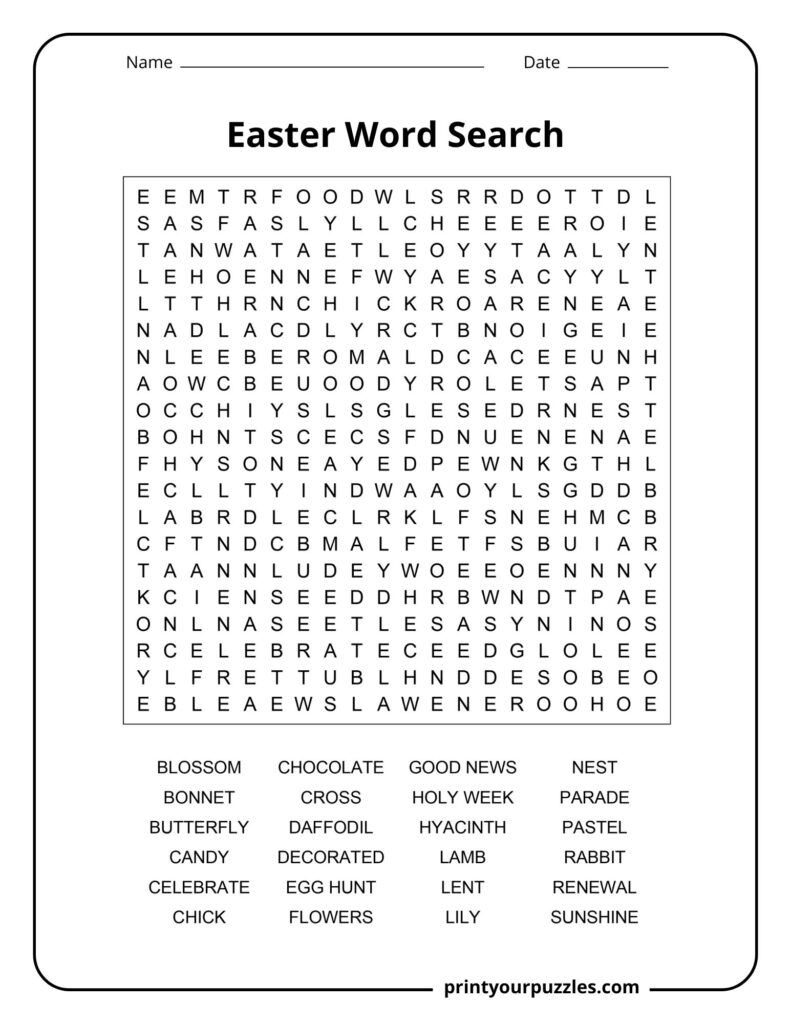
BLOSSOM, BONNET, BUTTERFLY, CANDY, CELEBRATE, CHICK, CHOCOLATE, CROSS, DAFFODIL, DECORATED, EGG HUNT, FLOWERS, GOOD NEWS, HOLY WEEK, HYACINTH, LAMB, LENT, LILY, NEST, PARADE, PASTEL, RABBIT, RENEWAL, SUNSHINE
Easter is the most important Christian holiday, celebrating the resurrection of Jesus Christ three days after his crucifixion, symbolizing hope, salvation, and eternal life for believers worldwide.
Easter falls on a different date each year, occurring between late March and late April, determined by the first Sunday following the full moon after the spring equinox.
Eggs and rabbits are ancient symbols of fertility and new life, adopted into Easter traditions over centuries, blending Christian beliefs with springtime celebrations of nature’s renewal and abundance.
Holy Week commemorates the final days of Jesus Christ’s life, including his triumphant entry into Jerusalem, the Last Supper, crucifixion on Good Friday, and glorious resurrection on Sunday.
Easter is celebrated globally through church services, family meals, egg hunts, and gift giving, with each country adding unique cultural traditions while honoring the shared spirit of renewal.
Easter predates Christmas in Christian tradition, established as the primary holy feast since the earliest centuries of the Church, long before December festivities became widely celebrated.
Some historians believe the name Easter derives from Eostre, an ancient Germanic goddess of spring and dawn, whose seasonal festivals were later blended with Christian resurrection celebrations.
Easter ranks as the second largest candy-consuming holiday in the United States after Halloween, with families spending enormous amounts on chocolate, decorations, baskets, and festive clothing annually.
Ancient Persians, Egyptians, and Romans exchanged decorated eggs during spring festivals centuries before Christianity, symbolizing fertility and new life, a tradition later embraced and transformed by Christian communities.
Created in Italy in 2011, this extraordinary chocolate masterpiece stood nearly ten meters tall, entering the Guinness World Records as the heaviest and most spectacular Easter egg ever crafted.