
Spring Bank Holiday is a public holiday celebrated across the United Kingdom near the end of May. It normally falls on the last Monday of the month, giving many people a three-day weekend as spring begins to give way to summer. Banks, government offices, schools, and numerous businesses may close, although opening hours and employees’ holiday arrangements vary.
The holiday developed from an older Christian observance known as Whit Monday, the day after Pentecost. Because Pentecost follows the changing date of Easter, Whit Monday did not occur on the same calendar date each year. In 1967, the traditional holiday was replaced by a more consistent bank holiday on the final Monday in May. The occasion is still sometimes informally called the Whitsun bank holiday, especially by older generations.
Unlike Christmas or Easter, Spring Bank Holiday has no single set of required customs, symbols, or foods. Its main attraction is the additional day away from normal work or school routines. Families and friends may arrange picnics, barbecues, countryside walks, garden parties, or short trips. Coastal towns, parks, historic properties, zoos, and tourist attractions can become particularly busy during the long weekend.
Community events also form an important part of the occasion. Depending on the location, people may attend village fairs, food festivals, outdoor concerts, craft markets, sporting competitions, or traditional celebrations. Gardening is another popular activity because late May often brings longer daylight hours, blooming flowers, and increasing warmth. However, British spring weather can be unpredictable, so sunshine, wind, cool temperatures, and rain are all possible during the same weekend.
Seasonal foods may include picnic sandwiches, strawberries, cakes, grilled dishes, salads, and ice cream. Some people use the holiday to begin preparing for summer, complete household projects, visit relatives, or simply relax at home. Roads and public transport can become crowded as travelers take advantage of the extended break.
Spring Bank Holiday is observed throughout England, Wales, Scotland, and Northern Ireland, although the wider bank-holiday calendars differ among these parts of the United Kingdom. It provides a cheerful pause before June and the official start of summer.
Enjoy the traditions, activities, seasonal weather, and relaxing atmosphere of the long weekend with this Spring Bank Holiday word search, featuring 24 carefully selected words inspired by picnics, gardens, festivals, travel, sunshine, family outings, and the final days of spring.
We invite you to discover two important days observed in the United Kingdom: Boxing Day and Remembrance Day.
Related Word Searches:
May | Spring | Summer | Easter | Boxing Day
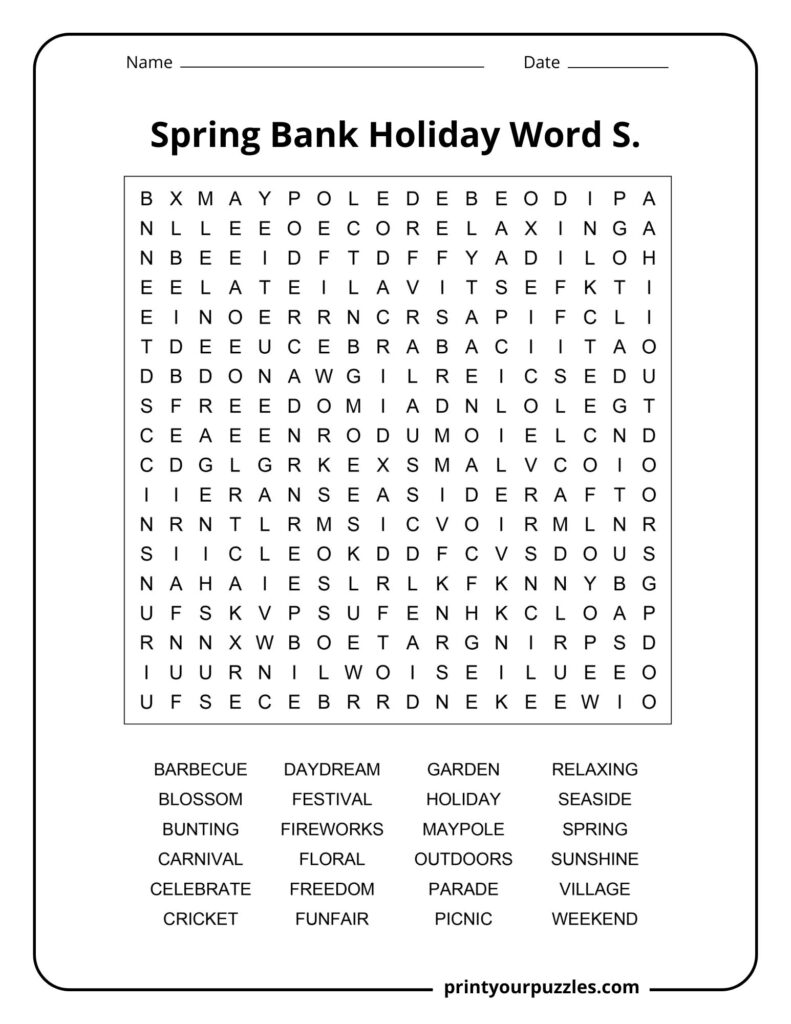
BARBECUE, BLOSSOM, BUNTING, CARNIVAL, CELEBRATE, CRICKET, DAYDREAM, FESTIVAL, FIREWORKS, FLORAL, FREEDOM, FUNFAIR, GARDEN, HOLIDAY, MAYPOLE, OUTDOORS, PARADE, PICNIC, RELAXING, SEASIDE, SPRING, SUNSHINE, VILLAGE, WEEKEND
BARBECUE – An outdoor cooking method where food, typically meat and vegetables, is grilled over an open flame or hot coals, often enjoyed with family and friends during warm weather gatherings.
BLOSSOM – The colourful flowers that appear on trees and plants during spring, symbolising renewal and the arrival of warmer weather, often seen on cherry, apple, and pear trees.
BUNTING – Decorative strings of small triangular flags or pennants, typically in bright colours, hung across streets, gardens, and buildings to celebrate festivals, holidays, and community events.
CARNIVAL – A lively outdoor celebration featuring rides, games, colourful stalls, music, and entertainment, bringing communities together in a festive atmosphere of joy and excitement.
CELEBRATE – To mark a special occasion or holiday with joyful activities, gatherings, food, and festivities, expressing happiness and gratitude with family, friends, and the wider community.
CRICKET – A traditional British bat-and-ball sport played on grassy pitches, particularly popular during summer months, often associated with leisurely bank holiday afternoons and village green matches.
DAYDREAM – A pleasant, relaxed state of mind where the imagination wanders freely, often enjoyed during quiet moments of a bank holiday, imagining adventures, happy memories, or future plans.
FESTIVAL – A organised public celebration of culture, music, food, or tradition, bringing large crowds together to enjoy performances, activities, and shared experiences over several hours or days.
FIREWORKS – Spectacular explosive displays of colourful lights and loud bangs launched into the night sky, used to mark celebrations, creating a dazzling and memorable visual spectacle for crowds.
FLORAL – Relating to flowers and blossoms, describing the vibrant and colourful abundance of nature during springtime, from garden blooms to wildflower meadows bursting with seasonal colour.
FREEDOM – The wonderful sense of liberation and relief felt during a bank holiday, free from work and daily obligations, allowing people to spend time as they choose.
FUNFAIR – A travelling outdoor amusement event featuring exciting rides, colourful stalls, games of skill, sweet treats, and lively music, popular with children and families during holiday periods.
GARDEN – A cultivated outdoor space where flowers, plants, vegetables, and trees are grown and tended, becoming a peaceful haven for relaxation, play, and socializing during spring bank holidays.
HOLIDAY – A designated day or period of rest and celebration, free from work and routine, giving people the opportunity to relax, travel, spend time with loved ones, and enjoy leisure activities.
MAYPOLE – A tall wooden pole decorated with long colourful ribbons, traditionally danced around during spring celebrations in English villages, symbolising fertility, community spirit, and the arrival of summer.
OUTDOORS – The natural open-air environment beyond walls and rooftops, enthusiastically embraced during bank holidays for walking, sports, picnics, and simply enjoying fresh air and natural surroundings.
PARADE – A festive procession of people, floats, musicians, and performers moving through streets, celebrating a holiday or special occasion while entertaining spectators lined along the route.
PICNIC – A casual outdoor meal enjoyed in a park, garden, or countryside setting, typically involving packed food, blankets on the grass, and relaxed conversation in pleasant weather.
RELAXING – The act of resting the mind and body, releasing stress and tension, and enjoying peaceful, unhurried moments that a bank holiday generously provides away from everyday pressures.
SEASIDE – The coastal area beside the sea, a favourite British bank holiday destination offering beaches, rock pools, fish and chips, ice cream, and the soothing sound of waves.
SPRING – The season following winter, characterised by warming temperatures, longer daylight hours, blooming flowers, returning wildlife, and a general sense of renewal, energy, and optimism in nature.
SUNSHINE – The warm, bright light radiated by the sun, eagerly welcomed during spring bank holidays, lifting spirits, encouraging outdoor activities, and bathing landscapes in a golden, cheerful glow.
VILLAGE – A small rural community with its own distinct character, often hosting traditional bank holiday events such as fetes, fairs, sports days, and communal gatherings on the village green.
WEEKEND – The two-day rest period at the end of the working week, extended by a bank holiday into a precious extra day of leisure, relaxation, and quality time with others.
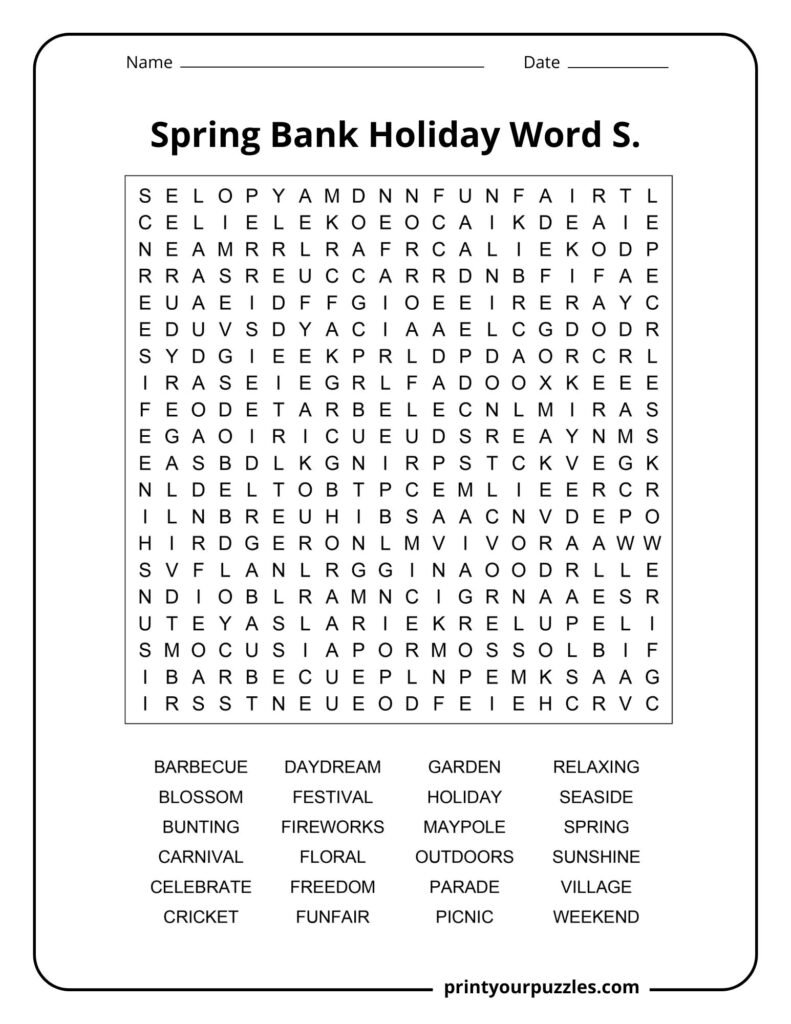
BARBECUE, BLOSSOM, BUNTING, CARNIVAL, CELEBRATE, CRICKET, DAYDREAM, FESTIVAL, FIREWORKS, FLORAL, FREEDOM, FUNFAIR, GARDEN, HOLIDAY, MAYPOLE, OUTDOORS, PARADE, PICNIC, RELAXING, SEASIDE, SPRING, SUNSHINE, VILLAGE, WEEKEND
Spring Bank Holiday falls on the last Monday of May each year in the United Kingdom, giving workers and families a long weekend to rest and enjoy seasonal activities.
Originally linked to the Christian celebration of Whit Monday, Spring Bank Holiday was officially moved to the last Monday of May in 1971 to create a fixed, predictable annual date.
People enjoy barbecues, visit the seaside, attend funfairs and festivals, explore the countryside, or simply relax in their gardens, taking full advantage of the longer days and warmer spring weather.
Yes, Spring Bank Holiday is a public holiday observed across England, Wales, Scotland, and Northern Ireland, meaning most businesses, schools, and public offices are officially closed for the day.
Yes, the date has occasionally been moved or an extra bank holiday added to coincide with significant national events, such as royal jubilees, weddings, or other major celebrations of national importance.
Before 1971, the holiday was celebrated on Whit Monday, a moveable Christian feast day that fell on different dates each year depending on the Easter calendar.
Additional bank holidays have been granted for special royal events, including Queen Elizabeth II’s Golden and Platinum Jubilees, and the coronation of King Charles III in 2023.
Dating back to medieval times, Maypole dancing was originally a pagan fertility ritual welcoming summer, and many English villages still proudly maintain this colorful and joyful community tradition today.
Many Britons consider the late May bank holiday weekend the true beginning of summer, with campsites, seaside resorts, and garden centres reporting their busiest trading period of the entire year.
The world-famous RHS Chelsea Flower Show is held in London every May, attracting thousands of visitors and perfectly complementing the spirit of blooming nature that defines this cheerful holiday period.