
April is the fourth month of the year and a season of noticeable change in many parts of the world. In the Northern Hemisphere, it is closely associated with spring, bringing warmer temperatures, longer days, fresh greenery, and colorful flowers. In the Southern Hemisphere, April belongs to autumn, when temperatures begin to cool and leaves may start changing color. These seasonal differences give the month a varied character depending on where people live.
The name April may come from the Latin word “aperire”, meaning “to open,” possibly referring to flowers and plants opening during spring. However, the exact origin of the name remains uncertain. In the modern calendar, April has 30 days and arrives between March and May. It is often a transitional month, with weather that can change quickly from sunshine to rain, wind, or even late snow in colder regions.
Rain is one of the best-known symbols of April. The traditional expression “April showers bring May flowers” reflects the idea that spring rainfall helps gardens, fields, and trees grow. People may notice blooming tulips, daffodils, cherry blossoms, and other seasonal plants. Birds become more active, young animals appear, and many families begin spending more time outdoors in parks, gardens, and nature trails.
April also includes several important celebrations and observances. April Fools’ Day begins the month with jokes and harmless pranks, while Earth Day encourages people to care for the environment. Easter sometimes falls in April, bringing religious services, family gatherings, decorated eggs, and seasonal foods. Depending on the year and country, the month may also include school vacations, festivals, sporting events, and community activities.
For many people, April is a time for spring cleaning, gardening, outdoor exercise, and preparing homes for warmer weather. Clothing becomes lighter, farmers and gardeners begin planting, and markets may offer fresh seasonal produce. The month often feels hopeful and energetic because nature appears to be starting again after winter.
This printable April word search puzzle captures the character of the month through words connected with spring weather, flowers, celebrations, nature, and familiar seasonal activities. It provides an enjoyable printable puzzle for classrooms, families, rainy afternoons, or anyone who wants to welcome April with a relaxing and educational challenge.
Related Word Searches:
April Fools’ Day | Easter | Earth Day | Spring | March | National Pet Day
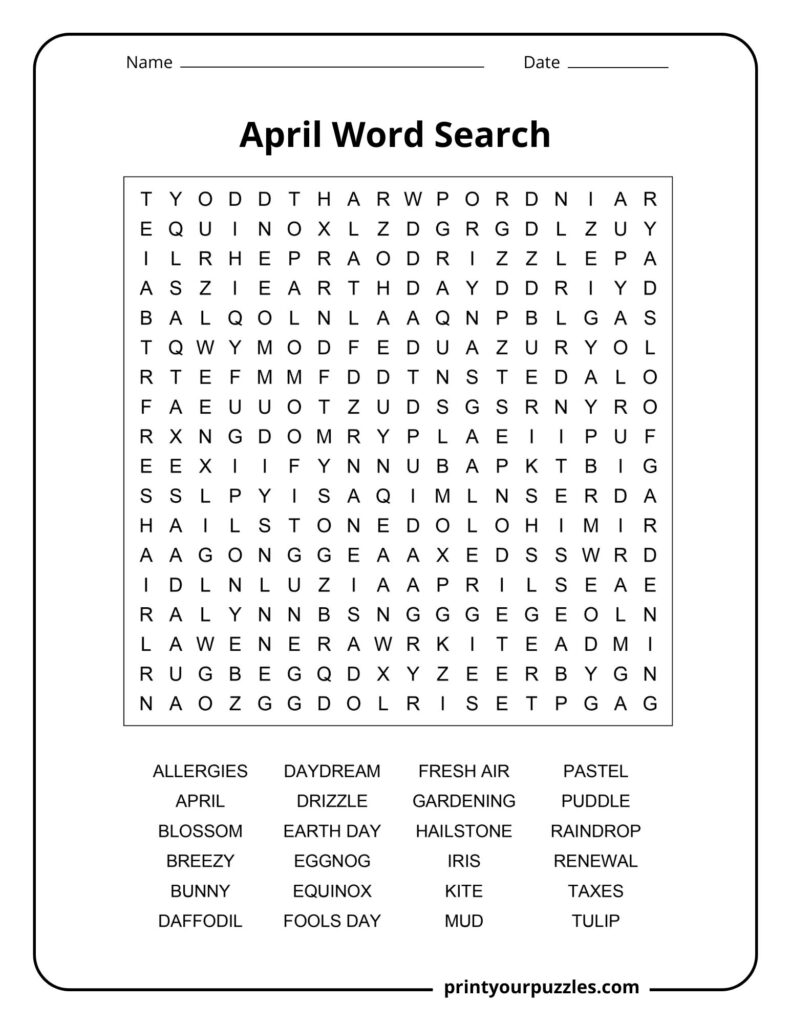
ALLERGIES, APRIL, BLOSSOM, BREEZY, BUNNY, DAFFODIL, DAYDREAM, DRIZZLE, EARTH DAY, EGGNOG, EQUINOX, FOOLS DAY, FRESH AIR, GARDENING, HAILSTONE, IRIS, KITE, MUD, PASTEL, PUDDLE, RAINDROP, RENEWAL, TAXES, TULIP
ALLERGIES – Immune system reactions triggered by pollen, dust, or other spring substances, causing sneezing, itchy eyes, and general discomfort during the blooming season.
APRIL – The fourth month of the year, marking the heart of spring in the Northern Hemisphere, known for unpredictable weather, blooming flowers, and longer daylight hours.
BLOSSOM – The delicate flowers that appear on trees and plants during spring, signaling new growth and warmer days ahead after the cold winter months.
BREEZY – A pleasant weather condition common in April, characterized by gentle, refreshing winds that carry the sweet scent of flowers and fresh rain through the air.
BUNNY – A small, fluffy rabbit strongly associated with Easter celebrations in April, symbolizing fertility, new life, and the joyful arrival of the spring season.
DAFFODIL – A bright yellow trumpet-shaped flower that blooms in early spring, widely regarded as one of the most cheerful and recognizable symbols of the April season.
DAYDREAM – A pleasant mental wandering into imaginative thoughts, often inspired by the warmth and beauty of April sunshine streaming through windows on lazy spring afternoons.
DRIZZLE – A light, fine rainfall typical of April showers, gently watering gardens and fields while creating a peaceful, misty atmosphere across towns and countryside alike.
EARTH DAY – An annual global environmental awareness event celebrated on April 22nd, encouraging people worldwide to take action in protecting nature, reducing pollution, and promoting sustainability.
EGGNOG – A rich, creamy beverage traditionally made with eggs, milk, and spices, often enjoyed during festive spring gatherings and Easter holiday celebrations with family and friends.
EQUINOX – The astronomical moment in late March or early April when day and night are of nearly equal length, officially marking the beginning of the spring season.
FOOLS DAY – A reference to April Fools’ Day, celebrated on April 1st, a fun tradition of playing harmless pranks, jokes, and tricks on unsuspecting friends and colleagues.
FRESH AIR – The clean, crisp outdoor air of April, filled with the scents of rain and blooming nature, perfect for opening windows and enjoying long walks outside.
GARDENING – The rewarding springtime activity of planting seeds, tending soil, and nurturing flowers and vegetables, taking full advantage of April’s warming temperatures and generous rainfall.
HAILSTONE – A small pellet of ice that falls from storm clouds during unpredictable April weather, sometimes surprising people on otherwise mild and seemingly pleasant spring days.
IRIS – A graceful flowering plant with striking purple, blue, or yellow blooms that typically appears in spring gardens, adding bold color and elegance to outdoor spaces.
KITE – A lightweight frame covered in fabric or paper, flown high in the sky using string, perfect for enjoying the strong and playful April winds outdoors.
MUD – The soft, wet mixture of soil and water created by April’s frequent rains, a familiar sight in gardens, fields, and along pathways throughout the spring season.
PASTEL – Soft, delicate shades of pink, lavender, yellow, and blue commonly associated with Easter and spring, widely used in seasonal decorations, clothing, and holiday candy packaging.
PUDDLE – A small pool of rainwater collected on the ground after an April shower, irresistible to children who delight in splashing through them wearing bright rubber boots.
RAINDROP – A single droplet of water falling from April clouds, joining millions of others to nourish plants, replenish rivers, and create the refreshing sound of spring rain.
RENEWAL – The powerful sense of new beginnings that April brings, as nature awakens from winter dormancy and people feel inspired to refresh their habits, goals, and surroundings.
TAXES – In the USA, federal income tax returns are due every April 15th, making this month synonymous with financial deadlines, paperwork, and the scramble to file on time.
TULIP – A bold, cup-shaped flower available in nearly every color, blooming proudly in April gardens and parks, and widely celebrated as one of spring’s most beloved symbols.
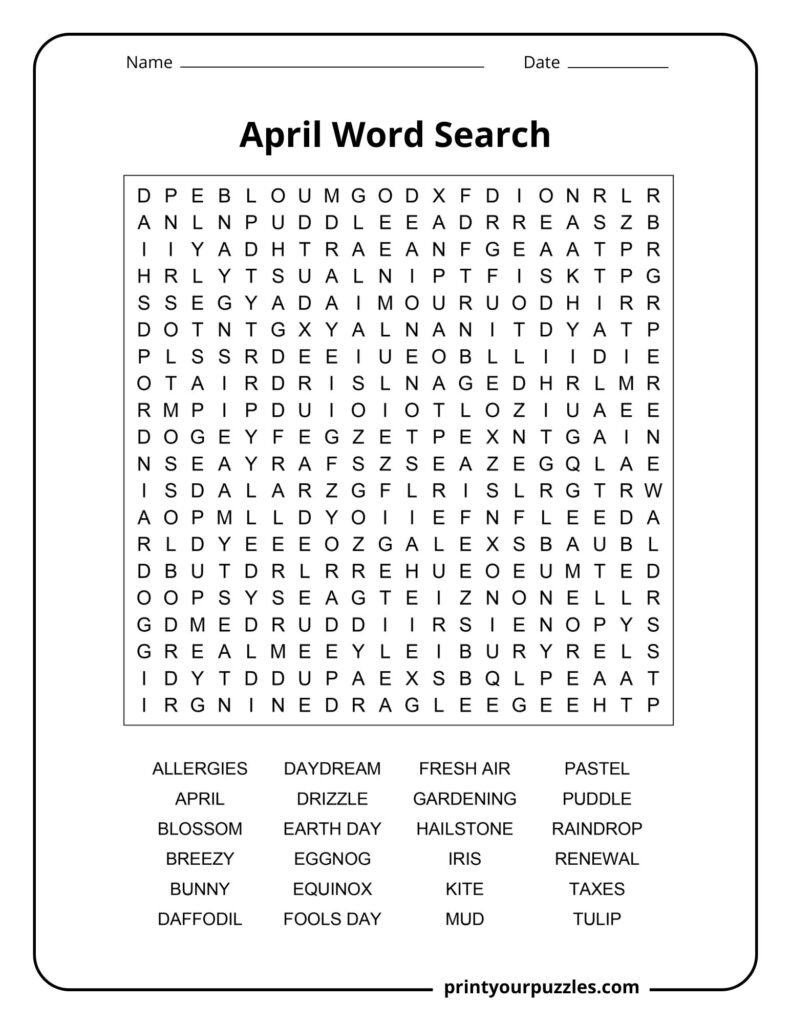
ALLERGIES, APRIL, BLOSSOM, BREEZY, BUNNY, DAFFODIL, DAYDREAM, DRIZZLE, EARTH DAY, EGGNOG, EQUINOX, FOOLS DAY, FRESH AIR, GARDENING, HAILSTONE, IRIS, KITE, MUD, PASTEL, PUDDLE, RAINDROP, RENEWAL, TAXES, TULIP
April falls during the Northern Hemisphere’s spring season, when temperatures rise, daylight increases, and nature awakens after winter, making it strongly connected to renewal, blooming flowers, and fresh beginnings.
April Fools’ Day on April 1st likely originated in 16th-century France when the calendar changed, leaving some people unaware and making them targets of playful jokes and pranks.
April experiences frequent rainfall because warming temperatures cause increased evaporation and atmospheric activity, creating unstable weather patterns that produce the characteristic showers that famously bring May flowers.
April hosts Earth Day on the 22nd, promoting environmental awareness worldwide, and often includes Easter celebrations, making it a month rich in both ecological and cultural significance.
April’s birthstone is the diamond, symbolizing strength and clarity. Its birth flowers are the daisy and sweet pea, both representing innocence, loyalty, and the gentle beauty of spring.
April is the most contradictory month — warm one day, cold the next, beautiful and unsettling in equal measure. It is the month of awakening, of seeing things freshly, of the world refusing to stay still. These three books capture that tension perfectly.
To Kill a Mockingbird – Harper Lee. Set in a sleepy Southern town as spring warms into summer, seen through a child’s eyes slowly opening to the world.
The Great Gatsby – F. Scott Fitzgerald. Spring parties, blooming obsession, and reinvention in the air. Gatsby’s world awakens in April before it burns in summer.
Middlemarch – George Eliot. A whole community stirring with ambition, love, and reform. As sprawling and full of life as April itself — everything possible, nothing settled yet.
In the ancient Roman calendar, which began in March, April held the second position until January and February were later added, reshaping the entire yearly structure.
“Aperire” means “to open,” likely referencing the way buds and flowers open during this season, making it a beautifully descriptive name for such a blooming, awakening month.
Every single letter in the word “April” appears just once, with no repetitions, making it uniquely distinctive among all twelve months of the modern calendar year.
The Titanic sank and Abraham Lincoln died on April 15th, making the already stressful federal tax deadline share its date with two of history’s most somber and memorable moments.
The daisy symbolizes innocence and cheerfulness, while the sweet pea represents delicate pleasures and goodbyes, giving April-born individuals two beautifully contrasting floral symbols to call their own.